Karma & Interdependence: Why It Is Never Fatalism
Intentional Action, Habit Momentum & Freedom in the Present Moment
In Sanskrit and Tibetan (las), karma literally means “action,” never “predestined fate.” While past choices shape today’s conditions, how one responds right now writes the next cause.
Why Blaming Suffering on Victims Violates Buddhist Ethics
One of the ugliest distortions of popular karma talk is shrugging at someone’s illness or misfortune as “their own bad karma.” In the Pali and Kangyur canons (such as the Sivaka Sutta), the Buddha explicitly lists eight causes of bodily pain—including weather, exhaustion, imbalanced diet, and accidents—declaring that anyone who claims “everything a person feels is caused by past karma” overshoots both empirical observation and truth.
Correctly understood, karma looks inward for responsibility and outward with unconditional compassion: past habits explain how momentum arose, while dependent origination (tendrel) guarantees that new conditions—medicine, kindness, steadiness—genuinely alter what happens next.
How It Is Practiced in Living Tradition
Contemplated daily alongside the Four Thoughts That Turn the Mind, grounding aspiration in small, concrete acts of speech and care.
Common Questions & Clarifications
Can past negative karma ever be changed?
Yes—because karma is conditional, not carved in stone. Just as a spoonful of salt makes a cup undrinkable yet dissolves harmlessly in a wide mountain lake, expanding ethical care and insight transforms how past seeds ripen.
Primary Sources & Further Reading
- Nāgārjuna, Mūlamadhyamakakārikā (Fundamental Wisdom of the Middle Way, Ch. 17 & 24)
- Vasubandhu, Abhidharmakośa (Treasury of Abhidharma, Ch. 4 on Karma)
Connected in the Mandala Graph
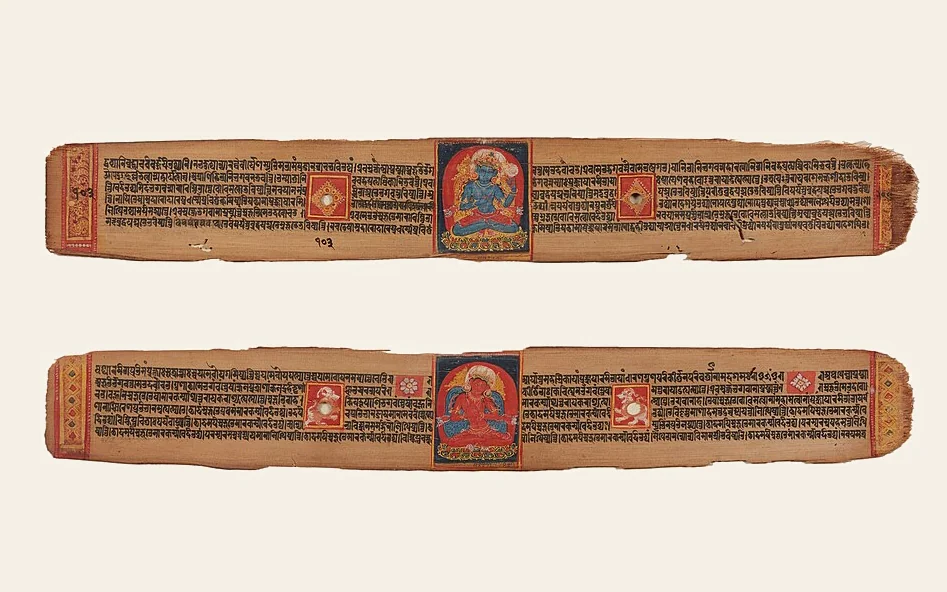
The Heart Sūtra (Sherab Nyingpo · 心经)
In 260 Chinese characters (and a slightly longer framed dialogue in the Tibetan Kangyur), Avalokiteśvara explains to Śāriputra why seeing emptiness—interdependent openness—dissolves fear.
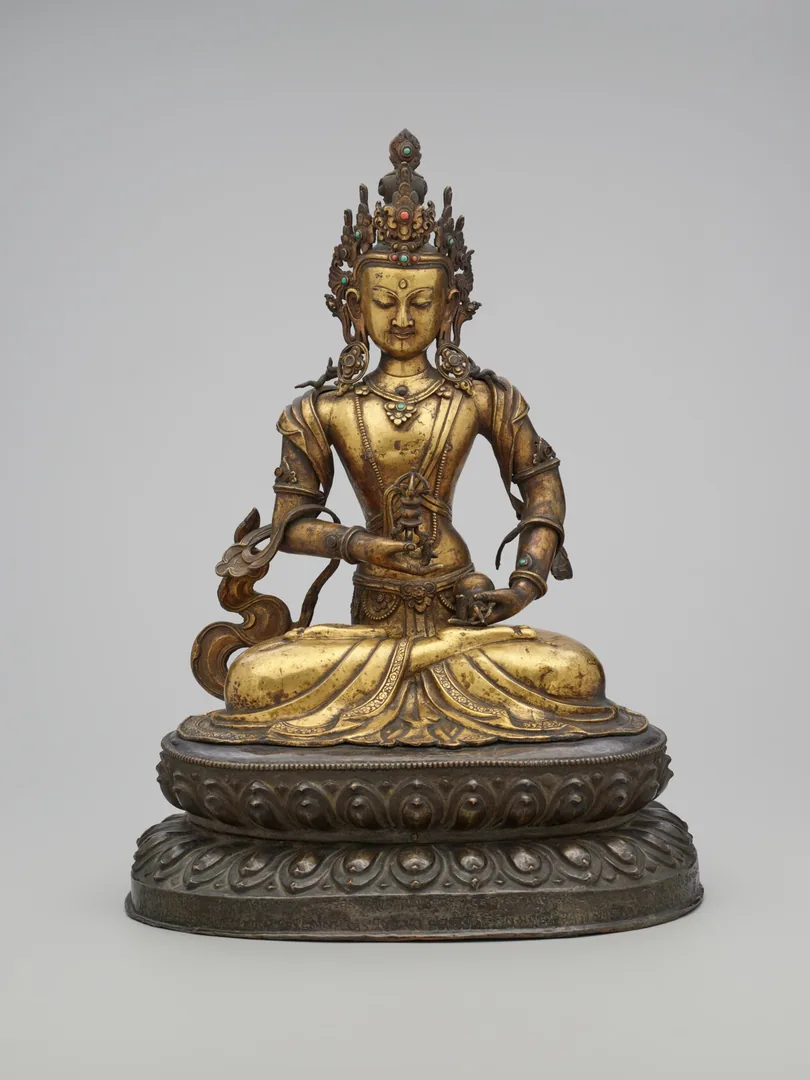
Vajrasattva (Dorje Sempa)
Radiant crystal-white in sambhogakāya ornaments, holding a five-pronged vajra at his heart and a silver bell at his hip, Vajrasattva embodies the indestructible purity underlying transient human mistakes.
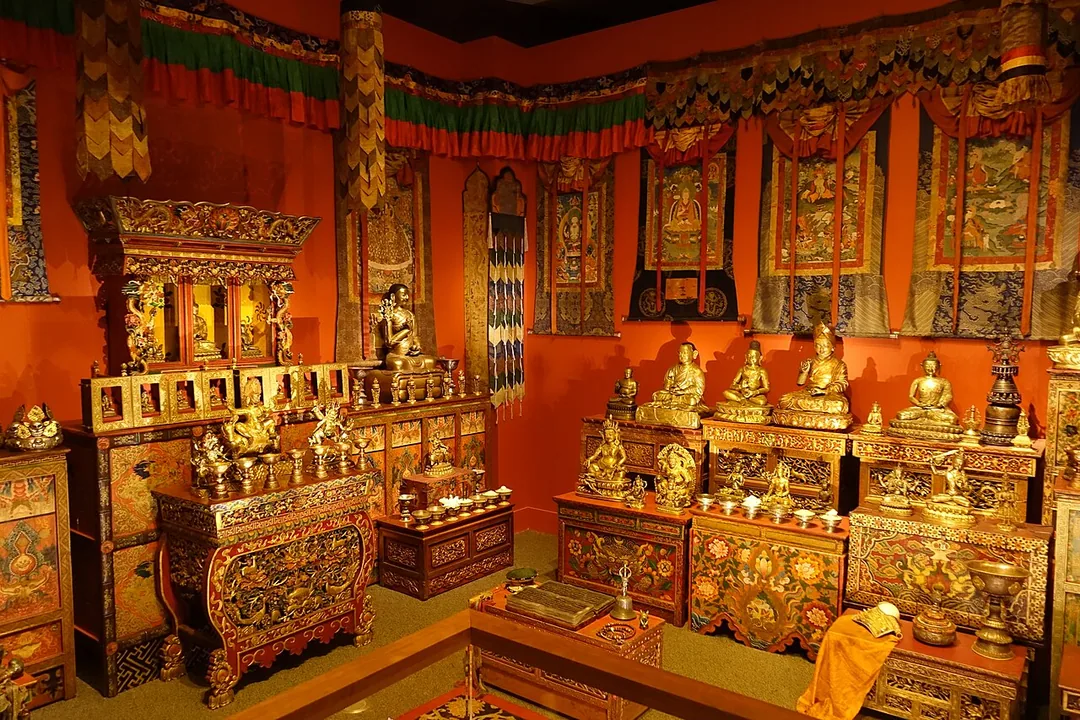
Dedication of Merit (Bsngo-ba · 回向)
No Tibetan contemplation, sutra reading, or prayer-wheel turn ends abruptly; it concludes with bsngo-ba (“turning toward”)—deliberately widening a private wish so everyone walking the same hard road is included.
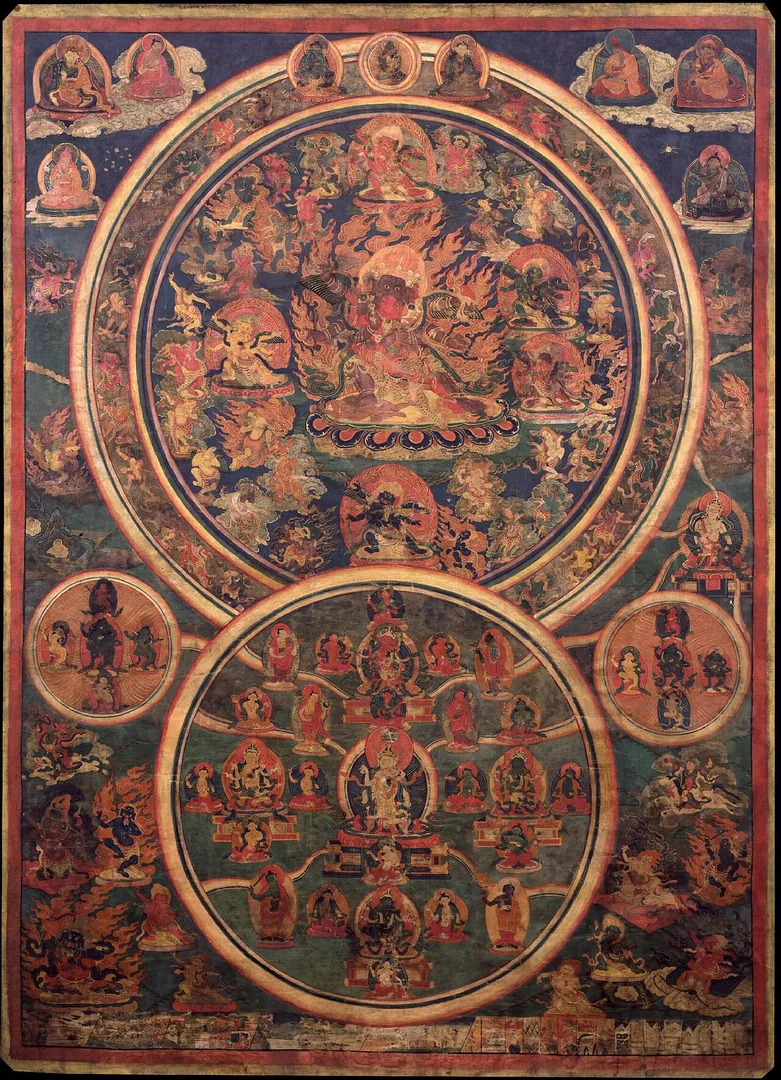
Bardo: The Six In-Between States
Literally “interval between two things” (bar-do), the famous Tibetan Book of the Dead (Bardo Thödol) maps not only death and rebirth, but six everyday transitional spaces—starting with this waking moment.