Hall IV · ཆོས་བརྒྱུད། (chos brgyud)
Lineages & Sacred Places
How Indian monastic philosophy met Himalayan indigenous culture, branching into distinct transmission lineages across Lhasa, Kham, Amdo, Bhutan, Ladakh, and Nepal.
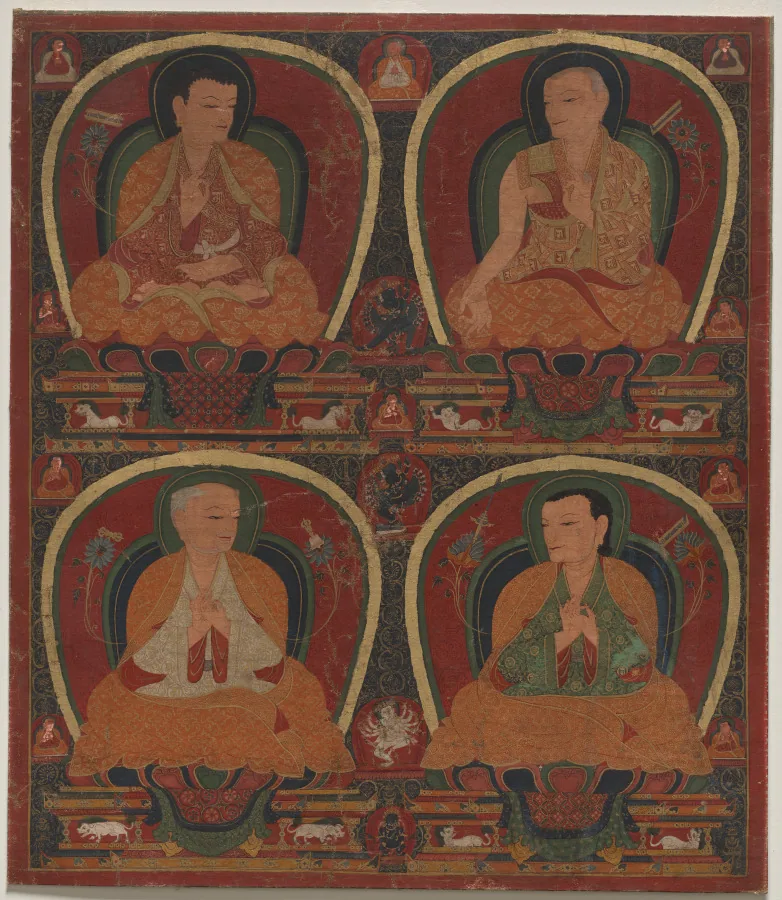
The Four Tibetan Schools & Bön Explained Clearly
Sharing the exact same Kangyur and Tengyur Buddhist canon, Tibet’s four major Buddhist schools differ not in core creed, but in historical translation era, pedagogical sequence, and meditative emphasis.
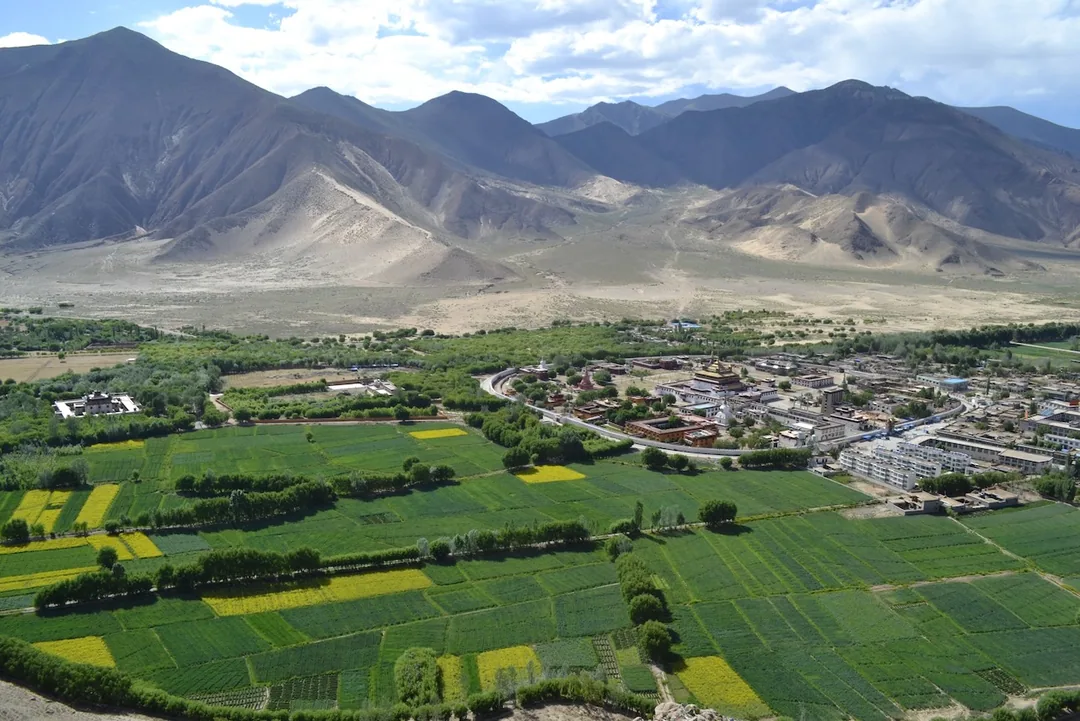
Jokhang Temple & Samye Monastery
Built in the 7th and 8th centuries respectively, Lhasa’s Jokhang anchors Tibetan devotional pilgrimage around the Jowo Śākyamuni, while Samye in Lhoka realizes an entire three-dimensional mandala in stone, timber, and earth.
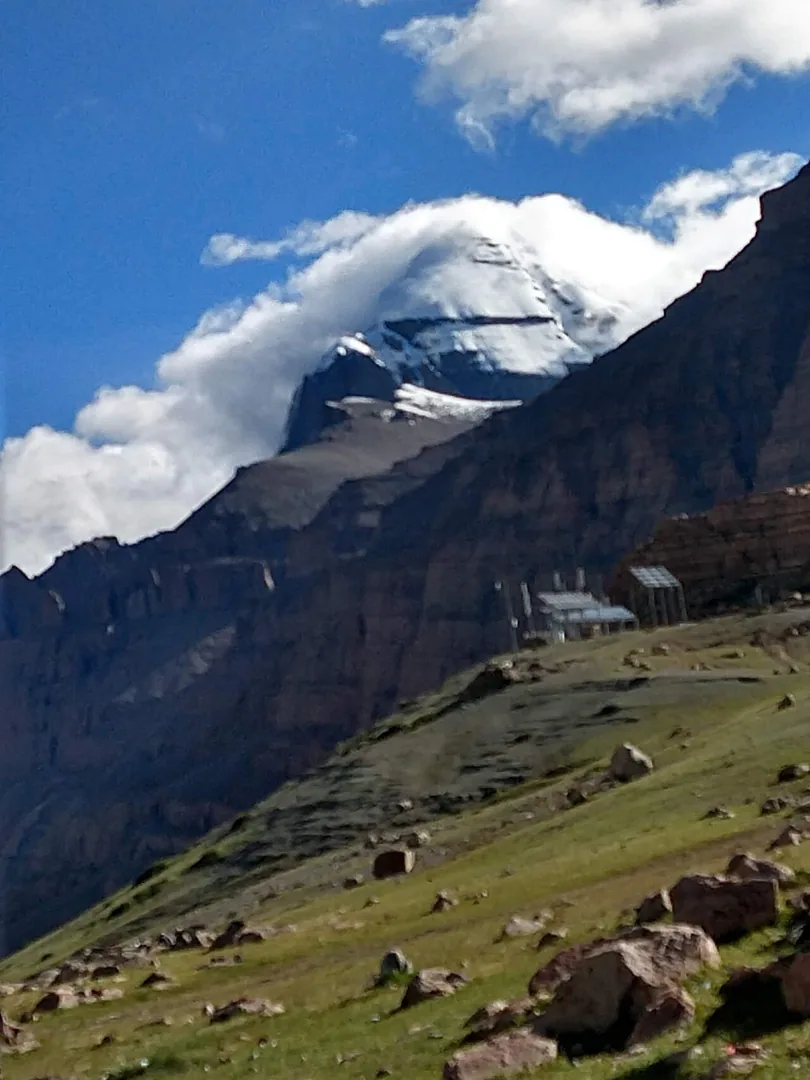
Mount Kailash (Gang Rinpoche) & Kora
Known in Tibetan as Gang Rinpoche (“Precious Jewel of Snows”), this four-sided peak in western Ngari feeds four of Asia’s greatest rivers and remains intentionally unclimbed out of shared reverence across Tibetan Buddhism, Bön, Hinduism, and Jainism.
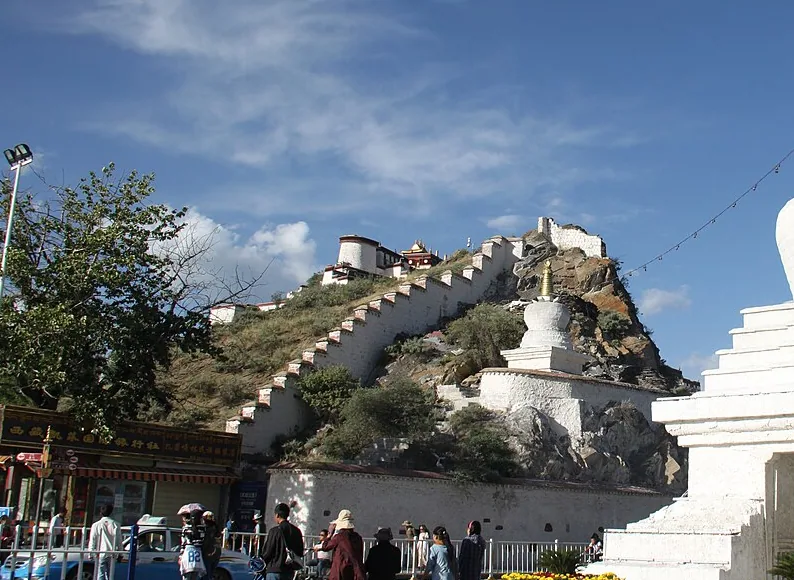
The Potala Palace (Pho-brang Po-ta-la · Lhasa)
Rising 117 meters atop Marpori (“Red Hill”) above the Lhasa valley, the Potala takes its name from Mount Potalaka—Avalokiteśvara’s pure abode in the Avataṃsaka Sūtra—fusing 7th-century meditation caves with the 17th-century White and Red Palaces.
Tibetan Monastic Debate & the Three Great Seats (Sera, Drepung, Ganden)
Every afternoon under the trees of Sera, Drepung, and Ganden monasteries, hundreds of monks pair off—one standing to test definitions with sharp claps, one seated calmly defending consistency—preserving classical Indian Nālandā logic (pramāṇa) as a living anti-dogma discipline.