Tibetan Monastic Debate & the Three Great Seats (Sera, Drepung, Ganden)
Inside the Shaded Courtyards Where Nālandā Logic Lives Out Loud
Every afternoon under the trees of Sera, Drepung, and Ganden monasteries, hundreds of monks pair off—one standing to test definitions with sharp claps, one seated calmly defending consistency—preserving classical Indian Nālandā logic (pramāṇa) as a living anti-dogma discipline.
Blind Faith Is Forbidden: How Courtyard Syllogisms Work
In the Kalama Sutta and Tattvasaṃgraha, the Buddha urged students to test his words “just as a goldsmith tests gold by rubbing, cutting, and melting—never accepting merely out of deference.” Twelfth-century Tibetan logician Chapa Chökyi Sengé at Sangphu Monastery turned that principle into brisk oral consequence-logic (thal-’gyur): the seated defender states a philosophical thesis, and the standing challenger asks strict yes/no/why questions to expose hidden self-contradictions.
Even the dramatic physical gestures carry exact ethical reminders: raising the right hand overhead invokes Mañjuśrī’s flaming sword cutting ignorance; extending the left hand represents compassionate wisdom pulling beings from cyclic suffering; clapping both palms together seals method and emptiness in exact synchronization with the word “Dih!” or “Chirp!”; and pulling the left hand back turns the rosary/robe to recall mindfulness.
| Discipline | Root Indian Text & Author | Years Studied | Core Inquiry |
|---|---|---|---|
| 1. Valid Cognition (Pramāṇa) | Dharmakīrti, Pramāṇavārttika | 2–4 years (ongoing) | Epistemology: What counts as reliable perception & inference? |
| 2. Perfection of Wisdom (Pāramitā) | Maitreyanātha, Abhisamayālaṃkāra | 4–6 years | Architecture of the entire Mahāyāna path & bodhisattva grounds |
| 3. Middle Way (Madhyamaka) | Candrakīrti, Madhyamakāvatāra | 2–4 years | Ultimate ontology: Emptiness & Dependent Origination |
| 4. Phenomenology (Abhidharma) | Vasubandhu, Abhidharmakośa | 2–4 years | Psychology of mind, mental factors, karma & cosmology |
| 5. Monastic Ethics (Vinaya) | Guṇaprabha, Vinayasūtra | 2–4 years | Ethical vows, communal governance & restorative harmony |
How It Is Practiced in Living Tradition
Practiced daily in Sera’s pebbled courtyard, Drepung, Ganden, Tashilhunpo, Labrang, Sakya Shedras, Nyingma colleges (such as Larung & Namdroling), and historic Bön colleges—including modern Geshema doctoral degrees awarded to Tibetan nuns since 2016.
Common Questions & Clarifications
What is the difference between a “Geshe” and a “Khenpo”?
Both are earned academic doctoral degrees (never inherited by birth!): “Geshe” (dge-bshes, short for kalyāṇamitra, spiritual friend) is awarded in Gelug and Bön monasteries after ~16–20 years of debate study; “Khenpo” (mkhan-po, abbot/professor) is the equivalent scholarly degree in Nyingma, Sakya, and Kagyu monastic colleges (shedras).
Primary Sources & Further Reading
- Georges B. J. Dreyfus, The Sound of Two Hands Clapping: The Education of a Tibetan Buddhist Monk (UC Press)
- Daniel E. Perdue, Debate in Tibetan Buddhism (Snow Lion)
Connected in the Mandala Graph
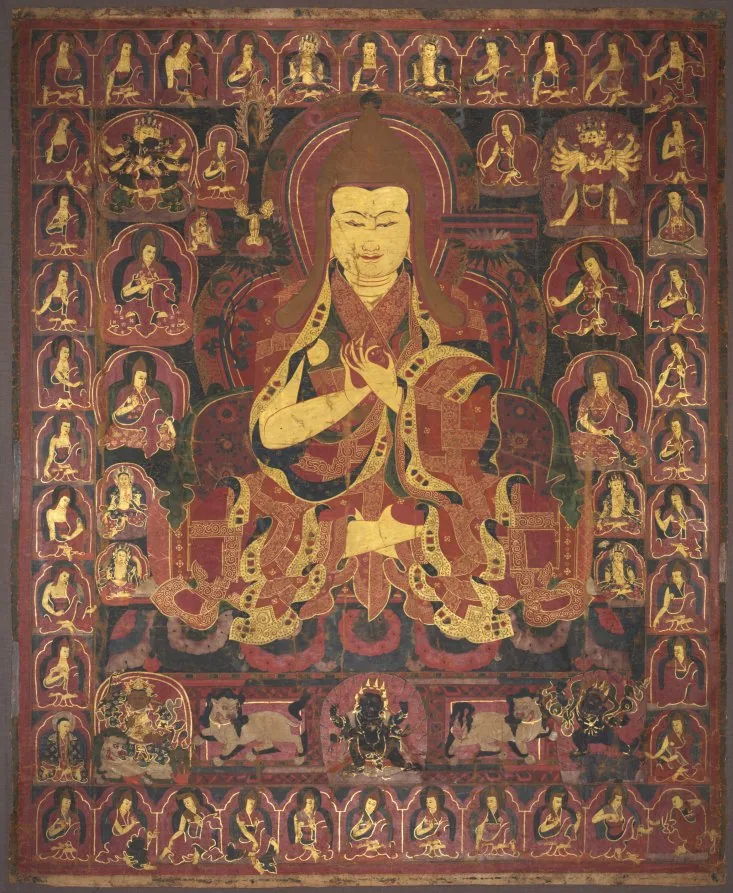
Je Tsongkhapa (Lobsang Drakpa · 1357–1419)
Born in Amdo Tsongkha (modern Qinghai Kumbum) in 1357, Je Rinpoche studied across Sakya, Kagyu, Jonang, and Kadampa masters before founding Ganden Monastery—uniting rigorous Nālandā logic, pure Vinaya discipline, and Tantric contemplation into one seamless graduated path (Lamrim).
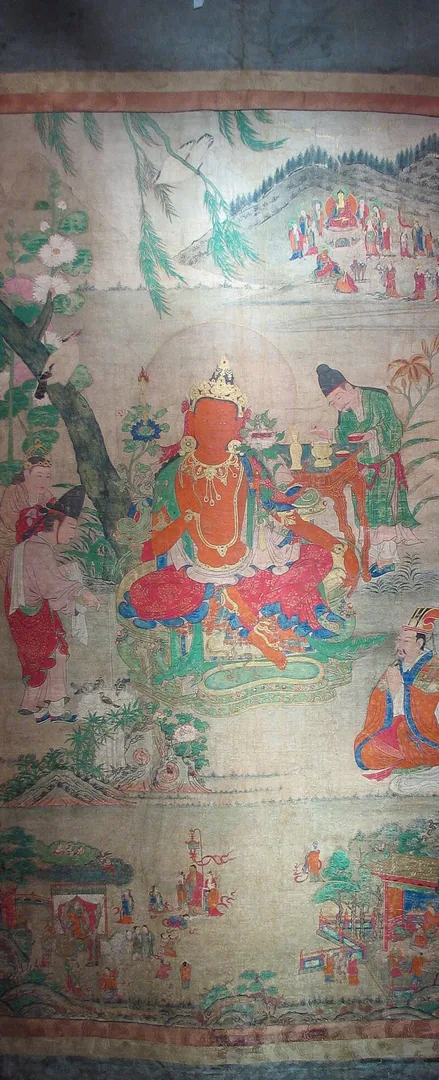
Mañjuśrī (Jampelyang)
Radiant saffron-gold in hue, Mañjuśrī raises a blazing sword overhead with his right hand to slice right through conceptual confusion, while holding the Prajñāpāramitā Sūtra on a lotus at his heart.
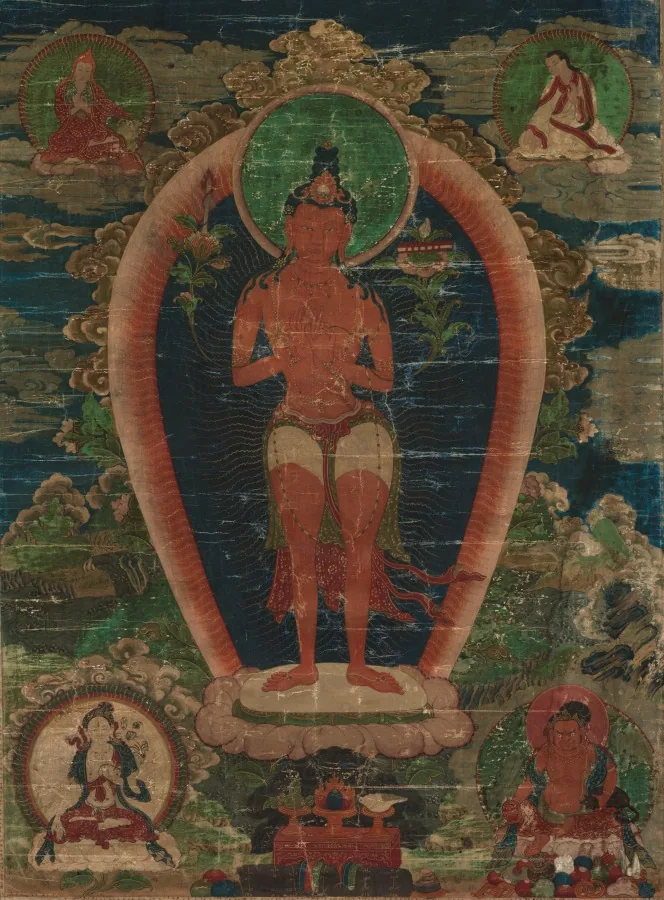
Oṃ A Ra Pa Ca Na Dhīḥ (Mañjuśrī Mantra)
Preserving the first five letters of the ancient Gāndhārī Kharoṣṭhī alphabet used in early Prajñāpāramitā manuscripts, this mantra trains the mind in lucid, unhurried discernment.
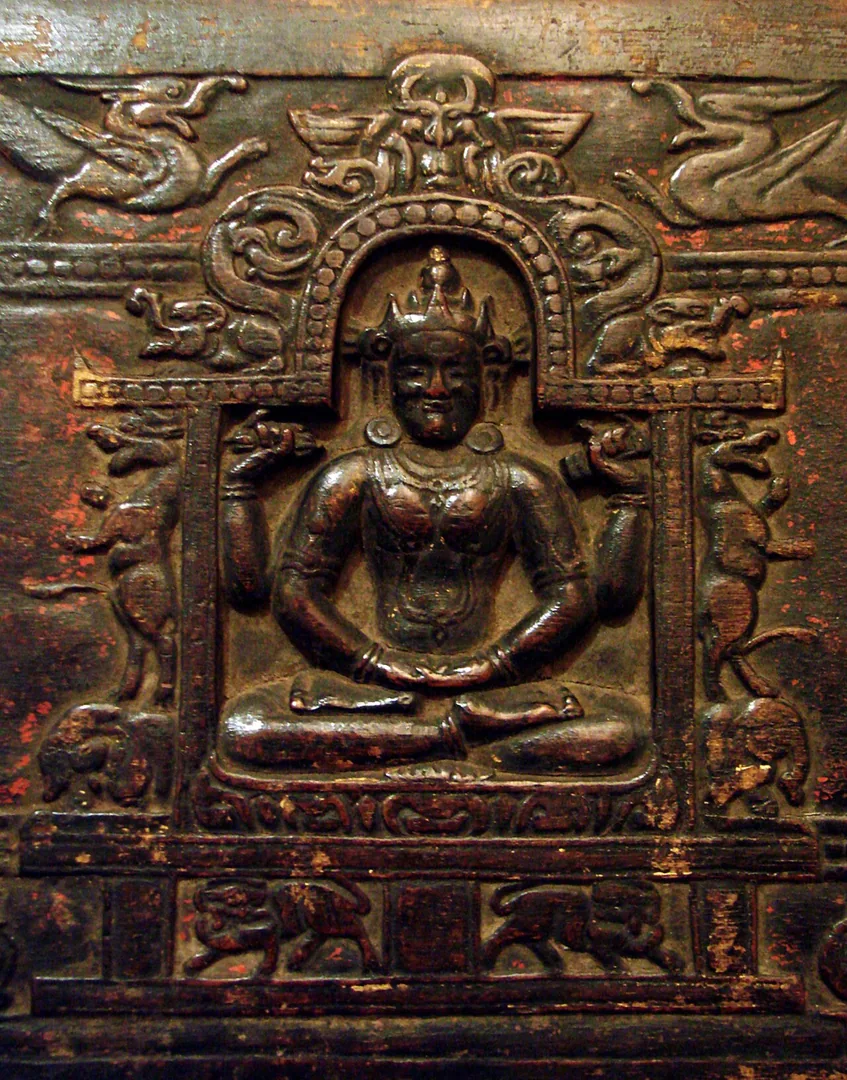
Śūnyatā (Emptiness) & the Two Truths (Madhyamaka)
In Nāgārjuna’s Middle Way philosophy, “emptiness” (stong-pa-nyid) never means nothing exists; it means nothing exists in frozen isolation—and precisely because things lack rigid self-nature, seeds sprout, suffering changes, and awakening works.