Hall III · ཕྱག་མཚན། (phyag mtshan)
Art, Symbols & Objects
Himalayan material culture turns geometry, wind, water, and mineral pigment into contemplative architecture. Here every line, color order, and mechanical axis is explained clearly.
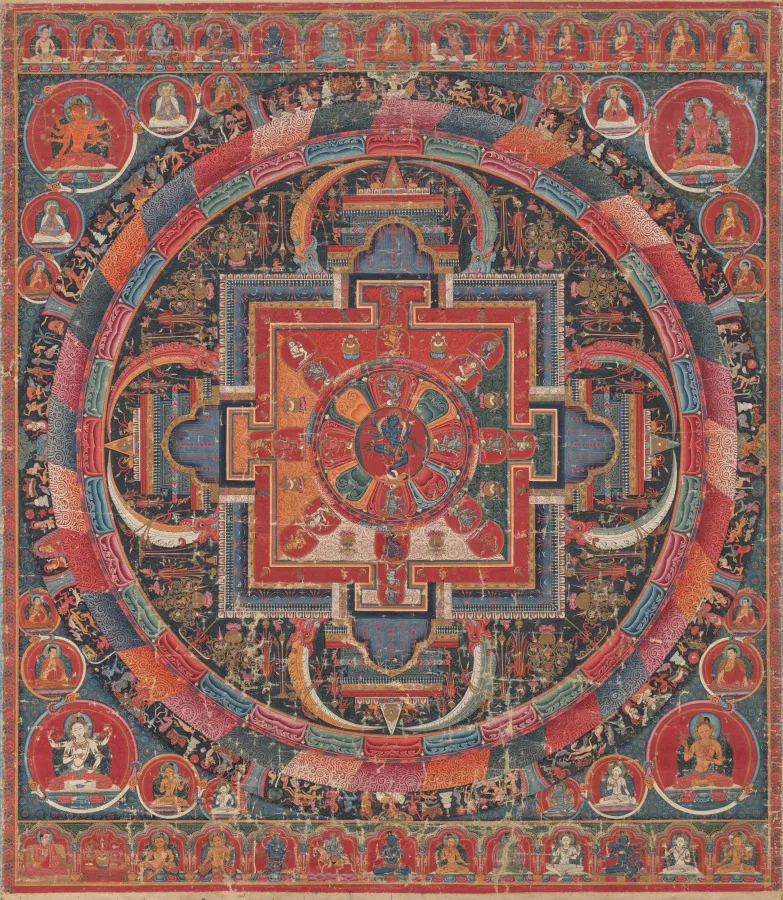
The Mandala (Kyilkhor · དཀྱིལ་འཁོར།)
Rendered in Tibetan as dkyil-’khor (“center and periphery”), a mandala is not decorative symmetry—it is a two-dimensional architectural floor plan of an awakened three-dimensional palace.
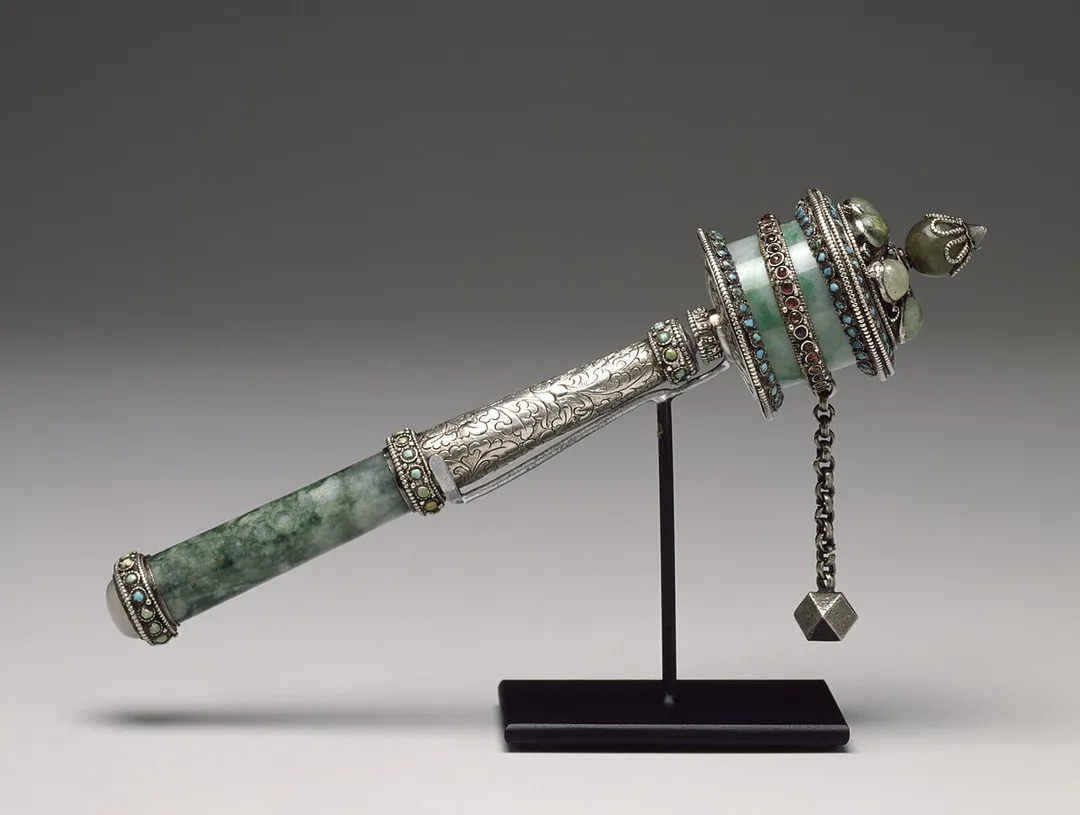
Tibetan Prayer Wheel (Mani Khorlo)
Far more than handheld brass cylinders, Tibetan prayer wheels harness mountain streams, high-pass wind, and rising butter-lamp heat so consecrated texts keep turning even while human bodies sleep.
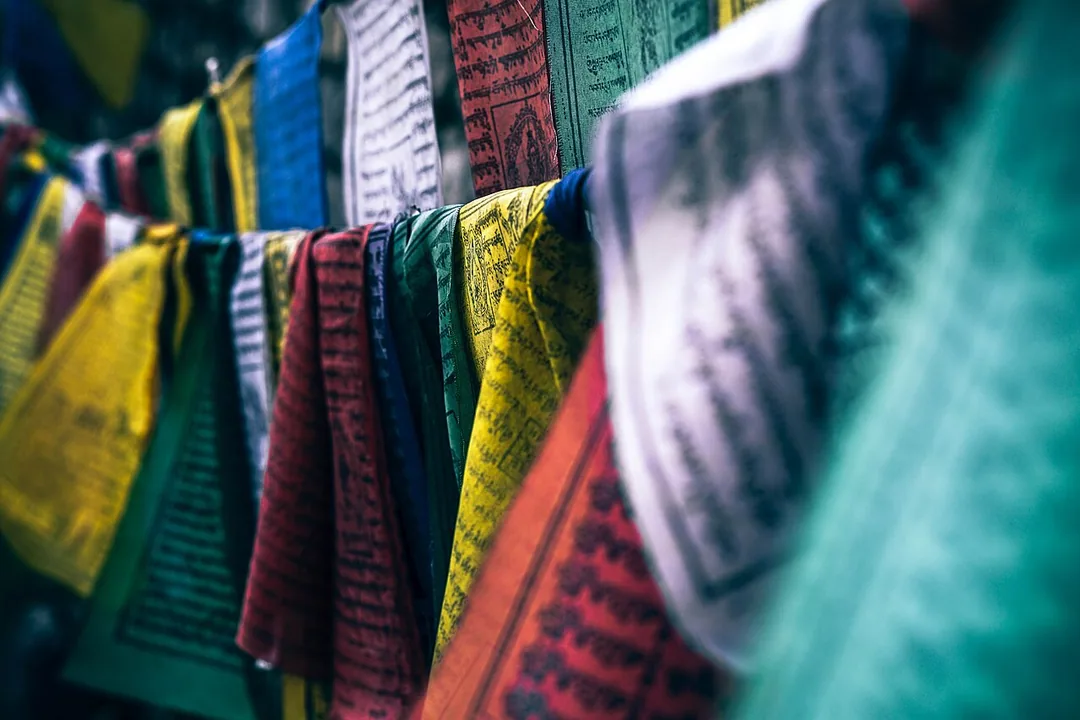
Five-Element Prayer Flags (Lungta · རླུང་རྟ།)
Literally “Wind Horse” (rlung-rta), five-colored cloth banners strung across Himalayan passes arrange the five natural elements in strict sequence so mountain wind carries auspiciousness across the valley.
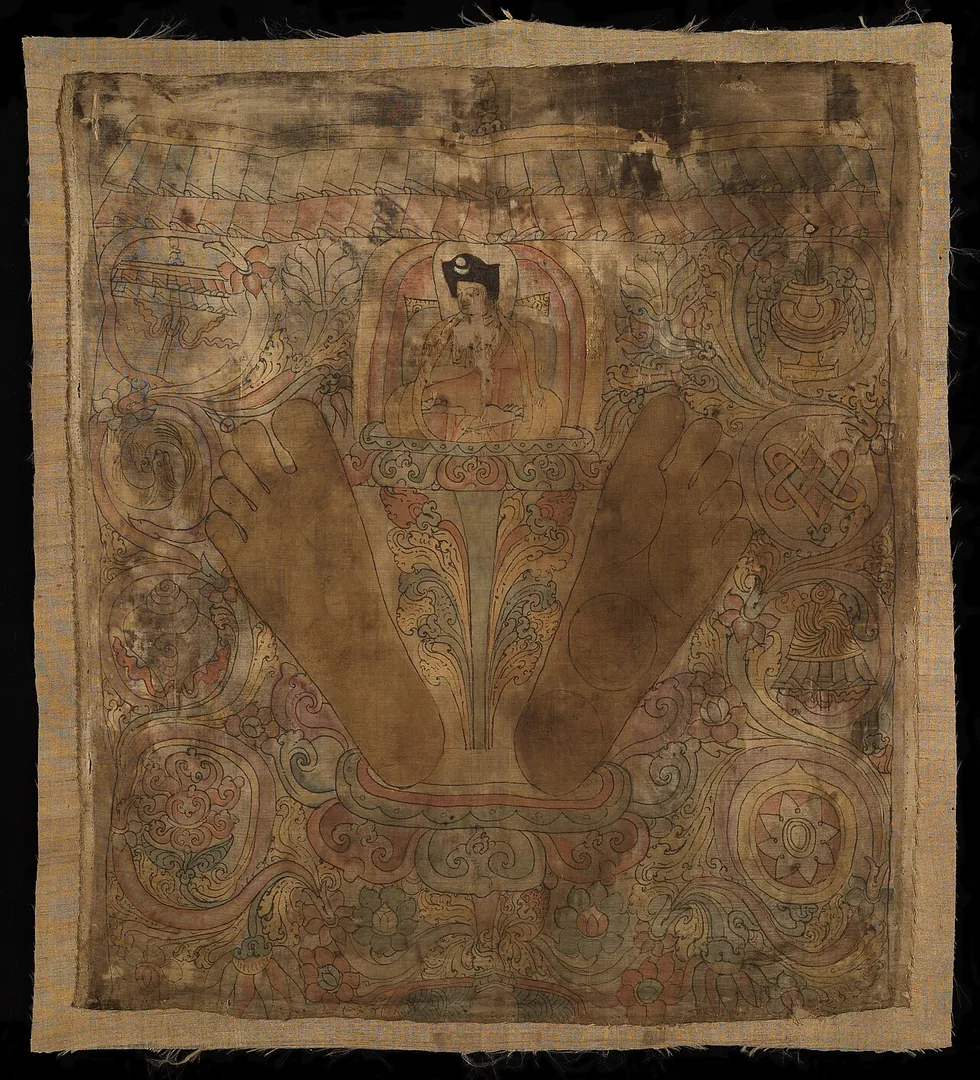
The Eight Auspicious Symbols (Ashtamangala)
Originally royal coronation offerings in ancient India and reinterpreted as attributes of the Buddha’s awakened body, speech, and mind, these eight emblems form the foundational grammar of Tibetan visual design.
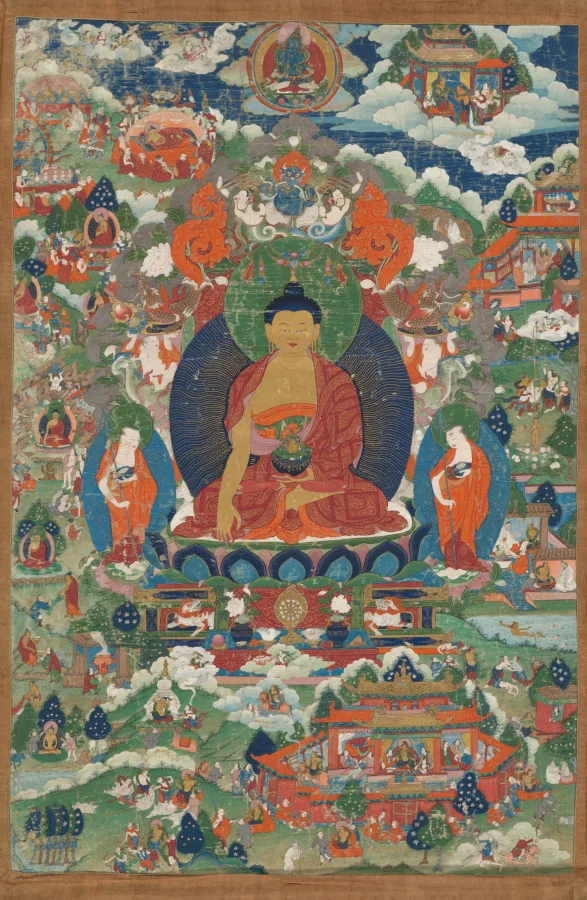
How to Read a Thangka Painting
Meaning “something unrolled” (thang-ka), a Tibetan scroll painting is structured along a strict vertical and proportional grid so portable monasteries on horseback could carry complete contemplative maps.
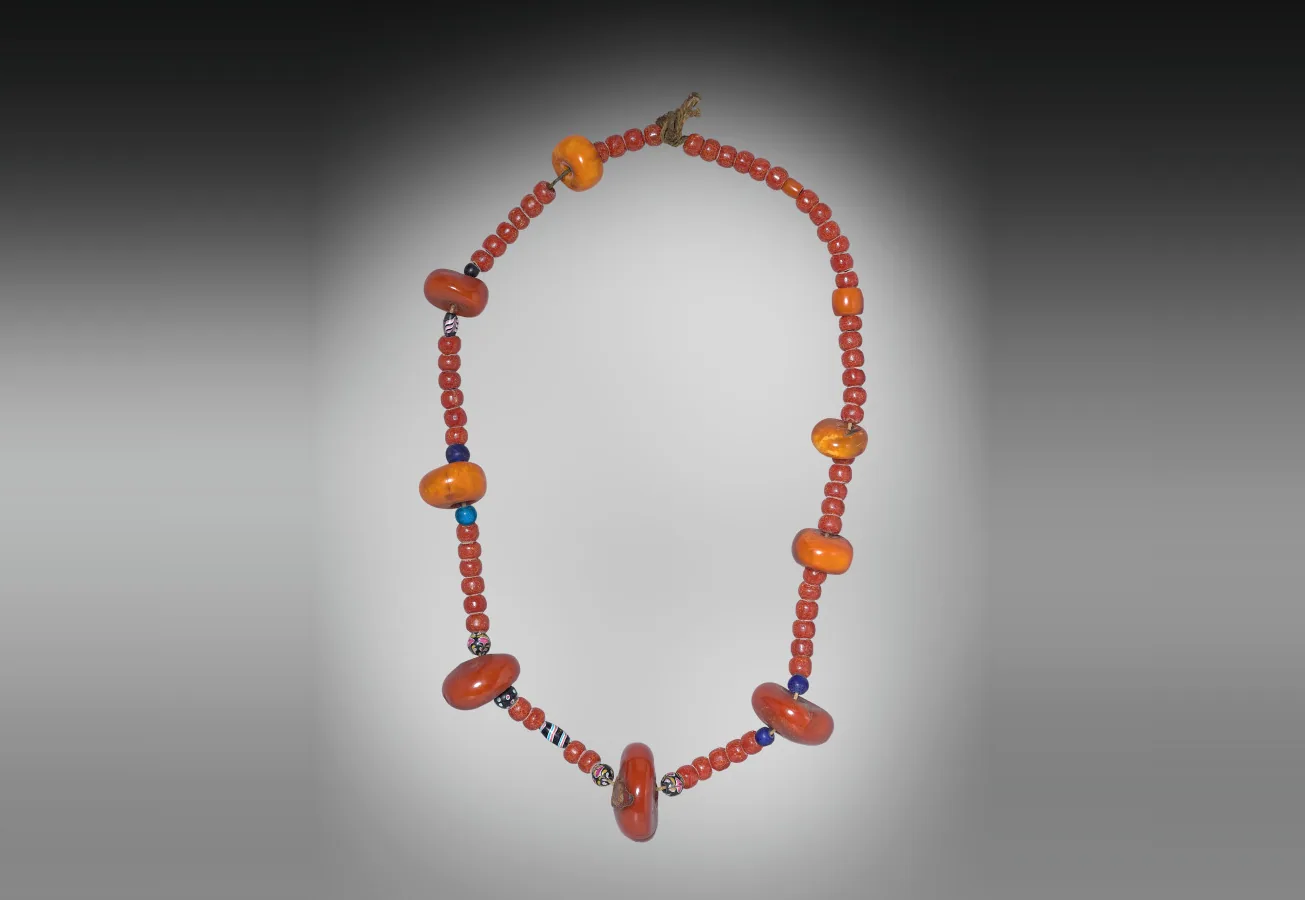
The 108-Bead Mala (Phreng-ba)
Called phreng-ba (“garland”) in Tibetan, a 108-bead mala serves as a tactile anchor for breath and mantra recitation—keeping body, speech, and wandering mind together.
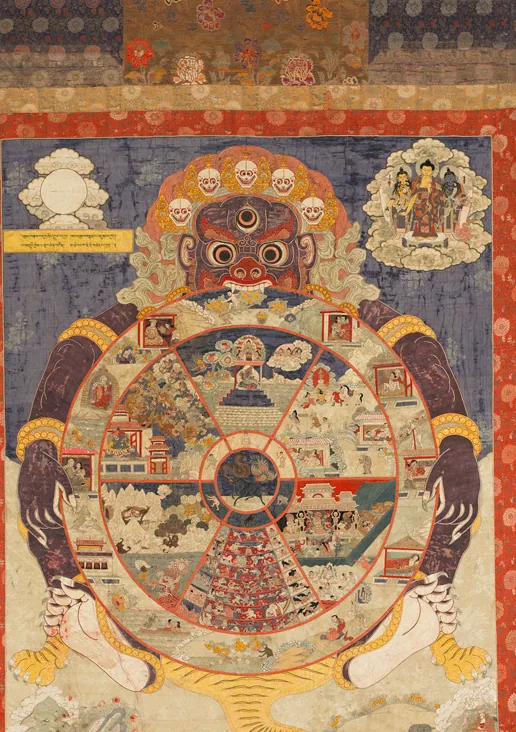
Bhavacakra: The Wheel of Life (Srid-pa’i ’khor-lo)
Painted on the outer vestibule wall of nearly every Tibetan monastery according to instructions in the Vinaya (Toh 3), the Wheel of Becoming maps how habitual reactivity spins into suffering—and precisely where awareness steps free.
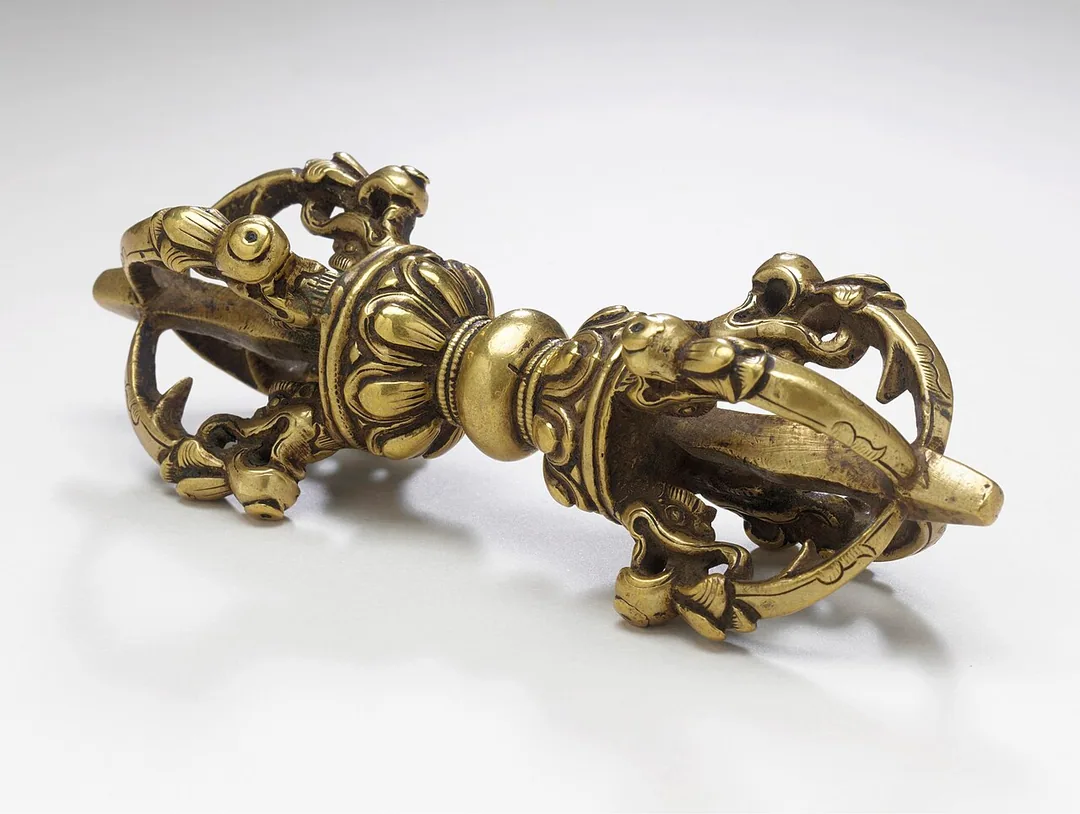
Vajra & Bell (Dorje & Drilbu · རྡོ་རྗེ་དང་དྲིལ་བུ།)
Never separated on a Tibetan altar, the brass five-pronged vajra held in the right hand embodies indestructible compassionate method (upāya), while the hollow bronze bell held in the left proclaims wisdom realizing emptiness (prajñā).
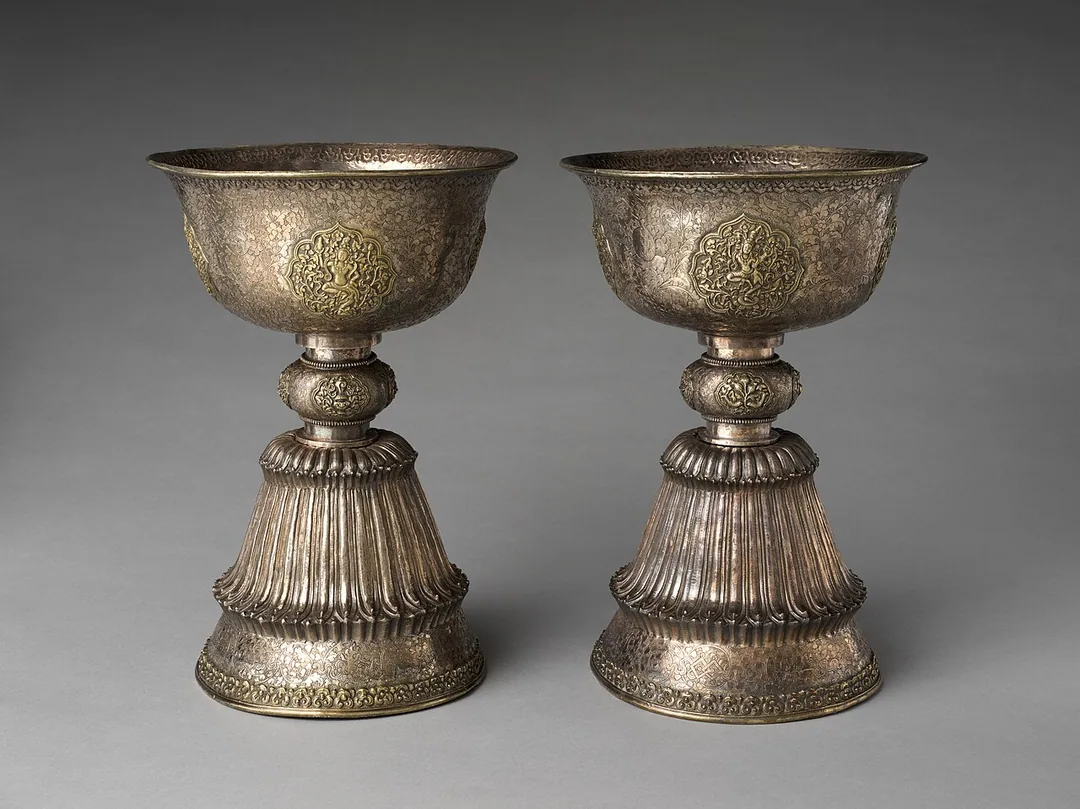
Butter Lamps & Seven Water Bowls (Chöme & Yönchab)
Across every Tibetan household shrine, a straight row of seven brass bowls filled with fresh morning water (yönchab) sits beside warm golden butter lamps (chöme)—chosen precisely because water is free of stinginess and flame dispels darkness without discrimination.
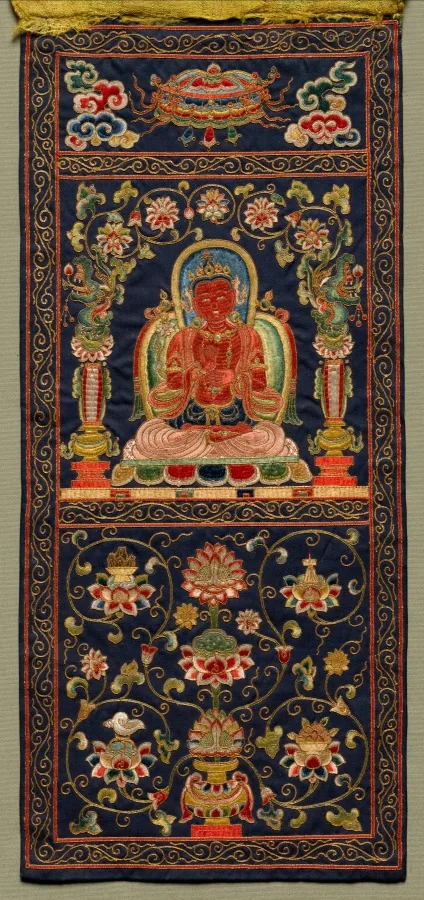
The Khatag Ceremonial Scarf (ཁ་བཏགས།)
Offered at greetings, farewells, empowerments, weddings, and mountain passes, the Tibetan khatag (“face-cloth” of unstained silk) expresses sincere goodwill free of hidden agenda—with subtle folding and offering gestures that speak volumes.
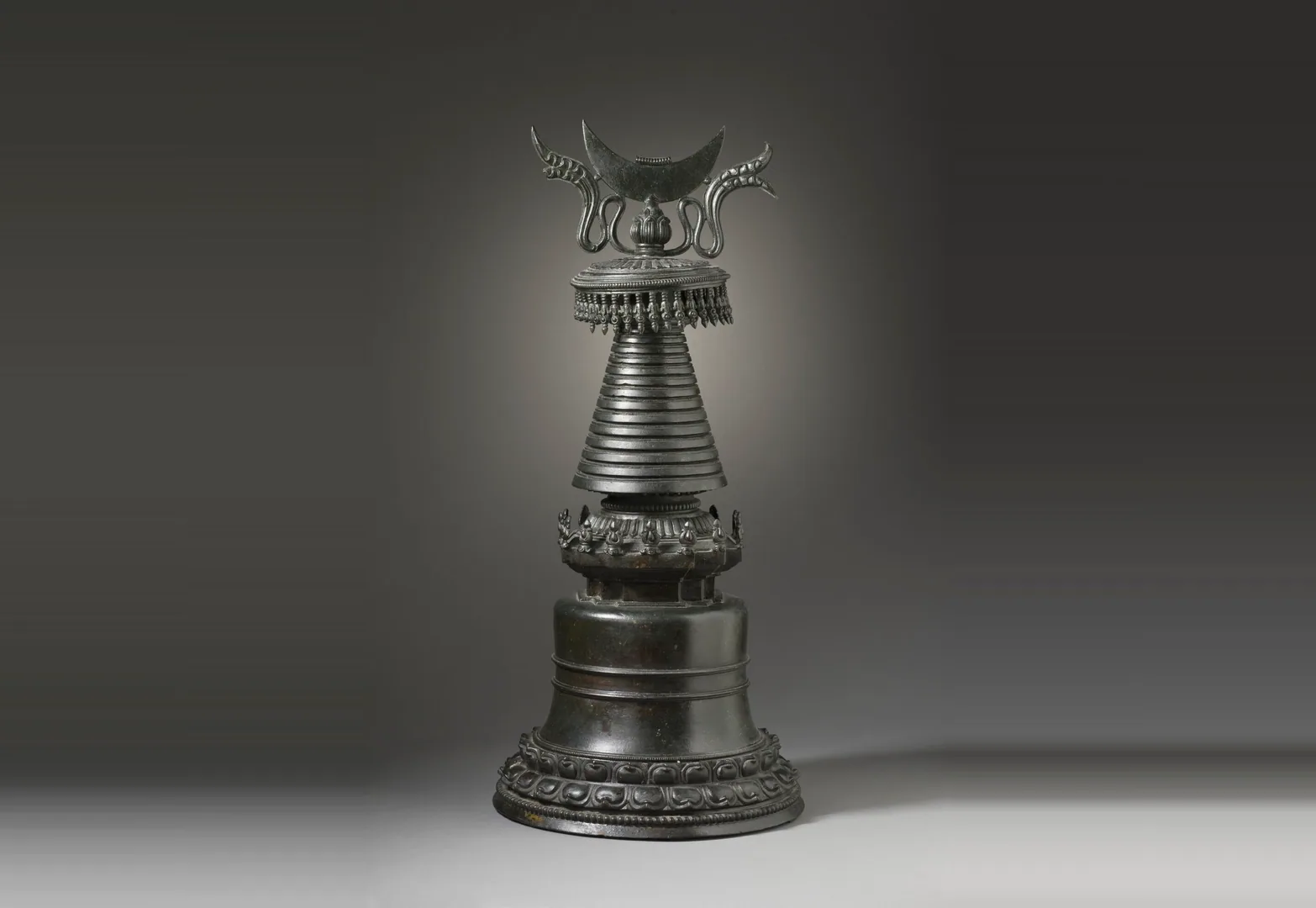
The Tibetan Stupa (Chörten · མཆོད་རྟེན།) & Eight Great Forms
Translated into Tibetan as mchod-rten (“receptacle of offerings”), every Himalayan whitewashed stupa stacks square earth, rounded water, conical fire, crescent air, and dissolving space into a three-dimensional statue of the Buddha’s Dharmakāya mind.