The Tibetan Stupa (Chörten · མཆོད་རྟེན།) & Eight Great Forms
Architectural Body of the Awakened Mind & Five Natural Elements
Translated into Tibetan as mchod-rten (“receptacle of offerings”), every Himalayan whitewashed stupa stacks square earth, rounded water, conical fire, crescent air, and dissolving space into a three-dimensional statue of the Buddha’s Dharmakāya mind.
Vertical Geometry: Stacking the Five Elements into Awakening
Before his parinirvāṇa at Kuśinagara, Śākyamuni folded his patchwork robe into a square, inverted his alms bowl on top of it, and stood his mendicant’s staff upright above the bowl—giving his disciples the original minimalist blueprint of every stupa across Asia.
In Tibetan architectural canons (such as Butön Rinchen Drup’s treatise on stupa proportions), every vertical tier maps simultaneously onto the five elements and the five paths to enlightenment: the square lion-throne base grounds Earth and foundational mindfulness; the four steps climb the Four Establishments of Mindfulness; the rounded white vase (bum-pa) holds Water and the Seven Factors of Awakening; the tapering spire of thirteen rings marks Fire and the ten bodhisattva grounds plus three unique mindfulnesses of a Buddha; and at the summit, a crescent moon (compassion) cradles a sun disc (wisdom) dissolving into a flame-drop (nada) in open sky.
| Stupa Name | Life Event & Site | Distinctive Architectural Step Feature |
|---|---|---|
| 1. Lotus Blossom Stupa | Birth at Lumbinī | Four circular steps ringed with sculpted lotus petals |
| 2. Enlightenment Stupa | Awakening at Bodh Gayā | Four clean, plain rectangular steps (most classic form) |
| 3. Many-Doored Stupa | First Teaching at Sarnath | Steps pierced with rows of 108/many tiny shrine doorways |
| 4. Miracles Stupa | Chötrul Month at Śrāvastī | Central projection juts outward on each of the four sides |
| 5. Descent from Heaven Stupa | Return at Sāṃkāśya (Lhabab) | Tiny central staircase running right down each side |
| 6. Reconciliation Stupa | Reuniting Sangha at Rājagṛha | Four octagonal (beveled-corner) steps of equal harmony |
| 7. Complete Victory Stupa | Extending lifespan at Vaiśālī | Three tall round steps (built for Uṣṇīṣavijayā longevity) |
| 8. Parinirvāṇa Stupa | Passing into peace at Kuśinagara | Bell-shaped dome resting directly on the Lion Throne (no steps!) |
How It Is Practiced in Living Tradition
Filled inside with a consecrated central “life-tree” pillar (srog-shing), clay tsa-tsa reliquaries, and rolled dhāraṇī scrolls; whitewashed anew by villagers each autumn on Lhabab Düchen.
Common Questions & Clarifications
What are the miniature clay cones (“Tsa-tsa”) often seen lined up on ledges around Tibetan stupas?
Called tsa-tsa (tsha-tsha, from Sanskrit sat-chāyā, “true impression”), they are stamped clay votive tablets mixed with sacred herbs or relics of loved ones, placed inside or around stupas so wind and rain bless memory and purify karma.
Primary Sources & Further Reading
- Lama Anagarika Govinda, Psycho-Cosmic Symbolism of the Buddhist Stūpa
- Pema Dorjee, Stupa and Its Technology: A Tibeto-Buddhist Perspective (Indira Gandhi National Centre)
Connected in the Mandala Graph
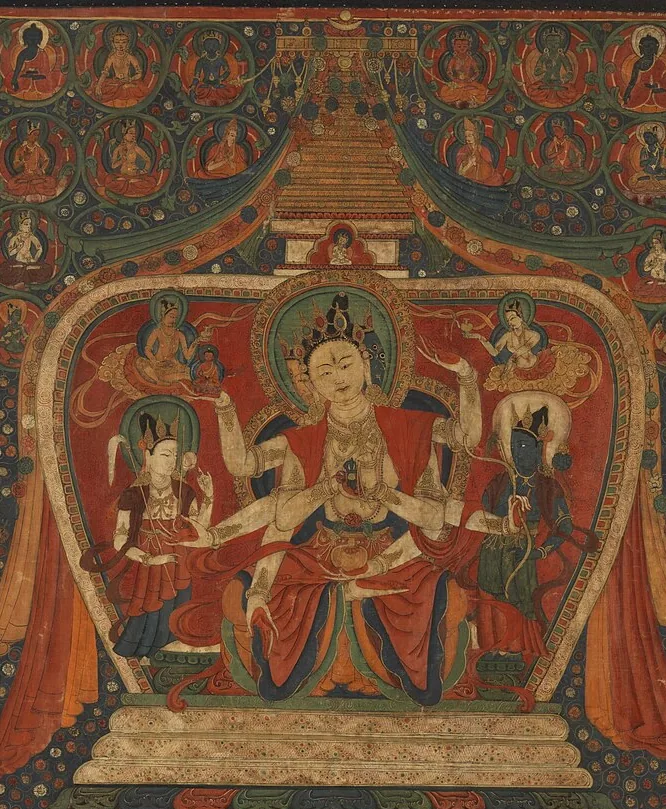
Uṣṇīṣavijayā (Namgyalma · Victorious Crown Wisdom)
Emanating as blinding white light from the crown protuberance (uṣṇīṣa) of Śākyamuni Buddha, three-faced eight-armed Namgyalma unites peaceful healing, protective strength, and karmic purification—completing Tibet’s revered Three Long-Life Deities.
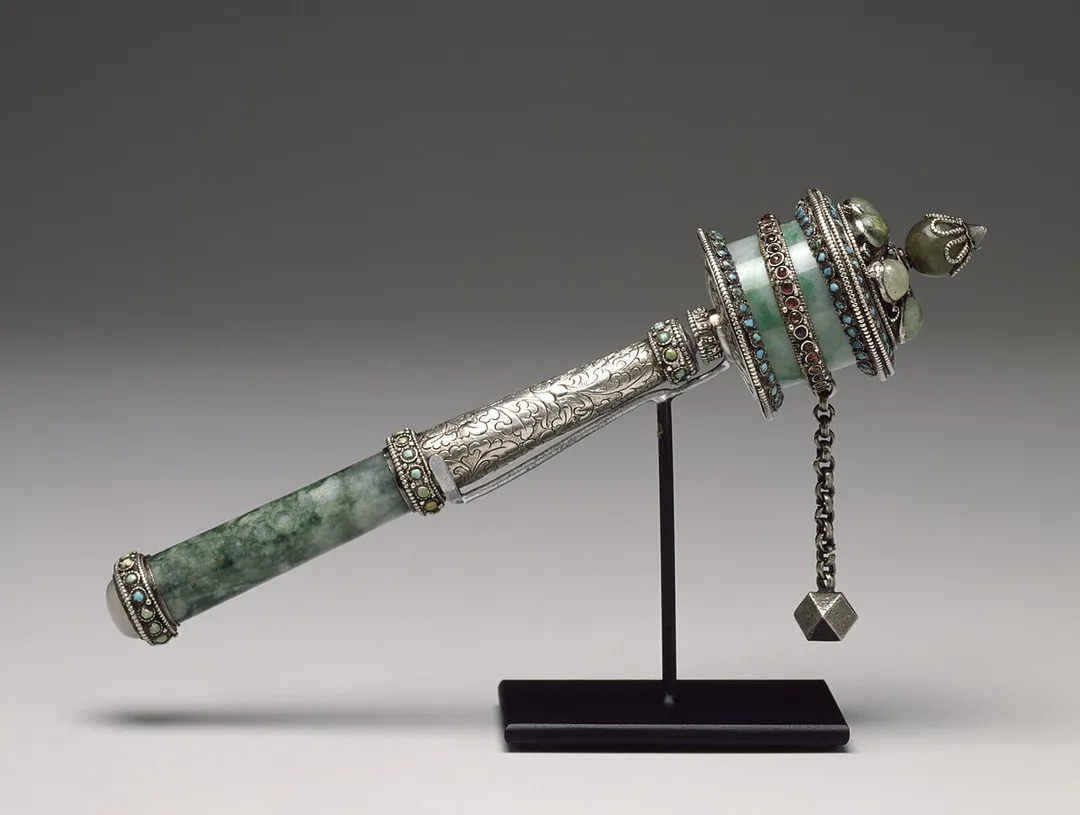
Tibetan Prayer Wheel (Mani Khorlo)
Far more than handheld brass cylinders, Tibetan prayer wheels harness mountain streams, high-pass wind, and rising butter-lamp heat so consecrated texts keep turning even while human bodies sleep.
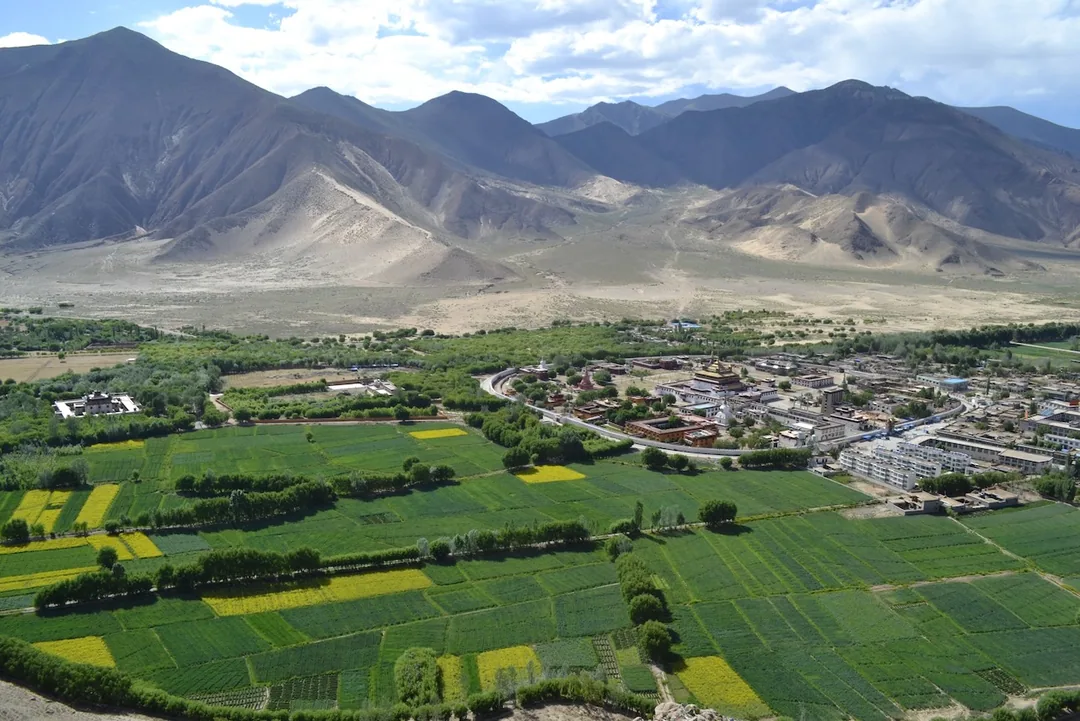
Jokhang Temple & Samye Monastery
Built in the 7th and 8th centuries respectively, Lhasa’s Jokhang anchors Tibetan devotional pilgrimage around the Jowo Śākyamuni, while Samye in Lhoka realizes an entire three-dimensional mandala in stone, timber, and earth.
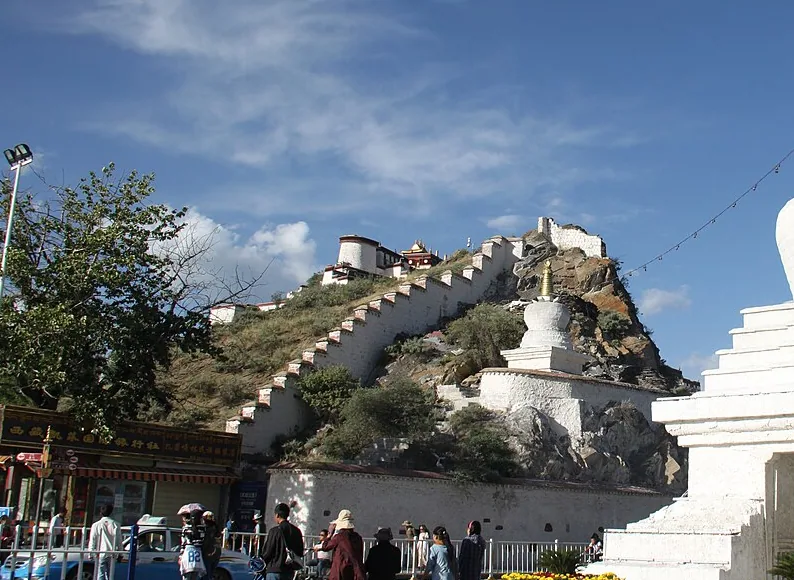
The Potala Palace (Pho-brang Po-ta-la · Lhasa)
Rising 117 meters atop Marpori (“Red Hill”) above the Lhasa valley, the Potala takes its name from Mount Potalaka—Avalokiteśvara’s pure abode in the Avataṃsaka Sūtra—fusing 7th-century meditation caves with the 17th-century White and Red Palaces.