Hall I · ལྷ་ཚོགས། (lha tshogs)
Pantheon & Figures
In Tibetan Buddhism, enlightened figures are not capricious gods demanding tribute, but visual mirrors of awakened qualities—compassion, discernment, fearlessness, and healing—rendered in precise iconographic code.
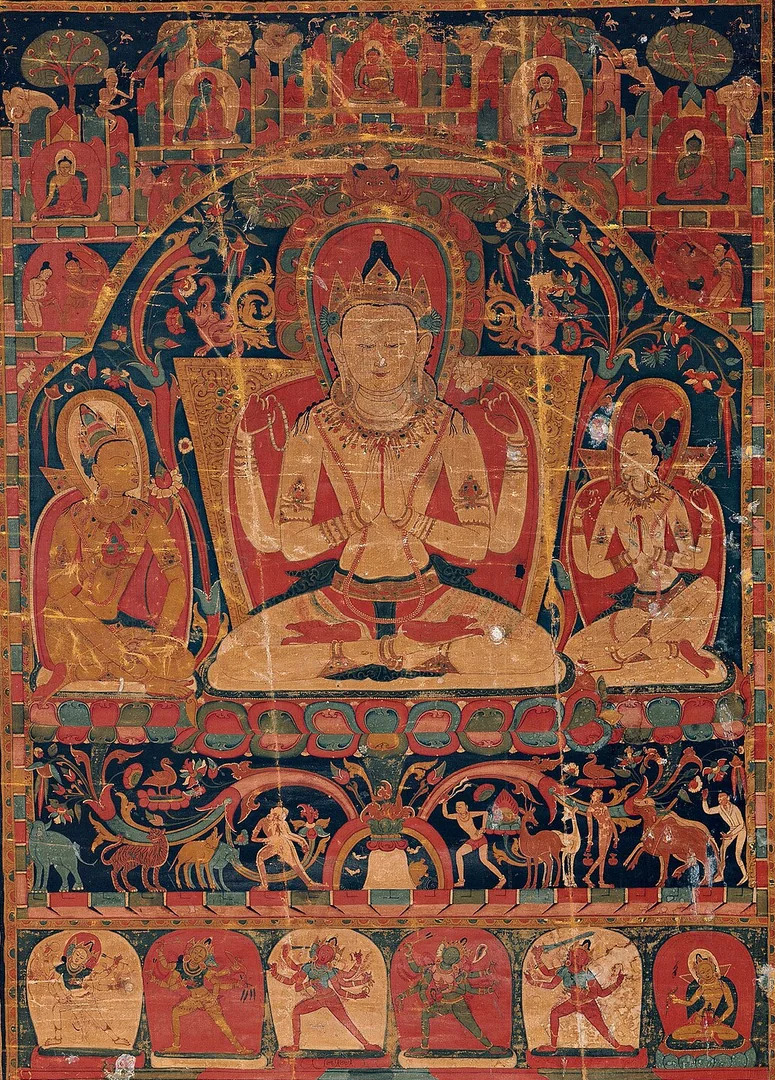
Avalokiteśvara (Chenrezig)
Known in Tibetan as Chenrezig (“One Who Gazes with Unwavering Eyes”), the four-armed white form embodies impartial compassion united with emptiness, associated with the Six-Syllable Mantra Oṃ Maṇi Padme Hūṃ.
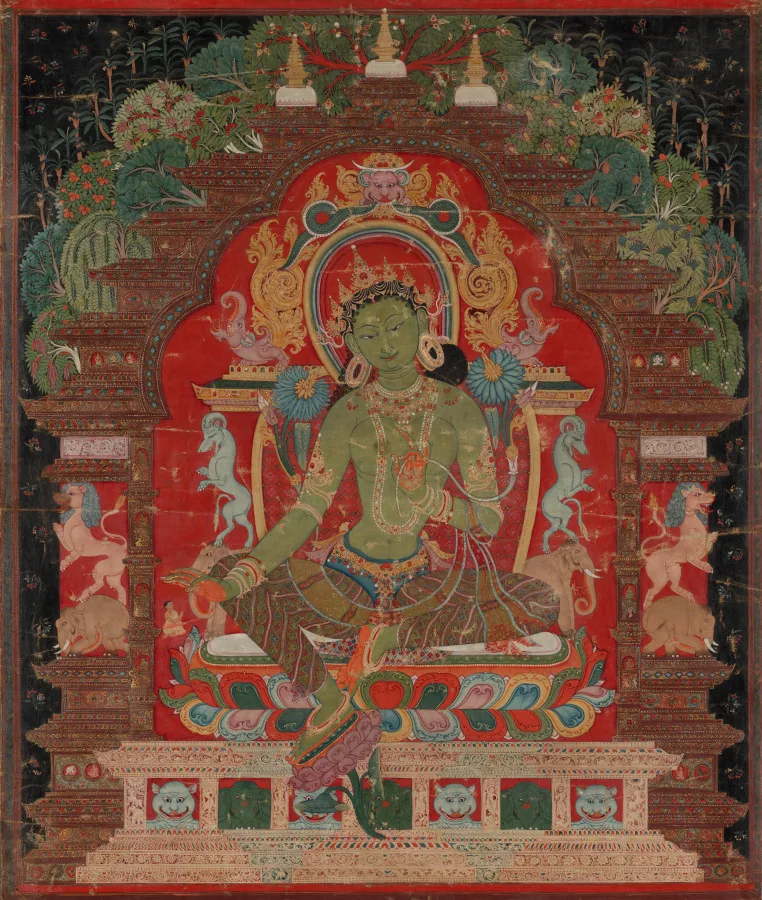
Green Tārā (Sgrol-ljang)
Seated in royal ease with her right foot already stepping off the lotus cushion, Green Tārā embodies enlightened compassion in immediate motion—green being the color of the Wind/Action Buddha Family.
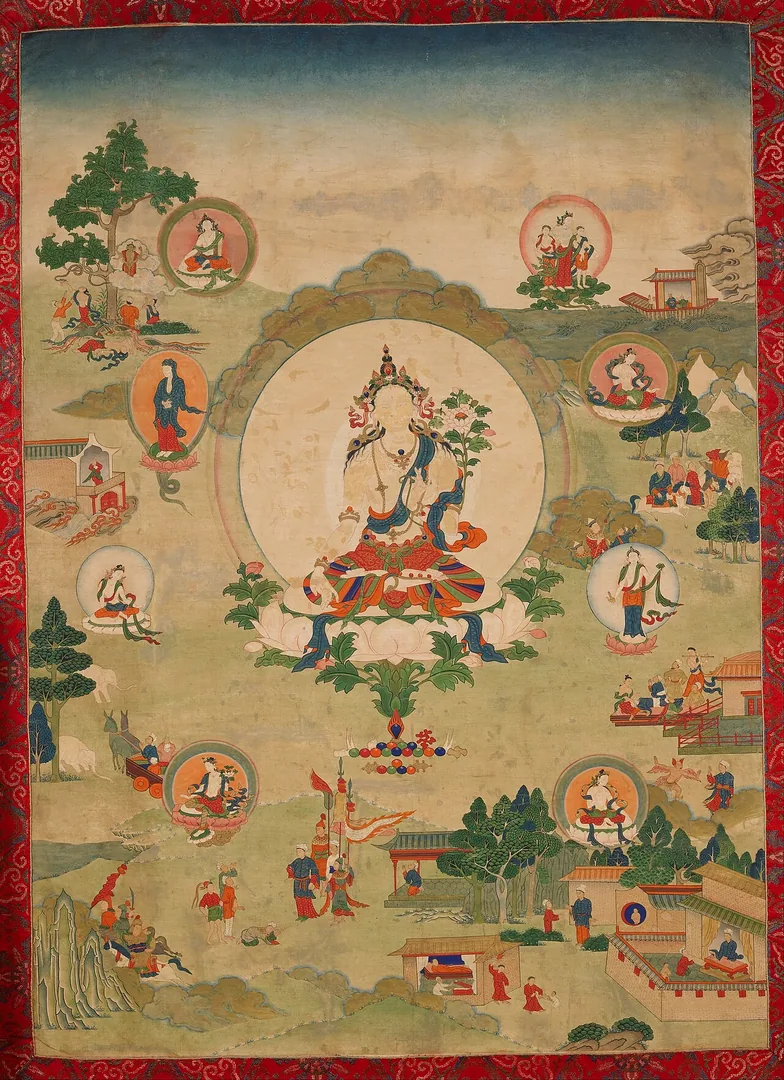
White Tārā (Sgrol-dkar)
Distinguished by seven eyes—on her forehead, palms, soles, and face—White Tārā sits in full vajra posture radiating autumn-moon serenity, forming one of Tibet’s Three Long-Life Deities.
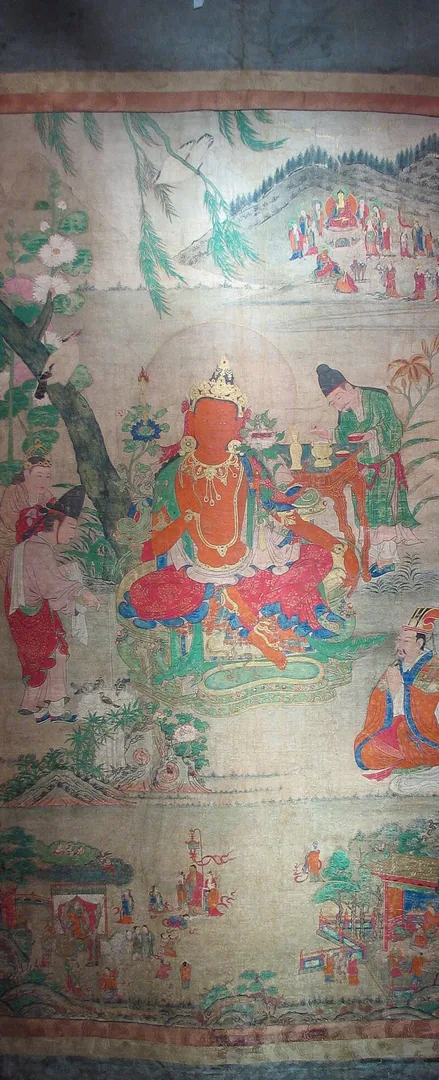
Mañjuśrī (Jampelyang)
Radiant saffron-gold in hue, Mañjuśrī raises a blazing sword overhead with his right hand to slice right through conceptual confusion, while holding the Prajñāpāramitā Sūtra on a lotus at his heart.
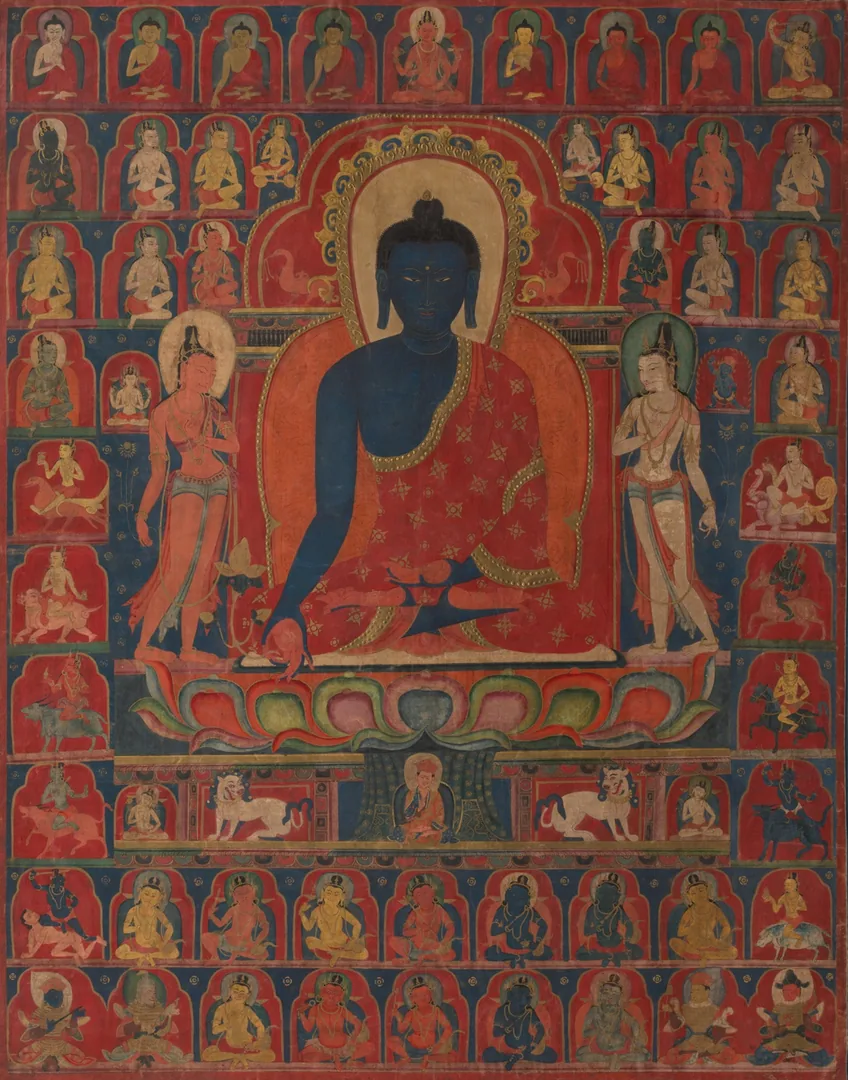
Medicine Buddha (Bhaiṣajyaguru · Sangye Menla)
Radiating deep lapis-lazuli blue, Sangye Menla wears monastic robes, holding an alms bowl of healing nectar in his left hand and a stem of golden myrobalan (arura) in his outstretched right hand.
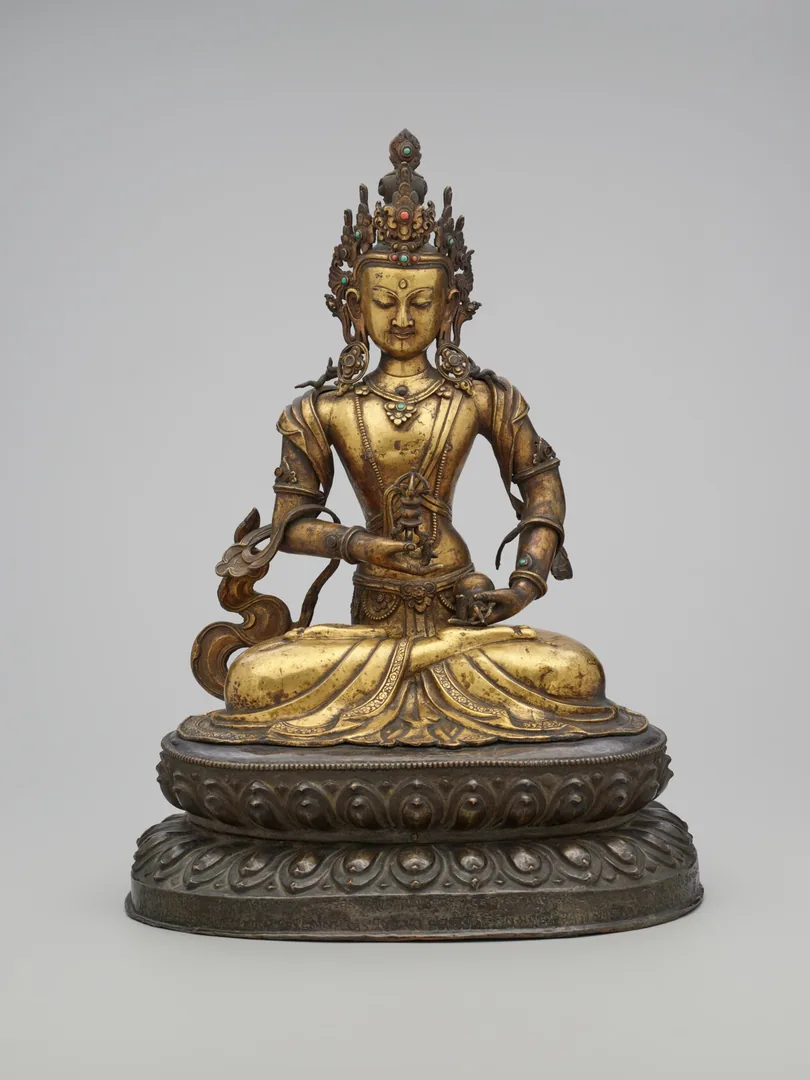
Vajrasattva (Dorje Sempa)
Radiant crystal-white in sambhogakāya ornaments, holding a five-pronged vajra at his heart and a silver bell at his hip, Vajrasattva embodies the indestructible purity underlying transient human mistakes.
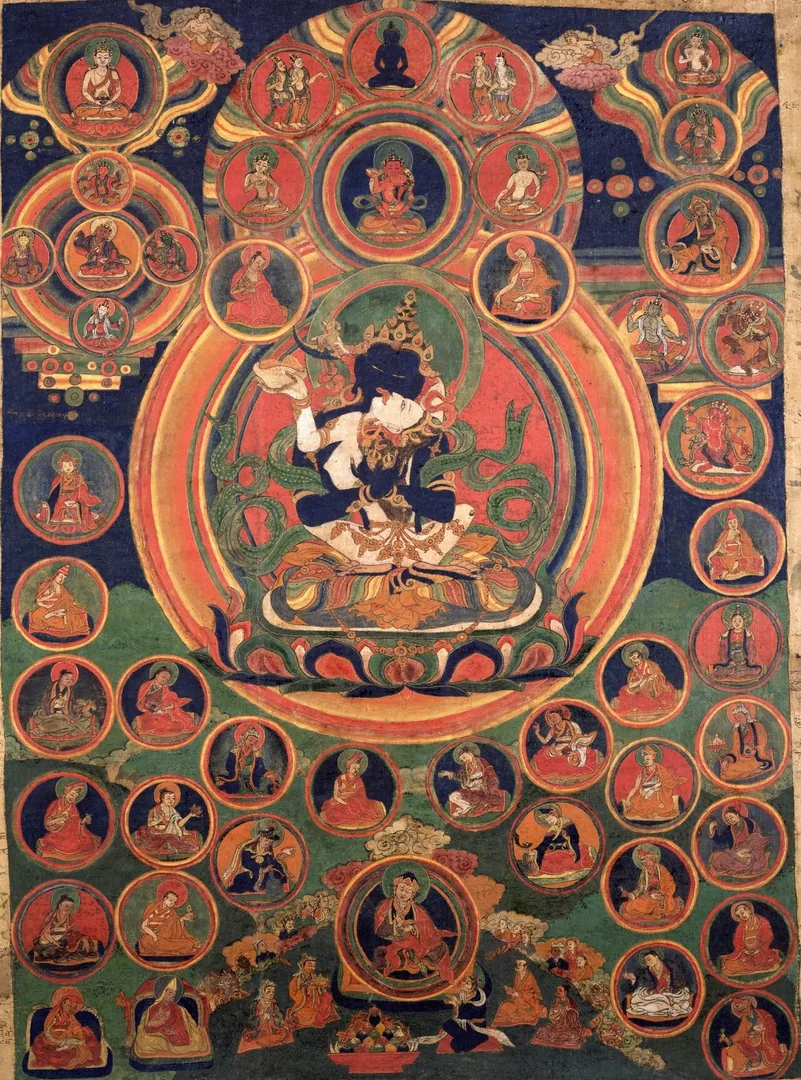
Padmasambhava (Guru Rinpoche)
Invited from Oddiyāna and Nālandā to Tibet by King Trisong Detsen in the 8th century, Padmasambhava (“Lotus-Born”) consecrated Samye Monastery and harmonized Himalayan indigenous spirits with Buddhist Dharma.
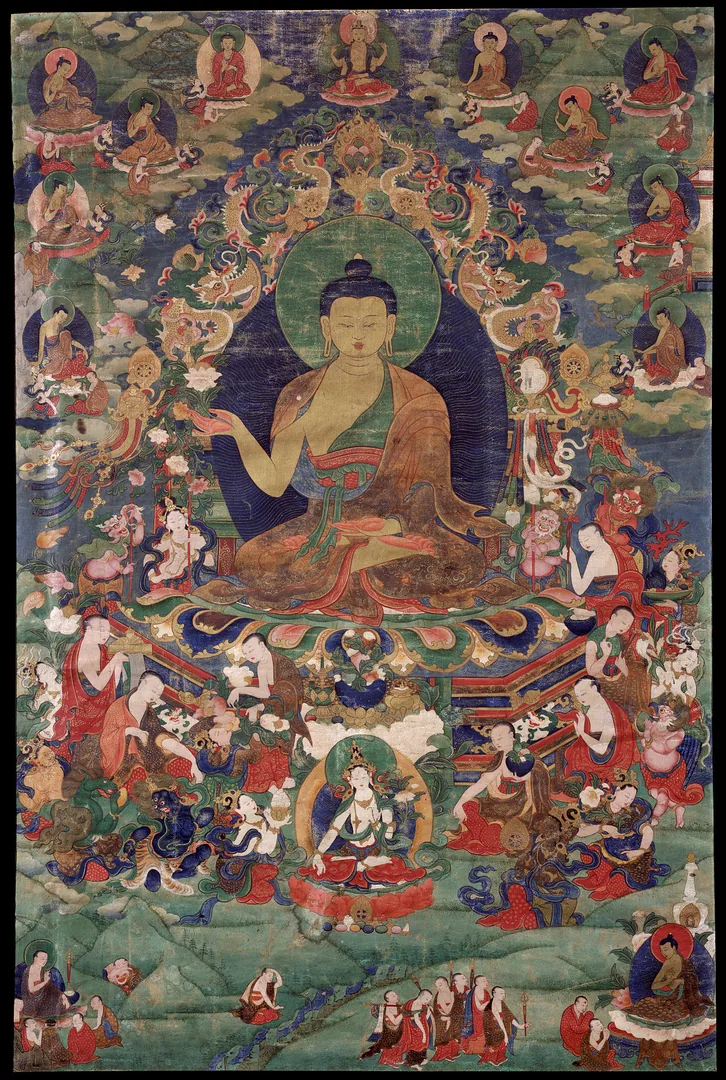
Śākyamuni Buddha (Shakya Thubpa)
Known in Tibetan as Shakya Thubpa (“Mighty Sage of the Śākyas”), the historical Buddha sits in unadorned monastic robes, touching the earth with his right fingertips to witness impartial awakening while cradling an iron alms bowl in his lap.
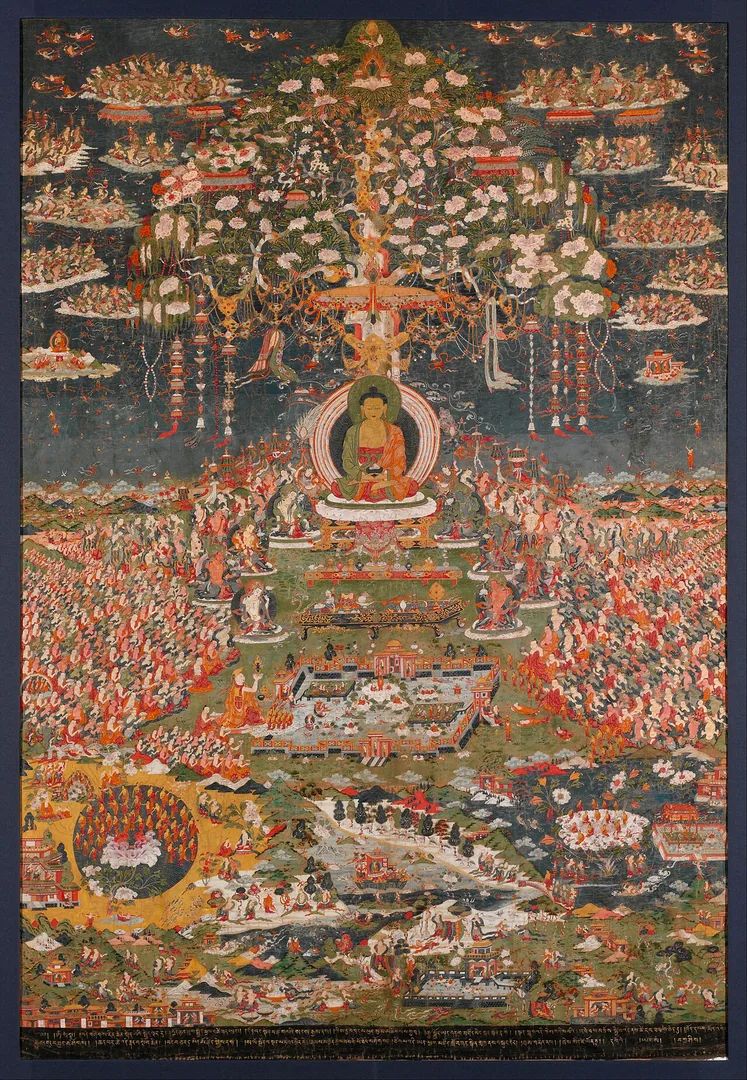
Amitābha (Öpakmé · Buddha of Infinite Light)
Radiating warm sunset-ruby red in the West of the Tibetan mandala, Amitābha (“Infinite Light,” Tibetan Öpakmé) rests both hands in meditation equipoise cradling an alms bowl of ambrosial nectar (amṛta), presiding over the Lotus Family to which Chenrezig and Padmasambhava belong.
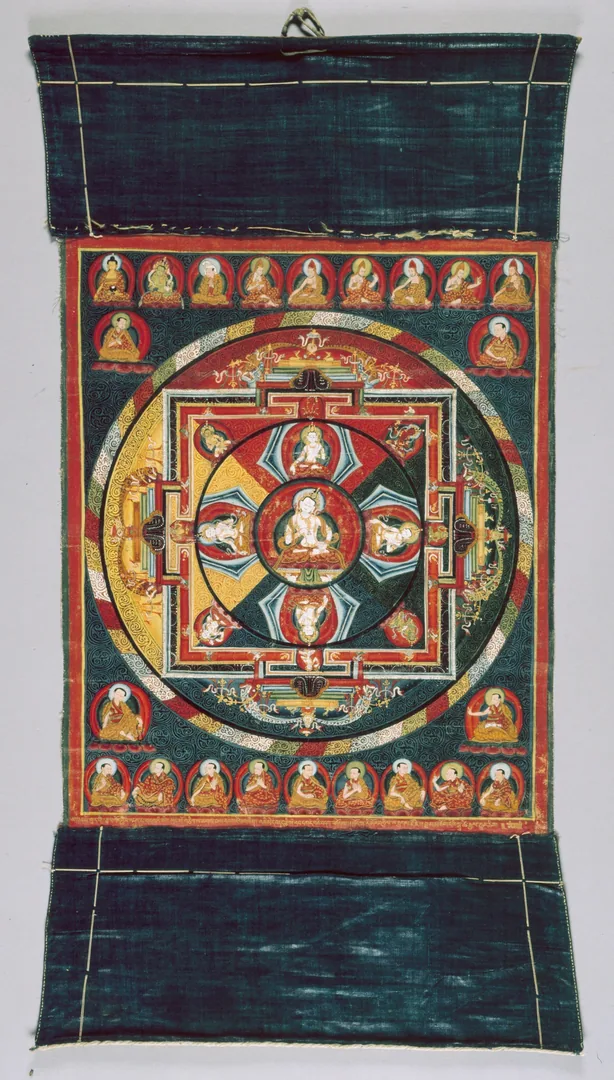
Vajrapāṇi (Chana Dorje · Wielder of the Thunderbolt)
Standing in midnight-blue warrior stance amidst blazing wisdom flames and brandishing a five-pronged vajra overhead, Vajrapāṇi embodies fearless spiritual power—completing Tibet’s beloved Rigsum Gönpo triad alongside Chenrezig (compassion) and Mañjuśrī (wisdom).
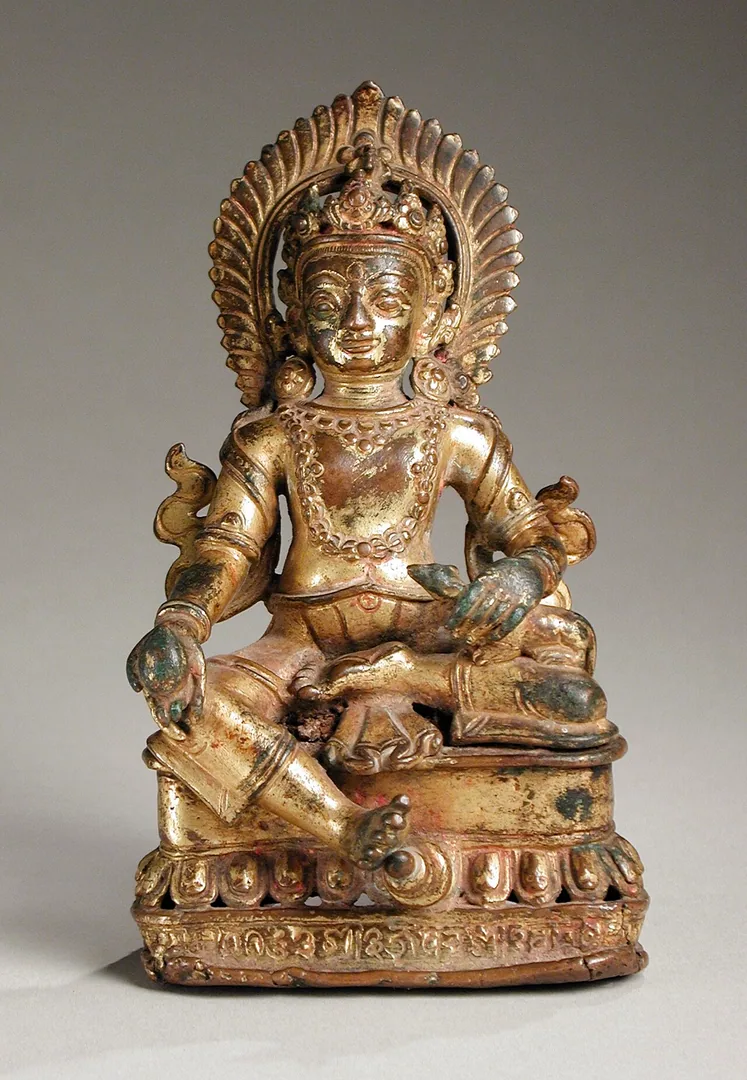
Yellow Jambhala (Dzambhala Serpo)
Seated in royal ease with a golden body, holding a citron fruit in his right hand and a jewel-disgorging mongoose under his left arm, Yellow Jambhala embodies Buddhist abundance: freeing practitioners from survival panic and miserliness so Dharma and generosity can flourish.
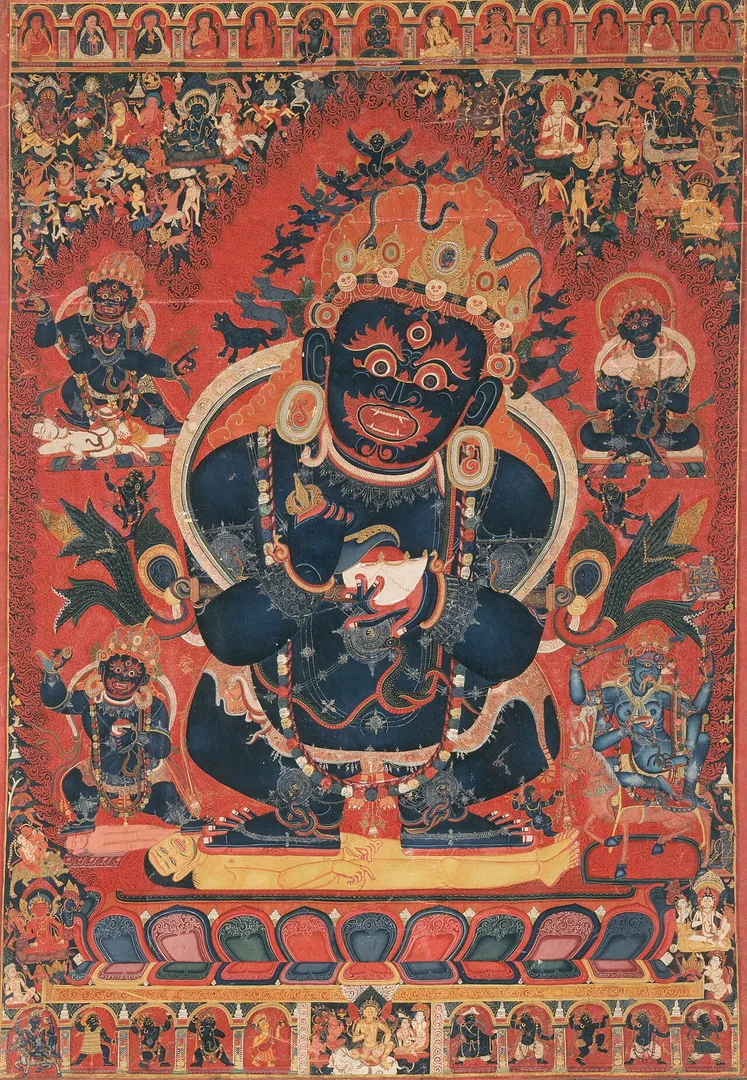
Mahākāla (Gönpo · Wisdom Dharma Protector)
Known simply in Tibetan as Gönpo (“The Protector”), Mahākāla (“Great Black One” / “Beyond Time”) manifests Avalokiteśvara’s compassion in fierce midnight-blue form—shattering self-deception and guarding ethical integrity across Kagyu, Sakya, and Gelug monasteries.
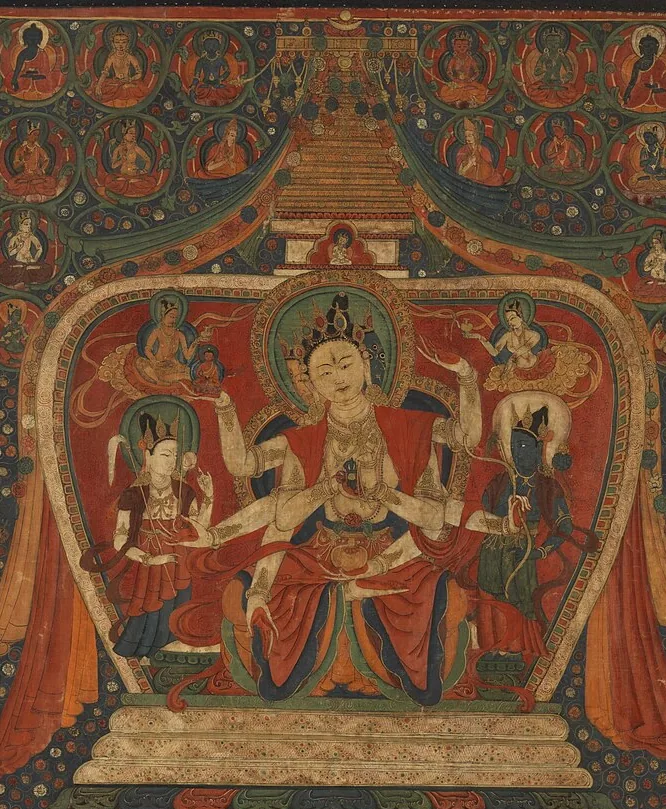
Uṣṇīṣavijayā (Namgyalma · Victorious Crown Wisdom)
Emanating as blinding white light from the crown protuberance (uṣṇīṣa) of Śākyamuni Buddha, three-faced eight-armed Namgyalma unites peaceful healing, protective strength, and karmic purification—completing Tibet’s revered Three Long-Life Deities.
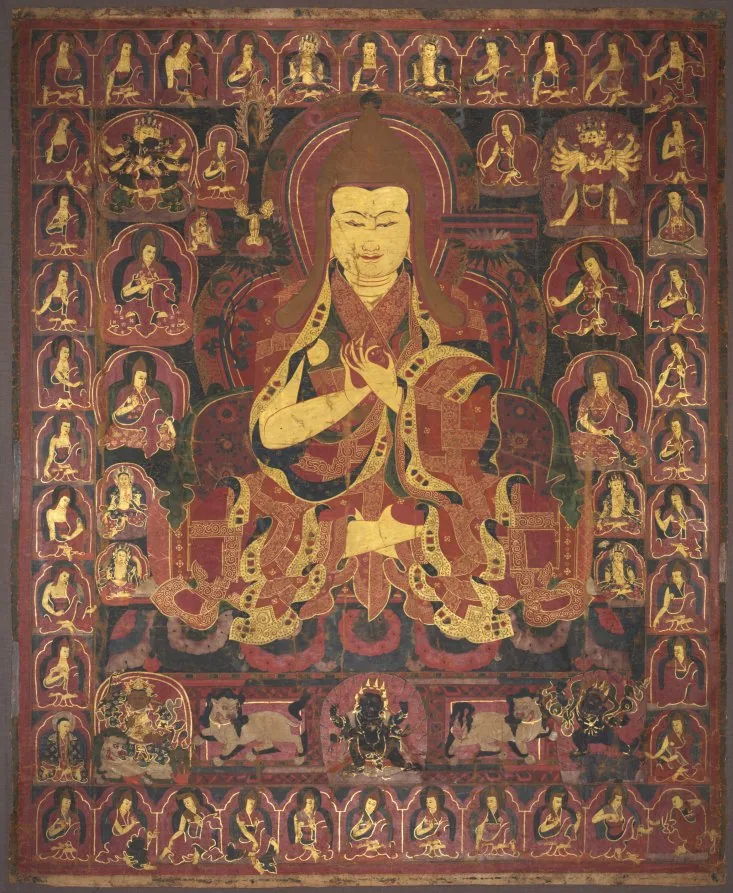
Je Tsongkhapa (Lobsang Drakpa · 1357–1419)
Born in Amdo Tsongkha (modern Qinghai Kumbum) in 1357, Je Rinpoche studied across Sakya, Kagyu, Jonang, and Kadampa masters before founding Ganden Monastery—uniting rigorous Nālandā logic, pure Vinaya discipline, and Tantric contemplation into one seamless graduated path (Lamrim).
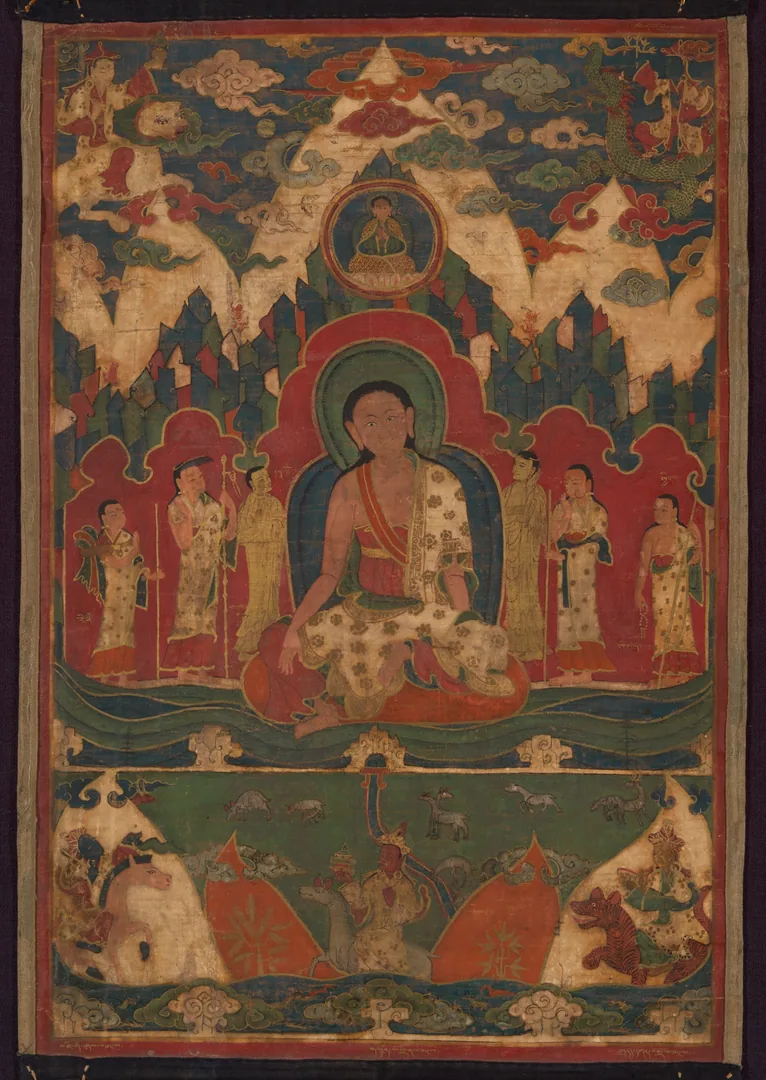
Jetsün Milarepa (1052–1135 · Tibet’s Cotton-Clad Poet-Yogi)
Seated in alpine cave solitude wearing a single white cotton cloth (repa), skin tinged pale green from years of wild nettle soup and right palm cupped at his ear singing spontaneous Vajra Songs (mgur), Milarepa proves no past mistake places awakening out of reach.