Jetsün Milarepa (1052–1135 · Tibet’s Cotton-Clad Poet-Yogi)
From Ruinous Revenge to Awakening in One Lifetime · Hand Raised in Song
Seated in alpine cave solitude wearing a single white cotton cloth (repa), skin tinged pale green from years of wild nettle soup and right palm cupped at his ear singing spontaneous Vajra Songs (mgur), Milarepa proves no past mistake places awakening out of reach.
Why Tibet’s Most Beloved Saint Began as a Murderer, Not a Child Prodigy
Unlike hagiographies where saints are flawless from the cradle, Tsangnyön Heruka’s 15th-century Life of Milarepa opens in raw human tragedy. After Milarepa’s father died, greedy relatives stole the family estate and enslaved his mother and sister. Driven by his mother’s bitter ultimatum, young Milarepa mastered destructive sorcery and collapsed a wedding hall, killing thirty-five people. Crushed immediately by unbearable remorse, he sought out the gruff translator Marpa Lotsāwa of Lhodrak.
Before granting a single tantric empowerment, Marpa subjected Milarepa to six grueling years of building and tearing down nine-story stone towers with bleeding hands and back—not out of cruelty, but to exhaust the karmic momentum of violence and forge unbreakable humility. When Marpa finally bestowed the transmission of Chakrasamvara, Nāropa’s Six Yogas, and Mahāmudrā, Milarepa retreated to icy Himalayan caves on the Nepal-Tibet border, surviving on nettle broth until even his skin turned pale green, attaining complete awakening in a single human lifetime.
Why His Right Hand Cups His Ear: The Art of Mgur
Look closely at any statue of Milarepa and you see his right palm held gently behind his right ear. Traditional folk singers in Tibet use that posture to project resonance across mountain valleys while listening inwardly; spiritually, it signifies listening to the uncontrived sound of Dharmatā and answering villagers, hunters, and scholars not in elitist Sanskrit jargon, but in vivid vernacular folk songs (mgur) full of snow lions, eagles, clouds, and mountain streams.
How It Is Practiced in Living Tradition
Read aloud by Tibetan families around evening hearths for centuries; inspiring solitary retreatants (ras-pa) across Lapchi, Chuwar, and Mount Kailash.
Common Questions & Clarifications
What is “Tummo” (Inner Heat), and how did Milarepa survive sub-zero blizzards in thin cotton?
Known in Tibetan as gtum-mo (“fierce inner warmth”), it is the foundational practice of the Six Yogas of Nāropa combining vase-breathing (rlung), subtle-body channels (rtsa), and non-conceptual concentration—documented in modern Harvard Medical School physiological studies showing trained yogis raising peripheral skin temperature significantly in cold rooms, though Tibetan masters stress its true purpose is igniting non-dual wisdom, not athletic stunts.
Who were Milarepa’s “Sun and Moon” disciples?
His “Sun-like” disciple was Gampopa Sönam Rinchen (1079–1153), a physician-turned-monk who united Kadampa stages of the path with Milarepa’s Mahāmudrā to establish monastic Kagyu; his “Moon-like” disciple was Rechungpa Dorje Drakpa, who preserved the wandering yogi (repa) and Whispered Lineage transmissions.
Primary Sources & Further Reading
- Tsangnyön Heruka (1488), The Life of Milarepa, trans. Andrew Quintman (Penguin Classics)
Connected in the Mandala Graph
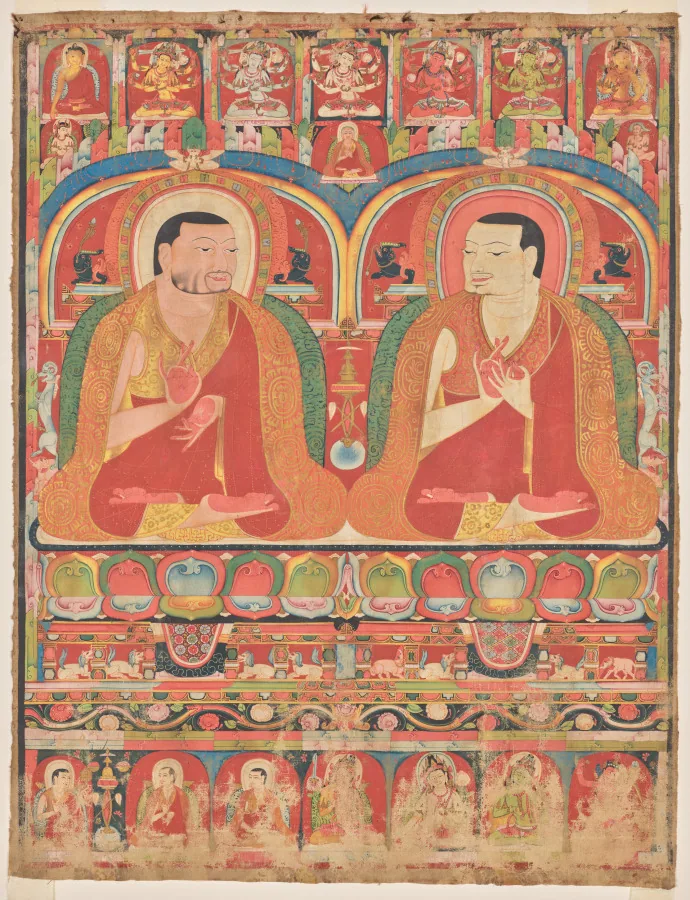
Dzogchen & Mahāmudrā: Resting in the Nature of Mind
Celebrated across Himalayan contemplative life as two rivers reaching the exact same ocean, Nyingma/Bön Dzogchen (“Great Perfection”) and Kagyu/Gelug Mahāmudrā (“Great Seal”) point directly to the luminous, unfabricated awareness already present beneath fleeting thoughts.
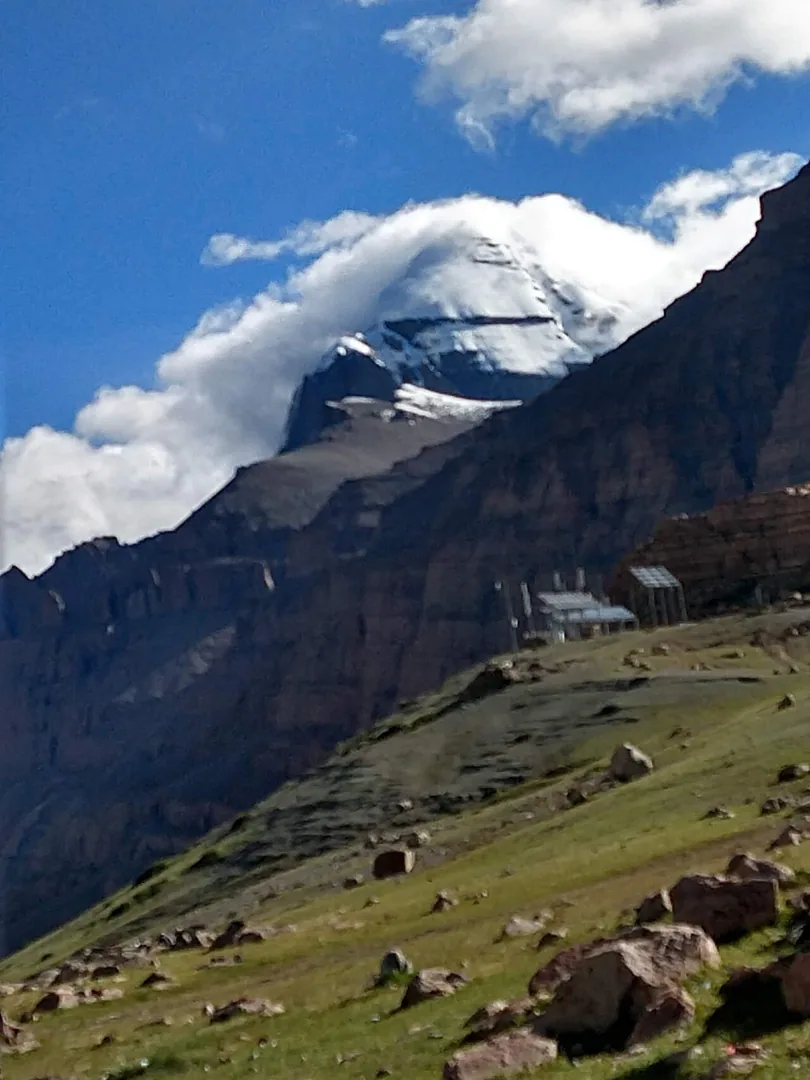
Mount Kailash (Gang Rinpoche) & Kora
Known in Tibetan as Gang Rinpoche (“Precious Jewel of Snows”), this four-sided peak in western Ngari feeds four of Asia’s greatest rivers and remains intentionally unclimbed out of shared reverence across Tibetan Buddhism, Bön, Hinduism, and Jainism.
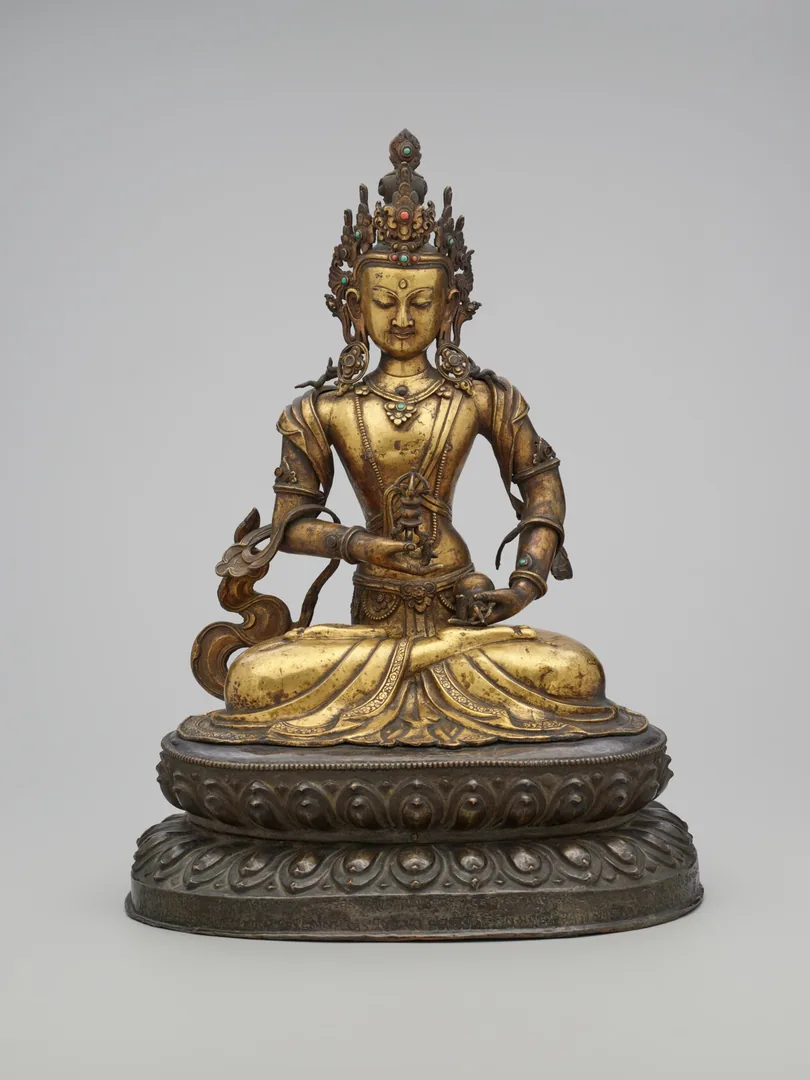
Vajrasattva (Dorje Sempa)
Radiant crystal-white in sambhogakāya ornaments, holding a five-pronged vajra at his heart and a silver bell at his hip, Vajrasattva embodies the indestructible purity underlying transient human mistakes.
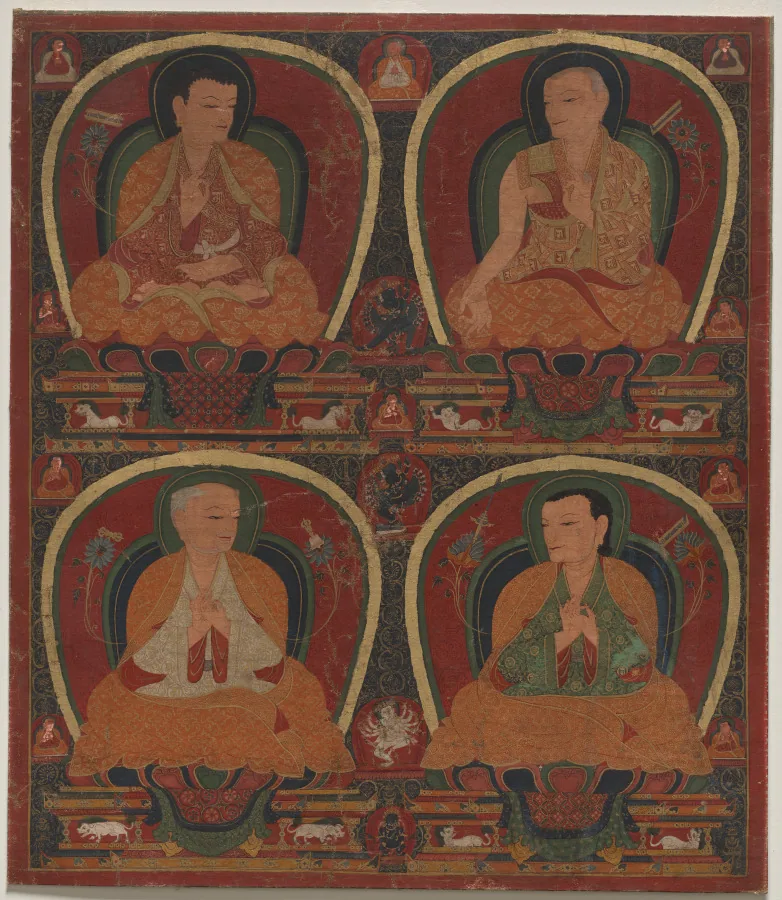
The Four Tibetan Schools & Bön Explained Clearly
Sharing the exact same Kangyur and Tengyur Buddhist canon, Tibet’s four major Buddhist schools differ not in core creed, but in historical translation era, pedagogical sequence, and meditative emphasis.