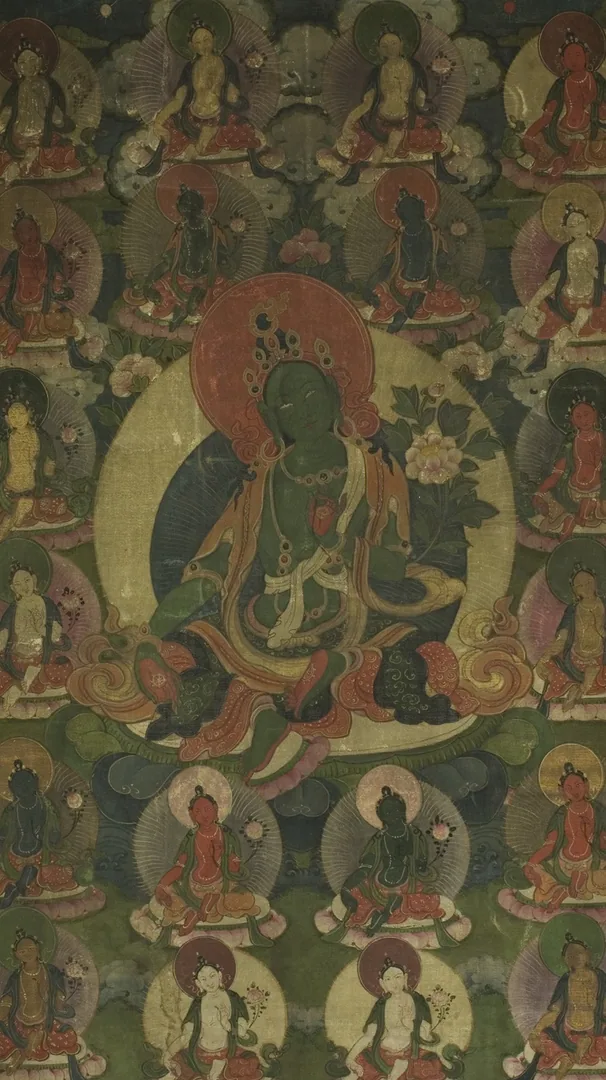
Green Tārā (Sgrol-ljang)
Swift Liberator from the Eight Outer and Inner Fears
Seated in royal ease with her right foot already stepping off the lotus cushion, Green Tārā embodies enlightened compassion in immediate motion—green being the color of the Wind/Action Buddha Family.
Born from a Tear, Refusing Gender Limitation
Two beloved narratives frame Green Tārā in Tibetan literature. In the popular devotional account, Avalokiteśvara looked out across countless beings still trapped in sorrow and wept; from his left tear sprang Peaceful White Tārā, and from his right tear sprang Swift Green Tārā, promising to share the labor of compassion.
In Tāranātha’s historical chronicle The Origin of Tārā Tantra, an ancient princess named Jñānacandra (“Moon of Wisdom”) cultivated bodhicitta for eons. Monks urged her to pray for rebirth as a man to complete awakening. Pointing out that in ultimate reality “there is neither male nor female, neither self nor person,” she vowed explicitly to attain supreme enlightenment—and remain active until samsara ends—in female form.
Why Her Right Foot Steps Forward: The Eight Great Fears
Unlike Buddhas seated in locked full-lotus equipoise, Green Tārā keeps her left leg folded (resting unwaveringly in wisdom) while extending her right foot onto a small lotus footrest—poised like a mother already rising at the first sound of a child’s cry. Her emerald hue belongs to Amoghasiddhi’s Karma Family, governed by the wind element: invisible, unhindered, instantaneous.
Classical Indian hymns praise her protection from the “Eight Great Dangers” (lions, wild elephants, wildfire, venomous snakes, bandits, prison chains, shipwrecking floods, and flesh-eating spirits). Tibetan masters since Atiśa immediately read each outer danger alongside its psychological twin: pride (lions), ignorance (elephants), anger (fire), envy (snakes), wrong views (bandits), avarice (chains), craving (floods), and paralyzing doubt (demons).
| Outer Danger | Inner Affliction | Psychological Antidote |
|---|---|---|
| Ferocious Lion | Pride & Arrogance (māna) | Grounded humility & equal dignity |
| Wild Elephant | Unmindful Delusion (moha) | Clear mindfulness & alertness |
| Forest Wildfire | Destructive Anger (dveṣa) | Patient cooling awareness |
| Venomous Snake | Envy & Resentment (īrṣyā) | Empathetic rejoicing (muditā) |
| Highway Bandits | Fanatical Wrong Views | Balanced Middle-Way inquiry |
| Iron Prison Chains | Miserliness & Scarcity | Open-handed generosity |
| Raging Flood | Compulsive Craving (rāga) | Unclinging contentment |
| Flesh-Eating Spirits | Paralyzing Doubt (vicikitsā) | Decisive, experiential trust |
How It Is Practiced in Living Tradition
Along with Chenrezig, Green Tārā is practiced across all four Tibetan lineages without sectarian boundary. Monasteries chant the Homage to the Twenty-One Tārās briskly before dawn assemblies whenever obstacles, illness, or communal anxiety arise.
Common Questions & Clarifications
What is the difference between Green Tārā and White Tārā?
Both are emanations of the same enlightened Tārā principle. Green Tārā steps forward in active posture for swift protection and overcoming obstacles; White Tārā sits in full vajra lotus with seven eyes, specializing in healing, vitality, and longevity.
Does anyone need esoteric empowerment just to recite Green Tārā’s mantra?
Across Tibetan traditions, reciting Oṃ Tāre Tuttāre Ture Svāhā and reading the Twenty-One Praises with an altruistic wish for peace is universally open; only complex inner tantric self-generation requires formal initiation.
Primary Sources & Further Reading
- Homage to the Twenty-One Tārās (Toh 438), Kangyur
- Tāranātha (1604), The Golden Rosary: Origin of the Tārā Tantra
Connected in the Mandala Graph
Oṃ Tāre Tuttāre Ture Svāhā (Green Tārā Mantra)
Known in Tibet as the Ten-Syllable Essence Mantra, its three variations on the Sanskrit verbal root tṛ (“to cross over”) trace a clear arc from relief in worldly crisis to freedom from inner anxiety.
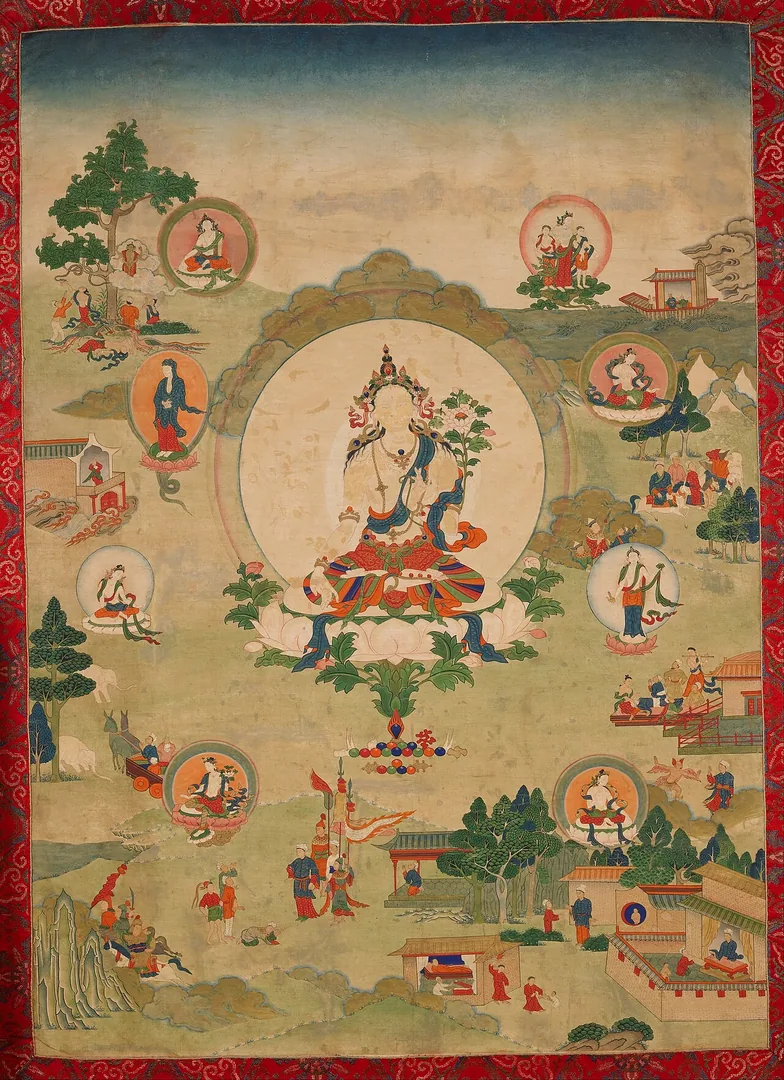
White Tārā (Sgrol-dkar)
Distinguished by seven eyes—on her forehead, palms, soles, and face—White Tārā sits in full vajra posture radiating autumn-moon serenity, forming one of Tibet’s Three Long-Life Deities.
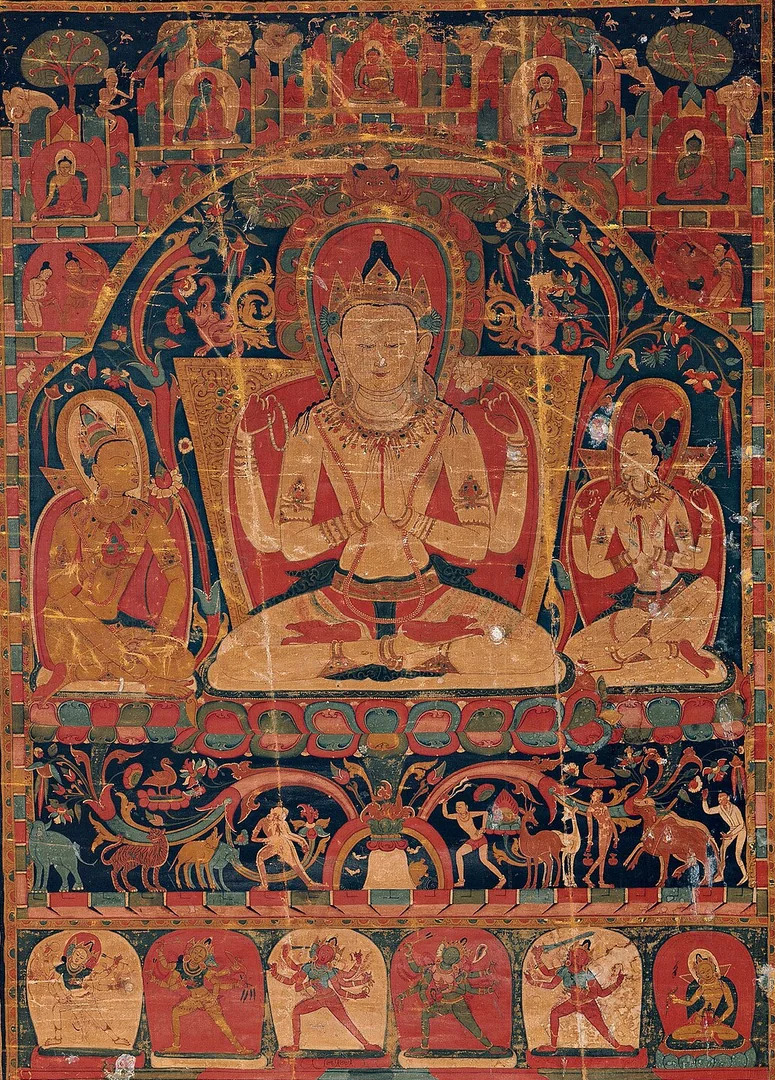
Avalokiteśvara (Chenrezig)
Known in Tibetan as Chenrezig (“One Who Gazes with Unwavering Eyes”), the four-armed white form embodies impartial compassion united with emptiness, associated with the Six-Syllable Mantra Oṃ Maṇi Padme Hūṃ.
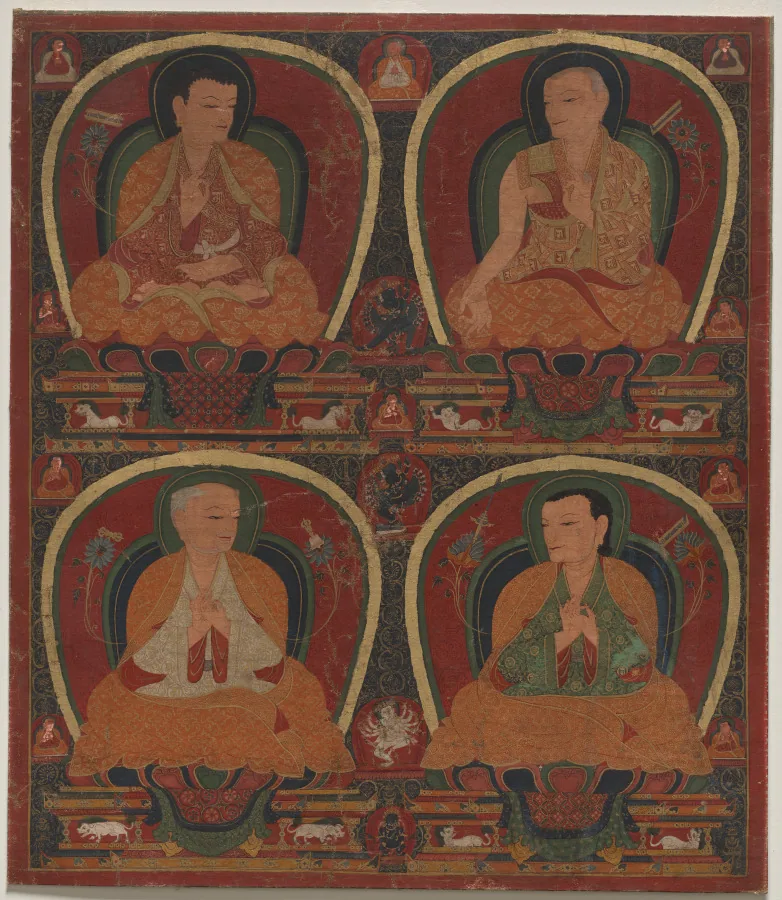
The Four Tibetan Schools & Bön Explained Clearly
Sharing the exact same Kangyur and Tengyur Buddhist canon, Tibet’s four major Buddhist schools differ not in core creed, but in historical translation era, pedagogical sequence, and meditative emphasis.