Oṃ Tāre Tuttāre Ture Svāhā (Green Tārā Mantra)
Threefold Invocation of Fearlessness & Swift Action
Known in Tibet as the Ten-Syllable Essence Mantra, its three variations on the Sanskrit verbal root tṛ (“to cross over”) trace a clear arc from relief in worldly crisis to freedom from inner anxiety.
Consecration of body, speech, and mind in receptive presence.
Grammar of the Three Liberations
In Sanskrit grammar, Tāre is the vocative singular feminine form of Tārā: “O Liberator!” Calling her name acknowledges that one is caught in turbulent circumstances and ready to steady the boat. Tuttāre intensifies the root—traditionally explained as freeing the mind from the Eight Inner Fears (anger, doubt, clinging, pride) that amplify external danger tenfold. Finally, Ture (“Swift One”) points to the cessation of subtle self-grasping, while Svāhā means “May this blessing take firm root in my heart.”
In the classic Gelug and Sakya commentaries (such as First Dalai Lama Gendün Drup’s commentary on the Tārā liturgy), the three central words also map directly onto the Four Noble Truths: Tāre liberates from manifest suffering (Truth of Suffering); Tuttāre cuts the karmic and emotional origins of suffering (Truth of Origin); and Ture establishes swift realization of cessation and the path (Truths of Cessation and Path).
| Segment | Tibetan Reading | Literal Sanskrit | Contemplative Level |
|---|---|---|---|
| OṂ (ཨོཾ) | Om | Sacred triad (A-U-M) | Consecrating body, speech & mind |
| TĀRE (ཏཱ་རེ) | Ta-re | “O Liberator!” (vocative) | Relief from acute outer crises (Suffering) |
| TUTTĀRE (ཏུཏྟཱ་རེ) | Tut-ta-re | “Savior from all fears” | Dissolving the 8 inner anxieties (Origin) |
| TURE (ཏུ་རེ) | Tu-re | “Swift Heroine” | Cessation of subtle grasping & delay (Cessation/Path) |
| SVĀHĀ (སྭཱ་ཧཱ) | So-ha | “May the root be established” | Sealing fearless compassion in daily action |
Root Mantra vs. the Twenty-One Tārās
In Himalayan monasteries, reciting Oṃ Tāre Tuttāre Ture Svāhā is paired with the Homage to the Twenty-One Tārās (Toh 438)—twenty-one four-line Sanskrit verses praising peaceful white, golden enriching, magnetizing red, and fierce obstacle-clearing aspects of Tārā, all unified inside this single ten-syllable root.
How It Is Practiced in Living Tradition
Often recited in sets of 21 or 108 beads at dawn, before travel across high mountain passes, or during periods of acute uncertainty.
Common Questions & Clarifications
Why do Tibetans pronounce Svāhā as “Soha”?
In Tibetan phonology, the Sanskrit glide svā shifts naturally to so, making “so-ha” the universal Tibetan liturgical pronunciation across all four schools.
Why do people often recite Green Tārā’s mantra in sets of 21?
Twenty-one honors the canonical Twenty-One Emanations of Tārā praised in the Kangyur sutra (Toh 438), making 7, 21, or 108 the traditional daily counts.
Primary Sources & Further Reading
- Homage to the Twenty-One Tārās (Toh 438), Kangyur
- Bokar Rinpoche, Tara: The Feminine Divine
Connected in the Mandala Graph
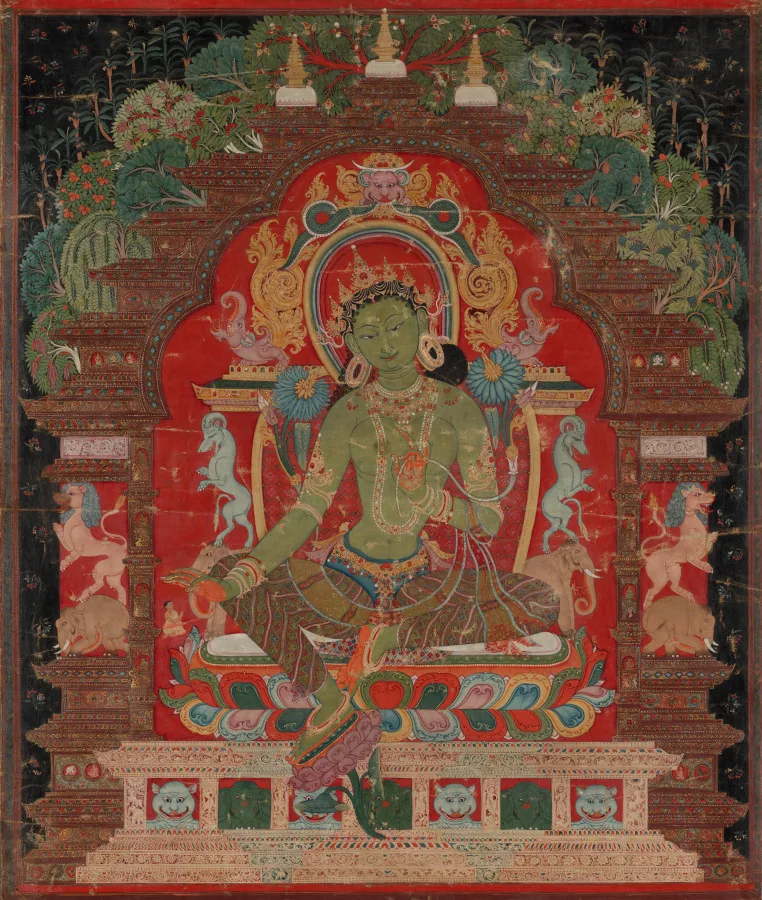
Green Tārā (Sgrol-ljang)
Seated in royal ease with her right foot already stepping off the lotus cushion, Green Tārā embodies enlightened compassion in immediate motion—green being the color of the Wind/Action Buddha Family.
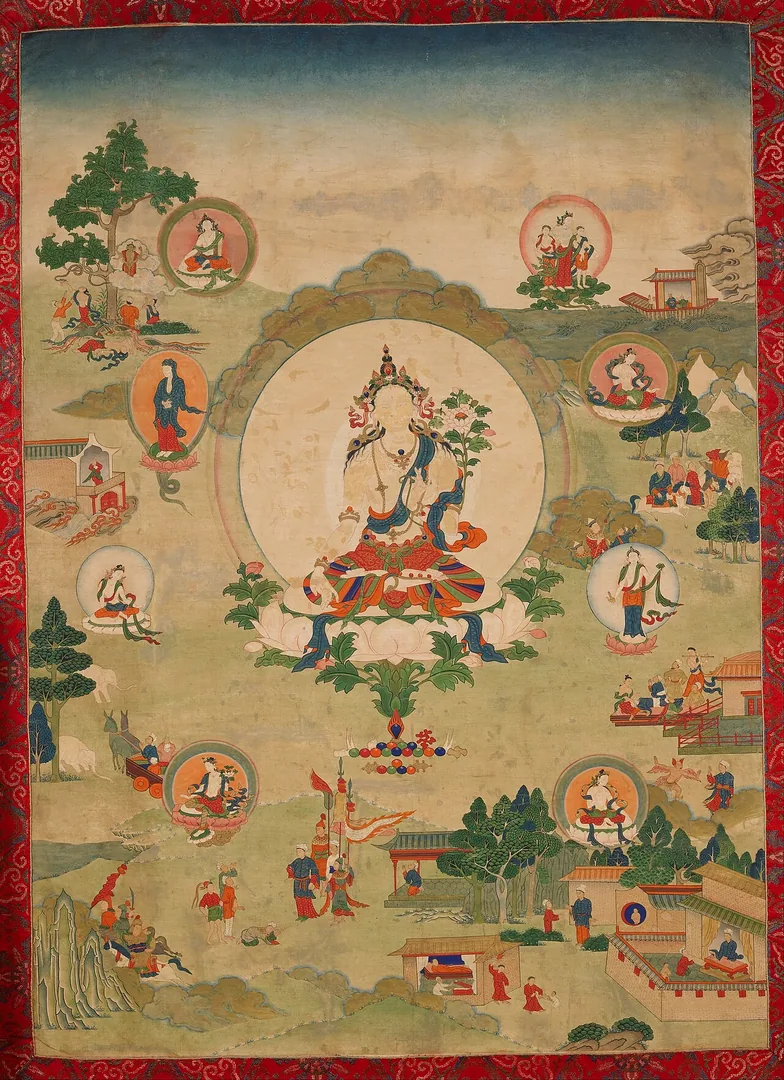
White Tārā (Sgrol-dkar)
Distinguished by seven eyes—on her forehead, palms, soles, and face—White Tārā sits in full vajra posture radiating autumn-moon serenity, forming one of Tibet’s Three Long-Life Deities.
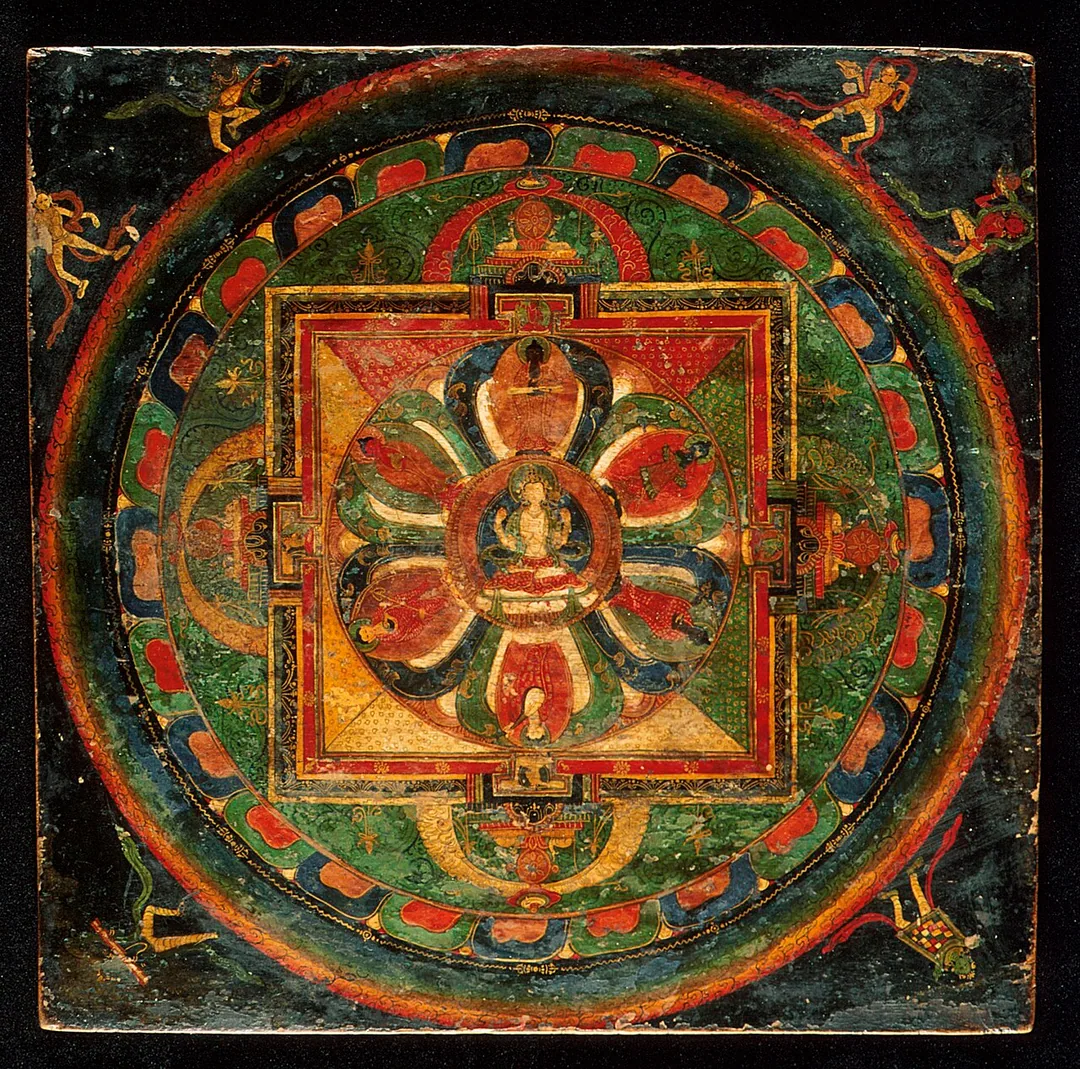
Oṃ Maṇi Padme Hūṃ (Six-Syllable Mantra)
Literally invoking the “Jewel in the Lotus,” these six syllables condense the entire Mahāyāna path: altruistic method (the wish-fulfilling jewel, maṇi) inseparable from wisdom realizing emptiness (the lotus, padma).

Five-Element Prayer Flags (Lungta · རླུང་རྟ།)
Literally “Wind Horse” (rlung-rta), five-colored cloth banners strung across Himalayan passes arrange the five natural elements in strict sequence so mountain wind carries auspiciousness across the valley.