White Tārā (Sgrol-dkar)
Wish-Fulfilling Wheel of Healing, Serenity & Longevity
Distinguished by seven eyes—on her forehead, palms, soles, and face—White Tārā sits in full vajra posture radiating autumn-moon serenity, forming one of Tibet’s Three Long-Life Deities.
Why Seven Eyes?
In the Wish-Fulfilling Wheel (Cintāmaṇicakra) lineage transmitted by Atiśa, White Tārā’s seven eyes represent vigilance across the three doors of body, speech, and mind. The forehead eye perceives non-dual emptiness, while the eyes on her palms and soles ensure that every gesture of giving and every step in the world is guided by clear seeing.
Longevity in Tibetan Thought: Time for What Matters
In Himalayan culture, gifting a White Tārā thangka to aging parents or teachers recovering from illness is a cherished gesture of care. Crucially, longevity practices (tshe-sgrub) frame human life not as clinging to youth, but as protecting precious time so wisdom, kindness, and unfinished responsibilities can ripen peacefully.
| Deity | Body & Arms | Key Visual Cue | Primary Focus |
|---|---|---|---|
| Amitāyus (Tsépakmé) | Coral Red · 1 face, 2 arms | Crowned Buddha holding long-life vase in lap | Restoring depleted vital essence (la-tshe) |
| White Tārā (Sgrol-dkar) | Moon White · 1 face, 2 arms | Full lotus seat; tiny eyes on palms, soles & brow | Gentle healing, serenity & maternal protection |
| Uṣṇīṣavijayā (Namgyalma) | Snow White · 3 faces, 8 arms | Holds miniature Amitābha, double vajra, bow & vase | Purifying karmic obstacles & sudden calamities |
How It Is Practiced in Living Tradition
Practiced quietly in the morning or offered during recovery from illness, often paired with Medicine Buddha prayers.
Common Questions & Clarifications
How can I tell White Tārā apart from Four-Armed Chenrezig at a glance?
Count the arms and check the palms: White Tārā has two arms and tiny eyes on her open palm and soles; Four-Armed Chenrezig has four arms with two palms joined at the chest.
What is White Tārā’s specific longevity mantra?
White Tārā adds six longevity syllables inside the root Tārā mantra: Oṃ Tāre Tuttāre Ture Mama Āyuḥ Puṇya Jñāna Puṣṭiṃ Kuru Svāhā—asking for the flourishing (puṣṭiṃ kuru) of lifespan (āyuḥ), merit (puṇya), and wisdom (jñāna).
Primary Sources & Further Reading
- Atiśa Dīpaṃkara (11th c.), Sadhana of Cintāmaṇicakra White Tārā
Connected in the Mandala Graph
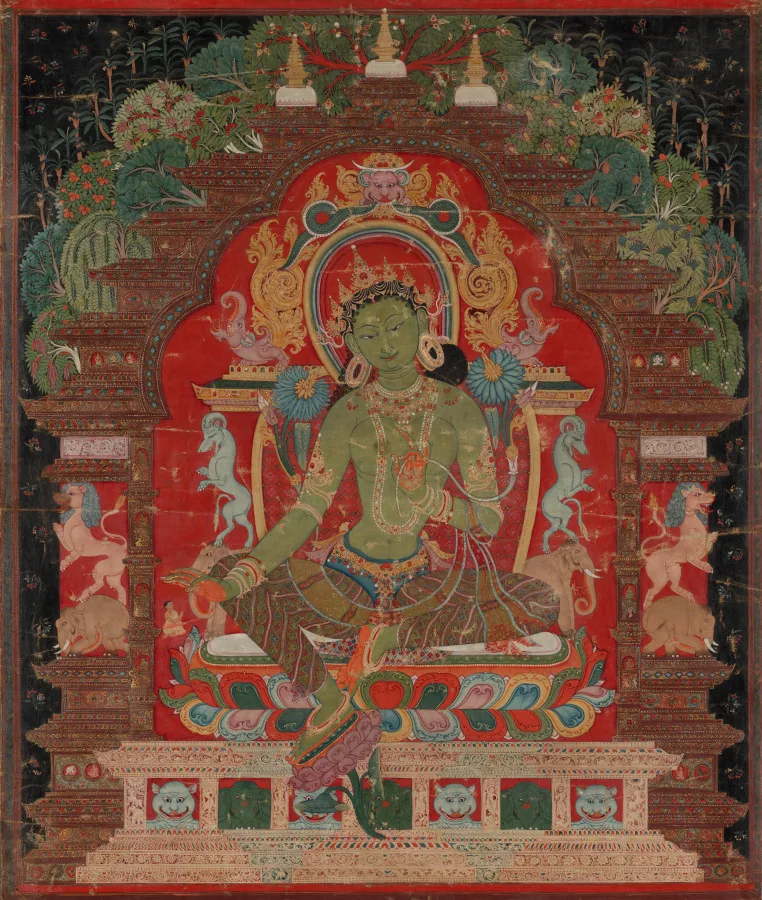
Green Tārā (Sgrol-ljang)
Seated in royal ease with her right foot already stepping off the lotus cushion, Green Tārā embodies enlightened compassion in immediate motion—green being the color of the Wind/Action Buddha Family.
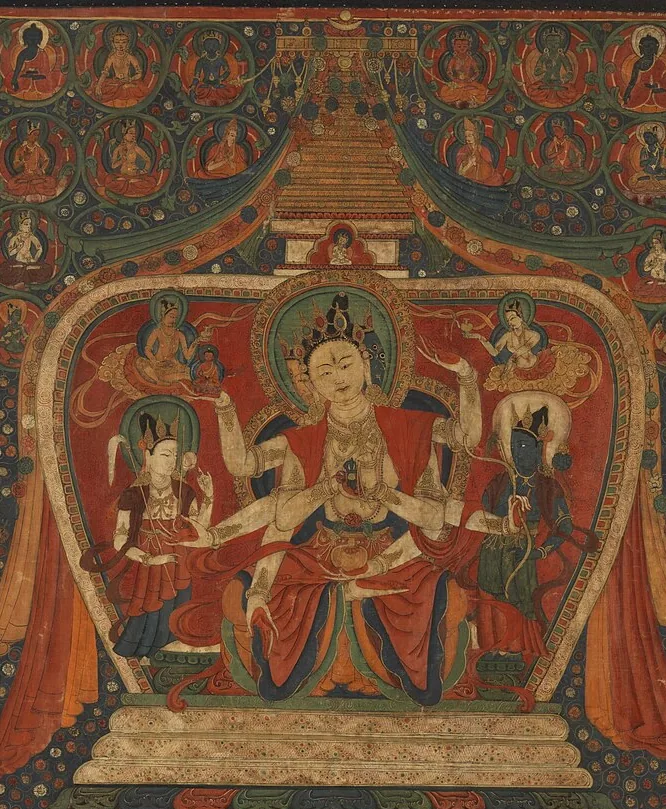
Uṣṇīṣavijayā (Namgyalma · Victorious Crown Wisdom)
Emanating as blinding white light from the crown protuberance (uṣṇīṣa) of Śākyamuni Buddha, three-faced eight-armed Namgyalma unites peaceful healing, protective strength, and karmic purification—completing Tibet’s revered Three Long-Life Deities.
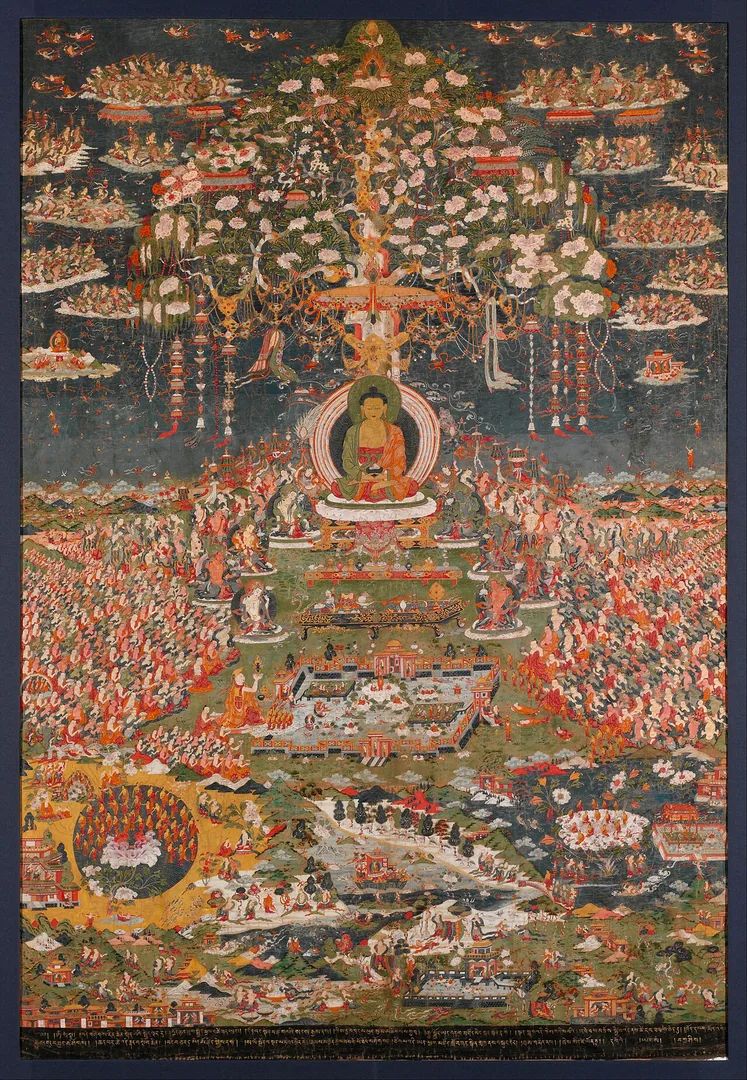
Amitābha (Öpakmé · Buddha of Infinite Light)
Radiating warm sunset-ruby red in the West of the Tibetan mandala, Amitābha (“Infinite Light,” Tibetan Öpakmé) rests both hands in meditation equipoise cradling an alms bowl of ambrosial nectar (amṛta), presiding over the Lotus Family to which Chenrezig and Padmasambhava belong.
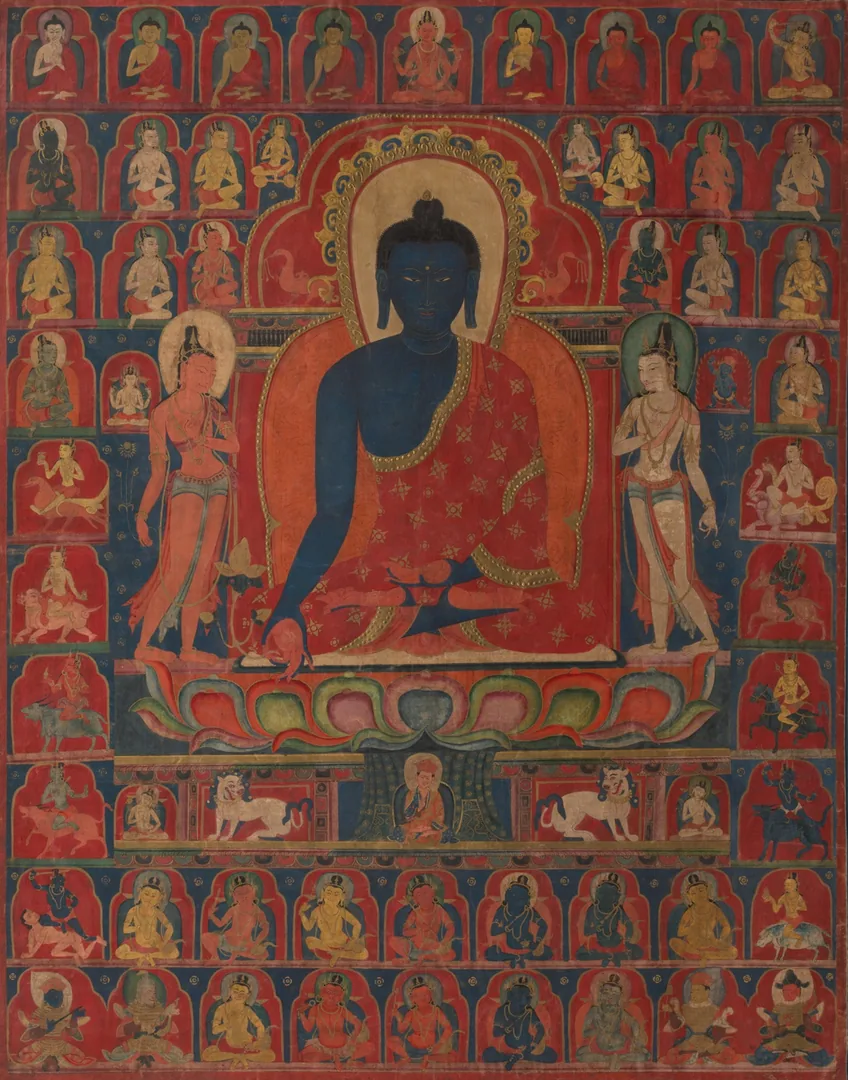
Medicine Buddha (Bhaiṣajyaguru · Sangye Menla)
Radiating deep lapis-lazuli blue, Sangye Menla wears monastic robes, holding an alms bowl of healing nectar in his left hand and a stem of golden myrobalan (arura) in his outstretched right hand.