Uṣṇīṣavijayā (Namgyalma · Victorious Crown Wisdom)
Three-Faced Eight-Armed Sovereign of Purification & Longevity
Emanating as blinding white light from the crown protuberance (uṣṇīṣa) of Śākyamuni Buddha, three-faced eight-armed Namgyalma unites peaceful healing, protective strength, and karmic purification—completing Tibet’s revered Three Long-Life Deities.
Why Eight Arms Hold Both Gentle Nectar and a Bow and Arrow
In the Uṣṇīṣavijayā Dhāraṇī Sūtra (one of the most influential texts across Silk Road, Tang Chinese, and Tibetan history, Toh 594 / T0967), a deva named Supratiṣṭhita realizes his carefree heavenly lifespan will end in seven days followed by painful rebirths. Terrified, he turns to Śākyamuni Buddha, from whose crown radiates the Uṣṇīṣavijayā mantra—teaching that true protection of life comes from clearing destructive karmic habits rather than clinging to pleasure.
Every one of her eight hands encodes one facet of complete care: the upper right holds Amitābha (remembering enlightened refuge); the second right holds a crossed viśvavajra at her heart (unshakeable stability); the third holds an arrow and the corresponding left holds a bow (effortless victory over inner maras); the lower right extends in supreme generosity; the upper left raises a protective lasso; the third left rests in fearlessness; and the lower left cradles an ambrosia vase in meditative equipoise.
How It Is Practiced in Living Tradition
Installed inside stupas (especially the Victory Stupa, Namgyal Chörten), recited during long-life ceremonies (tshe-dbang), and chanted for animals and the deceased so even brief hearing plants seeds of liberation.
Common Questions & Clarifications
Why did Tang-dynasty China carve stone “Dhāraṇī Pillars” (Jingchuang) to Uṣṇīṣavijayā?
They come from the exact same sutra! The sutra states that if the Uṣṇīṣavijayā Dhāraṇī is placed atop a tall banner, mountain, or stupa, even the shadow cast by the pillar or dust blown from it brings peace to passing beings—inspiring stone Jingchuang across Tang China and Namgyal Stupas across Tibet.
What is the short essence mantra of Uṣṇīṣavijayā?
Across Tibetan lineages, the concise nine-syllable heart mantra is Oṃ Bhrūṃ Svāhā · Oṃ Amṛta Āyurdade Svāhā (“Oṃ! Indestructible crown syllable! Oṃ, granter of deathless nectar and life, svāhā!”).
Primary Sources & Further Reading
Connected in the Mandala Graph
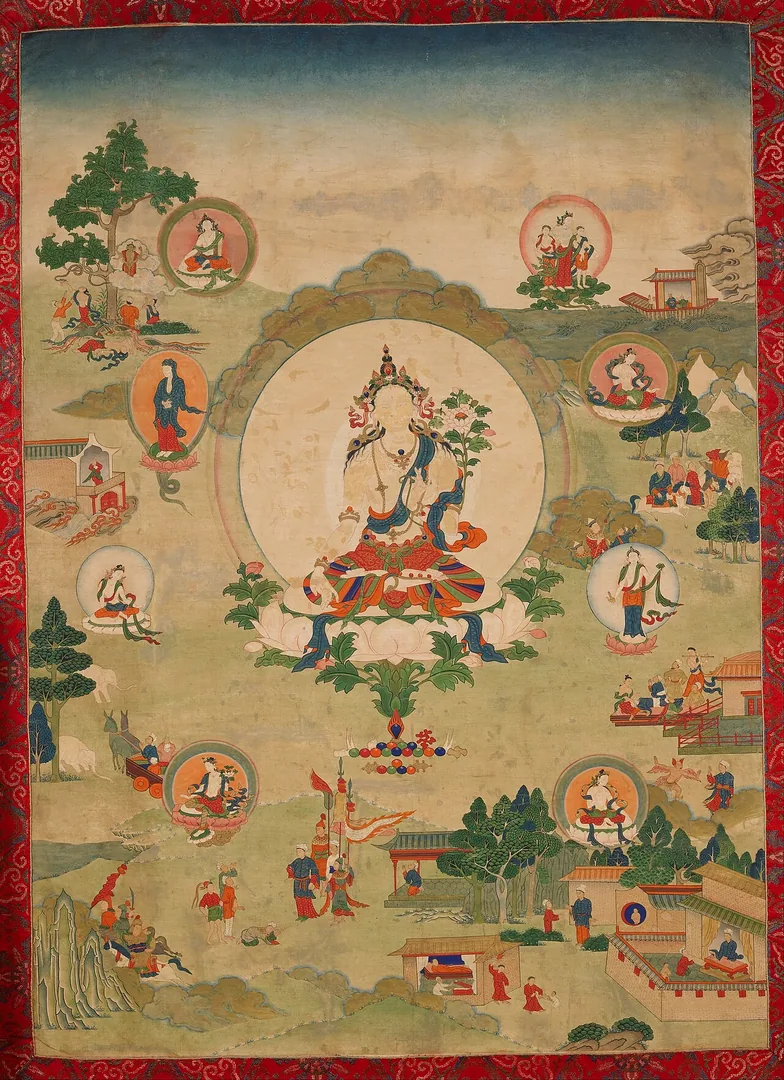
White Tārā (Sgrol-dkar)
Distinguished by seven eyes—on her forehead, palms, soles, and face—White Tārā sits in full vajra posture radiating autumn-moon serenity, forming one of Tibet’s Three Long-Life Deities.
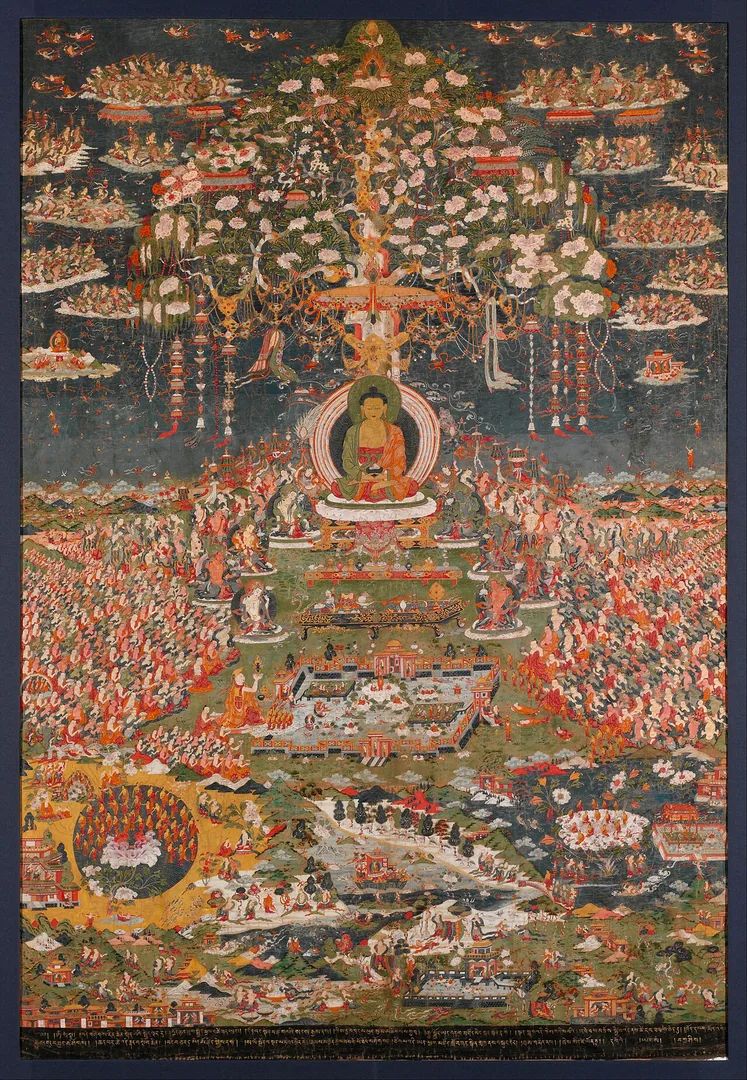
Amitābha (Öpakmé · Buddha of Infinite Light)
Radiating warm sunset-ruby red in the West of the Tibetan mandala, Amitābha (“Infinite Light,” Tibetan Öpakmé) rests both hands in meditation equipoise cradling an alms bowl of ambrosial nectar (amṛta), presiding over the Lotus Family to which Chenrezig and Padmasambhava belong.
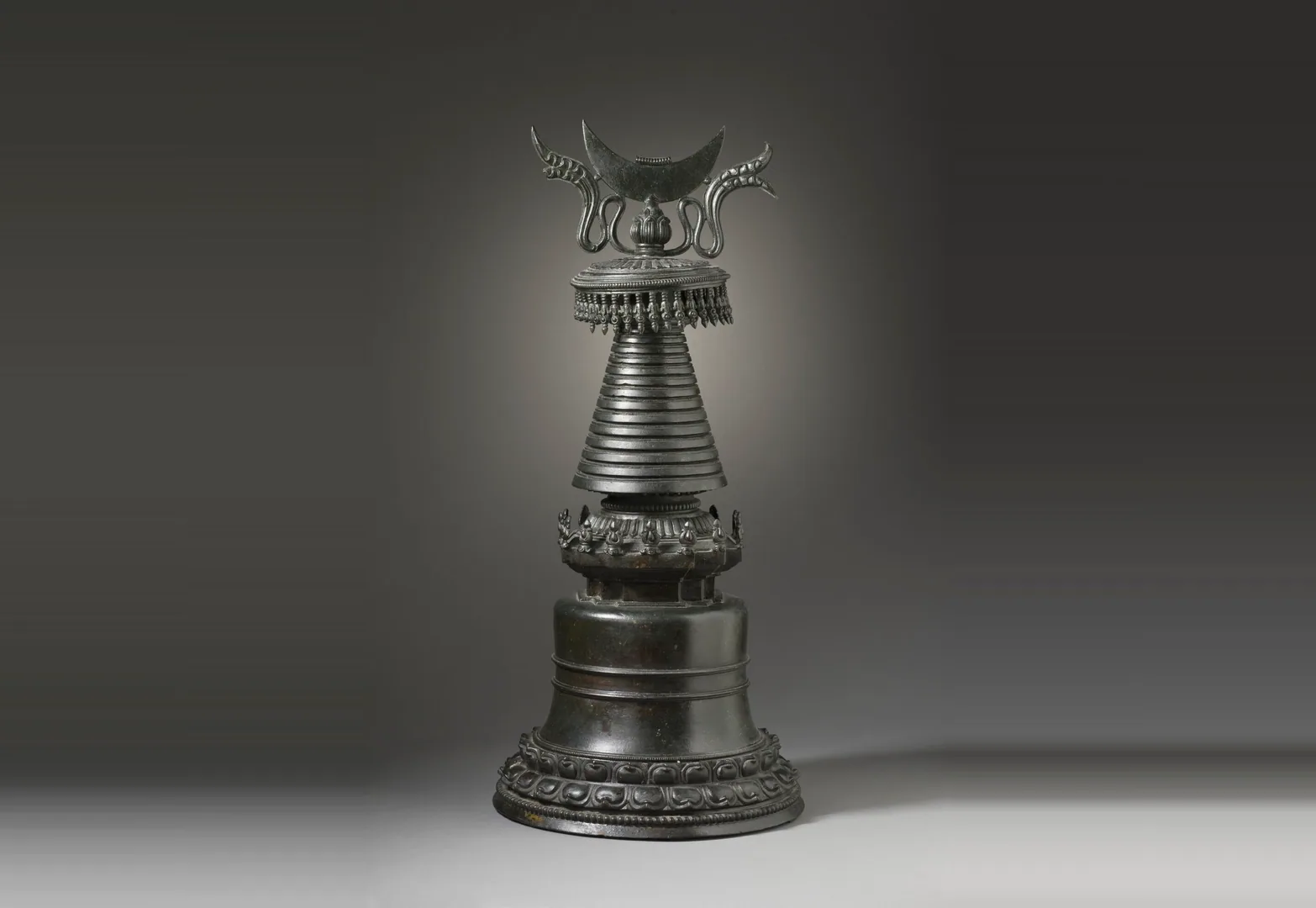
The Tibetan Stupa (Chörten · མཆོད་རྟེན།) & Eight Great Forms
Translated into Tibetan as mchod-rten (“receptacle of offerings”), every Himalayan whitewashed stupa stacks square earth, rounded water, conical fire, crescent air, and dissolving space into a three-dimensional statue of the Buddha’s Dharmakāya mind.
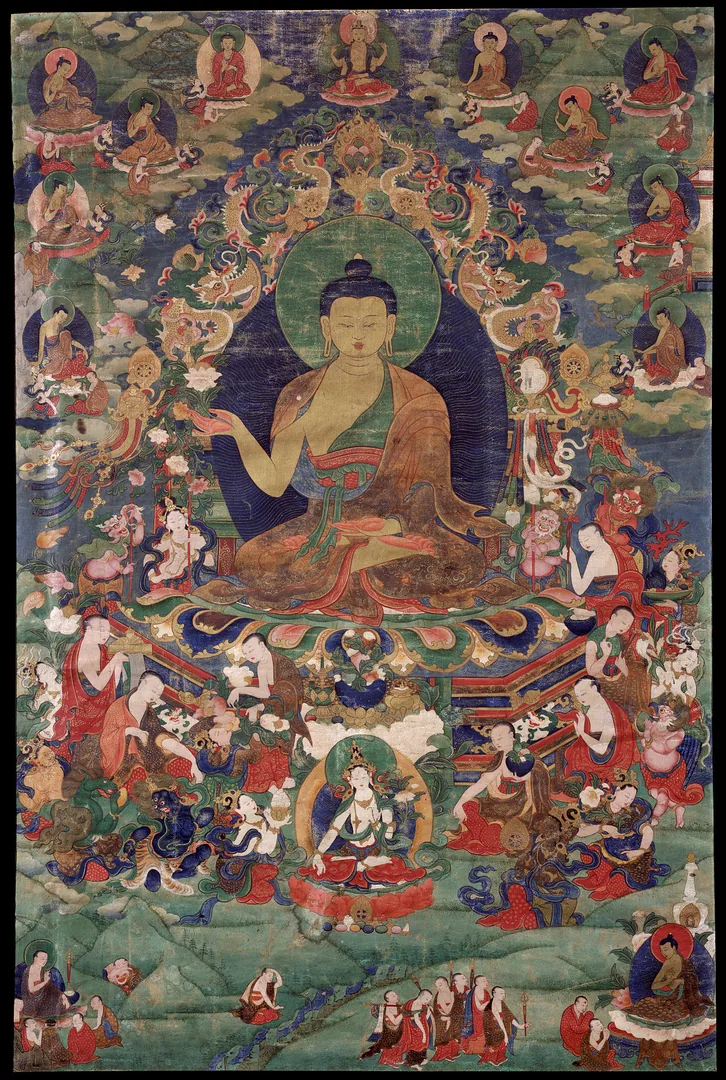
Śākyamuni Buddha (Shakya Thubpa)
Known in Tibetan as Shakya Thubpa (“Mighty Sage of the Śākyas”), the historical Buddha sits in unadorned monastic robes, touching the earth with his right fingertips to witness impartial awakening while cradling an iron alms bowl in his lap.