Oṃ Maṇi Padme Hūṃ (Six-Syllable Mantra)
Literal Etymology, Tibetan Pronunciation & Six-Syllable Map
Literally invoking the “Jewel in the Lotus,” these six syllables condense the entire Mahāyāna path: altruistic method (the wish-fulfilling jewel, maṇi) inseparable from wisdom realizing emptiness (the lotus, padma).
Awakened body, speech, and mind; generosity dissolving pride.
Why “Jewel in the Lotus” Is Not a Magical Password
Early Western travelers sometimes mistranslated Oṃ Maṇi Padme Hūṃ as a vague poetic sigh (“Hail to the jewel in the lotus!”). In the explanation given by the 14th Dalai Lama and classical Tibetan commentaries such as Dilgo Khyentse Rinpoche’s Heart Treasure of the Enlightened Ones, every word carries disciplined philosophical precision.
Oṃ is composed of three Sanskrit sounds (A-U-M) representing the practitioner’s ordinary body, speech, and mind—and simultaneously the awakened body, speech, and mind they can become. Maṇi (“jewel”) symbolizes method: the altruistic intention to relieve suffering, just as a jewel relieves poverty. Padme (“in the lotus”) symbolizes wisdom: clear insight into interdependence and emptiness, unstained like a lotus rising from mud. Hūṃ signifies indivisibility—compassion and wisdom functioning as one.
Sanskrit vs. Tibetan Pronunciation: Why Both Are Authentic
In classical Sanskrit, padme pronounces the d clearly (om ma-ni pad-me hūm). In spoken Tibetan phonology, the consonant cluster dm softened over a millennium into m or p-m, yielding Om ma-ni pe-me hung. Chinese sutra printings since the Yuan and Ming dynasties transcribed different regional pronunciations (“唵嘛呢叭咪吽”). Tibetan masters emphasize that sincere attention matters infinitely more than phonetic purism—famously illustrated by the folktale of an old hermit whose heartfelt mispronunciation glowed brighter than a proud scholar’s correction.
| Syllable | Color | Psychological Realm | Purified Habit | Perfection (Pāramitā) |
|---|---|---|---|---|
| OṂ (ཨོཾ) | White | Deva / Gods | Subtle pride & complacency | Generosity (Dāna) |
| MA (མ) | Green | Asura / Demi-Gods | Jealousy & competitive strife | Ethical Discipline (Śīla) |
| ṆI (ཎི) | Yellow | Human Realm | Clinging desire & restlessness | Patience (Kṣānti) |
| PAD (པད) | Soft Blue | Animal Realm | Mental dullness & apathy | Joyful Effort (Vīrya) |
| ME (མེ) | Red | Preta / Hungry Ghosts | Miserliness & chronic scarcity | Meditative Stability (Dhyāna) |
| HŪṂ (ཧཱུྃ) | Dark Blue | Naraka / Hells | Hatred, rage & acute terror | Prajñā Wisdom |
How It Is Practiced in Living Tradition
Carved onto slate mani walls (always passed on the left so one’s right side faces the script), printed millions of times inside prayer wheels, and recited quietly on 108-bead malas.
Common Questions & Clarifications
How do the six syllables relate to the Six Realms of existence?
In Tibetan meditation manuals, each syllable cools the root emotional habit of one psychological realm: Oṃ (pride / gods), Ma (jealousy / demi-gods), Ṇi (clinging desire / humans), Pad (dullness / animals), Me (scarcity & craving / hungry ghosts), and Hūṃ (aggression & fear / hells).
Primary Sources & Further Reading
- Dilgo Khyentse Rinpoche, Heart Treasure of the Enlightened Ones (commentary on Patrul Rinpoche)
- Kāraṇḍavyūha Sūtra (Toh 116)
Connected in the Mandala Graph
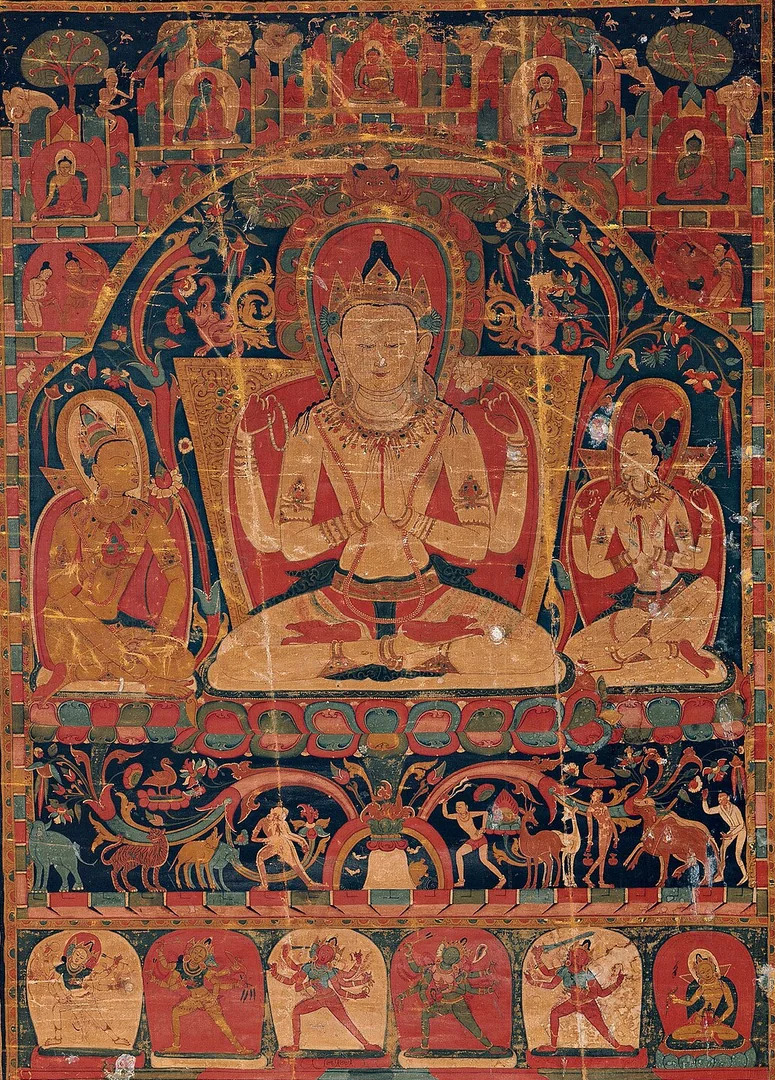
Avalokiteśvara (Chenrezig)
Known in Tibetan as Chenrezig (“One Who Gazes with Unwavering Eyes”), the four-armed white form embodies impartial compassion united with emptiness, associated with the Six-Syllable Mantra Oṃ Maṇi Padme Hūṃ.
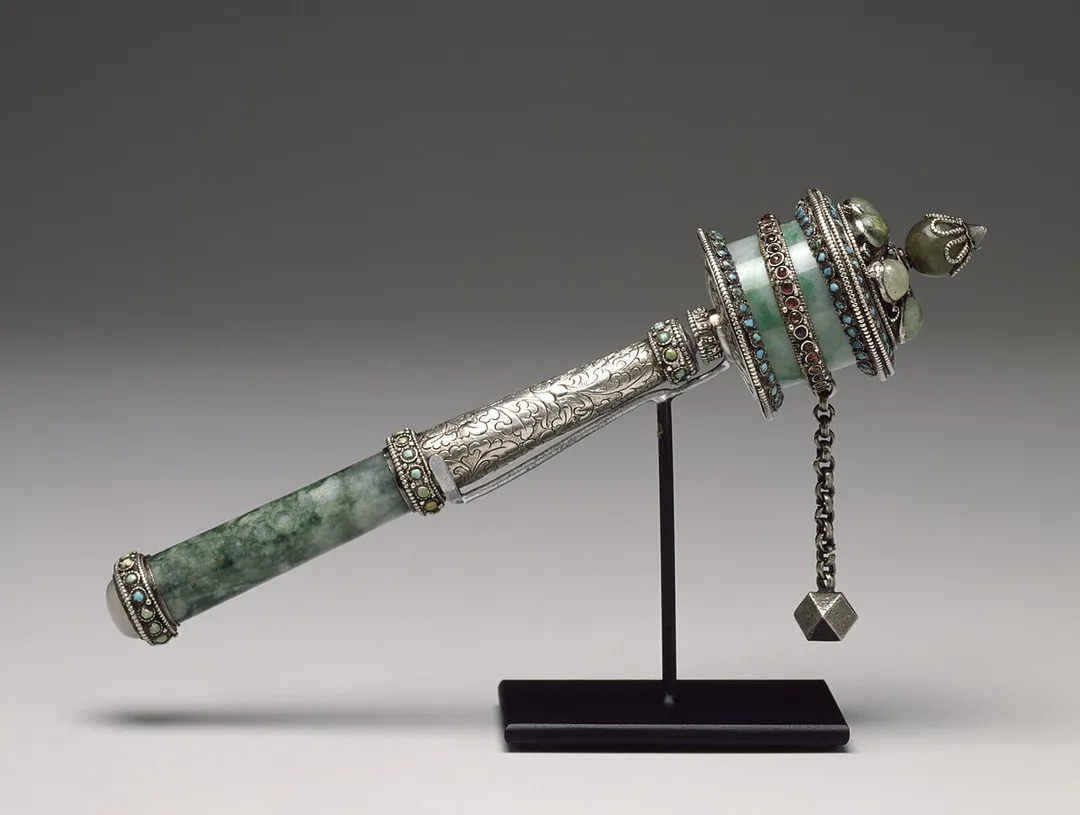
Tibetan Prayer Wheel (Mani Khorlo)
Far more than handheld brass cylinders, Tibetan prayer wheels harness mountain streams, high-pass wind, and rising butter-lamp heat so consecrated texts keep turning even while human bodies sleep.
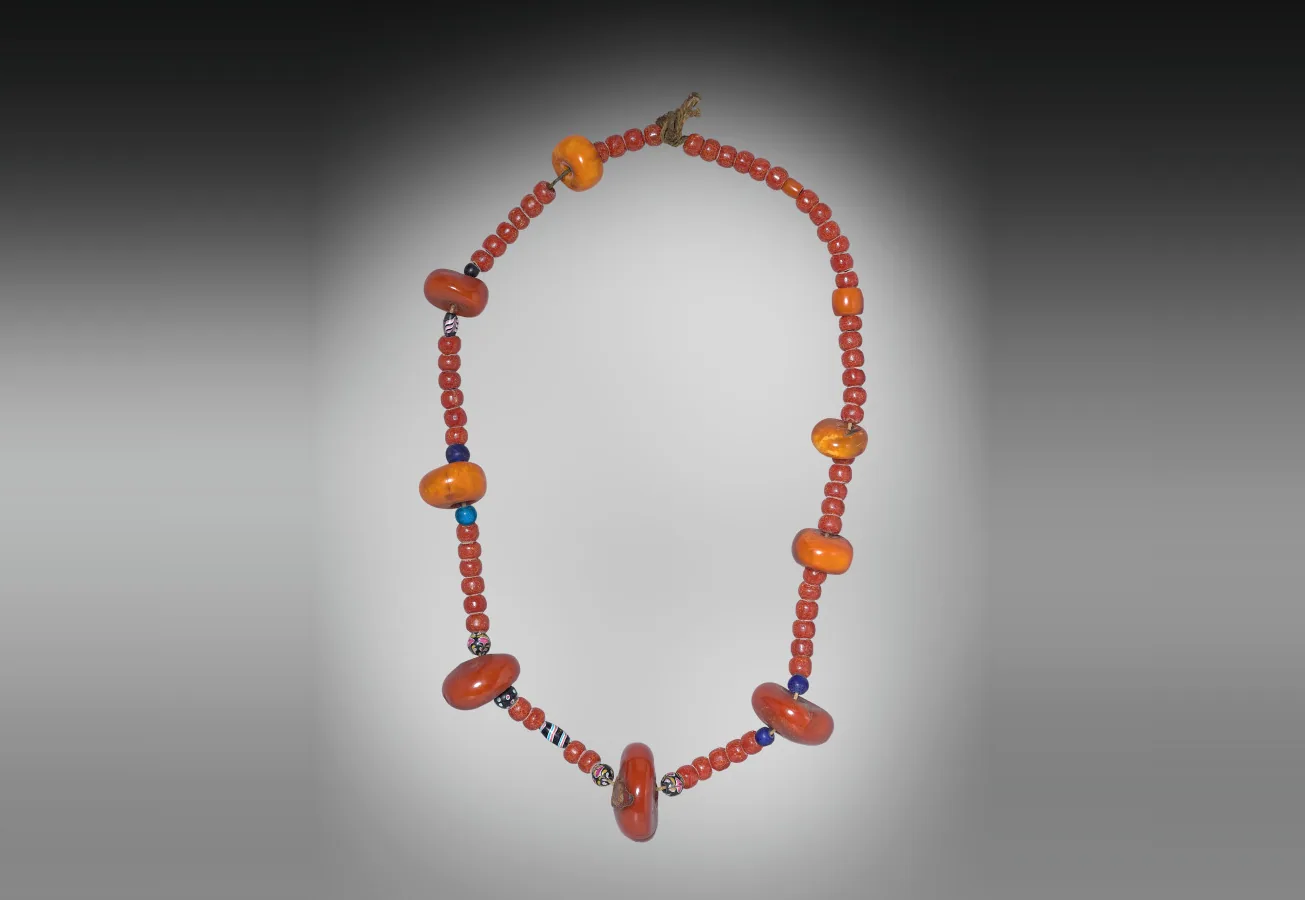
The 108-Bead Mala (Phreng-ba)
Called phreng-ba (“garland”) in Tibetan, a 108-bead mala serves as a tactile anchor for breath and mantra recitation—keeping body, speech, and wandering mind together.
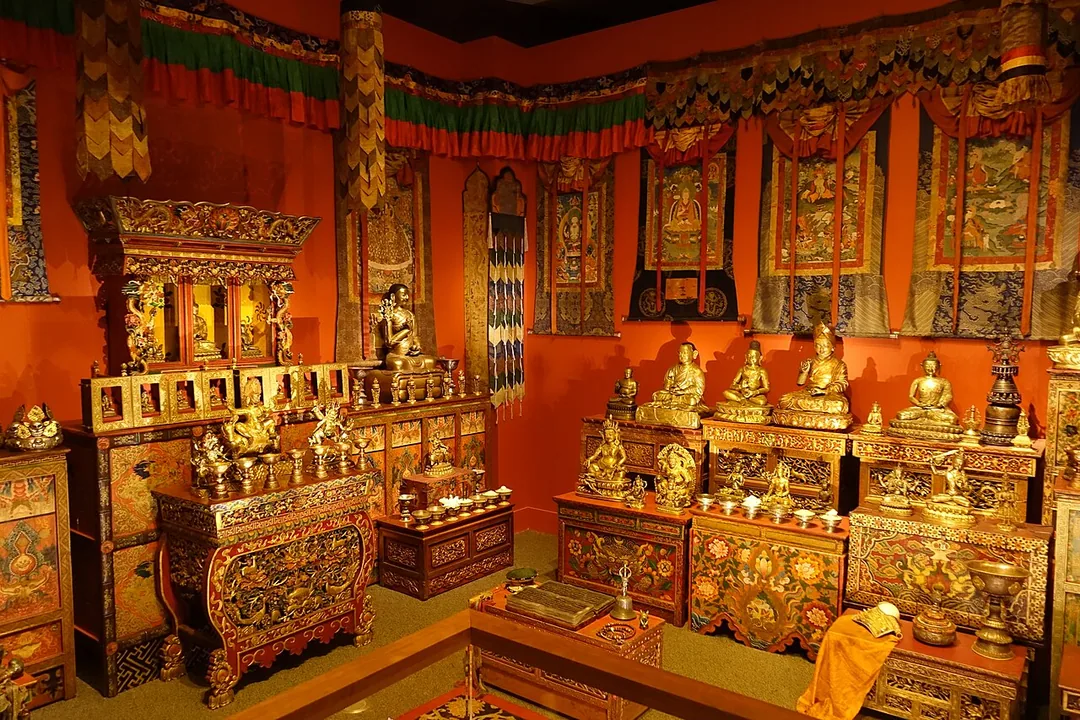
Dedication of Merit (Bsngo-ba · 回向)
No Tibetan contemplation, sutra reading, or prayer-wheel turn ends abruptly; it concludes with bsngo-ba (“turning toward”)—deliberately widening a private wish so everyone walking the same hard road is included.