Tibetan Prayer Wheel (Mani Khorlo)
Hand, Water, Wind & Heat Wheels · Internal Mechanics & Lineage
Far more than handheld brass cylinders, Tibetan prayer wheels harness mountain streams, high-pass wind, and rising butter-lamp heat so consecrated texts keep turning even while human bodies sleep.
Water, Wind, and Rising Heat: Prayer Wheels Were Never a Stamina Test
Outside observers sometimes assume a prayer wheel only “counts” if spun manually until one’s wrist aches. Walk through any Himalayan valley and a broader engineering imagination appears: wooden chu-khor wheels straddle snowmelt streams turning forty times a minute all winter; rooftop lung-khor vanes catch high-altitude gusts; delicate paper-and-brass me-khor cylinders spin silently in the warm updraft above butter lamps.
Tibetan lineage texts trace the prayer wheel to Nāgārjuna retrieving the practice from the Nāga realm and passing it through the Lion-Faced Ḍākinī into Tibet. Across every medium—woodblock paper, 20th-century optical microfilm endorsed by Lama Zopa Rinpoche, or high-density modern media—the principle is identical: enlisting natural forces in service of compassionate intention.
Inside the Cylinder: Why Winding Direction Matters
An authentic mani wheel is not hollow brass. Around a central “life-tree” spindle (srog-shing) are wound thousands of continuous strips printed with mantras—primarily Oṃ Maṇi Padme Hūṃ. Two construction rules are non-negotiable: the text must face outward with letters upright (never upside down), and the scroll must be wrapped clockwise around the axle when viewed from above, matching the direction in which the wheel is spun.
How It Is Practiced in Living Tradition
Traditional meditation pairs spinning with two visualizations: rays of light radiating outward from the cylinder to ease the suffering of beings, and light drawing inward to dissolve one’s own agitation.
Common Questions & Clarifications
Why must Buddhist prayer wheels turn clockwise—and why do Bön wheels turn the other way?
In Indian and Tibetan Buddhist etiquette, keeping the sacred object to one’s right shoulder (pradakṣiṇā, clockwise from above) expresses respect, following the apparent path of the sun; indigenous Bön tradition honors a solar-lunar counter-rotation keeping the left shoulder inward.
Primary Sources & Further Reading
- Lama Zopa Rinpoche & Lorne Ladner, Wheel of Great Compassion: The Practice of the Prayer Wheel in Tibetan Buddhism
Connected in the Mandala Graph
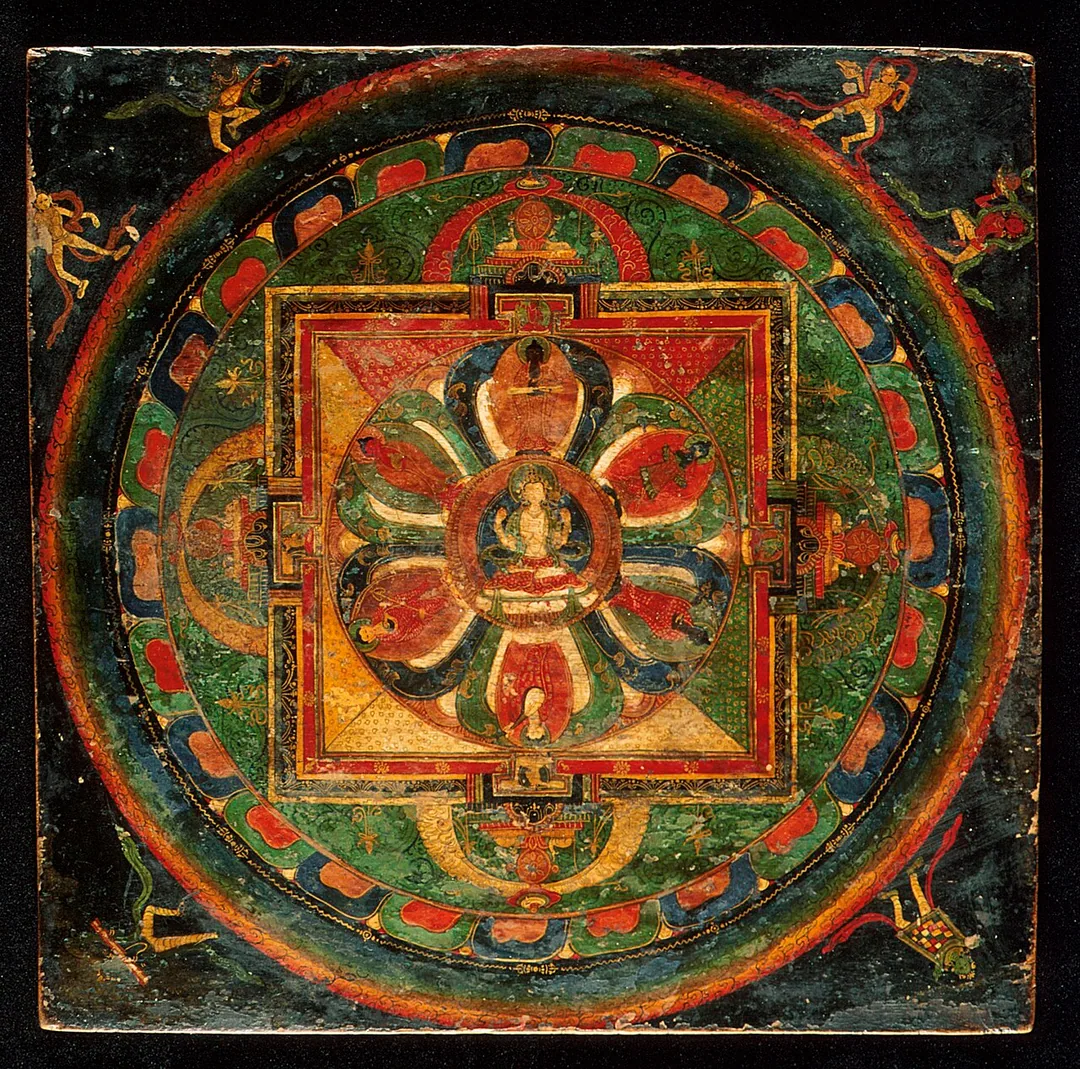
Oṃ Maṇi Padme Hūṃ (Six-Syllable Mantra)
Literally invoking the “Jewel in the Lotus,” these six syllables condense the entire Mahāyāna path: altruistic method (the wish-fulfilling jewel, maṇi) inseparable from wisdom realizing emptiness (the lotus, padma).
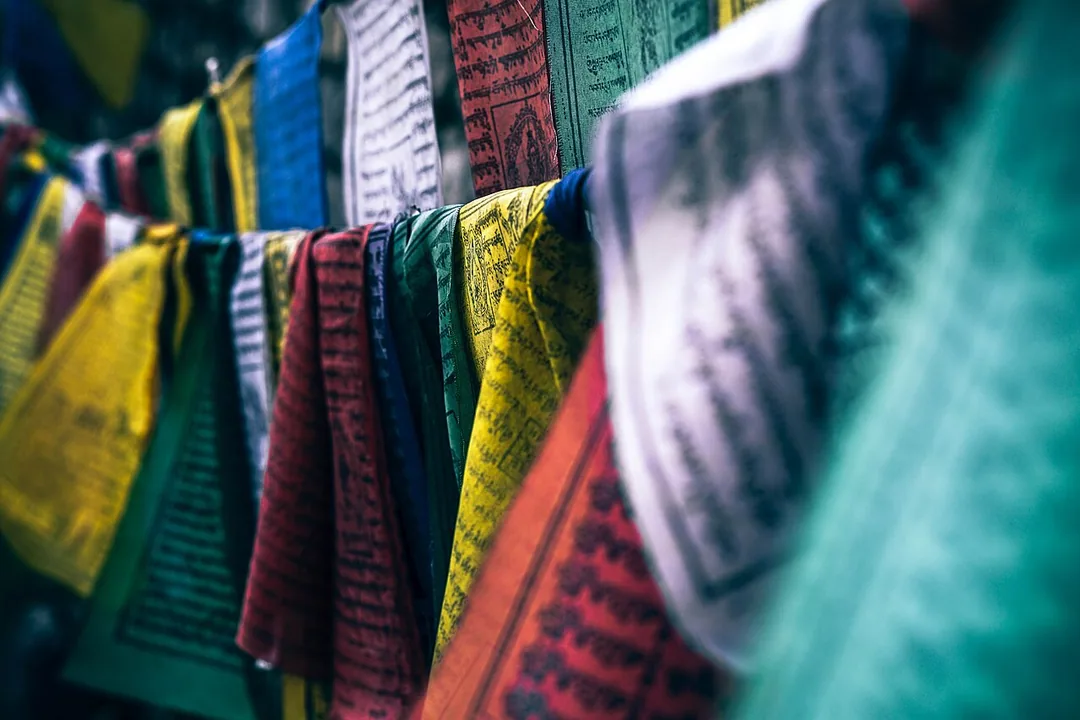
Five-Element Prayer Flags (Lungta · རླུང་རྟ།)
Literally “Wind Horse” (rlung-rta), five-colored cloth banners strung across Himalayan passes arrange the five natural elements in strict sequence so mountain wind carries auspiciousness across the valley.
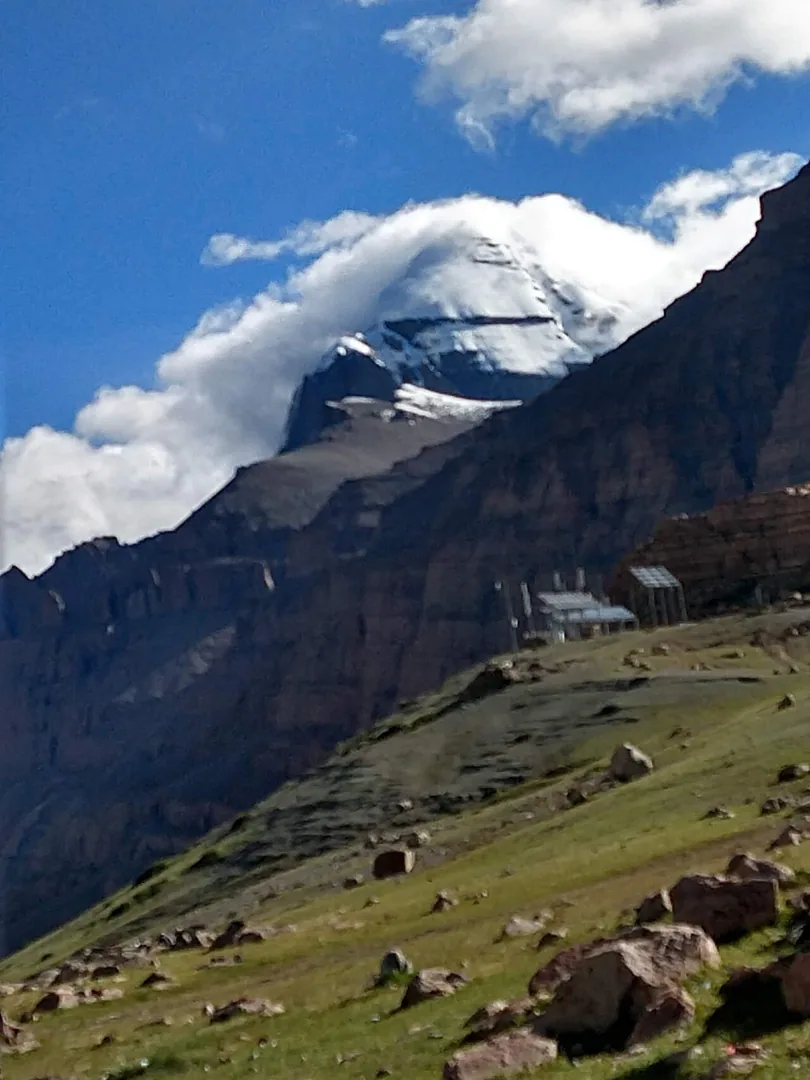
Mount Kailash (Gang Rinpoche) & Kora
Known in Tibetan as Gang Rinpoche (“Precious Jewel of Snows”), this four-sided peak in western Ngari feeds four of Asia’s greatest rivers and remains intentionally unclimbed out of shared reverence across Tibetan Buddhism, Bön, Hinduism, and Jainism.
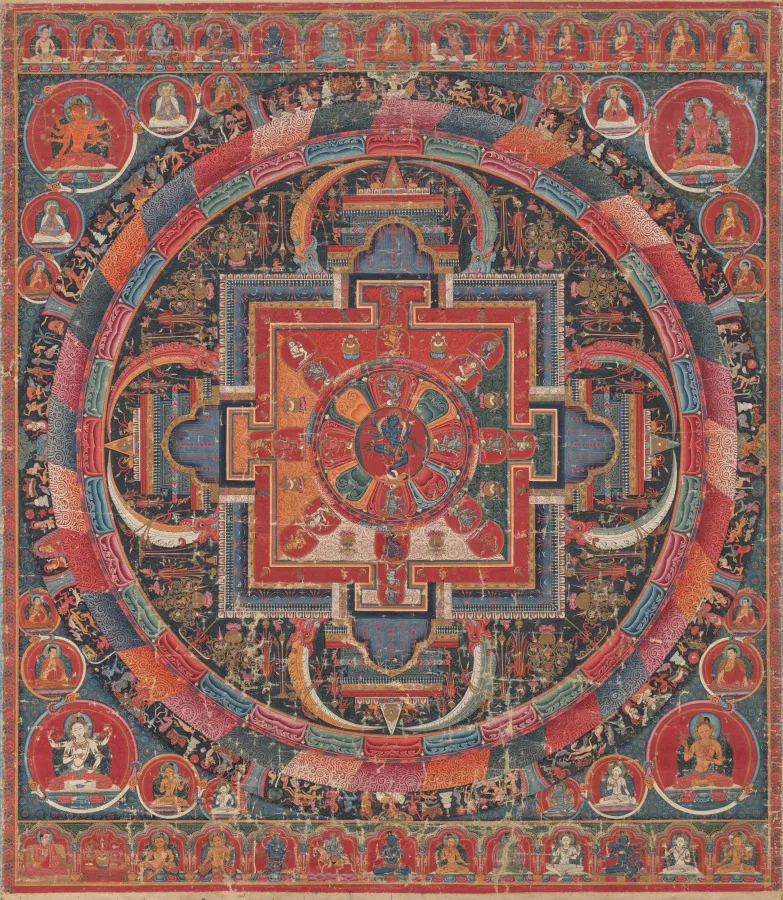
The Mandala (Kyilkhor · དཀྱིལ་འཁོར།)
Rendered in Tibetan as dkyil-’khor (“center and periphery”), a mandala is not decorative symmetry—it is a two-dimensional architectural floor plan of an awakened three-dimensional palace.