Five-Element Prayer Flags (Lungta · རླུང་རྟ།)
Why Blue-White-Red-Green-Yellow Never Changes Order
Literally “Wind Horse” (rlung-rta), five-colored cloth banners strung across Himalayan passes arrange the five natural elements in strict sequence so mountain wind carries auspiciousness across the valley.
Space / Sky (nam-mkha’) — All-encompassing space and Dharmadhātu wisdom; always hung first at the top or left.
What “Wind Horse” Really Means in Tibetan Daily Life
In Tibetan psychology, rlung-rta (“wind-horse”) also names a person’s vital inner morale and harmonious alignment with the world. When someone feels exhausted, discouraged, or out of sync, Tibetans say their lungta has sunk low; raising fresh flags on a windy ridge—printed at the center with a galloping horse bearing the Three Jewels and flanked at the four corners by Garuda, Dragon, Snow Lion, and Tiger—symbolically restores vitality and balance with the five elements.
Why Fading and Fraying in the Wind Is Part of the Ritual
Visitors sometimes wonder why weathered, frayed prayer flags are left fluttering on passes until threadbare. Traditional cotton flags are meant to weather naturally: as wind and sun dissolve each fiber and ink stroke, the prayers are understood to disperse into the atmosphere while visually reminding passersby of impermanence. (Today, ecological Himalayan monasteries strongly urge returning to unbleached biodegradable cotton rather than synthetic polyester.)
| Order | Color | Tibetan | Natural Element | Harmonized Quality |
|---|---|---|---|---|
| 1st (Top/Left) | Sky Blue | སྔོན་པོ། (sngon po) | Space / Sky (nam-mkha’) | Vastness, openness & clarity of mind |
| 2nd | Pure White | དཀར་པོ། (dkar po) | Air / Moving Cloud (rlung) | Unstained purity & smooth breath/prāṇa |
| 3rd | Vermilion Red | དམར་པོ། (dmar po) | Fire (me) | Warmth, vitality & compassionate courage |
| 4th | Emerald Green | ལྗང་ཁུ། (ljang khu) | Water (chu) | Fluid adaptability & swift healing action |
| 5th (Bottom/Right) | Earth Yellow | སེར་པོ། (ser po) | Earth (sa) | Grounded stability, nourishment & equanimity |
How It Is Practiced in Living Tradition
Hung on auspicious lunar mornings—especially during Losar (Tibetan New Year) and Saga Dawa—while avoiding astrologically discordant “black banner” days (ba-dan nag-po).
Common Questions & Clarifications
Do prayer flags carry prayers “to the gods”?
Commonly misnamed “prayer flags” in English, Tibetan lungta do not petition a creator god; they broadcast goodwill, mantras, and elemental harmony outward on the wind for all beings.
Primary Sources & Further Reading
- Timothy Clark, Radiant Heart: The Prayer Flag Tradition of Tibet
Connected in the Mandala Graph
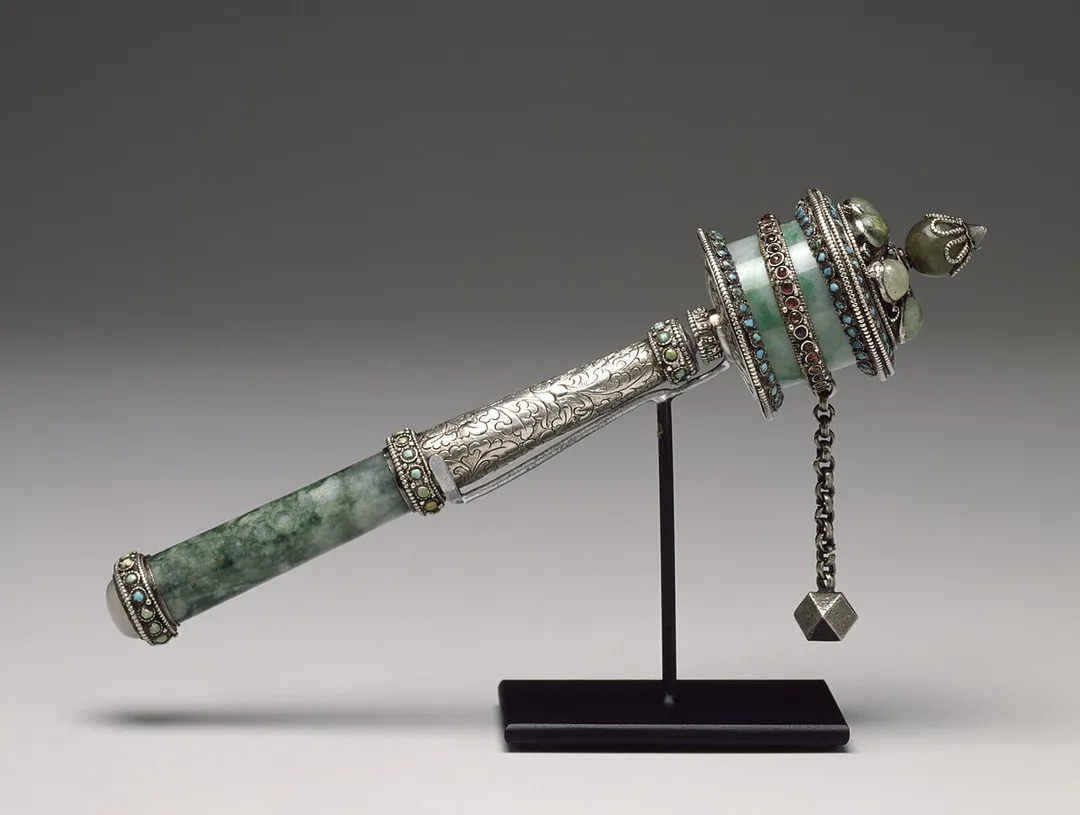
Tibetan Prayer Wheel (Mani Khorlo)
Far more than handheld brass cylinders, Tibetan prayer wheels harness mountain streams, high-pass wind, and rising butter-lamp heat so consecrated texts keep turning even while human bodies sleep.
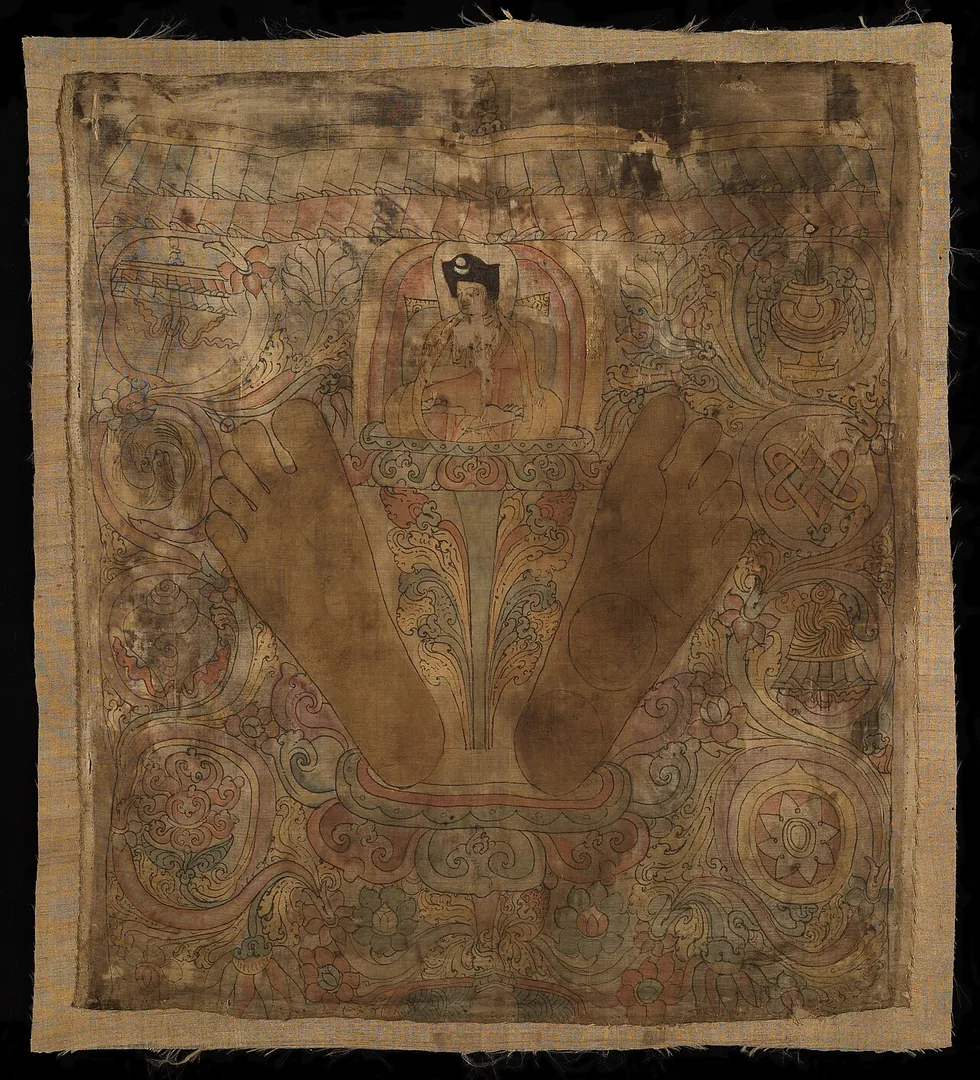
The Eight Auspicious Symbols (Ashtamangala)
Originally royal coronation offerings in ancient India and reinterpreted as attributes of the Buddha’s awakened body, speech, and mind, these eight emblems form the foundational grammar of Tibetan visual design.
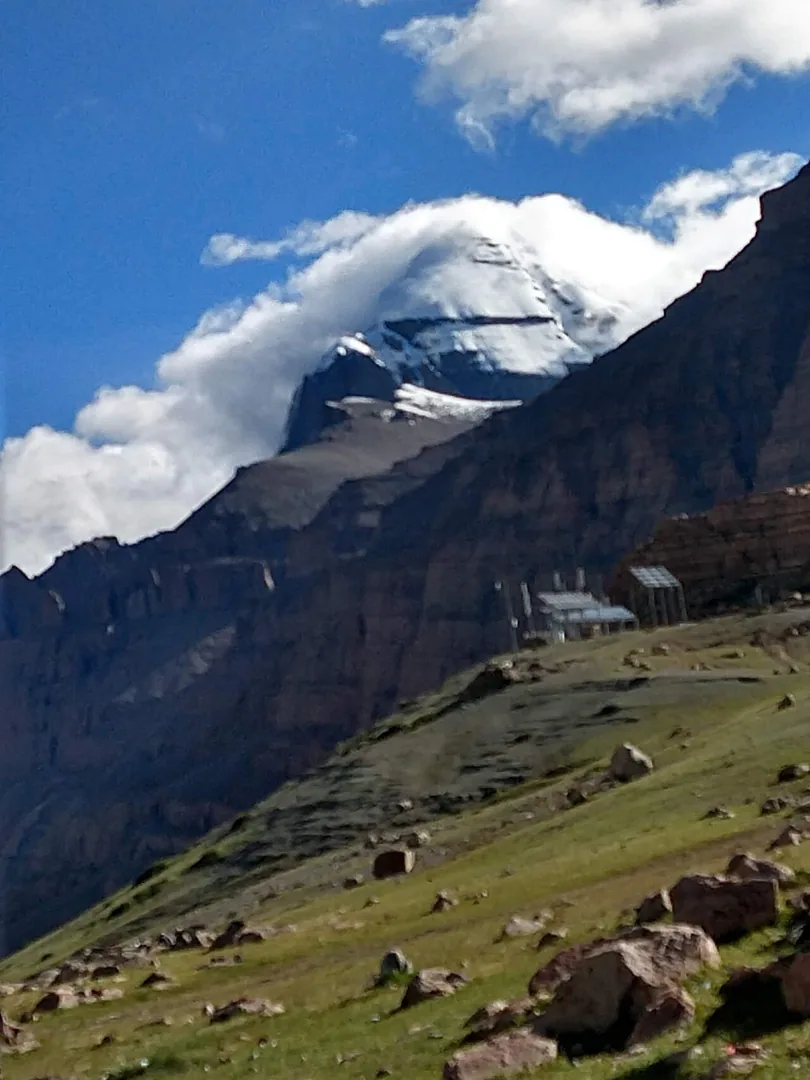
Mount Kailash (Gang Rinpoche) & Kora
Known in Tibetan as Gang Rinpoche (“Precious Jewel of Snows”), this four-sided peak in western Ngari feeds four of Asia’s greatest rivers and remains intentionally unclimbed out of shared reverence across Tibetan Buddhism, Bön, Hinduism, and Jainism.
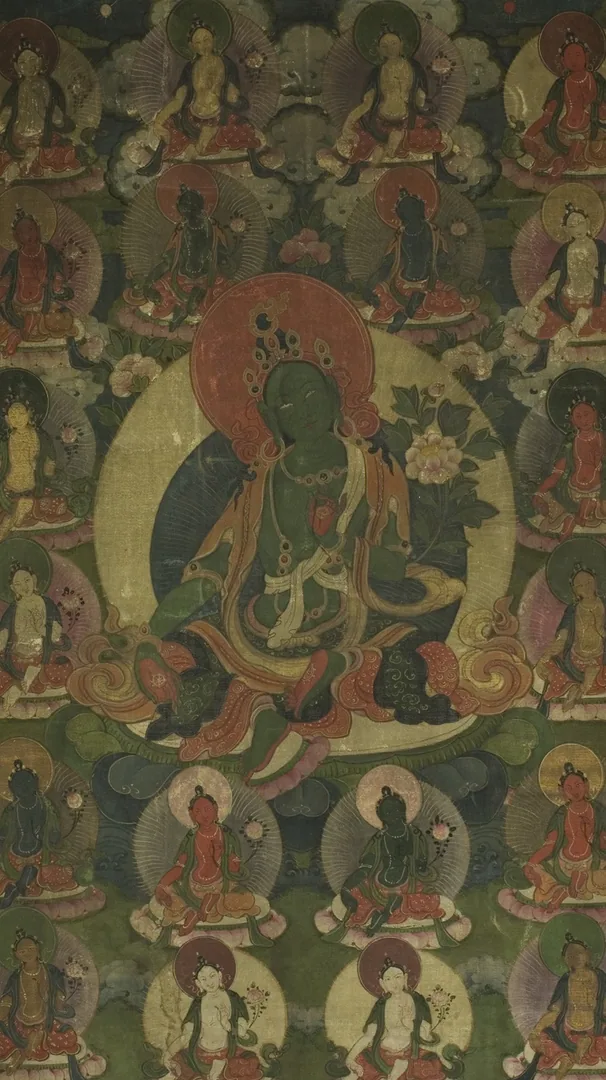
Oṃ Tāre Tuttāre Ture Svāhā (Green Tārā Mantra)
Known in Tibet as the Ten-Syllable Essence Mantra, its three variations on the Sanskrit verbal root tṛ (“to cross over”) trace a clear arc from relief in worldly crisis to freedom from inner anxiety.