Dzogchen & Mahāmudrā: Resting in the Nature of Mind
Distinguishing Thinking Mind (Sem) from Naked Awareness (Rigpa)
Celebrated across Himalayan contemplative life as two rivers reaching the exact same ocean, Nyingma/Bön Dzogchen (“Great Perfection”) and Kagyu/Gelug Mahāmudrā (“Great Seal”) point directly to the luminous, unfabricated awareness already present beneath fleeting thoughts.
Clouds vs. Sky: The Difference Between “Sem” and “Rigpa”
Beginning meditators often treat meditation like a bouncer at a door—exhausting themselves trying to block thoughts from arising. Both Dzogchen (codified with poetic brilliance by 14th-century master Longchen Rabjam) and Sūtra/Essence Mahāmudrā begin with a liberating distinction: Tibetan uses two completely different words for “mind.” Sem (སེམས།) names ordinary discursive thinking—anxious planning, replaying arguments, grasping “me” against “that.” Rigpa (རིག་པ།) or Tha-mal gyi shes-pa (“ordinary uncontrived awareness”) names the open, knowing space in which thoughts come and go.
Just as dark thunderclouds and white clouds never scratch or shrink the sky they float across, anxious or joyful thoughts never stain the awareness knowing them. In Tilopa’s famous Six Nails of Advice to Nāropa on the banks of the Ganges: “Don’t recall the past, don’t anticipate the future, don’t figure things out right now, don’t fabricate, don’t analyze—leave awareness in its natural expanse.”
| Dimension | Dzogchen (Great Perfection) | Mahāmudrā (Great Seal) |
|---|---|---|
| Literal Meaning | Primordially complete—nothing lacking to add, no stain to manufacture away | Every phenomenon is stamped (“sealed”) by indivisible emptiness-clarity |
| Entry Doorway | Direct Pointing-Out Instruction (ngo-sprod) distinguishing Sem from Rigpa | Settling in Calm Abiding (zhi-gnas) & Insight (lhag-mthong) into Ordinary Mind |
| Threefold Structure | View (Trekchö cutting through) · Spontaneous Presence (Thögal) · Fruit | Ground Mahāmudrā · Path (Four Yogas) · Fruition Mahāmudrā |
| Classic Masterpieces | Longchenpa’s Seven Treasuries; Jigme Lingpa’s Yeshe Lama | Gampopa; 3rd Karmapa’s Mahāmudrā Prayer; 9th Karmapa’s Ocean of Definitive Meaning |
How It Is Practiced in Living Tradition
Practiced only upon solid grounding in compassion and ethical preliminaries (ngöndro)—often summarized in short, frequent moments (“short times, many times”) of open awareness amidst daily work.
Common Questions & Clarifications
Did historical masters ever combine Dzogchen and Mahāmudrā into one lineage?
Far from competing, great masters such as Karma Chakmé (17th c.), Jamgön Kongtrul, and Jamyang Khyentse Wangpo taught the celebrated “Union of Mahāmudrā and Dzogchen” (Chak-Dzok Zung-jug), showing both point to the exact same awakened heart.
Primary Sources & Further Reading
- Longchen Rabjam (1308–1364), Finding Comfort and Ease in the Nature of Mind (Sems-nyid ngal-gso)
- Third Karmapa Rangjung Dorje, Aspiration Prayer of Mahāmudrā (Phyag-chen smon-lam)
Connected in the Mandala Graph
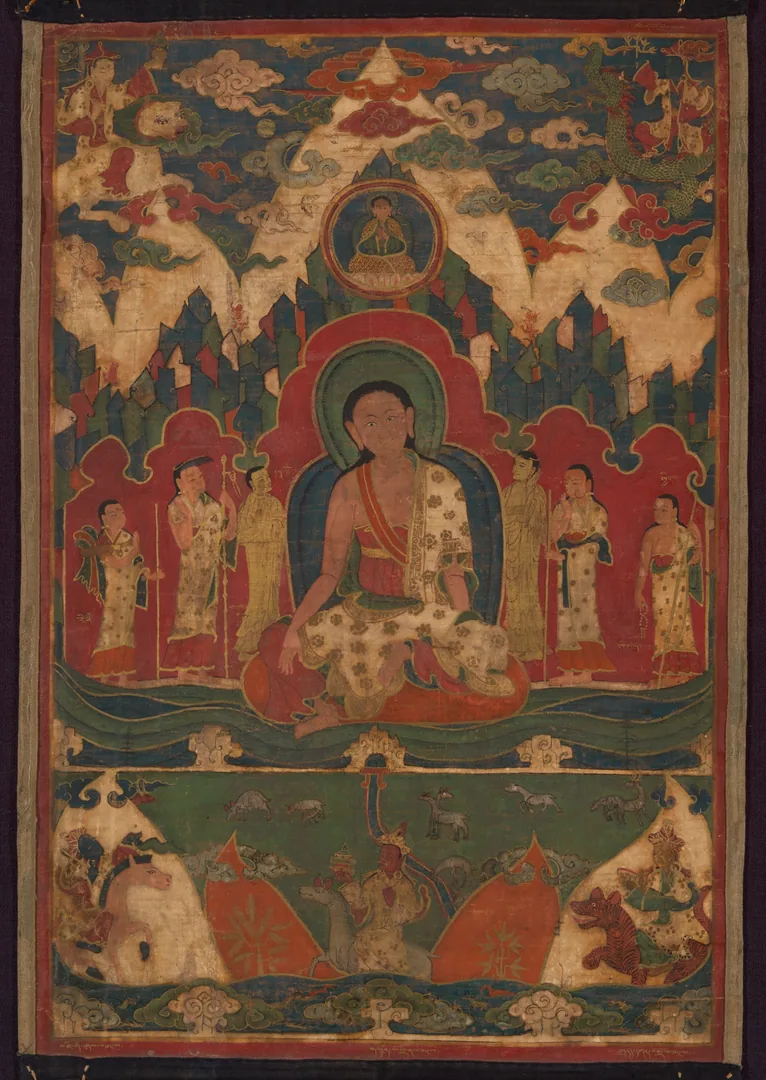
Jetsün Milarepa (1052–1135 · Tibet’s Cotton-Clad Poet-Yogi)
Seated in alpine cave solitude wearing a single white cotton cloth (repa), skin tinged pale green from years of wild nettle soup and right palm cupped at his ear singing spontaneous Vajra Songs (mgur), Milarepa proves no past mistake places awakening out of reach.
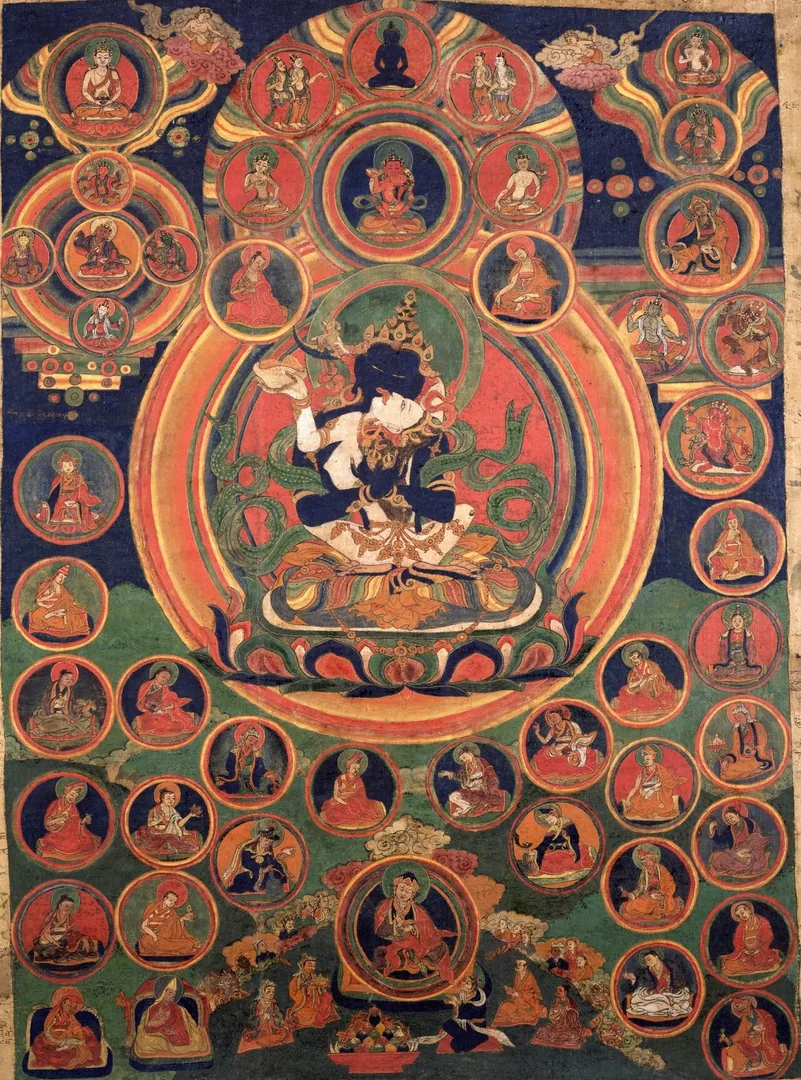
Padmasambhava (Guru Rinpoche)
Invited from Oddiyāna and Nālandā to Tibet by King Trisong Detsen in the 8th century, Padmasambhava (“Lotus-Born”) consecrated Samye Monastery and harmonized Himalayan indigenous spirits with Buddhist Dharma.
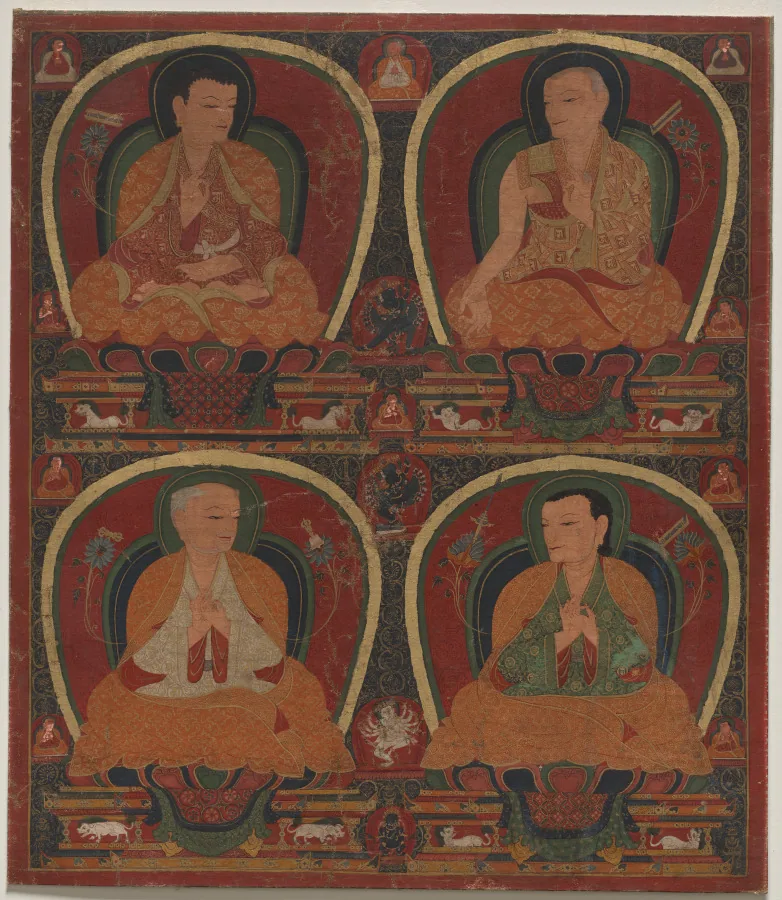
The Four Tibetan Schools & Bön Explained Clearly
Sharing the exact same Kangyur and Tengyur Buddhist canon, Tibet’s four major Buddhist schools differ not in core creed, but in historical translation era, pedagogical sequence, and meditative emphasis.
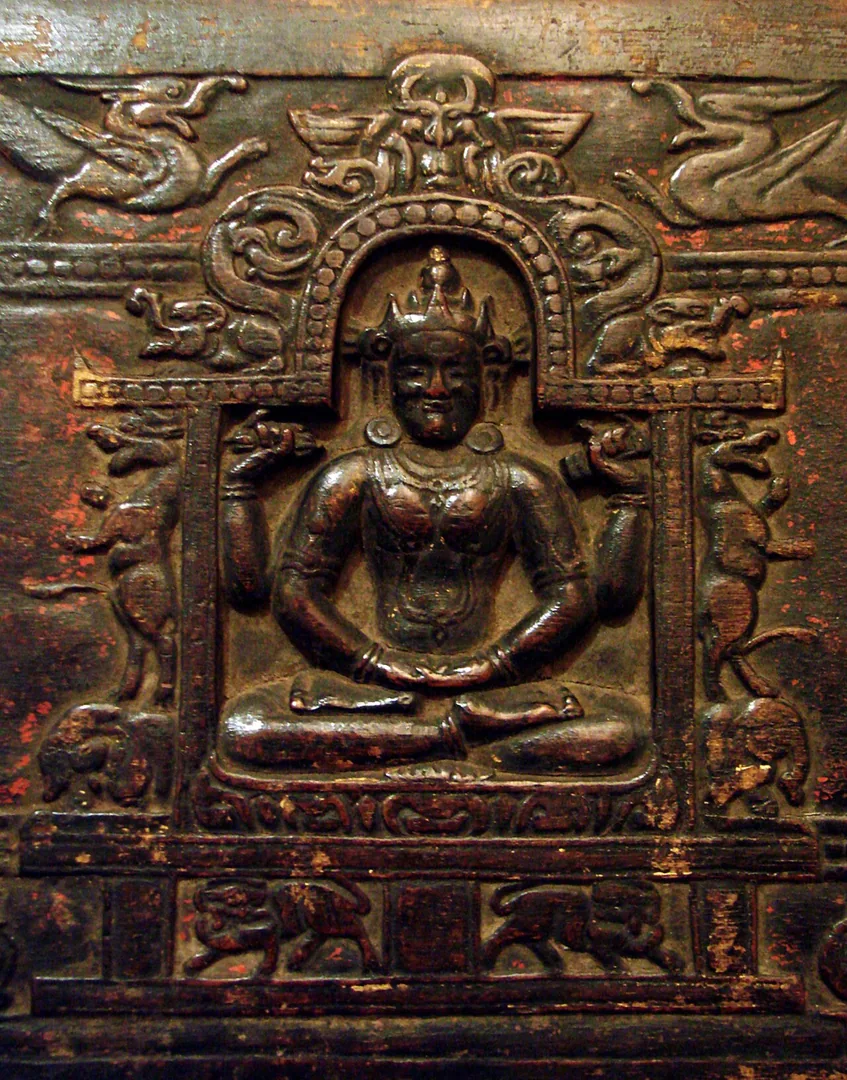
Śūnyatā (Emptiness) & the Two Truths (Madhyamaka)
In Nāgārjuna’s Middle Way philosophy, “emptiness” (stong-pa-nyid) never means nothing exists; it means nothing exists in frozen isolation—and precisely because things lack rigid self-nature, seeds sprout, suffering changes, and awakening works.