Śūnyatā (Emptiness) & the Two Truths (Madhyamaka)
Nāgārjuna’s Middle Way: Empty OF Independent Essence, Full OF Interdependence
In Nāgārjuna’s Middle Way philosophy, “emptiness” (stong-pa-nyid) never means nothing exists; it means nothing exists in frozen isolation—and precisely because things lack rigid self-nature, seeds sprout, suffering changes, and awakening works.
Always Ask: “Empty OF What?”
When people hear “the cup is empty” in everyday speech, they assume the cup has vanished. In Buddhist Madhyamaka logic, a cup is NEVER empty of holding hot tea! It is empty of svabhāva (རང་བཞིན།, rang-bzhin)—independent, self-powered, permanent essence existing from its own side without clay, potter, kiln fire, water, or human concept.
Second-century Nālandā genius Nāgārjuna proved in Chapter 24 of his Fundamental Wisdom of the Middle Way (Mūlamadhyamakakārikā) that if things possessed fixed, independent essence, nothing in the universe could ever change: an acorn could never become an oak, an angry mind could never become calm, and an unawakened person could never become a Buddha. Therefore: “For whomever emptiness is possible, everything becomes possible!”
| Common Misreading | Why It Fails | Authentic Madhyamaka View |
|---|---|---|
| “Nothing really exists; life is meaningless” | Nihilism (ucchedavāda): denies observable cause & effect | Things exist vividly as dependent processes, never in isolation |
| “Emptiness is a blank, emotionless void” | Confuses mental spacing-out with insight | Emptiness and spontaneous compassion are two sides of one coin |
| “Emptiness is a cosmic substance behind things” | Subtle eternalism: turns emptiness itself into a new idol | “Emptiness of emptiness”—a medicinal tool freeing the mind from all extremes |
How the Two Truths Protect Both Science and Contemplation
Madhyamaka balances on Two Truths (bden-pa gnyis) that describe the exact same reality at two resolutions: Conventional Truth (kun-rdzob bden-pa) honors how empirical cause-and-effect, medicine, ethics, and physics reliably function; Ultimate Truth (don-dam bden-pa) reveals that when probed to the bottom, no isolated atom or separate ego can be found standing on its own.
How It Is Practiced in Living Tradition
Debated rigorously in monastic courtyards by afternoon and contemplated silently on the cushion at dawn—joining analytical inquiry (dpyad-sgom) with resting meditation (’jog-sgom).
Common Questions & Clarifications
What is the difference between “Rangtong” and “Shentong” in Tibetan philosophy?
Rangtong (“empty of self-nature,” emphasized in Gelug and classic Prāsaṅgika) stresses that all phenomena without exception lack inherent existence; Shentong (“empty of other,” emphasized in Jonang and many Kagyu/Nyingma tantric commentaries) agrees that dualistic thoughts are empty of self-nature while emphasizing that luminous Buddha-nature is empty of adventitious stains—two complementary pedagogical lenses.
Primary Sources & Further Reading
- Nāgārjuna, The Fundamental Wisdom of the Middle Way (Mūlamadhyamakakārikā), trans. Jay L. Garfield (Oxford)
- Candrakīrti, Introduction to the Middle Way (Madhyamakāvatāra) with Mipham & Tsongkhapa commentaries
Connected in the Mandala Graph
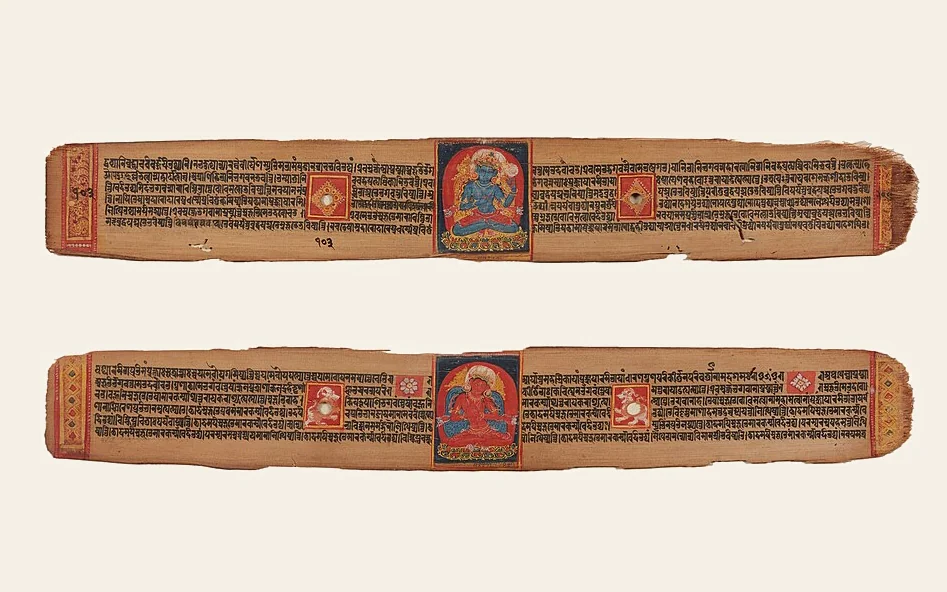
The Heart Sūtra (Sherab Nyingpo · 心经)
In 260 Chinese characters (and a slightly longer framed dialogue in the Tibetan Kangyur), Avalokiteśvara explains to Śāriputra why seeing emptiness—interdependent openness—dissolves fear.
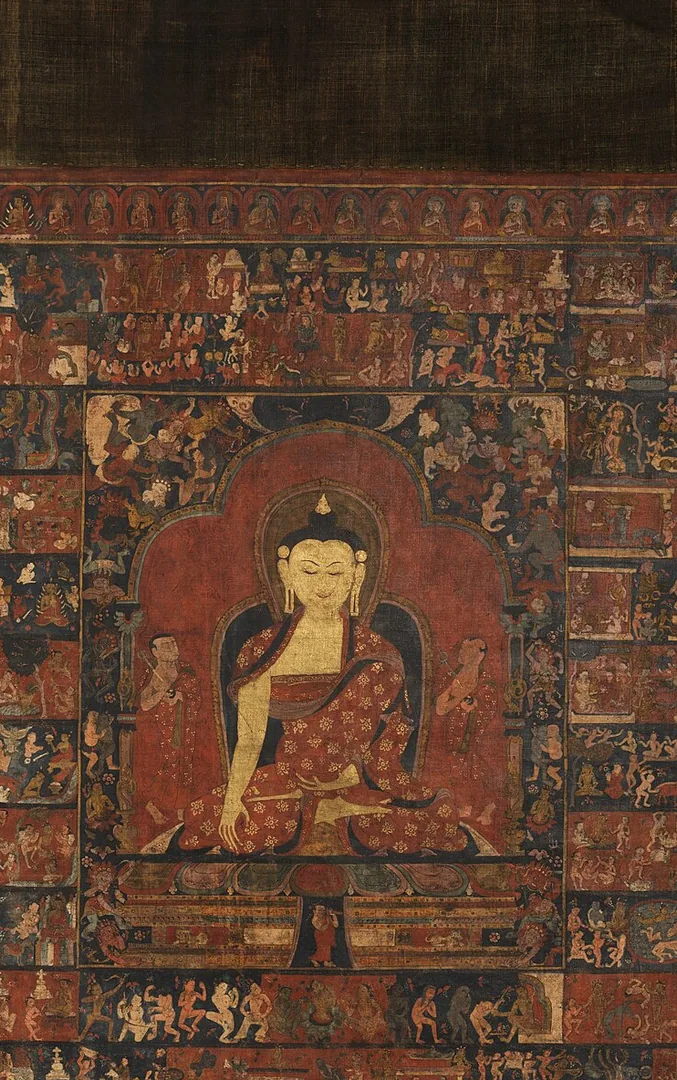
Karma & Interdependence: Why It Is Never Fatalism
In Sanskrit and Tibetan (las), karma literally means “action,” never “predestined fate.” While past choices shape today’s conditions, how one responds right now writes the next cause.
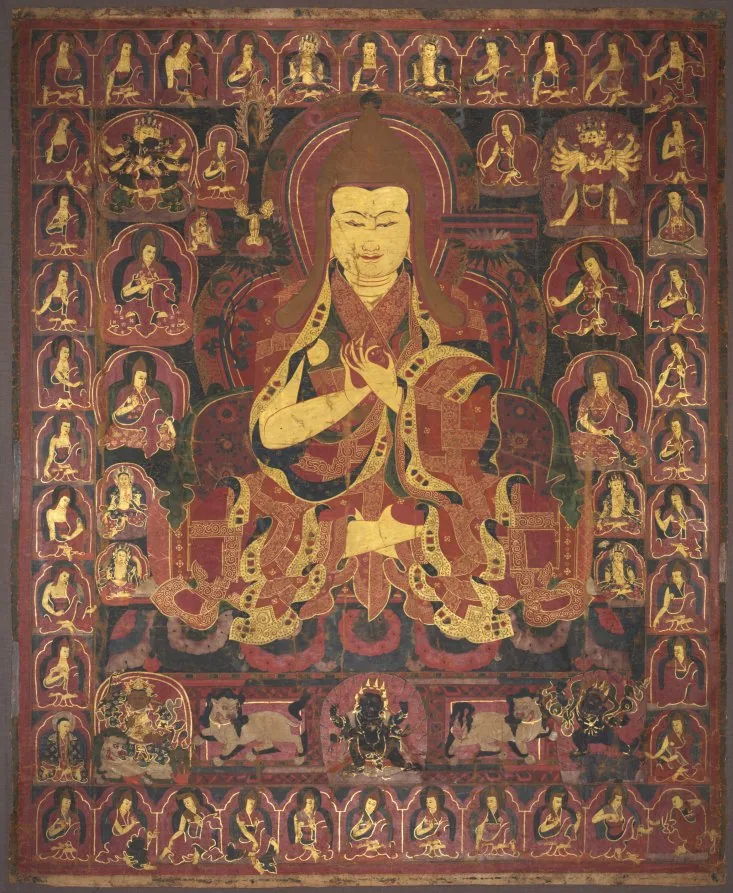
Je Tsongkhapa (Lobsang Drakpa · 1357–1419)
Born in Amdo Tsongkha (modern Qinghai Kumbum) in 1357, Je Rinpoche studied across Sakya, Kagyu, Jonang, and Kadampa masters before founding Ganden Monastery—uniting rigorous Nālandā logic, pure Vinaya discipline, and Tantric contemplation into one seamless graduated path (Lamrim).
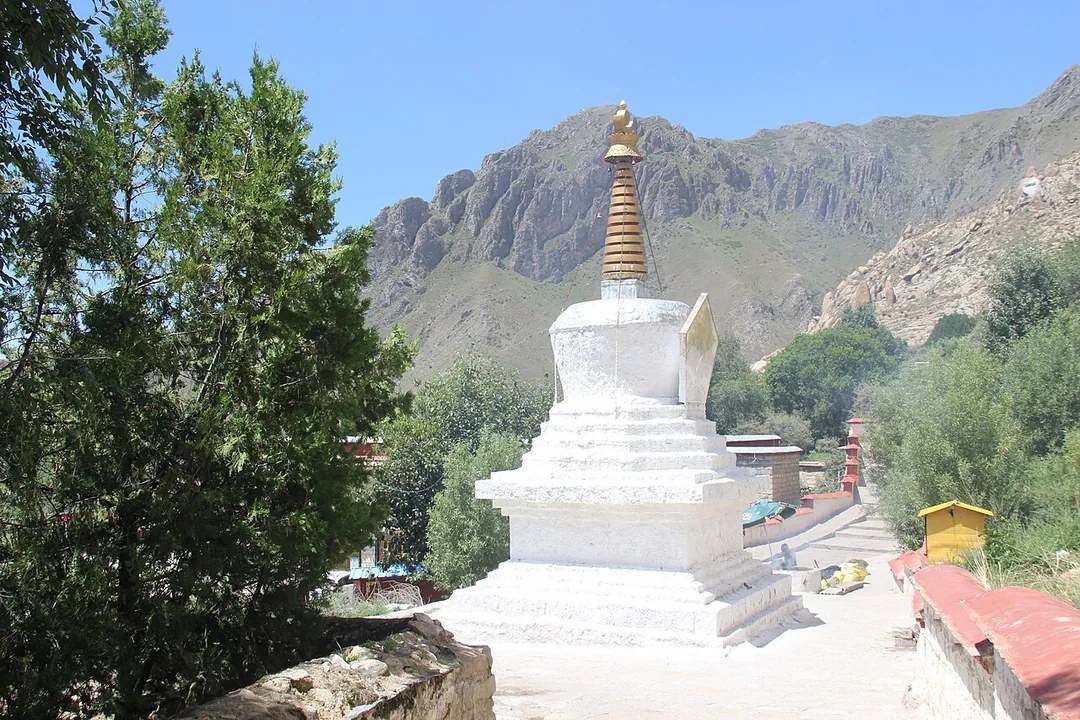
Tibetan Monastic Debate & the Three Great Seats (Sera, Drepung, Ganden)
Every afternoon under the trees of Sera, Drepung, and Ganden monasteries, hundreds of monks pair off—one standing to test definitions with sharp claps, one seated calmly defending consistency—preserving classical Indian Nālandā logic (pramāṇa) as a living anti-dogma discipline.