Je Tsongkhapa (Lobsang Drakpa · 1357–1419)
Synthesis of Sharp Madhyamaka Reason, Monastic Ethics & Tantric Clarity
Born in Amdo Tsongkha (modern Qinghai Kumbum) in 1357, Je Rinpoche studied across Sakya, Kagyu, Jonang, and Kadampa masters before founding Ganden Monastery—uniting rigorous Nālandā logic, pure Vinaya discipline, and Tantric contemplation into one seamless graduated path (Lamrim).
Why Both a Monk’s Robe and Mañjuśrī’s Sword Appear Together
In 14th-century Tibet, practitioners often fell into an artificial split: scholastic logicians dismissed tantric yogis as undisciplined, while meditators dismissed sutric study and Vinaya ethics as dry book-learning. Travelling on foot from Amdo to Central Tibet at sixteen, Tsongkhapa studied tirelessly under more than forty teachers across every school—learning Sakya logic from Rendawa, Kagyu Mahāmudrā, medicine, and Kadampa Lamrim.
His masterwork, the Great Treatise on the Stages of the Path to Enlightenment (Lamrim Chenmo, 1402), showed that every sutra and tantra taught by the Buddha fits together without a single contradiction as graded steps for one person’s awakening. In iconography, his yellow pandita hat and monastic robes honor pure ethical discipline, while the flaming sword and Prajñāpāramitā volume blooming beside his shoulders identify him as human embodiment of Mañjuśrī’s analytical clarity.
The Entire Path in Fourteen Verses: Three Principal Aspects
Asked by a close student in Amdo to distill all eighty-four thousand teachings onto a single sheet of paper, Tsongkhapa composed The Three Principal Aspects of the Path (Lam-gtso rnam-gsum), still memorized across every Gelug college:
| Principal Aspect | Tibetan (Wylie) | What It Remedies | Plain Meaning |
|---|---|---|---|
| 1. Free Determination (Renunciation) | nges ’byung | Compulsive chasing of status & distraction | Seeing clearly that cyclic craving never satisfies; choosing inner freedom |
| 2. Altruistic Bodhicitta | byang chub kyi sems | Solitary self-preoccupation | Refusing solo peace while others suffer; awakening for the sake of all |
| 3. Right View of Emptiness | yang dag pa’i lta ba | Reifying things as inherently fixed | Seeing dependent origination & emptiness as identical (Prāsaṅgika Madhyamaka) |
How It Is Practiced in Living Tradition
Commemorated across Tibet, Qinghai, and Mongolia on the 25th day of the 10th Tibetan month as Ganden Ngamchö (“Ganden Five-Offering Butter Lamp Night”), when rooftops and windows glow with thousands of butter lamps.
Common Questions & Clarifications
Why are two younger monks always painted seated below Je Tsongkhapa?
Together they form the “Father and Two Spiritual Sons” (Je Yab-sras gsum): Gyaltsab Je Darma Rinchen (1364–1432, who succeeded Tsongkhapa on the Ganden throne) and Khedrup Je Gelek Pelzang (1385–1438, renowned master of both logic and Kālacakra).
Why is Kumbum Monastery (Ta’er Si) in Qinghai built around a white sandalwood tree?
According to tradition, a fragrant white sandalwood tree sprouted on the exact spot where Tsongkhapa’s birth blood fell; his mother later built a stupa enclosing the tree—hence 先有塔,而后有寺 (“first the stupa, then the monastery,” Ta’er Si) and Tibetan Kumbum (“Hundred Thousand Images”).
Primary Sources & Further Reading
- Je Tsongkhapa, The Great Treatise on the Stages of the Path to Enlightenment (Lamrim Chenmo, Snow Lion 3 vols.)
- Thupten Jinpa, Tsongkhapa: A Buddha in the Land of Snows (Yale University Press, 2019)
Connected in the Mandala Graph
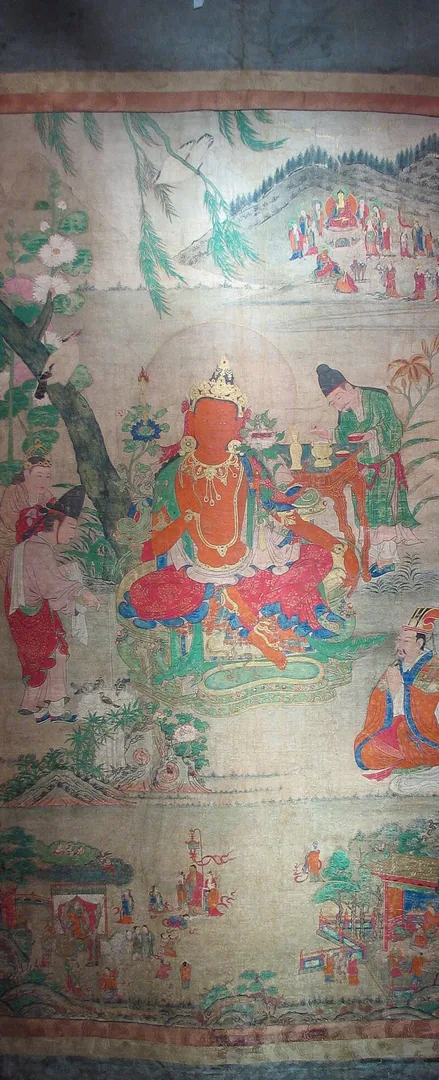
Mañjuśrī (Jampelyang)
Radiant saffron-gold in hue, Mañjuśrī raises a blazing sword overhead with his right hand to slice right through conceptual confusion, while holding the Prajñāpāramitā Sūtra on a lotus at his heart.
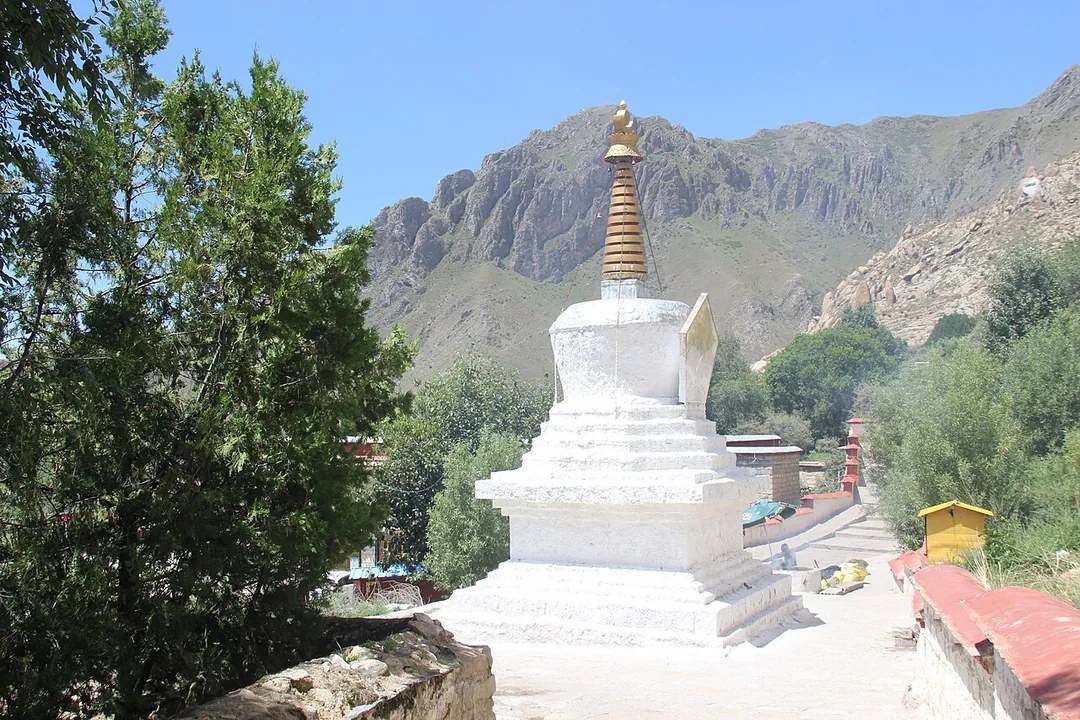
Tibetan Monastic Debate & the Three Great Seats (Sera, Drepung, Ganden)
Every afternoon under the trees of Sera, Drepung, and Ganden monasteries, hundreds of monks pair off—one standing to test definitions with sharp claps, one seated calmly defending consistency—preserving classical Indian Nālandā logic (pramāṇa) as a living anti-dogma discipline.
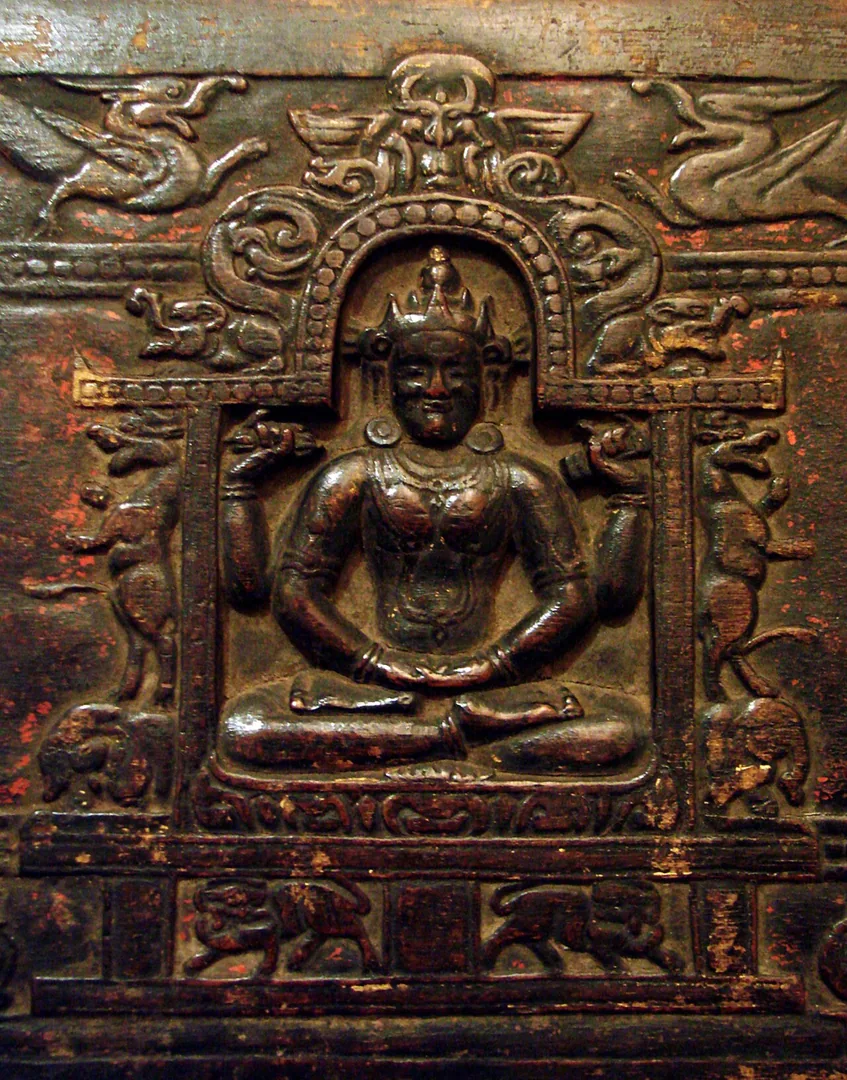
Śūnyatā (Emptiness) & the Two Truths (Madhyamaka)
In Nāgārjuna’s Middle Way philosophy, “emptiness” (stong-pa-nyid) never means nothing exists; it means nothing exists in frozen isolation—and precisely because things lack rigid self-nature, seeds sprout, suffering changes, and awakening works.
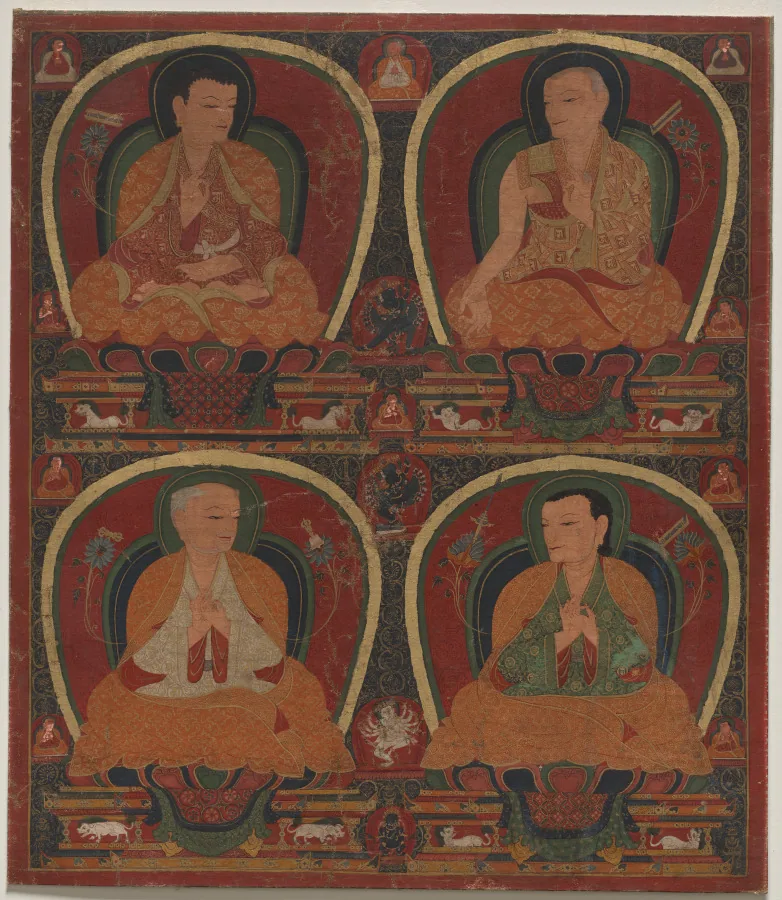
The Four Tibetan Schools & Bön Explained Clearly
Sharing the exact same Kangyur and Tengyur Buddhist canon, Tibet’s four major Buddhist schools differ not in core creed, but in historical translation era, pedagogical sequence, and meditative emphasis.