Mañjuśrī (Jampelyang)
Embodiment of Discriminating Wisdom · Wielder of the Flaming Sword
Radiant saffron-gold in hue, Mañjuśrī raises a blazing sword overhead with his right hand to slice right through conceptual confusion, while holding the Prajñāpāramitā Sūtra on a lotus at his heart.
Why Wisdom Holds Both a Sword and a Book
Mañjuśrī’s two implements form a precise pair. Study without sharp critical inquiry hardens into pedantry; skepticism without deep textual grounding drifts into nihilism. The flaming sword represents analytical insight (vipashyana) that cuts cleanly through rumination and self-deception—note that the sword never strikes another being, only ignorance itself. Meanwhile, the Prajñāpāramitā volume resting at heart-level grounds that sharpness in warmth and interdependence.
His youthful sixteen-year-old appearance (“Crown Prince of the Dharma,” Kumārabhūta) signals a mind that remains fresh, curious, and uncalcified by dogma.
The Three Bodhisattvas of Snowland (Rigsum Gönpo)
Across Tibetan rooftops and mountain passes, three colored stupas or mantras often stand side by side as the Rigsum Gönpo (“Lords of the Three Families”): Avalokiteśvara (compassion), Mañjuśrī (wisdom), and Vajrapāṇi (courageous power). Great scholar-saints of every school—Longchenpa, Sakya Paṇḍita, and Je Tsongkhapa—were revered as human embodiments of Mañjuśrī’s clarity.
How It Is Practiced in Living Tradition
Before philosophical debate in monastic courtyards—and among lay students preparing for exams, writing, or difficult life decisions—practitioners recite Oṃ A Ra Pa Ca Na Dhīḥ to quiet mental static.
Common Questions & Clarifications
Why do Tibetan pilgrims travel thousands of miles to Mount Wutai in Shanxi?
Known in Tibetan as Riwo Tse-nga (“Five-Peaked Mountain”), Mount Wutai is recognized in the Avataṃsaka Sūtra as Mañjuśrī’s earthly abode, making it a unique meeting ground of Tibetan, Mongol, and Chinese Buddhist traditions since the Tang and Yuan dynasties.
Primary Sources & Further Reading
- Mañjuśrīnāmasaṃgīti (Chanting the Names of Mañjuśrī, Toh 360)
- Mipham Rinpoche (19th c.), Sword of Wisdom for Thoroughly Ascertaining Reality
Connected in the Mandala Graph
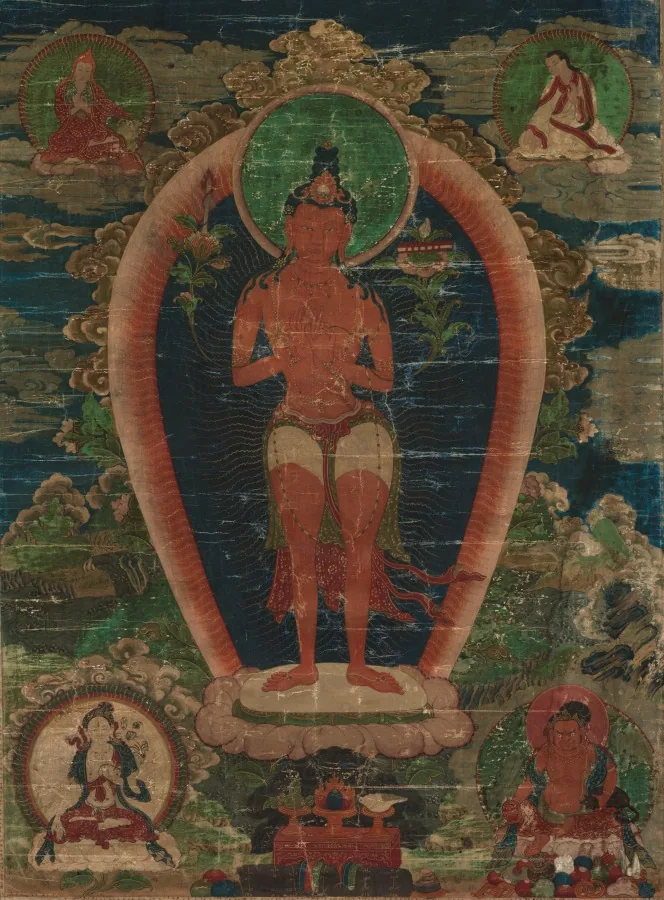
Oṃ A Ra Pa Ca Na Dhīḥ (Mañjuśrī Mantra)
Preserving the first five letters of the ancient Gāndhārī Kharoṣṭhī alphabet used in early Prajñāpāramitā manuscripts, this mantra trains the mind in lucid, unhurried discernment.
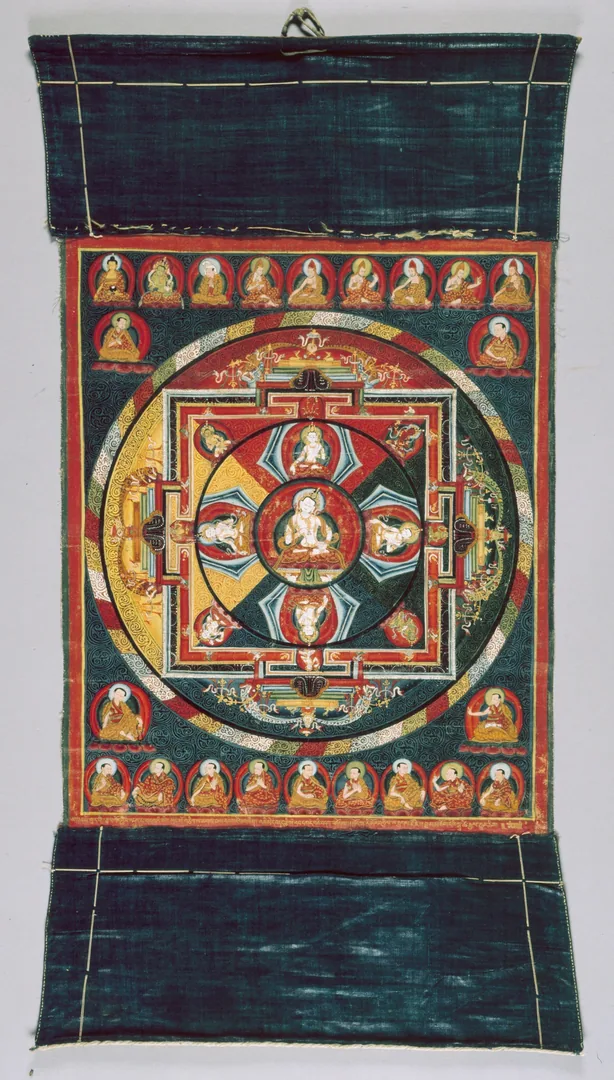
Vajrapāṇi (Chana Dorje · Wielder of the Thunderbolt)
Standing in midnight-blue warrior stance amidst blazing wisdom flames and brandishing a five-pronged vajra overhead, Vajrapāṇi embodies fearless spiritual power—completing Tibet’s beloved Rigsum Gönpo triad alongside Chenrezig (compassion) and Mañjuśrī (wisdom).
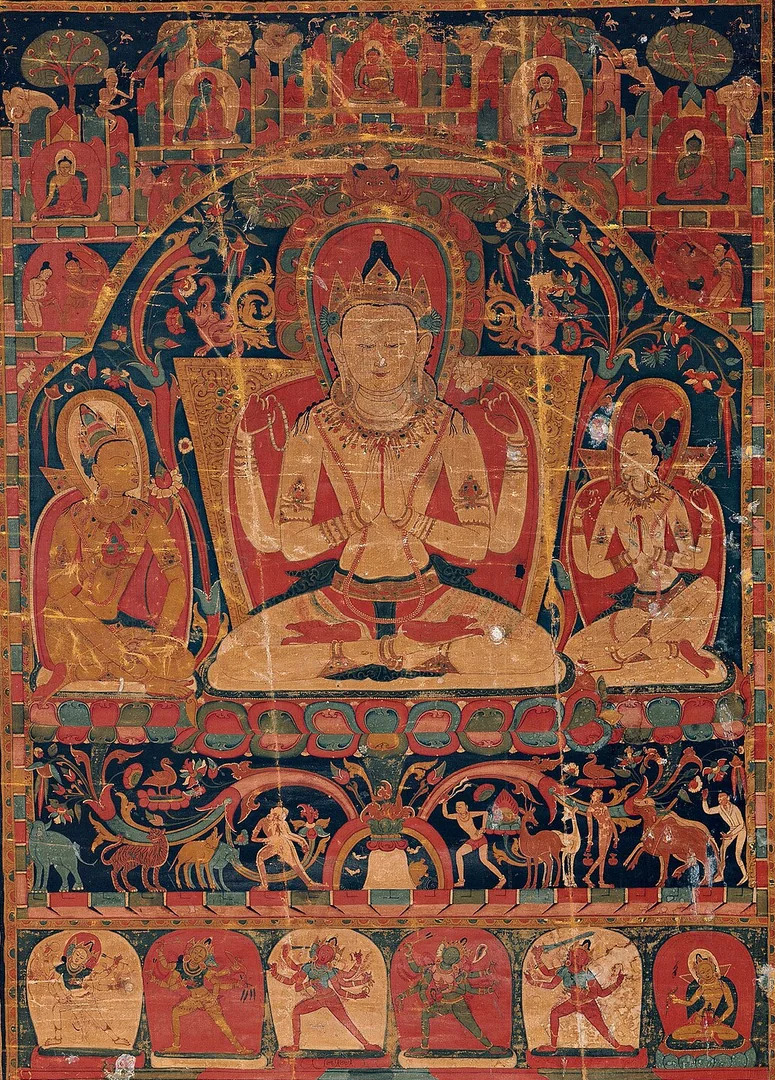
Avalokiteśvara (Chenrezig)
Known in Tibetan as Chenrezig (“One Who Gazes with Unwavering Eyes”), the four-armed white form embodies impartial compassion united with emptiness, associated with the Six-Syllable Mantra Oṃ Maṇi Padme Hūṃ.
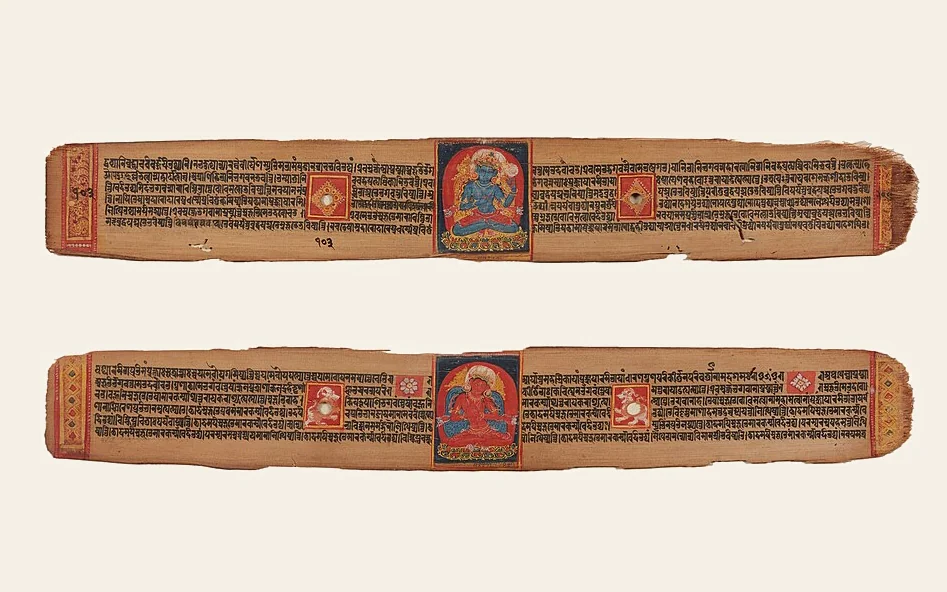
The Heart Sūtra (Sherab Nyingpo · 心经)
In 260 Chinese characters (and a slightly longer framed dialogue in the Tibetan Kangyur), Avalokiteśvara explains to Śāriputra why seeing emptiness—interdependent openness—dissolves fear.