Vajrapāṇi (Chana Dorje · Wielder of the Thunderbolt)
Bodhisattva of Awakened Power · Guardian of the Tantras
Standing in midnight-blue warrior stance amidst blazing wisdom flames and brandishing a five-pronged vajra overhead, Vajrapāṇi embodies fearless spiritual power—completing Tibet’s beloved Rigsum Gönpo triad alongside Chenrezig (compassion) and Mañjuśrī (wisdom).
Why Compassion and Wisdom Remain Incomplete Without Courageous Power
Throughout Tibetan villages, three stupas or inscribed stones stand together as the Rigsum Gönpo (“Protectors of the Three Families”): Avalokiteśvara, Mañjuśrī, and Vajrapāṇi. Their pairing encodes an astute psychological insight: compassion without strength collapses into helpless burnout; sharp intellect without courage stays trapped in analysis paralysis. Vajrapāṇi supplies nus-mthu—decisive, fearless spiritual energy capable of breaking entrenched habits and standing steady in crisis.
Unlike peaceful bodhisattvas seated calmly on moon discs, Vajrapāṇi usually appears in wrathful form (khro-bo), lunging on a solar disc in a blaze of fire. His ferocity is never personal rage; it is compassion refusing to yield to cruelty, depression, or fear.
“Lord of Secrets” (Guhyapati): Compiler of the Tantras
Just as Ānanda compiled the Buddha’s public Sūtras and Mañjuśrī dialogued in Mahāyāna discourses, canonical Vajrayāna tradition honors Vajrapāṇi as Guhyapati (“Lord of Secrets”)—the interlocutor who requested, received, and safeguarded the esoteric Tantras on Mount Malaya until human practitioners were ready.
How It Is Practiced in Living Tradition
Invoked by practitioners facing paralysis, acute fear, neurological exhaustion, or heavy psychological obstacles; recited concise and clear as Oṃ Vajrapāṇi Hūṃ.
Common Questions & Clarifications
What is the difference between Vajrapāṇi and Vajrasattva?
Though deeply related within the Vajra Family, they are distinct in Tibetan liturgy and art: Vajrasattva is crystal-white and peaceful, seated with vajra and bell for purification of regrets; Vajrapāṇi is midnight-blue and wrathful, standing in flames wielding a vajra overhead for courageous protection.
Primary Sources & Further Reading
- Vajrapāṇyabhiṣeka Mahātantra (Consecration of Vajrapāṇi, Toh 496), Kangyur
- Guhyasamāja Tantra (Toh 442), Kangyur
Connected in the Mandala Graph
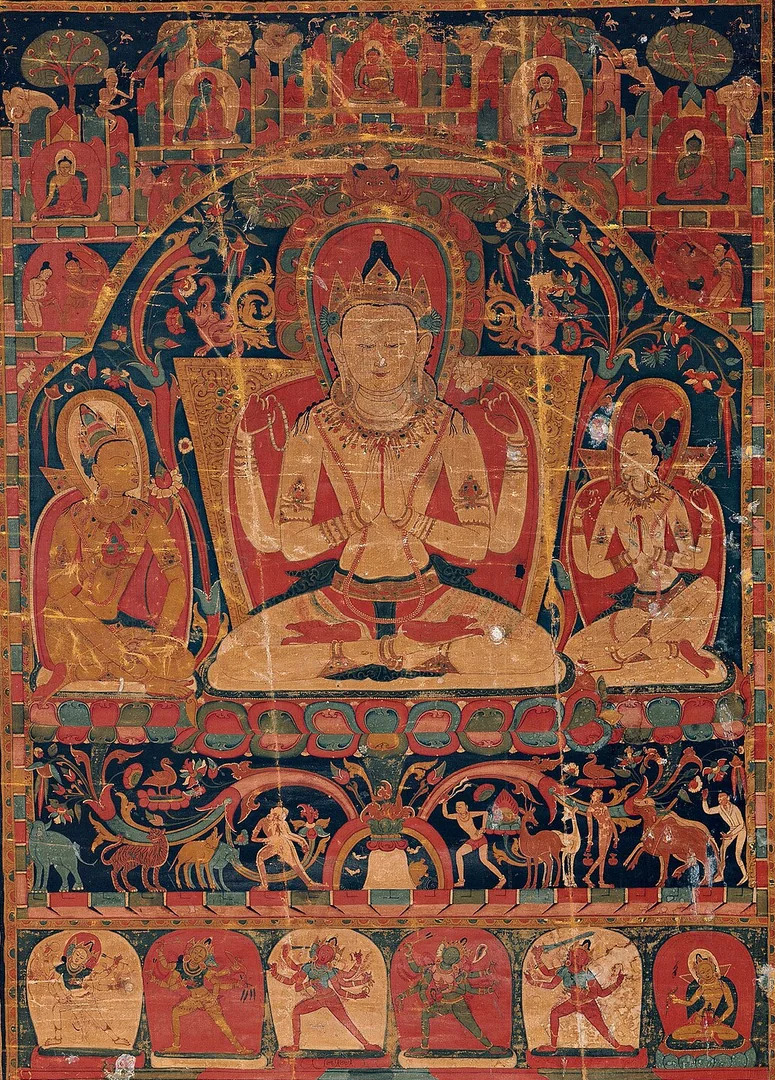
Avalokiteśvara (Chenrezig)
Known in Tibetan as Chenrezig (“One Who Gazes with Unwavering Eyes”), the four-armed white form embodies impartial compassion united with emptiness, associated with the Six-Syllable Mantra Oṃ Maṇi Padme Hūṃ.
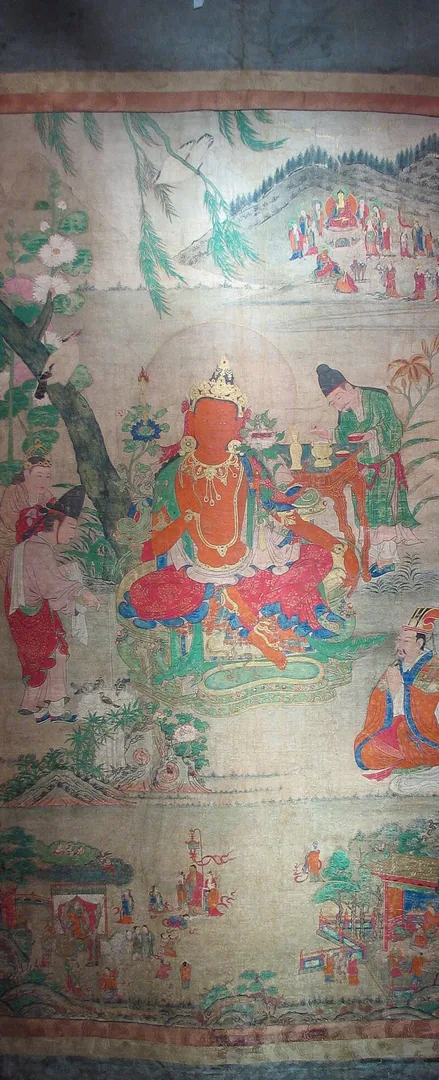
Mañjuśrī (Jampelyang)
Radiant saffron-gold in hue, Mañjuśrī raises a blazing sword overhead with his right hand to slice right through conceptual confusion, while holding the Prajñāpāramitā Sūtra on a lotus at his heart.
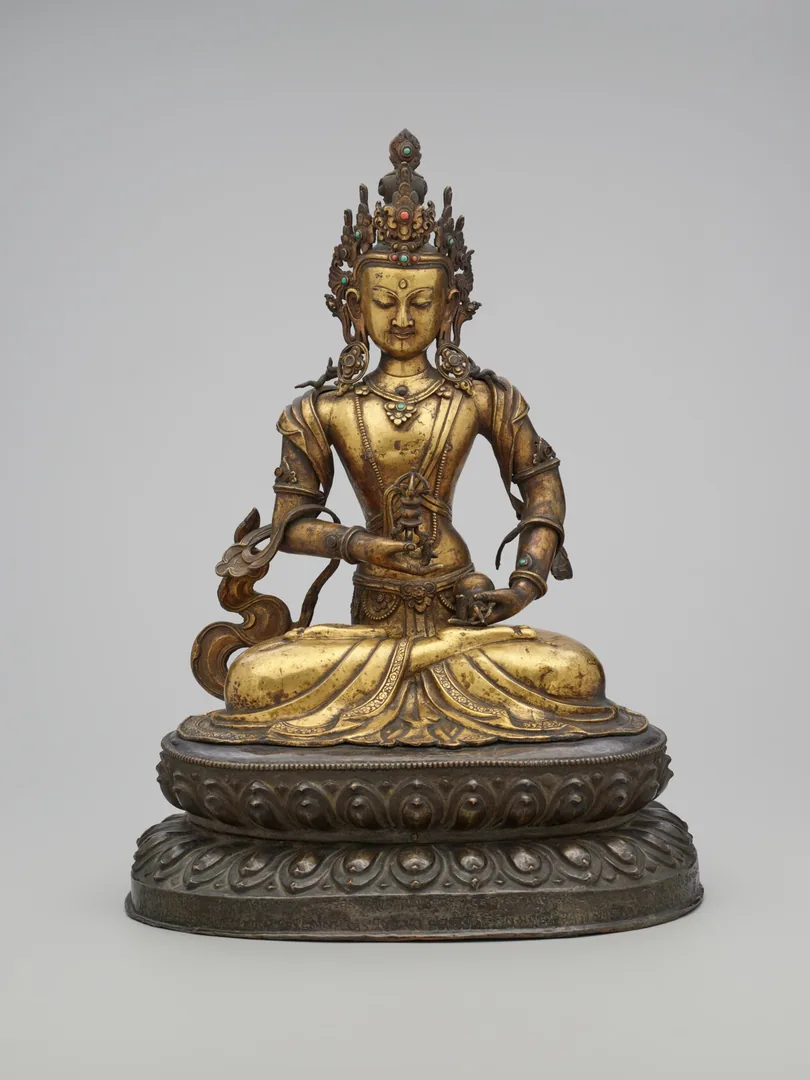
Vajrasattva (Dorje Sempa)
Radiant crystal-white in sambhogakāya ornaments, holding a five-pronged vajra at his heart and a silver bell at his hip, Vajrasattva embodies the indestructible purity underlying transient human mistakes.
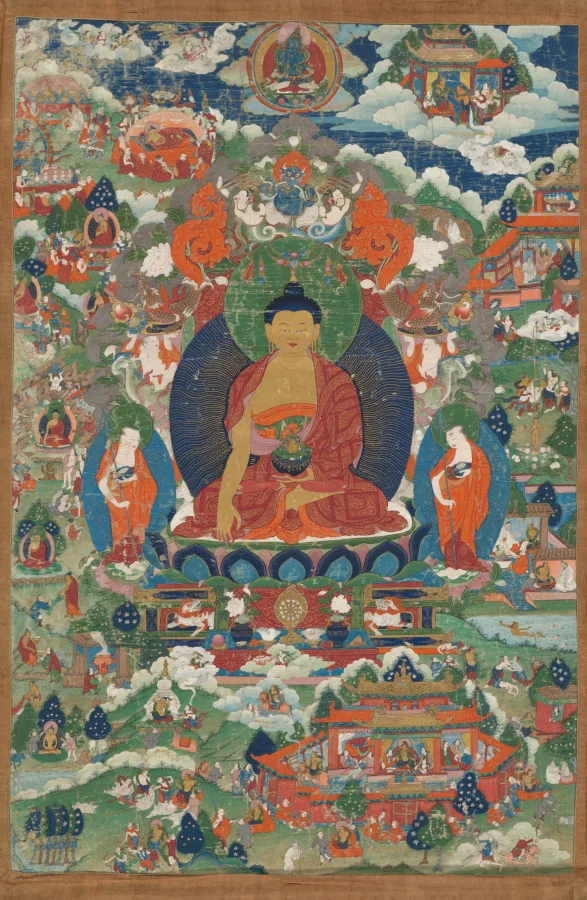
How to Read a Thangka Painting
Meaning “something unrolled” (thang-ka), a Tibetan scroll painting is structured along a strict vertical and proportional grid so portable monasteries on horseback could carry complete contemplative maps.