How to Read a Thangka Painting
Central Axis, Lineage Sky, Protectors & Stone Pigments
Meaning “something unrolled” (thang-ka), a Tibetan scroll painting is structured along a strict vertical and proportional grid so portable monasteries on horseback could carry complete contemplative maps.
Three Vertical Zones: Top, Center, and Base
First-time museum visitors often feel overwhelmed by dozens of small figures floating in clouds and flames. Step back and read the vertical axis in three registers: (1) The Central Figure—largest in scale, seated on a lotus and sun/moon disc—identifies the meditation subject of the scroll. (2) The Upper Sky Register depicts the lineage masters and primordial Buddha (flanked by sun and moon) showing how the teaching reached the present day. (3) The Lower Earth/Altar Register places fierce-looking Dharma protectors and wealth guardians at the base, clearing obstacles on the path.
Why Wrathful Figures Have Flames and Fangs
Wrathful deities (khro-bo) startle newcomers, yet in Tibetan iconography they are compassionate Buddhas in fierce guise—like a parent shouting sharply to pull a toddler back from traffic. Notice the third eye on their brow (wisdom) and the lotus cushion beneath their feet: fierce energy directed entirely against ego-grasping, apathy, and cruelty, never out of personal hatred.
How It Is Practiced in Living Tradition
Painted on prepared cotton canvas along charcoal geometric grids (thig-tse), consecrated on the reverse with Oṃ Āḥ Hūṃ aligned to crown, throat, and heart.
Common Questions & Clarifications
What distinguishes the Karma Gadri style of Eastern Tibet (Kham)?
Developed in Kham from the 16th century onward, the Karma Gadri school blended canonical Indian-Nepali deity proportions with spacious blue-green Chinese landscape brushwork, creating extraordinary stillness and depth.
Primary Sources & Further Reading
- David P. Jackson & Janice A. Jackson, Tibetan Thangka Painting: Methods and Materials
- Himalayan Art Resources (HAR) Open Iconographic Database
Connected in the Mandala Graph
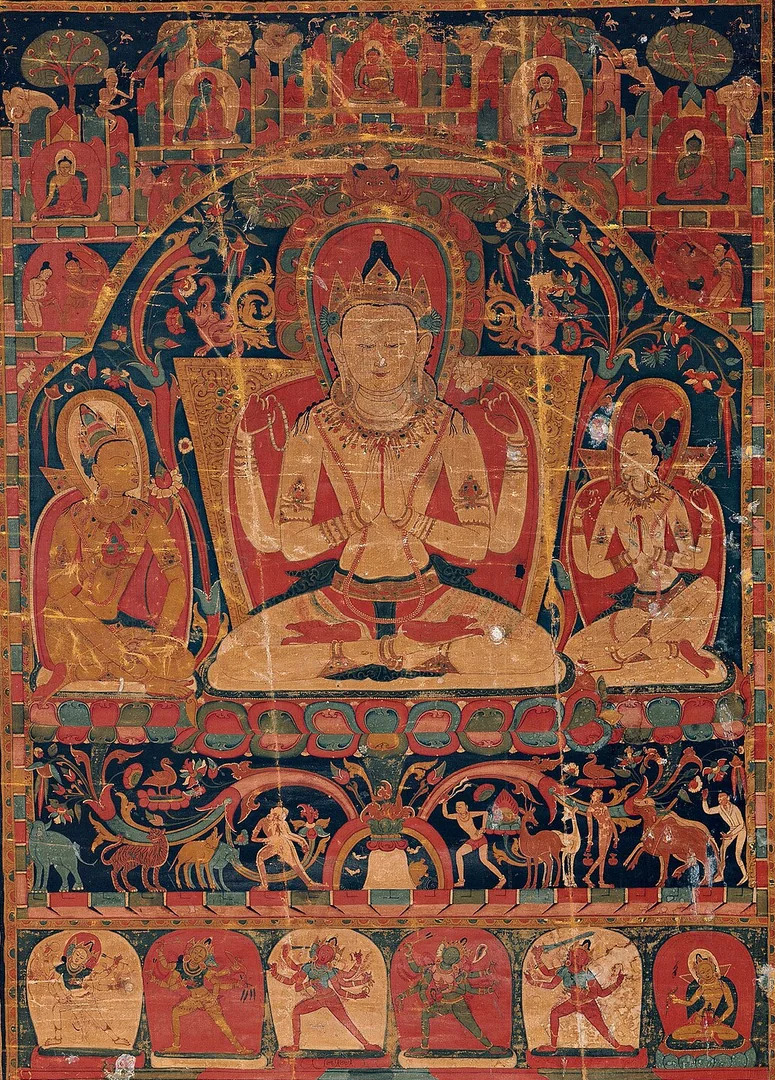
Avalokiteśvara (Chenrezig)
Known in Tibetan as Chenrezig (“One Who Gazes with Unwavering Eyes”), the four-armed white form embodies impartial compassion united with emptiness, associated with the Six-Syllable Mantra Oṃ Maṇi Padme Hūṃ.
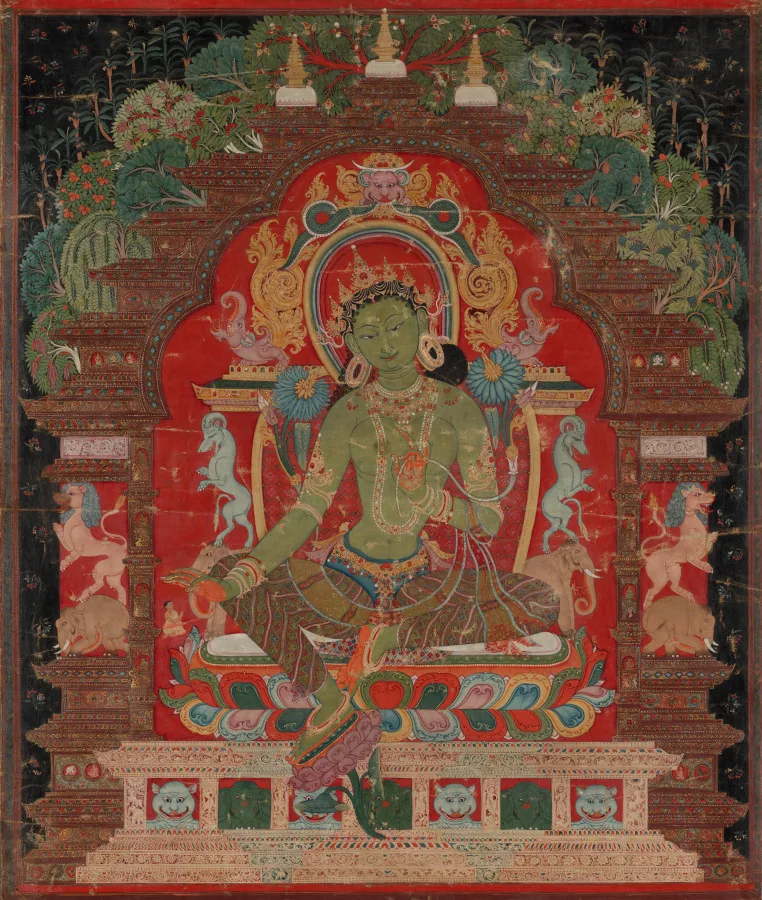
Green Tārā (Sgrol-ljang)
Seated in royal ease with her right foot already stepping off the lotus cushion, Green Tārā embodies enlightened compassion in immediate motion—green being the color of the Wind/Action Buddha Family.
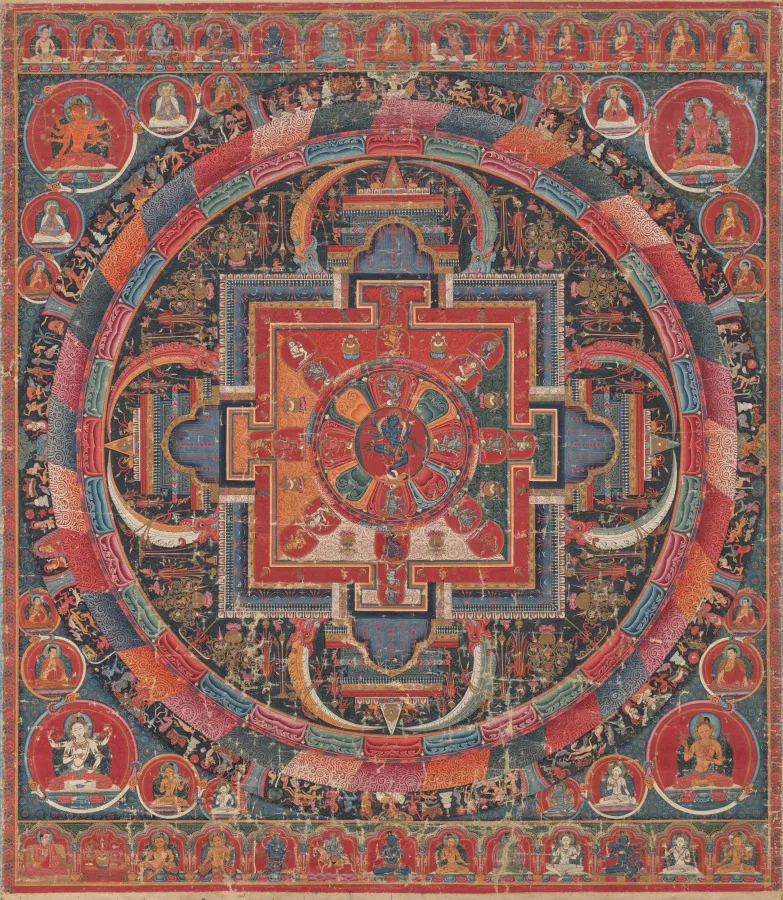
The Mandala (Kyilkhor · དཀྱིལ་འཁོར།)
Rendered in Tibetan as dkyil-’khor (“center and periphery”), a mandala is not decorative symmetry—it is a two-dimensional architectural floor plan of an awakened three-dimensional palace.
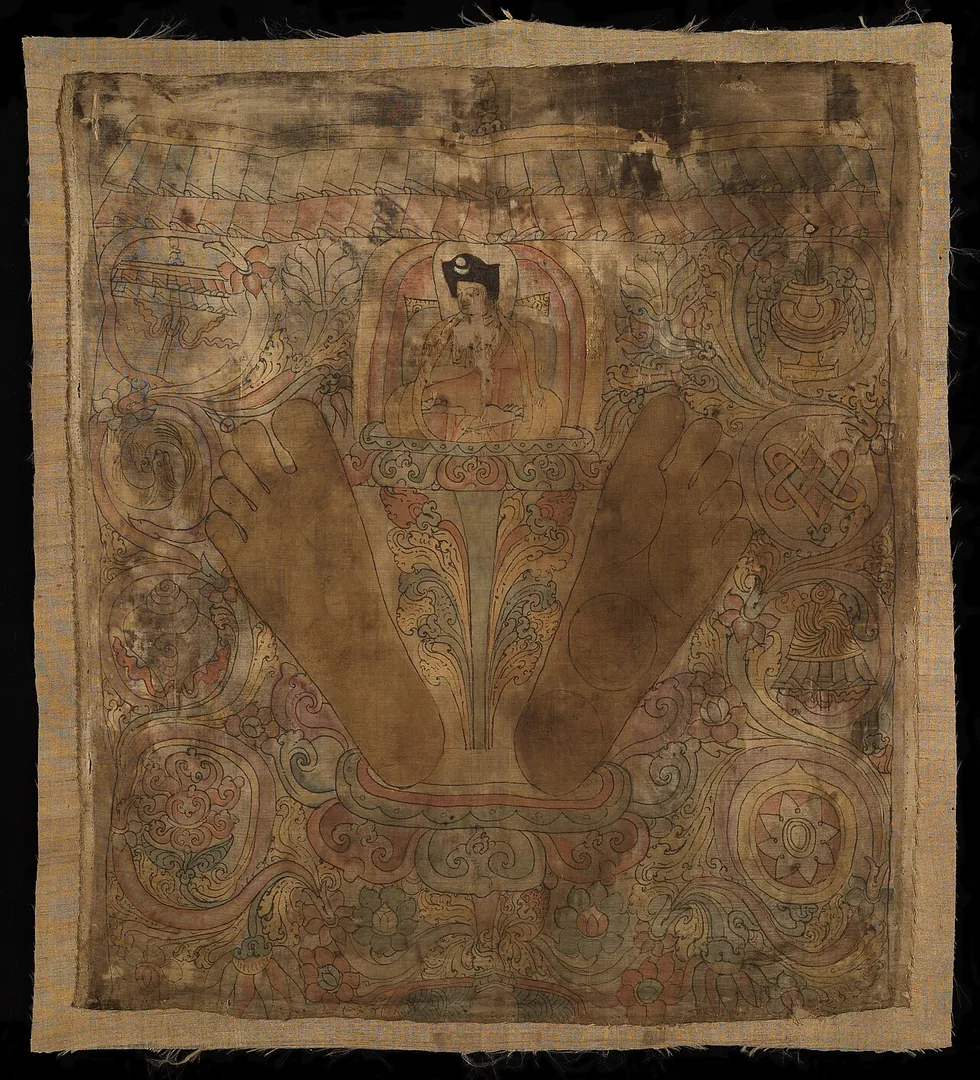
The Eight Auspicious Symbols (Ashtamangala)
Originally royal coronation offerings in ancient India and reinterpreted as attributes of the Buddha’s awakened body, speech, and mind, these eight emblems form the foundational grammar of Tibetan visual design.