Mahākāla (Gönpo · Wisdom Dharma Protector)
Wrathful Avalokiteśvara · Why Fierce Protectors Guard Compassion
Known simply in Tibetan as Gönpo (“The Protector”), Mahākāla (“Great Black One” / “Beyond Time”) manifests Avalokiteśvara’s compassion in fierce midnight-blue form—shattering self-deception and guarding ethical integrity across Kagyu, Sakya, and Gelug monasteries.
Why Would Gentle Avalokiteśvara Take a Terrifying Form?
Tibetan scriptures preserve the origin story: Avalokiteśvara once reflected that gentle, smiling peaceful forms easily inspire receptive minds, yet beings caught in violent arrogance, cynicism, or self-destructive compulsion simply brush mildness aside. Out of unbroken love, a dark-blue syllable HŪṂ emerged from Chenrezig’s heart and blazed forth as Mahākāla—fierce enough to stop destructive momentum in its tracks.
His jet-black or midnight-blue color carries precise philosophical meaning: just as black absorbs every color without changing its own hue, Ultimate Reality (dharmakāya) embraces every phenomenon without stain. The curved chopper (kartika) in his right hand slices the root of ego-clinging; the skullcup in his left transforms the blood of the five poisons into wisdom nectar.
Crucial Distinction: Enlightened vs. Worldly Protectors
Traditional Tibetan lamas draw an ironclad boundary between two categories of Dharma protectors (chos-skyong / dharmapāla): (1) Supramundane Wisdom Protectors (’jig-rten las ’das-pa’i srung-ma)—fully awakened Buddhas and high Bodhisattvas such as Mahākāla, Palden Lhamo, Ekajaṭī, and Vaiśravaṇa, in whom one may place spiritual refuge; and (2) Worldly Oath-Bound Spirits (’jig-rten-pa’i srung-ma)—powerful local mountain or planetary spirits bound under oath by masters like Padmasambhava, respected like helpful neighbors or civic guards, yet never taken as ultimate spiritual refuge.
| Form | Tibetan Name | Arms | Primary Lineage |
|---|---|---|---|
| Six-Armed Mahākāla | Gönpo Chakdrukpa | 1 face, 6 arms (midnight blue) | Shangpa Kagyu & Gelug primary protector |
| Black-Cloaked Mahākāla | Bernagchen | 1 face, 2 arms (black silk cloak) | Karma Kagyu (Karmapas’ protector) |
| Lord of the Pavilion | Gönpo Gur (Panjarnātha) | 1 face, 2 arms (holding gandī beam) | Sakya school principal protector |
| Four-Armed Mahākāla | Gönpo Chakzhipa | 1 face, 4 arms (seated, holding sword & fruit) | Chakrasamvara cycle (Kagyu & Nyingma) |
How It Is Practiced in Living Tradition
Chanted daily in monastic evening protector liturgies (Kangso) and especially on the 29th lunar day of every month to clear ethical compromises and obstacles to altruistic practice.
Common Questions & Clarifications
Is Mahākāla the same as the “Daikokuten” smiling kitchen god seen in Japan?
Remarkably, yes—both derive from Sanskrit Mahākāla! Seventh-century traveler Yijing recorded small dark Mahākāla images placed by monastery pillars in Indian kitchens to ensure abundant food for Studying monks; in Japan that peaceful wealth-kitchen aspect merged with Ōkuninushi as smiling Daikokuten, whereas Tibet preserved the fierce tantric wisdom-protector lineages.
Why are Mahākāla statues in monastery Gönkhang chapels often veiled with silk scarves?
Out of pedagogical care rather than secrecy: fierce tantric symbolism (flaying knives, skullcups, flames) is easily misread literally by uninitiated visitors as violence, so monasteries veil the faces to preserve contemplative respect.
Primary Sources & Further Reading
- Śrīmahākālatantra (Toh 440), Tibetan Kangyur
- René de Nebesky-Wojkowitz, Oracles and Demons of Tibet: The Cult and Iconography of the Tibetan Protective Deities
Connected in the Mandala Graph
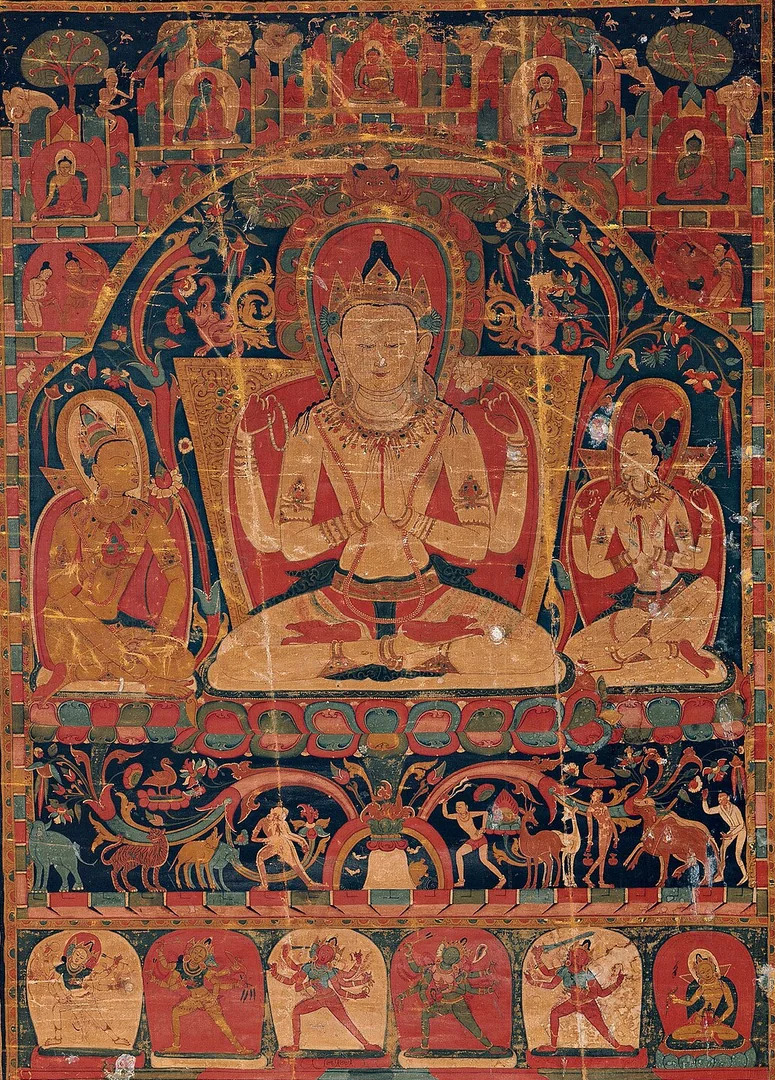
Avalokiteśvara (Chenrezig)
Known in Tibetan as Chenrezig (“One Who Gazes with Unwavering Eyes”), the four-armed white form embodies impartial compassion united with emptiness, associated with the Six-Syllable Mantra Oṃ Maṇi Padme Hūṃ.
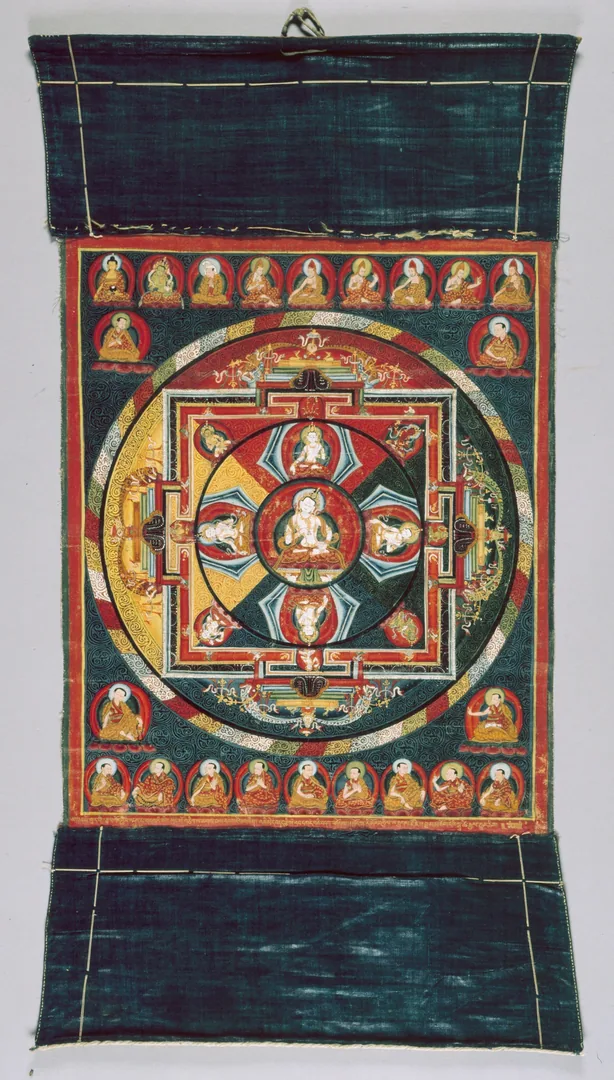
Vajrapāṇi (Chana Dorje · Wielder of the Thunderbolt)
Standing in midnight-blue warrior stance amidst blazing wisdom flames and brandishing a five-pronged vajra overhead, Vajrapāṇi embodies fearless spiritual power—completing Tibet’s beloved Rigsum Gönpo triad alongside Chenrezig (compassion) and Mañjuśrī (wisdom).
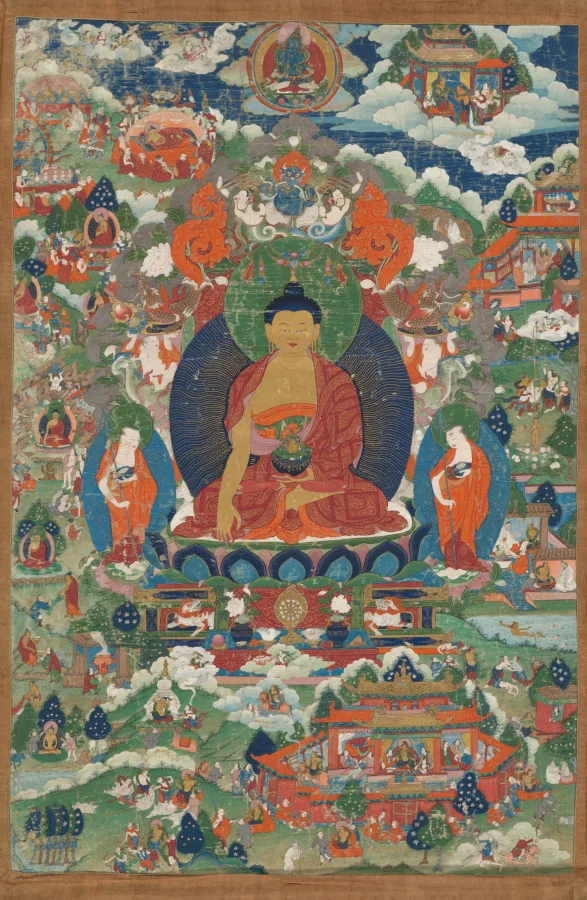
How to Read a Thangka Painting
Meaning “something unrolled” (thang-ka), a Tibetan scroll painting is structured along a strict vertical and proportional grid so portable monasteries on horseback could carry complete contemplative maps.
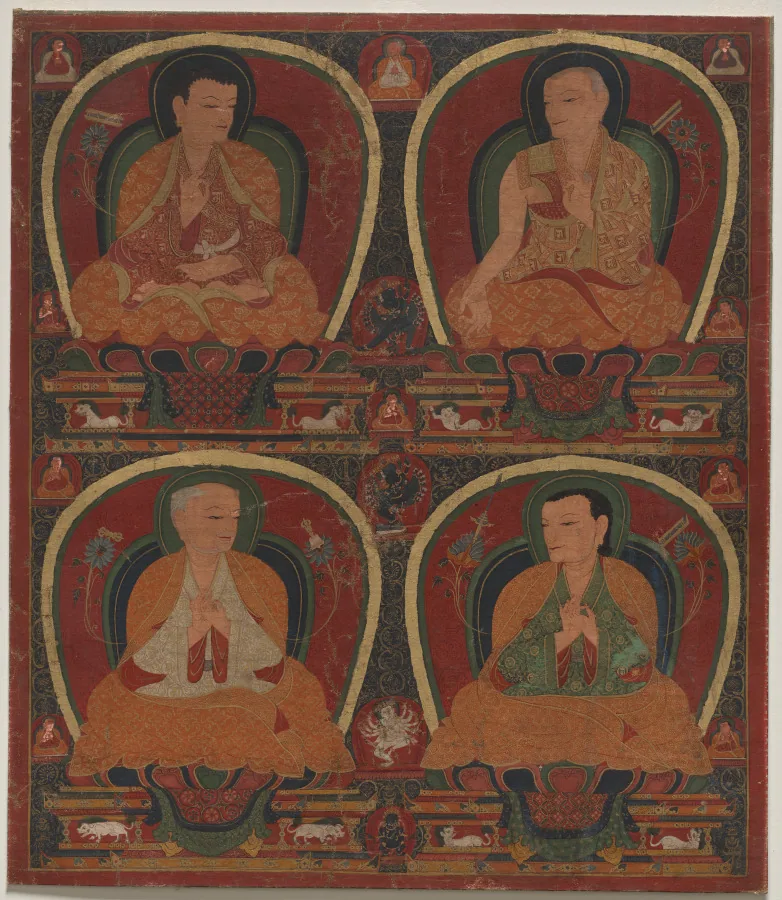
The Four Tibetan Schools & Bön Explained Clearly
Sharing the exact same Kangyur and Tengyur Buddhist canon, Tibet’s four major Buddhist schools differ not in core creed, but in historical translation era, pedagogical sequence, and meditative emphasis.