Butter Lamps & Seven Water Bowls (Chöme & Yönchab)
Why Plain Cold Water & Clarified Flame Outshine Costly Gold Offerings
Across every Tibetan household shrine, a straight row of seven brass bowls filled with fresh morning water (yönchab) sits beside warm golden butter lamps (chöme)—chosen precisely because water is free of stinginess and flame dispels darkness without discrimination.
Why Atiśa Said Tibet Needed Only Water to Accumulate Boundless Merit
When the great Indian master Atiśa arrived in Ngari in 1042, he marveled at Tibet’s snowmelt streams—cool, sweet, light, soft, crystal-clear, odorless, soothing to the throat, and gentle on the stomach (the classical Eight Qualities of Pure Water). Teaching his disciples, he observed that when wealthy donors offer gold or silk, pride and stinginess easily creep in; clean water, by contrast, is abundant, free to the poorest herder, and offered purely from mindfulness.
Even the physical choreography of pouring morning water bowls is a moving meditation: empty bowls are never left face-up on a shrine (stored upside down overnight, turned upright one by one at dawn with a splash of “base water” so they never sit dry), spaced exactly the width of a single grain of barley—neither clinking together (which breeds dullness) nor drifting far apart—and poured to just one grain below the rim without spilling.
| Bowl # | Sanskrit / Tibetan Role | Traditional Offering | Inner Contemplation |
|---|---|---|---|
| 1 · Argham | མཆོད་ཡོན། (Drinking water) | Cool water for a thirsty traveler | Cooling feverish craving & restlessness |
| 2 · Pādyam | ཞབས་བསིལ། (Foot-washing water) | Water to wash dusty feet | Humbly clearing karmic stains of walking in delusion |
| 3 · Puṣpe | མེ་ཏོག (Fresh flowers) | Garlands pleasing the eyes | Opening generous beauty & ethical grace |
| 4 · Dhūpe | བདུག་སྤོས། (Incense) | Natural aromatic herbs | Fragrance of pure ethical integrity (śīla) |
| 5 · Āloke | མར་མེ། (Butter lamp light) | Clarified yak-butter flame | Wisdom dispelling the darkness of ignorance |
| 6 · Gandhe | དྲི་ཆབ། (Saffron-scented water) | Soothing perfumed water applied to heart | Refreshing diligence & calm joy |
| 7 · Naivedya | ཞལ་ཟས། (Nourishing food) | Pure sustenance (followed silently by Śabda music) | Sustaining samādhi without dependence on coarse craving |
Butter Lamps: Why Clarified Flame Embodies Impermanence and Wisdom
In temples like Jokhang and Kumbum, massive golden vats of clarified yak butter burn day and night. Tibetan masters point right at the lamp to explain mind: the brass cup is the body, the golden butter is accumulated merit and breath, the cotton wick is ethical mindfulness, and the clear flame—neither identical to the wick nor separate from it, illuminating others while consuming attachment—is prajñā wisdom.
How It Is Practiced in Living Tradition
Offered every morning with Oṃ Āḥ Hūṃ, lighting lamps especially on new/full moons, Ganden Ngamchö, Chötrul Düchen, and during 49-day remembrance vigils.
Common Questions & Clarifications
Why must you never blow out a Tibetan butter lamp with your mouth?
In Himalayan and Indian ritual etiquette, human breath carries saliva and impure prāṇa; if a lamp needs to be extinguished for safety, one gently waves a fan/tweezers or dips the wick tip into the melted butter.
Primary Sources & Further Reading
- Lama Zopa Rinpoche, Extensive Offering Practice & Preliminary Guidelines on Water Bowls
Connected in the Mandala Graph
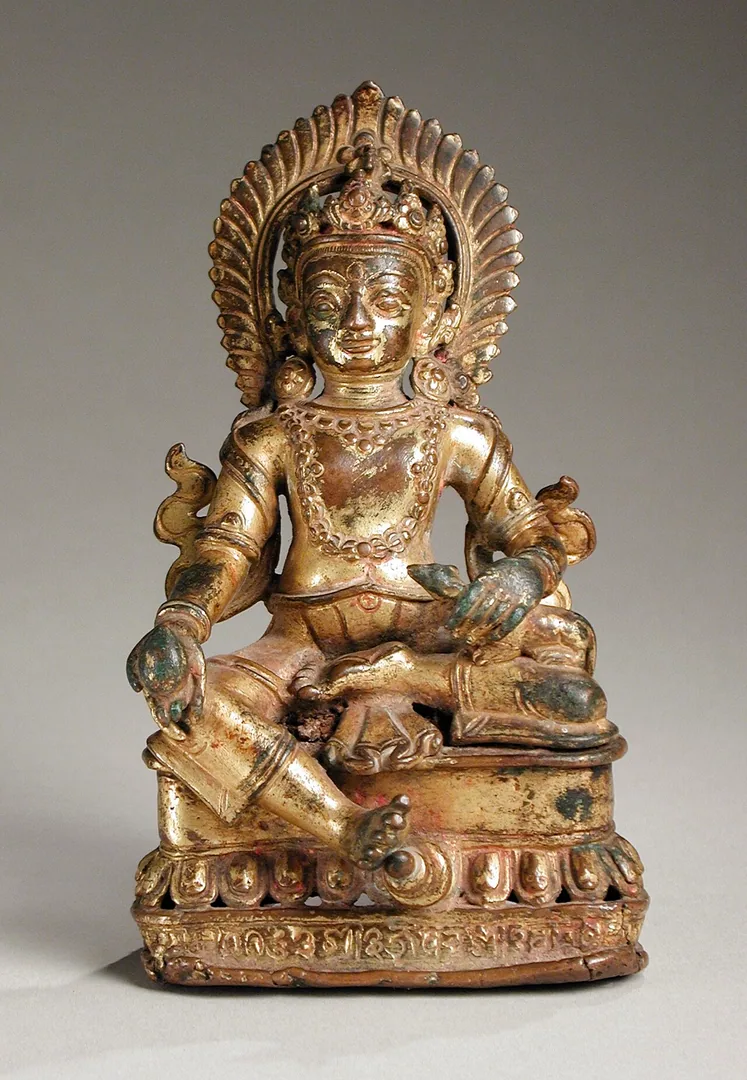
Yellow Jambhala (Dzambhala Serpo)
Seated in royal ease with a golden body, holding a citron fruit in his right hand and a jewel-disgorging mongoose under his left arm, Yellow Jambhala embodies Buddhist abundance: freeing practitioners from survival panic and miserliness so Dharma and generosity can flourish.
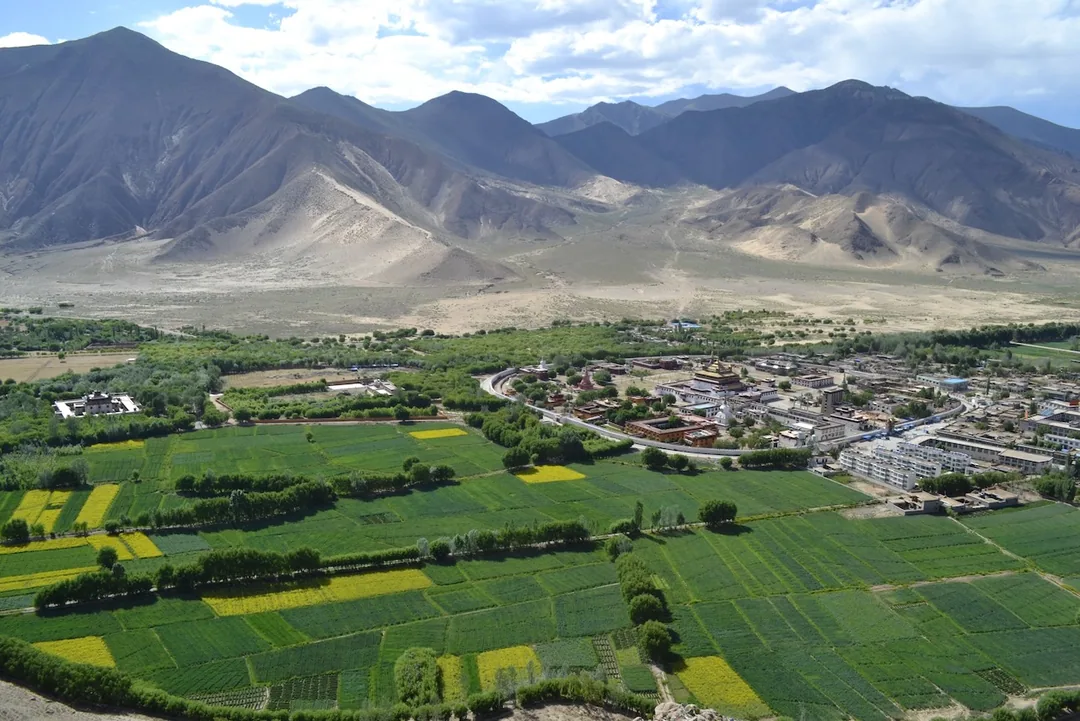
Jokhang Temple & Samye Monastery
Built in the 7th and 8th centuries respectively, Lhasa’s Jokhang anchors Tibetan devotional pilgrimage around the Jowo Śākyamuni, while Samye in Lhoka realizes an entire three-dimensional mandala in stone, timber, and earth.
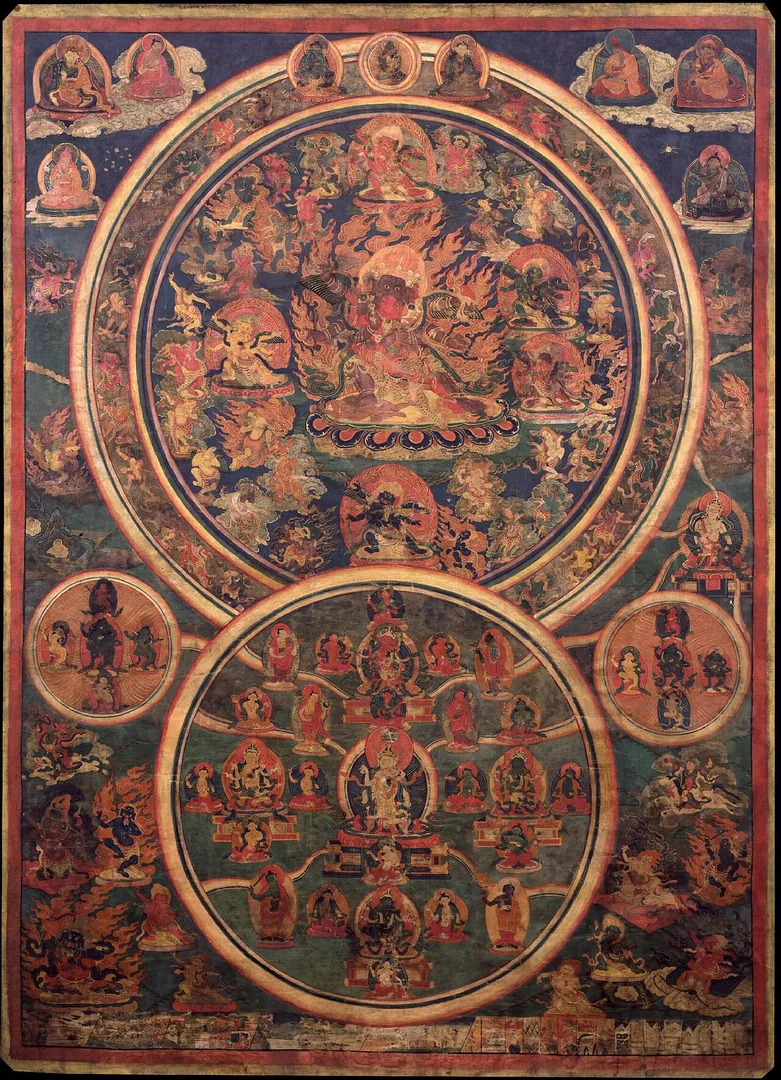
Bardo: The Six In-Between States
Literally “interval between two things” (bar-do), the famous Tibetan Book of the Dead (Bardo Thödol) maps not only death and rebirth, but six everyday transitional spaces—starting with this waking moment.
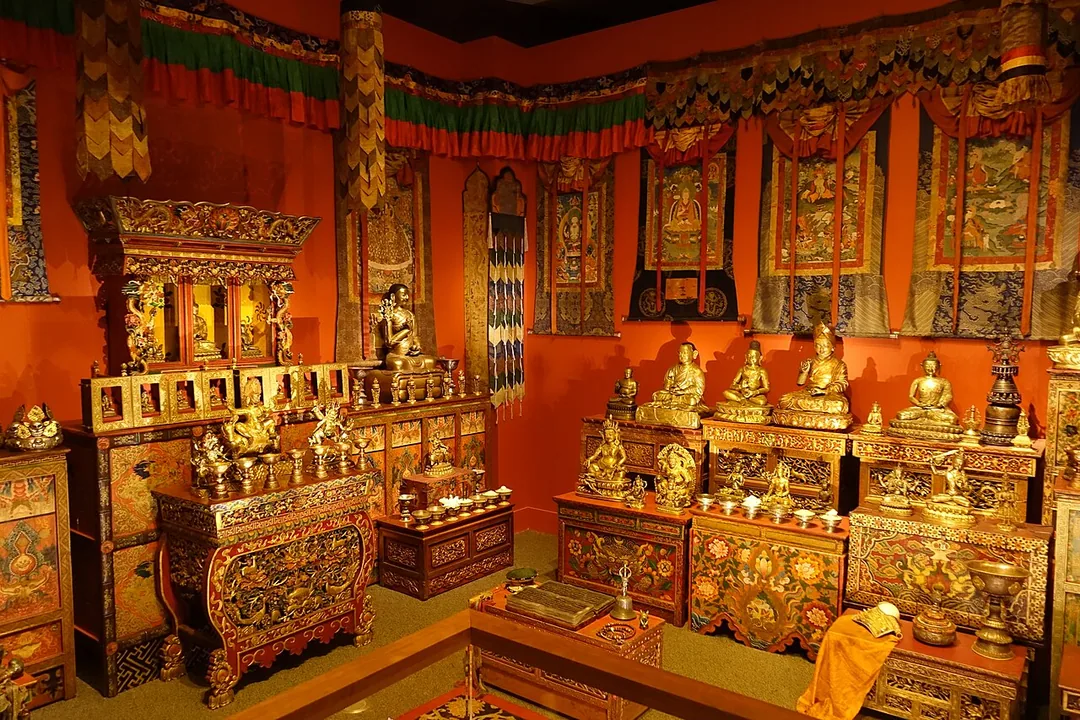
Dedication of Merit (Bsngo-ba · 回向)
No Tibetan contemplation, sutra reading, or prayer-wheel turn ends abruptly; it concludes with bsngo-ba (“turning toward”)—deliberately widening a private wish so everyone walking the same hard road is included.