Ādi-Buddha: Samantabhadra & Vajradhara (Primordial Dharmakāya)
Unborn Ground of Awakening Across Nyingma, Sarma, Kālacakra & Bön Traditions
Placed at the very apex of every Tibetan refuge tree and thangka lineage, the Ādi-Buddha (“Primordial Buddha”) is never a creator god who made the universe, but the timeless, uncompounded nature of mind itself—depicted naked and sky-blue as Samantabhadra in Nyingma Dzogchen, or crowned in royal silks crossing vajra and bell as Vajradhara in Kagyu, Sakya, and Gelug.
Why “Primordial Buddha” Does Not Mean a Creator God
Newcomers reading the Sanskrit term Ādi-Buddha (“First” or “Primordial Buddha”) or encountering the Nyingma scripture The All-Creating King (Kun-byed rgyal-po, Toh 828) naturally wonder whether Tibetan Buddhism secretly reintroduced a monotheistic creator deity. Classical Tibetan philosophy answers with an emphatic no. Because Buddhist dependent origination (pratītyasamutpāda) refutes any uncaused external creator (Īśvara), “primordial” here refers not to a person who existed before the Big Bang, but to primordial purity (ka-dag)—the fact that pure awareness (rigpa) has been free from confusion from the very beginning, just as space remains unstained regardless of whether storm clouds gather or disperse.
Equally helpful for museum visitors is distinguishing two completely different figures named Samantabhadra. In East Asian halls such as Mount Emei and in Mahāyāna sutras, Bodhisattva Samantabhadra (Byang-chub sems-dpa’ Kun-tu bzang-po) wears princely silks and rides a six-tusked white elephant embodying vast ethical vows. In Tibetan Nyingma and Bön art, Ādi-Buddha Samantabhadra (Chos-sku Kun-tu bzang-po, “All-Good”) sits in full vajra posture completely naked without a single jewel or silk, painted deep sky-blue (often embracing luminous white Samantabhadrī, pure awareness and empty space inseparable) to show that ultimate dharmakāya truth needs zero conceptual ornament.
Samantabhadra vs. Vajradhara: How Tibetan Lineages Depict the Source
Why do Nyingma thangkas place naked Samantabhadra at the summit of the lineage, whereas Kagyu, Sakya, and Gelug thangkas place crowned Vajradhara (Dorje Chang, crossing vajra and bell at his heart)? Far from sectarian contradiction, the two icons emphasize two complementary faces of the same awakening. When the great Indian siddha Tilopa famously told Nāropa on the banks of the Ganges, “Tilopa has no human guru; my guru is omniscience itself—Vajradhara,” he pointed to luminous Sambhogakāya—the communicative dimension through which silent dharmakāya speaks tantras and transmits blessings:
| Tradition | Primary Figure | Visual Signature | Doctrinal Emphasis |
|---|---|---|---|
| Nyingma (Dzogchen) | Samantabhadra (Kuntuzangpo) | Naked sky-blue body, zero ornaments, dhyāna mudra or embracing white Samantabhadrī | Dharmakāya: naked, unfabricated rigpa & empty expanse |
| Kagyu, Sakya & Gelug (Sarma) | Vajradhara (Dorje Chang) | Deep blue or silver, five-leaf crown & silks, wrists crossed holding vajra and bell | Sambhogakāya / Svābhāvikakāya: union of bliss-method & emptiness |
| Kālacakra & Jonang | Paramādibuddha / Vajrasattva | Four-faced twenty-four-armed Kālacakra or sixth-family sovereign Vajrasattva | Advaya (Non-Dual): timeless innate clear light pervading all five families |
| Yungdrung Bön | Kuntuzangpo & Shenlha Ökar | Unadorned Bonku Kuntuzangpo paired with luminous white Shenlha Ökar | Bonku (Truth Body) & Dzogku (Perfection Body) of Dzogchen Zhangzhung Nyengyü |
How It Is Practiced in Living Tradition
Contemplated daily at the crown of lineage Guru Yoga visualizations across all Tibetan schools—especially through the famous Prayer of Kuntuzangpo (Kun-bzang smon-lam, recited widely during solar and lunar eclipses) in Nyingma and the Mahāmudrā lineage supplication (“Great Dorje Chang, Tilo, Nāro…”) in Kagyu.
Common Questions & Clarifications
What is the difference between Vajradhara and Vajrasattva in museum bronzes?
Watch the hands and body color! Vajradhara crosses both wrists at his heart (vajrahūṃkāra mudra) holding vajra and bell together, and in paintings is deep sapphire-blue. Vajrasattva holds the vajra upright at his heart with his right hand while resting the bell low on his left hip, and in paintings is pure moon-white.
Why is Samantabhadra’s consort Samantabhadrī white while he is blue?
In Dzogchen visual symbolism, Samantabhadrī (pure white) represents completely open, uncompounded emptiness (dharmadhātu), while Samantabhadra (sky-blue) represents luminous, cognizant awareness (rigpa). Reversing the Sarma convention to highlight spacious openness, their embrace illustrates that emptiness is never a blank void and awareness is never a solid thing.
Primary Sources & Further Reading
- Kun-byed rgyal-po (The Sovereign All-Creating Mind, Toh 828), trans. Eva K. Neumaier-Dargyay (SUNY Press)
- Tilopa, Ganges Mahāmudrā (Phyag-chen gang-gā-ma) & Jamgön Kongtrul’s Treasury of Knowledge
- Art Institute of Chicago Open Access (148390): 15th-Century Tibetan Silver Vajradhara
Connected in the Mandala Graph
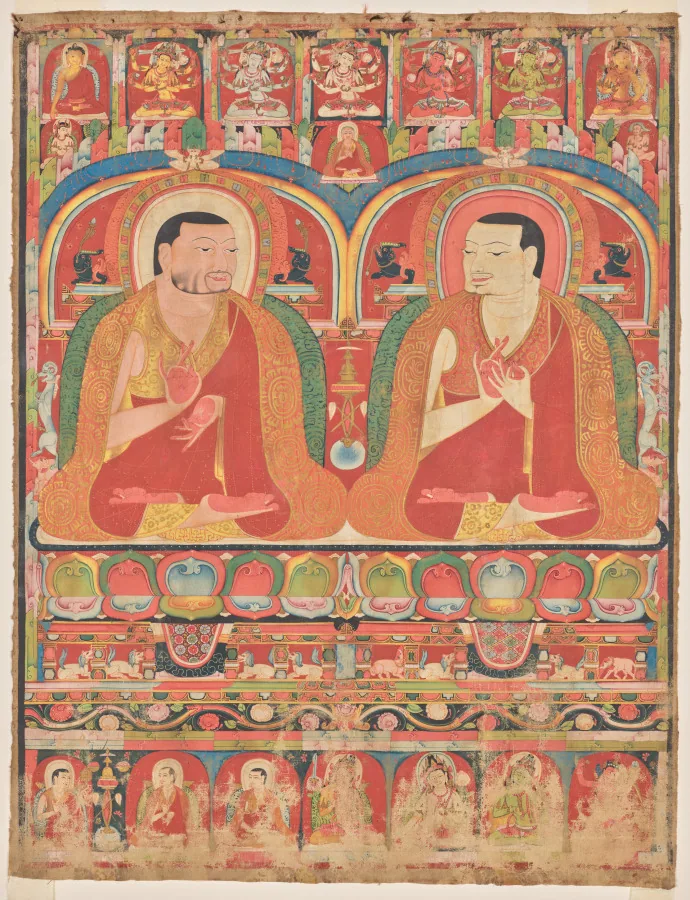
Dzogchen & Mahāmudrā: Resting in the Nature of Mind
Celebrated across Himalayan contemplative life as two rivers reaching the exact same ocean, Nyingma/Bön Dzogchen (“Great Perfection”) and Kagyu/Gelug Mahāmudrā (“Great Seal”) point directly to the luminous, unfabricated awareness already present beneath fleeting thoughts.
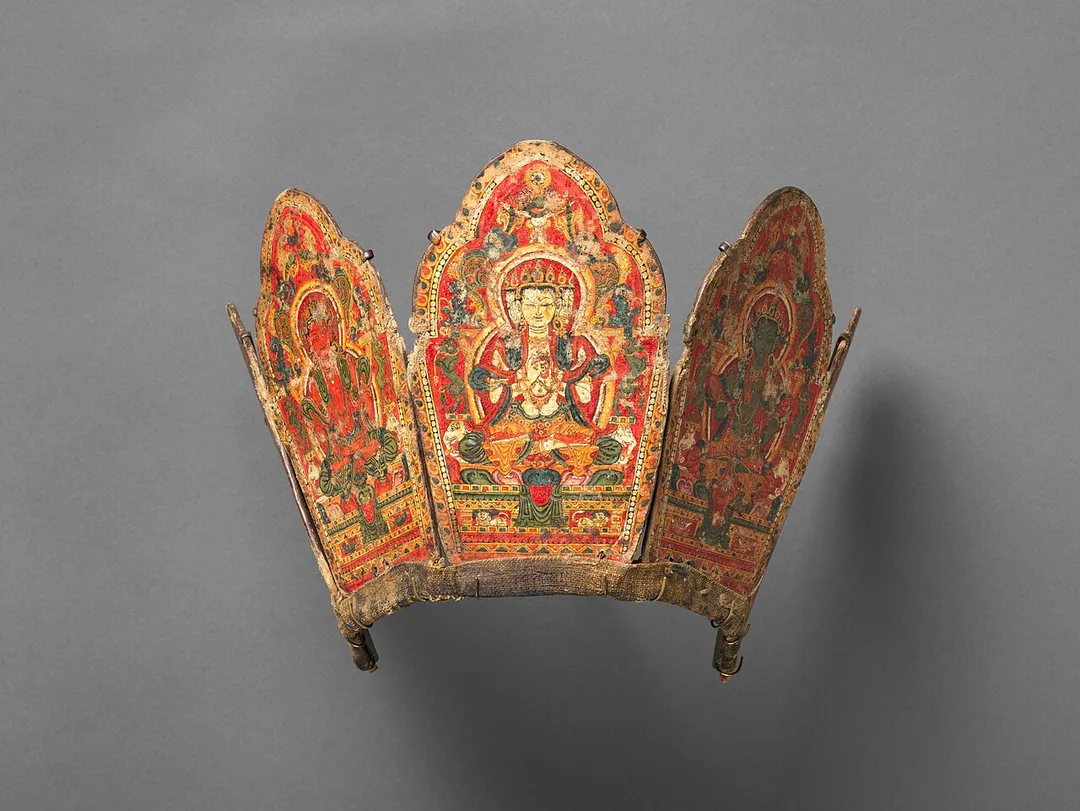
The Five Buddha Families & Five Wisdoms (Rigs-lnga)
Known in Tibetan as Gyalwa Rig-nga, the Five Buddha Families organize every mandala color, direction, element, and deity around one radical psychological premise: the raw energy inside our five most painful emotions is the exact same energy as the Five Awakened Wisdoms.
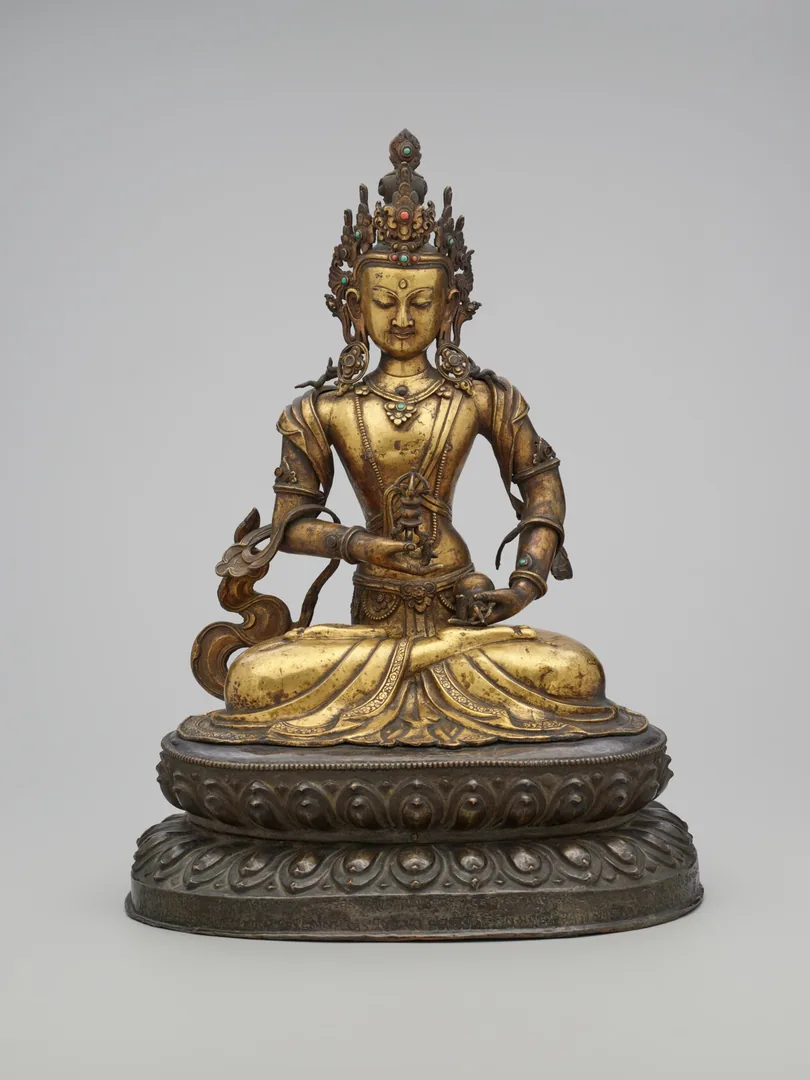
Vajrasattva (Dorje Sempa)
Radiant crystal-white in sambhogakāya ornaments, holding a five-pronged vajra at his heart and a silver bell at his hip, Vajrasattva embodies the indestructible purity underlying transient human mistakes.
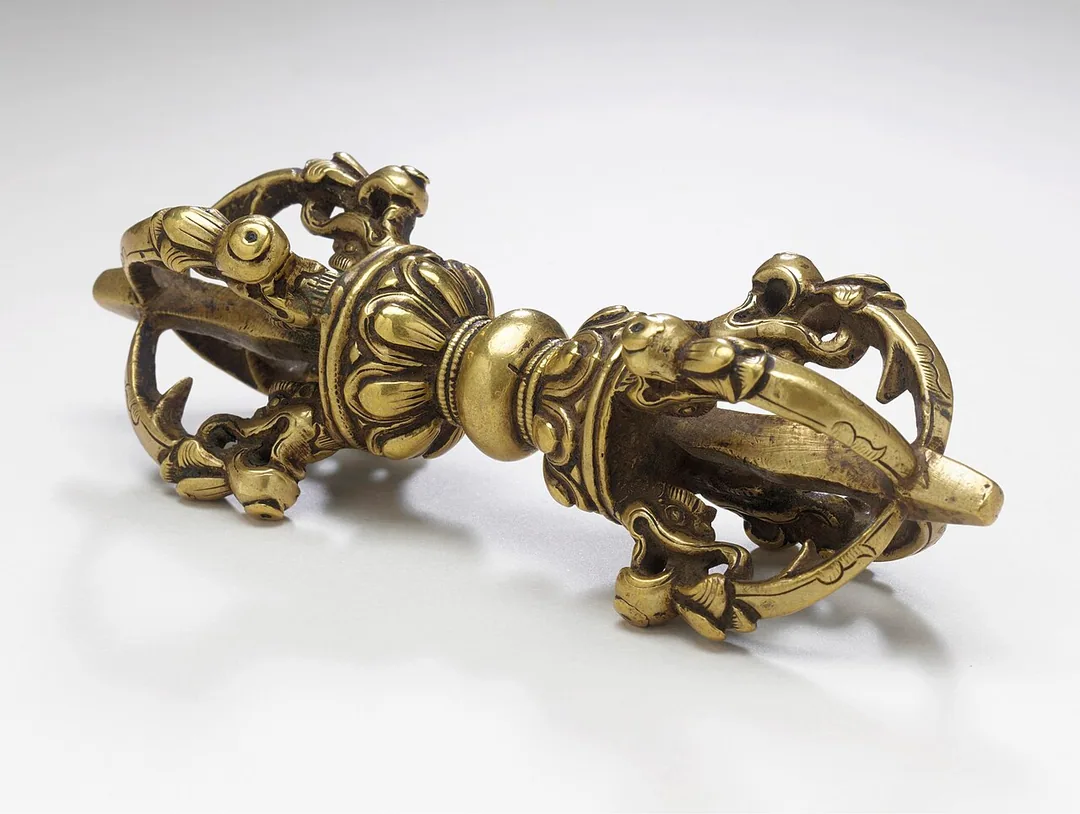
Vajra & Bell (Dorje & Drilbu · རྡོ་རྗེ་དང་དྲིལ་བུ།)
Never separated on a Tibetan altar, the brass five-pronged vajra held in the right hand embodies indestructible compassionate method (upāya), while the hollow bronze bell held in the left proclaims wisdom realizing emptiness (prajñā).