Kurukullā (Rigjema · Lotus-Bow Wisdom Ḍākinī)
Four-Armed Ruby-Red Lotus-Family Emanation of Tārā Drawing a Bow of Red Utpala Blossoms
Dancing on one foot in a ruby-red aura while drawing a bow and arrow woven entirely of red utpala lotus blossoms, four-armed Kurukullā (Tibetan: Rigjema, “Knowledge-Maker”) is an enlightened semi-wrathful emanation of Tārā in Amitābha’s Lotus Family—celebrated not for worldly manipulation, but for magnetizing fractured minds and conditions toward Dharma and harmony.
ཨོཾ་ཀུ་རུ་ཀུལླེ་ཧྲཱིཿསྭཱ་ཧཱ།
Devanāgarī: ॐ कुरुकुल्ले ह्रीः स्वाहा · Liturgical Reading: Om ku-ru-ku-le hrih so-ha
Oṃ—O Wisdom-Maker Kurukullā, through Amitābha’s lotus heart-seed Hrīḥ, may auspicious wisdom take root! (Toh 437)
Weapons Woven of Red Lotuses: What “Magnetizing” (Vaśīkaraṇa) Really Means
In The Metropolitan Museum of Art’s exquisite 17th–18th century silk-appliqué thangka (2014.720.1), every weapon in Kurukullā’s four hands sprouts delicate blossoms. In the fourfold Buddhist enlightened activities—pacifying (śānti, white), enriching (puṣṭi, yellow), magnetizing (vaśīkaraṇa / dbang, red), and fiercely protecting (abhicāra, dark blue)—Kurukullā embodies red magnetizing wisdom, belonging to Amitābha’s Lotus Family, which transmutes grasping desire (rāga) into Discriminating Awareness Wisdom (pratyavekṣaṇā-jñāna).
Classical commentaries on the Kurukullā Kalpa (Toh 437) explain her four floral implements on two levels. Outwardly, her flower bow and arrow pierce hard-heartedness with warmth, her flower hook draws auspicious teachers, sangha harmony, and ethical resources close, and her flower lasso binds scattered conditions safely to the path. Inwardly—and far more importantly—what a practitioner first “magnetizes” is their own unruly wind-mind (rlung-sems): when distraction is gathered gently back into meditative equipoise without coercion, natural dignity and kindness effortlessly inspire others.
Sakya’s “Three Red Deities,” Kagyu Retreats & Nyingma Lotus Mastery
Historically, King Indrabhūti of Oḍḍiyāna and Master Lalitavajra transmitted Kurukullā’s cycle into India’s monastic universities, from where Bari Rinchen Drag (1040–1112) brought it to Tibet. In the Sakya tradition, four-armed Kurukullā stands as the sovereign centerpiece of the Three Great Red Deities (dMar-po skor-gsum—Kurukullā, Red Gaṇapati, and Kāmarāja) within the famed Thirteen Golden Dharmas. In Nyingma and lineages, nineteenth-century masters Jamyang Khyentse Wangpo and Ju Mipham composed celebrated prayers to Kurukullā and the Lotus Dakini assembly to harmonize turbulent eras through non-coercive compassion.
| Hand | Implement | Inner Contemplative Function | Relational / Ethical Fruit |
|---|---|---|---|
| Upper Left & Right | Utpala-Flower Bow & Arrow | Unites emptiness (bow) with one-pointed prajñā insight (arrow) | Warms cold estrangement and awakens altruistic empathy |
| Lower Right | Red Lotus Iron Hook (aṅkuśa) | Gently hooks wandering attention back from distraction | Draws authentic teachers, Dharma friends & ethical support |
| Lower Left | Red Lotus Lasso (pāśa) | Stabilizes subtle wind-mind inseparably in clarity | Sustains lasting harmony and trustworthiness in community |
How It Is Practiced in Living Tradition
Widely honored across Sakya, Nyingma, Kagyu, and Gelug communities for cultivating interpersonal warmth, eloquence, and favorable conditions for Dharma study; in traditional Tibetan practice, formal sādhana visualization and mantra recitation rely on receiving empowerment or subsequent permission (rjes-gnang) and oral reading transmission (lung) from a qualified lineage teacher, always grounded in altruistic bodhicitta rather than self-serving attachment.
Common Questions & Clarifications
Is Kurukullā the same as “Red Tārā”?
Closely related, yet iconographically distinct! Textually, the Kurukullā Tantra (Toh 437) explicitly calls her Ārya-Tārā-Kurukullā—an emanation of Tārā—so many practitioners affectionately call her “Red Tārā.” Strictly speaking, however, Tibetan art also features peaceful two-armed forms of Red Tārā (such as Apalālā/Rigjema variants seated on a lotus), whereas four-armed dancing Kurukullā drawing the flower bow is unmistakable.
Primary Sources & Further Reading
- Ārya-tārā-kurukullā-kalpa (Kangyur Toh 437), trans. Dharmachakra Translation Committee, 84000: Translating the Words of the Buddha
- Miranda Shaw, Passionate Enlightenment & Buddhist Goddesses of India (Princeton University Press, 2006), Ch. 21 “Kurukullā”
- The Metropolitan Museum of Art (2014.720.1 · CC0): Silk Appliqué Thangka of the Goddess Kurukullā, Tibet, 17th–18th Century
Connected in the Mandala Graph
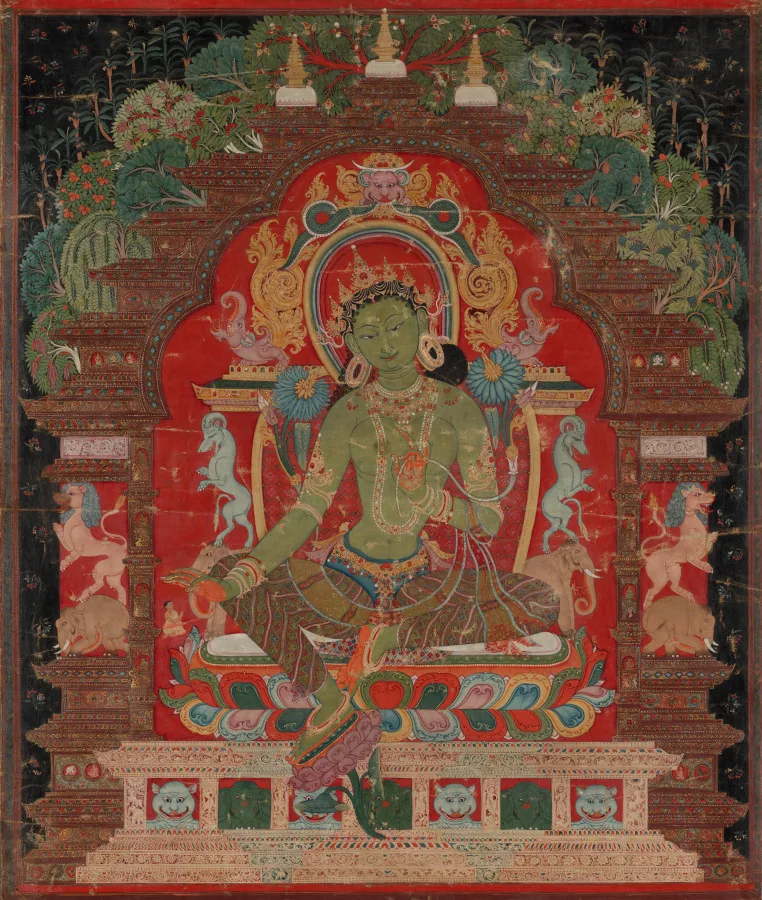
Green Tārā (Sgrol-ljang)
Seated in royal ease with her right foot already stepping off the lotus cushion, Green Tārā embodies enlightened compassion in immediate motion—green being the color of the Wind/Action Buddha Family.
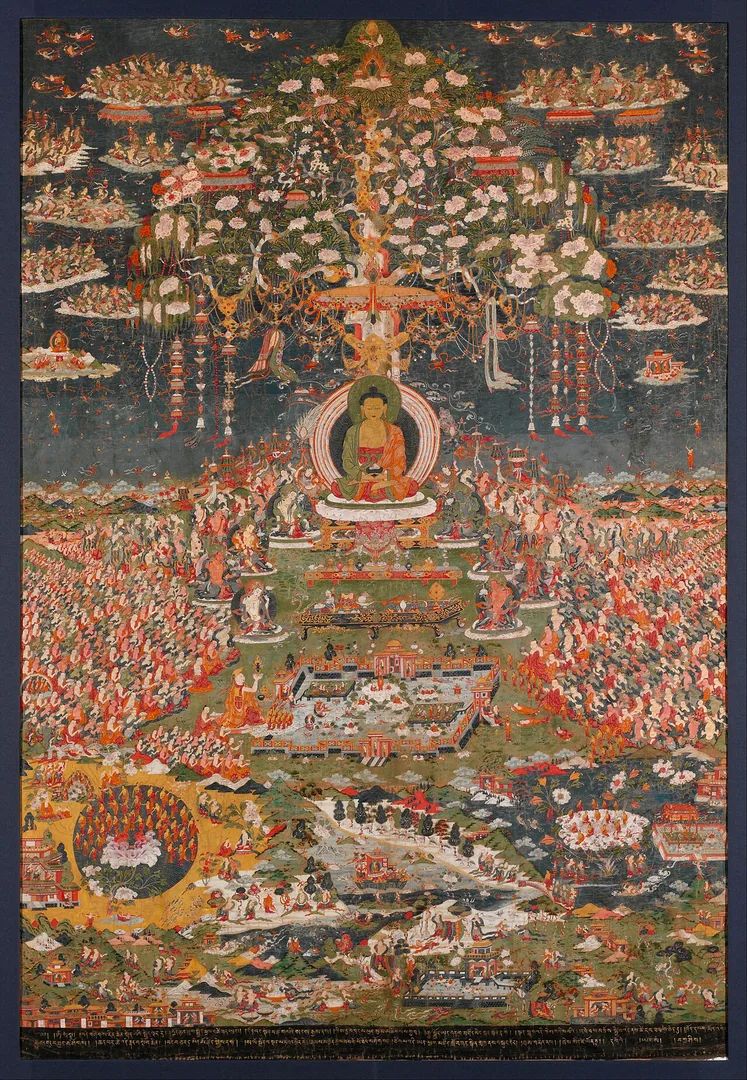
Amitābha (Öpakmé · Buddha of Infinite Light)
Radiating warm sunset-ruby red in the West of the Tibetan mandala, Amitābha (“Infinite Light,” Tibetan Öpakmé) rests both hands in meditation equipoise cradling an alms bowl of ambrosial nectar (amṛta), presiding over the Lotus Family to which Chenrezig and Padmasambhava belong.
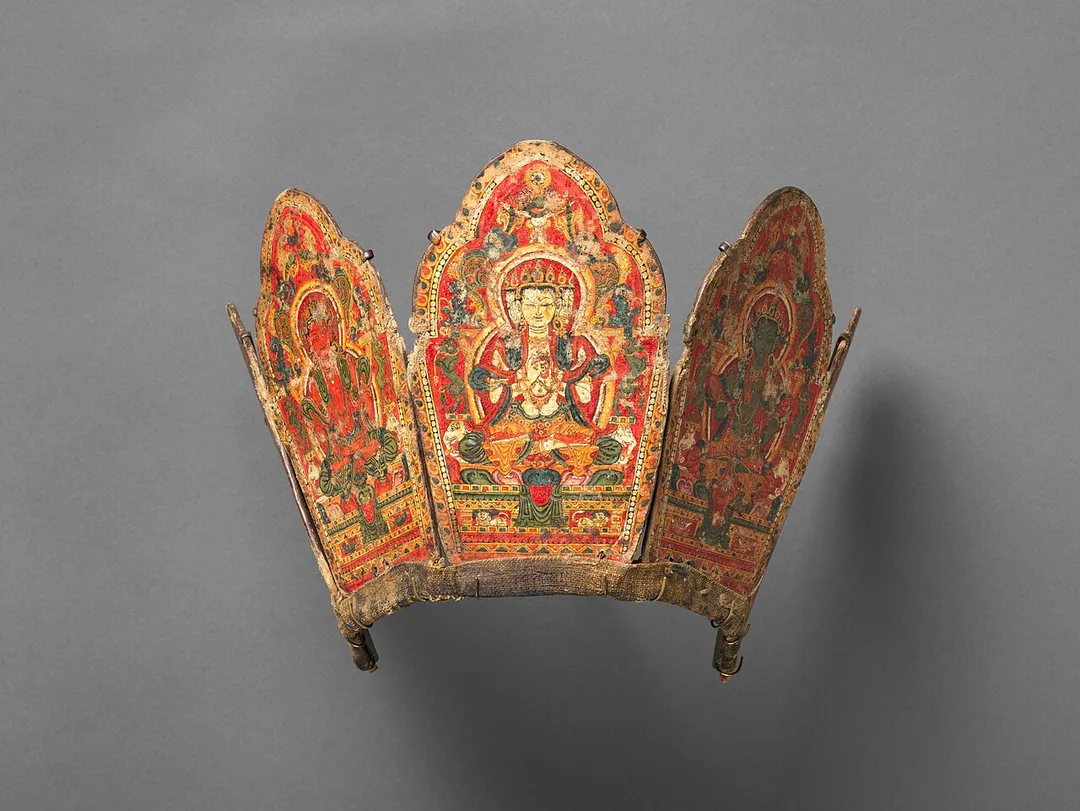
The Five Buddha Families & Five Wisdoms (Rigs-lnga)
Known in Tibetan as Gyalwa Rig-nga, the Five Buddha Families organize every mandala color, direction, element, and deity around one radical psychological premise: the raw energy inside our five most painful emotions is the exact same energy as the Five Awakened Wisdoms.
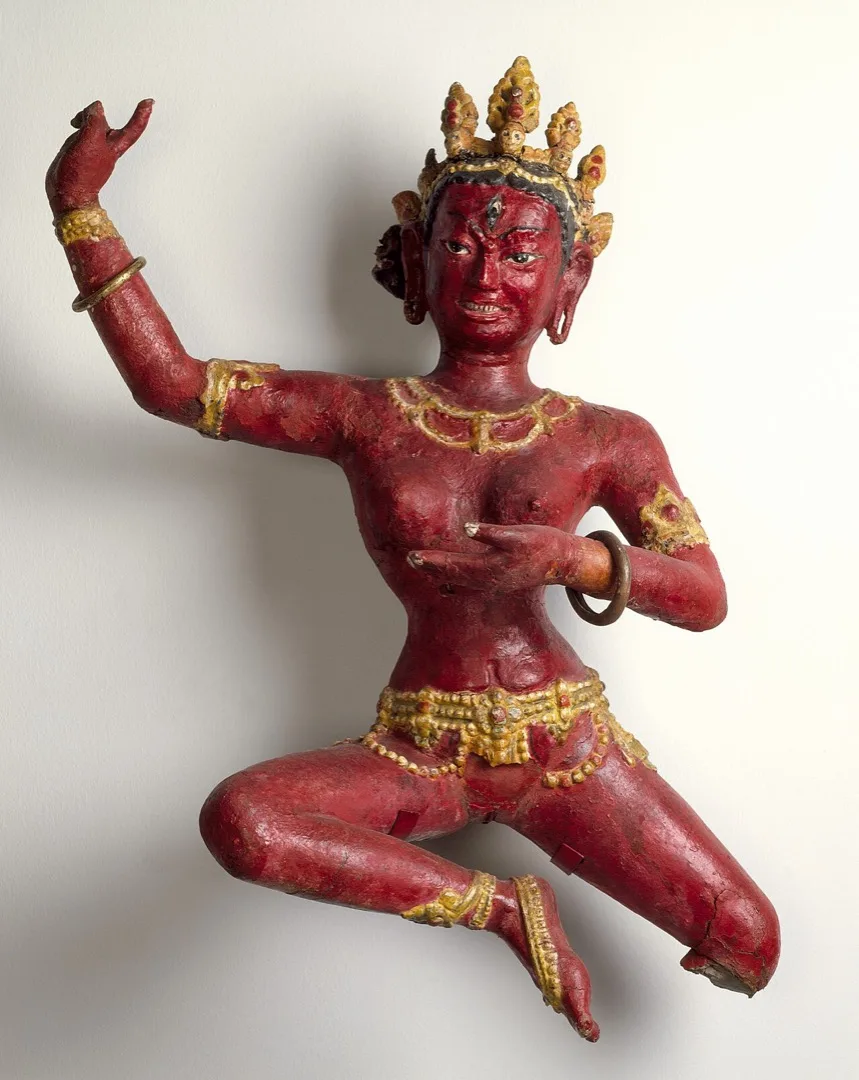
Vajrayoginī & Vajravārāhī (Dorje Naljorma / Dorje Phagmo)
Blazing ruby-red amidst wisdom flames, holding a curved flaying knife (kartika) to sever egoic habit and a skullcup of non-dual bliss, Vajrayoginī—and her celebrated sow-crowned form Vajravārāhī (Dorje Phagmo)—is the supreme female Anuttarayoga yidam across Kagyu, Sakya, and Gelug Buddhism, embodying full awakening in female form.