Vajrayoginī & Vajravārāhī (Dorje Naljorma / Dorje Phagmo)
Radiant Ruby-Red Sovereign of Wisdom-Ḍākinīs Transmuting Primal Ignorance Into Space-Awareness
Blazing ruby-red amidst wisdom flames, holding a curved flaying knife (kartika) to sever egoic habit and a skullcup of non-dual bliss, Vajrayoginī—and her celebrated sow-crowned form Vajravārāhī (Dorje Phagmo)—is the supreme female Anuttarayoga yidam across Kagyu, Sakya, and Gelug Buddhism, embodying full awakening in female form.
Why a Wild Sow’s Head? Turning Root Ignorance Directly Into Space-Wisdom
First-time museum visitors viewing our 14th-century LACMA sculpture (M.90.195) are often startled to discover a small wild boar’s snout protruding gracefully behind the goddess’s right ear. Far from folklore, this detail encodes one of Buddhist psychology’s sharpest insights. At the very center of the Tibetan Wheel of Life (Bhavacakra), three animals bite one another’s tails: rooster (craving), snake (hatred), and pig—representing fundamental ignorance (avidyā / ma-rig-pa), the stubborn blindness to interdependence that drives the other two.
In the Mother-Tantra alchemy of Vajravārāhī (“Adamantine Sow,” Dorje Phagmo), practitioners do not treat raw mental energy as an enemy to be repressed; instead, when recognized without grasping, the dense, unshakeable energy of ignorance flips directly into all-pervading space wisdom (dharmadhātu-jñāna). Her curved flaying knife (kartika) slices conceptual proliferation cleanly at the root, her skullcup holds the unified taste (ro-gcig) of bliss and emptiness, and the khaṭvāṅga staff resting in the crook of her left elbow represents her hidden consort Cakrasaṃvara—showing she is complete in herself.
Vajravārāhī vs. Nāro Khecharī vs. Chinnamastā: Key Museum Forms & Samding
Vajrayoginī serves as the overarching sovereign title encompassing several distinct visual transmissions across Himalayan schools. In Kagyu three-year retreats (lo-gsum phyogs-gsum), Vajravārāhī is the primary paired with inner-heat yoga; in Sakya (as one of the Three Red Deities within the Thirteen Golden Dharmas) and Gelug monasteries, Nāro Khecharī (Nā-ro mkha’-spyod-ma, transmitted from Nāropa to Phagmo Grupa and Phamthingpa) is equally beloved. Culturally, Tibet’s most famous female reincarnation lineage—Samding Dorje Phagmo (founded in the 15th century by Chökyi Drönma above Yamdrok Lake)—bears her name.
| Iconographic Form | Tibetan Name | Instant Visual Distinction | Primary Lineage Context |
|---|---|---|---|
| Vajravārāhī (Adamantine Sow) | rDo-rje phag-mo | Dancing on one foot · Small sow’s head above right ear or crown · Right hand raises chopper | Kagyu (Karma, Drukpa, Drikung) & Nyingma Longchen Nyingthik (Dechen Gyalmo) |
| Nāro Khecharī (Nāropa’s Sky-Goer) | Nā-ro mkha’-spyod-ma | No sow’s head · Both feet planted in lunging stride · Gazing upward drinking from raised skullcup, chopper pointing down | Sakya Thirteen Golden Dharmas (“Three Red”) & Gelug Tantric Colleges |
| Trikāya Vajrayoginī (Chinnamuṇḍā) | dBu-bcad-ma | Golden or red central figure holding her own severed head to nourish two flanking yoginīs (severing dualistic ego at root) | Princess Lakṣmīṅkarā’s Virūpa / Sakya & Kagyu inner-channel lineage |
How It Is Practiced in Living Tradition
Honored across Himalayan communities on every 25th lunar waning day (Ḍākinī Tsok day) and associated with sacred pilgrimage sites such as Sankhu Vajrayoginī in Kathmandu Valley and Yamdrok Samding in Tibet. Because Vajrayoginī belongs to the highest Mother-Tantra (Yoginī-tantra) class, personal sadhana recitation and subtle-body yogas require authentic blessing empowerment (byin-rlabs / dbang), oral transmission (lung), and experiential commentary (khrid) from a qualified Kagyu, Sakya, Gelug, or Nyingma master.
Common Questions & Clarifications
Why is Vajrayoginī depicted unclothed with bone ornaments in museum bronzes?
In Buddhist iconography, peaceful bodhisattvas wear silk garments symbolizing ethical Conduct, whereas yoginīs and herukas appear “clothed in space” (digambara) to show primordial awareness completely stripped of conceptual veils and social pretense—crowned instead with the Six Bone Ornaments representing the perfection of the Six Pāramitās (generosity through wisdom).
Primary Sources & Further Reading
- Elizabeth English, Vajrayoginī: Her Visualizations, Rituals, and Forms (Studies in Indian and Tibetan Buddhism, Wisdom Publications, 2002)
- Hildegard Diemberger, When a Woman Becomes a Religious Dynasty: The Samding Dorje Phagmo of Tibet (Columbia University Press, 2007)
- Los Angeles County Museum of Art (M.90.195): 14th-Century Himalayan Sculpture of Dancing Vajravārāhī
Connected in the Mandala Graph
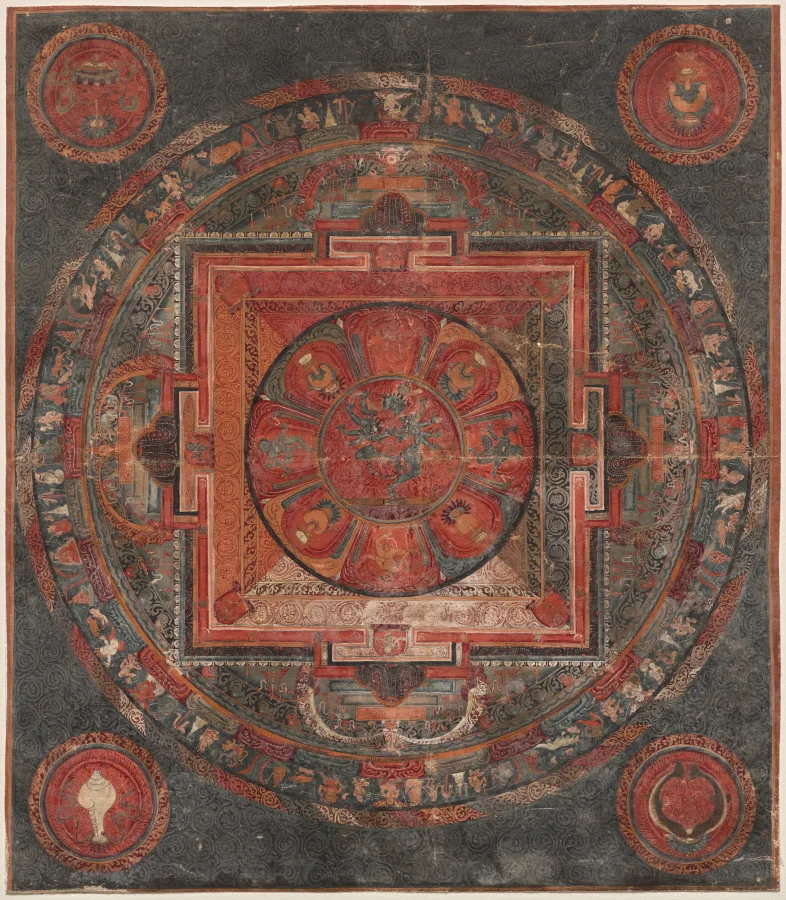
Cakrasaṃvara (Khorlo Demchog · Wheel of Supreme Bliss)
Celebrated across Himalayan art and pilgrimage as the indwelling mandala deity of Mount Kailash, sapphire-blue Cakrasaṃvara embraces crimson wisdom-ḍākinī Vajravārāhī with crossed vajra and bell—embodying Mother Tantra’s realization that great bliss and emptiness are indivisible.
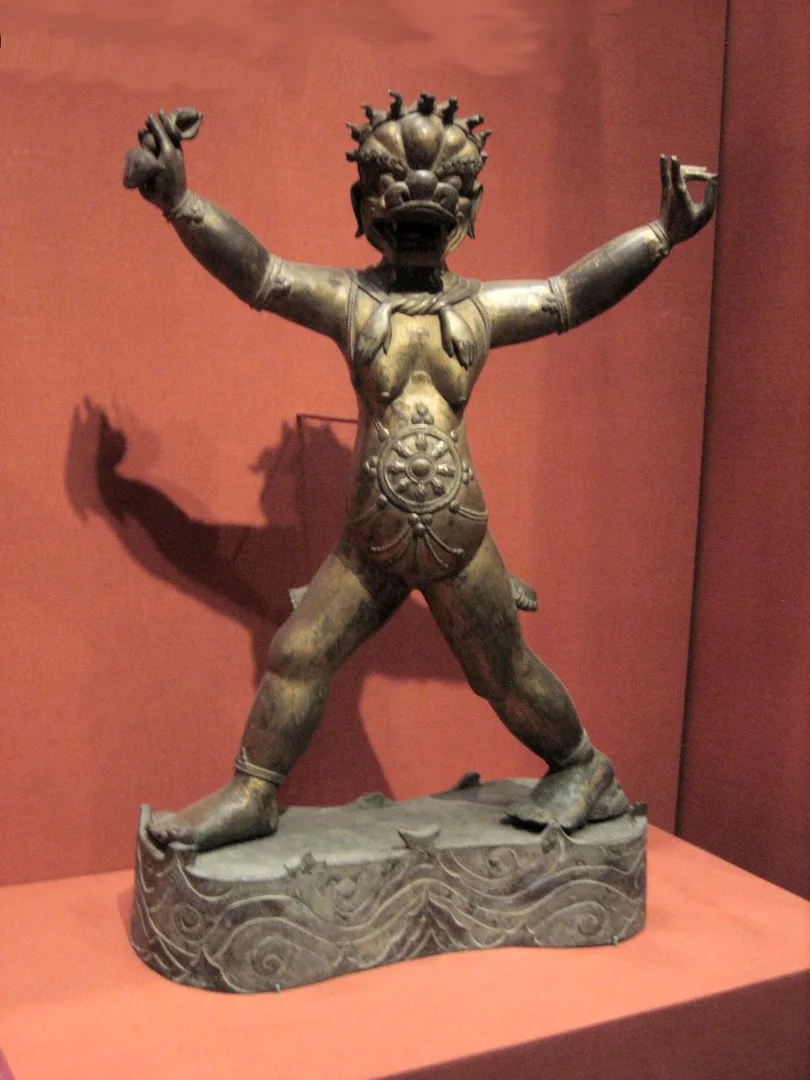
Siṃhamukhā (Senge Dongma · Lion-Faced Wisdom Ḍākinī)
Dancing on one foot in a halo of wisdom fire with a snow-white roaring lioness face atop a sapphire-blue body, Siṃhamukhā is no worldly spirit but an enlightened dharmakāya wisdom-ḍākinī—celebrated equally in Nyingma terma, Sakya’s Thirteen Golden Dharmas, and Gelug monasteries for dissolving psychic negativity and curses back into emptiness.
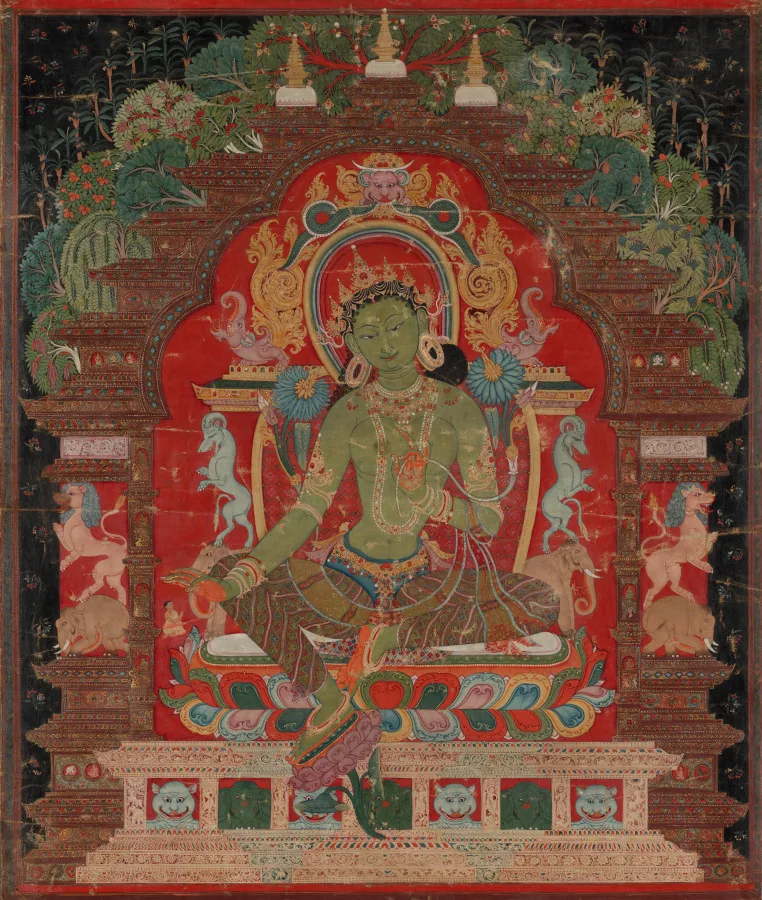
Green Tārā (Sgrol-ljang)
Seated in royal ease with her right foot already stepping off the lotus cushion, Green Tārā embodies enlightened compassion in immediate motion—green being the color of the Wind/Action Buddha Family.
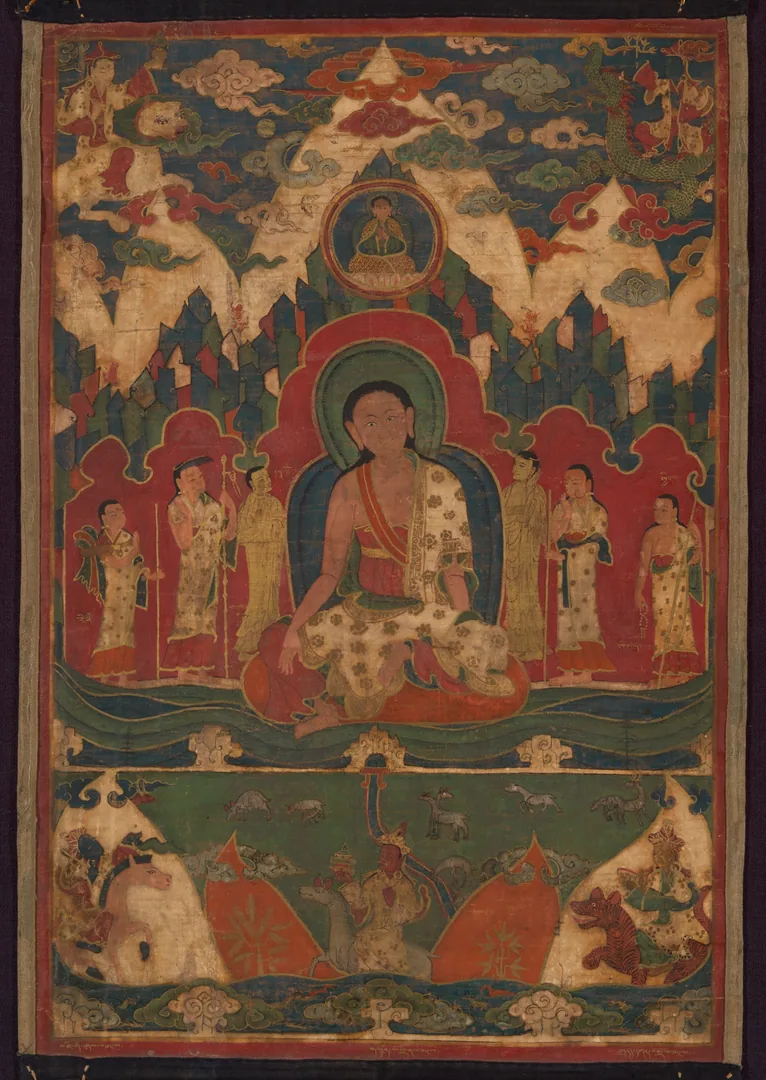
Jetsün Milarepa (1052–1135 · Tibet’s Cotton-Clad Poet-Yogi)
Seated in alpine cave solitude wearing a single white cotton cloth (repa), skin tinged pale green from years of wild nettle soup and right palm cupped at his ear singing spontaneous Vajra Songs (mgur), Milarepa proves no past mistake places awakening out of reach.