Siṃhamukhā (Senge Dongma · Lion-Faced Wisdom Ḍākinī)
Sapphire-Blue Dancing Ḍākinī with a Snow-Lioness Visage Revered Across Nyingma, Sakya & Gelug
Dancing on one foot in a halo of wisdom fire with a snow-white roaring lioness face atop a sapphire-blue body, Siṃhamukhā is no worldly spirit but an enlightened dharmakāya wisdom-ḍākinī—celebrated equally in Nyingma terma, Sakya’s Thirteen Golden Dharmas, and Gelug monasteries for dissolving psychic negativity and curses back into emptiness.
The Roar That Empties Fear: Why Wisdom Wears a Snow-Lioness Face
Across early Indian Pāli suttas and Mahāyāna scriptures alike, the Lion’s Roar (siṃhanāda) is the supreme metaphor for teaching emptiness and fearlessness: when a lioness roars on a mountain crag, cunning jackals scatter and lesser noises fall silent. In Himalayan tantric art, Siṃhamukhā (Senge Dongma) gives that metaphor breathtaking visual form. Dancing on one poised foot (ardhaparyaṅka) in a garland of five bone ornaments signifying the Five Transcendent Wisdoms, her deep sapphire-blue body represents changeless dharmadhātu space, while her snow-white roaring lioness face with three blazing eyes signifies completely pure, unstained awareness (rigpa) fearless of past, present, or future.
Why is she renowned above all for avertering negativity (bzlog-pa / dokpa—turning back curses, collective hostility, gossip, and psychic disturbances)? Classical accounts relate that during great philosophical debates at Bodhgayā’s Vajrāsana, when hostile sorcerers hurled lethal māra-curses against Buddhist panditas and Padmasambhava, Guru Rinpoche entered an Oḍḍiyāna sandalwood grove where wisdom-ḍākinī Siṃhamukhā appeared in space and bestowed her secret transmission. Crucially, Buddhist dokpa is never petty retaliation: raised overhead, her curved vajra-chopper (kartika) severs the dualistic belief in a “sender,” a “target,” and a “weapon,” dissolving hostile energy back into unborn space so neither party accumulates further karmic harm.
A Shared Rimé Jewel: Nyingma Terma, Sakya’s Thirteen Golden Dharmas & Gelug Colleges
One of the surest marks of Siṃhamukhā’s stature in Tibet is that three major historical streams—often mistakenly assumed by outsiders to practice completely separate pantheons—each guard her lineage among their most precious inner transmissions:
| School | Lineage Origin | Principal Color & Retinue | Distinctive Role |
|---|---|---|---|
| Nyingma (Kama & Terma) | Padmasambhava, Nyangral, Ratna Lingpa, Longchen Nyingthig & Dudjom Tersar | Sapphire-blue (secret Guru Padmasambhava / Yeshe Tsogyal form) with Tiger & Bear-faced retinue | Secret dakini Guru Yoga (Yumka) & supreme obstacle-clearing dokpa |
| Sakya (Thirteen Golden Dharmas) | 11th-century Bari Lotsāwa Rinchen Drak (1040–1112) from India/Nepal | Included among the 3 Red Deities / Wrathful Dakini Golden Dharmas (blue or crimson variants) | Guarded inside gSer-chos bcu-gsum (“Thirteen Golden Dharmas” never leaving Sakya walls historically) |
| Gelug (Tashilhunpo, Sera & Tantric Colleges) | Transmitted directly from Bari Lotsāwa’s Sakya stream through Je Tsongkhapa & 1st Dalai Lama Gendün Drub | Sapphire-blue dancing wisdom-ḍākinī invoked in daily monastic protector & clapping dokpa rites | Treasured inner yidam-protector of Panchen & Dalai Lama lineages |
How It Is Practiced in Living Tradition
Witnessed publicly during monastic rhythmic hand-clapping reversion prayers (thal-rdob bzlog-pa) prior to Losar New Year across Tibetan monasteries. Out of strict respect for Vajrayāna samaya across Nyingma, Sakya, and Gelug traditions alike, Siṃhamukhā’s fierce fourteen-syllable action mantra is traditionally classified as strictly oral-transmission only—never printed on public banners or chanted without formal empowerment (abhiṣeka / dbang), reading transmission (lung), and pith instruction (tri / khrid) from a qualified lineage master.
Common Questions & Clarifications
Is Siṃhamukhā a worldly protector spirit or a fully enlightened Buddha?
She is 100% a fully enlightened Buddha (ye-shes mkha’-’gro, supramundane Wisdom-Ḍākinī)—specifically the fierce manifestation of Prajñāpāramitā (Perfection of Wisdom, the Mother of All Buddhas) and the secret ḍākinī dimension of Padmasambhava and Guhyasamāja, never a worldly spirit.
Why do Tibetan monasteries clap their hands sharply three times during Siṃhamukhā prayers?
In classic Tibetan liturgy, the sharp crack of two palms striking together serves as a vivid acoustic teaching on dependent origination and emptiness: sound arises only when two hands meet, comes from nowhere, abides nowhere, and vanishes instantly into silence—demonstrating how conceptual obstacles dissolve the moment their emptiness is recognized.
Primary Sources & Further Reading
- Jamgön Kongtrul Lodrö Thayé & Jamyang Khyentse Wangpo, Rinchen Terdzö & Compendium of Sadhanas (Sgrub-thabs kun-btus, Sakya Thirteen Golden Dharmas section)
- Miranda Shaw, Passionate Enlightenment & Buddhist Goddesses of India: Iconography of Siṃhamukhā (Princeton University Press, 2006)
- Asian Art Museum of San Francisco Open Archive: 17th-Century Tibetan Gilt-Bronze Simhavaktra Dakini
Connected in the Mandala Graph
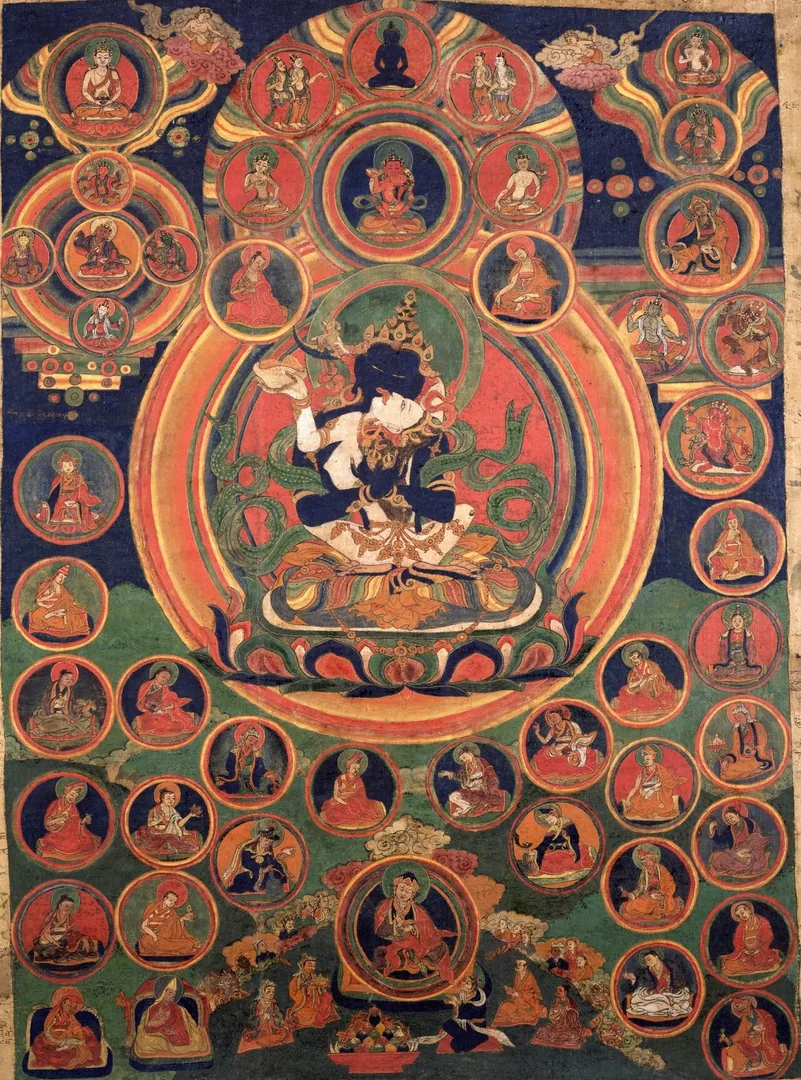
Padmasambhava (Guru Rinpoche)
Invited from Oddiyāna and Nālandā to Tibet by King Trisong Detsen in the 8th century, Padmasambhava (“Lotus-Born”) consecrated Samye Monastery and harmonized Himalayan indigenous spirits with Buddhist Dharma.
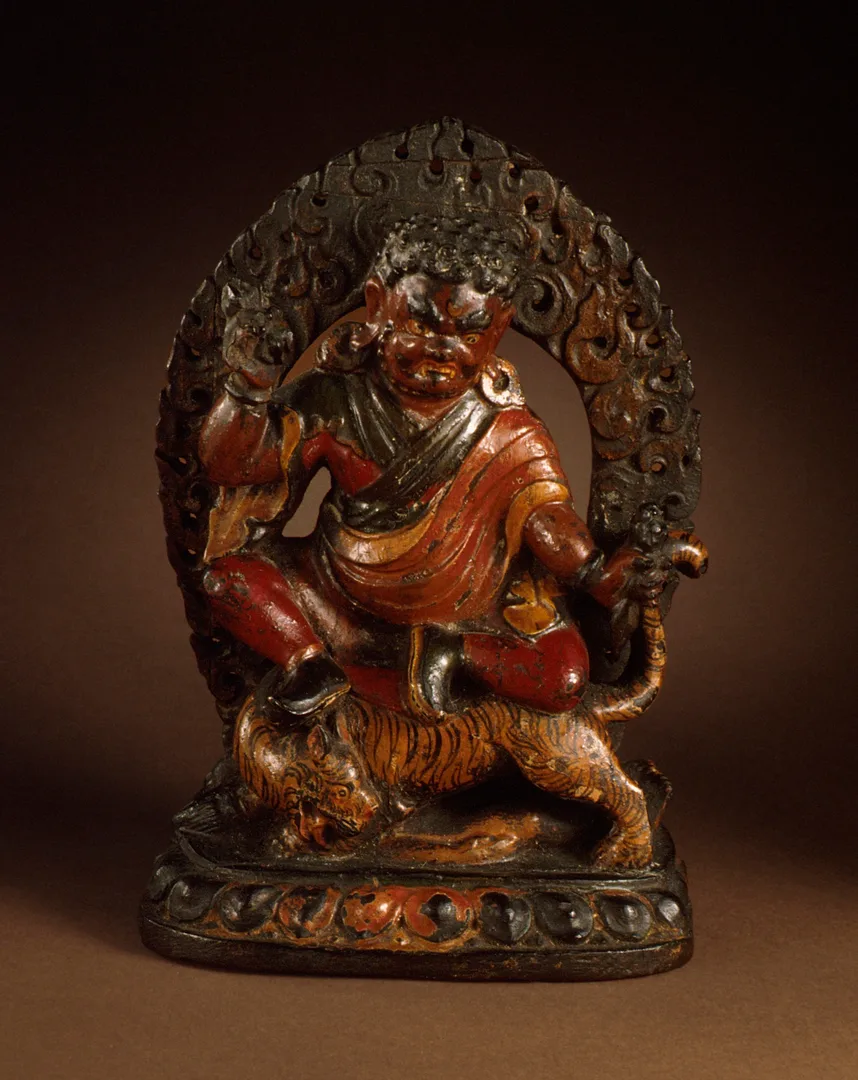
Dorje Drolö (Wrathful Padmasambhava on the Tigress)
Standing in a blaze of dark maroon flames atop a roaring pregnant tigress—actually wisdom consort Yeshe Tsogyal in fierce emanation—Dorje Drolö is the eighth and wildest of Padmasambhava’s Eight Manifestations, revered at Bhutan’s cliffside Taktsang (“Tiger’s Nest”) for shattering spiritual hypocrisy and turbulent-age obstacles.
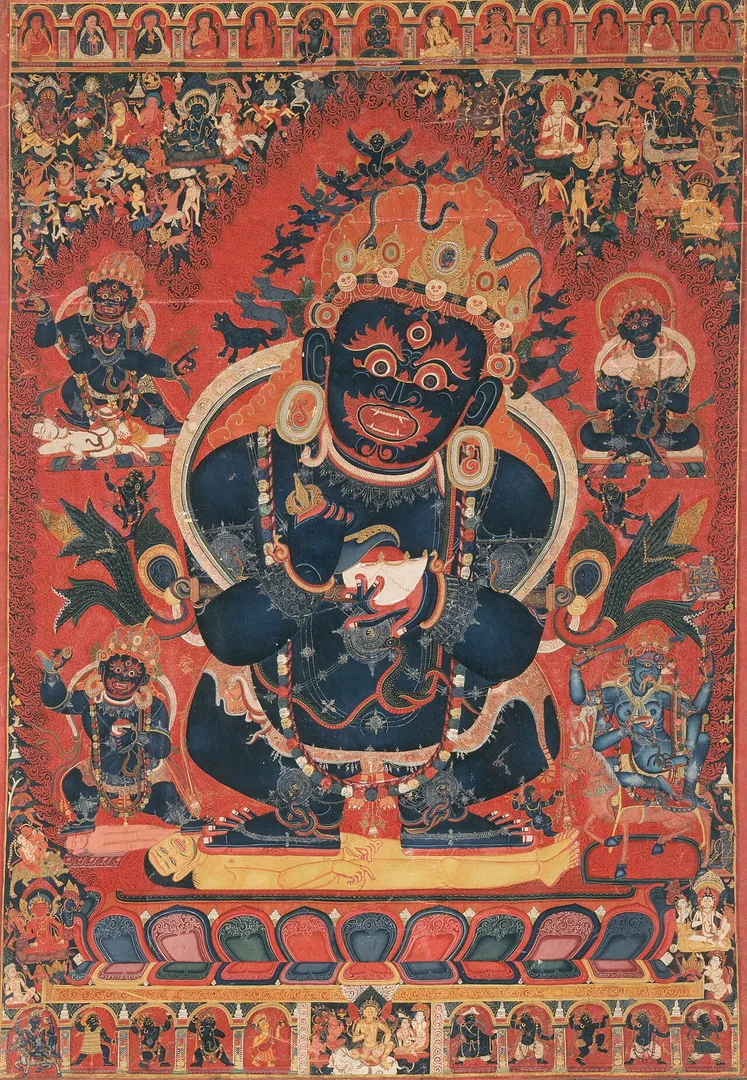
Mahākāla (Gönpo · Wisdom Dharma Protector)
Known simply in Tibetan as Gönpo (“The Protector”), Mahākāla (“Great Black One” / “Beyond Time”) manifests Avalokiteśvara’s compassion in fierce midnight-blue form—shattering self-deception and guarding ethical integrity across Kagyu, Sakya, and Gelug monasteries.
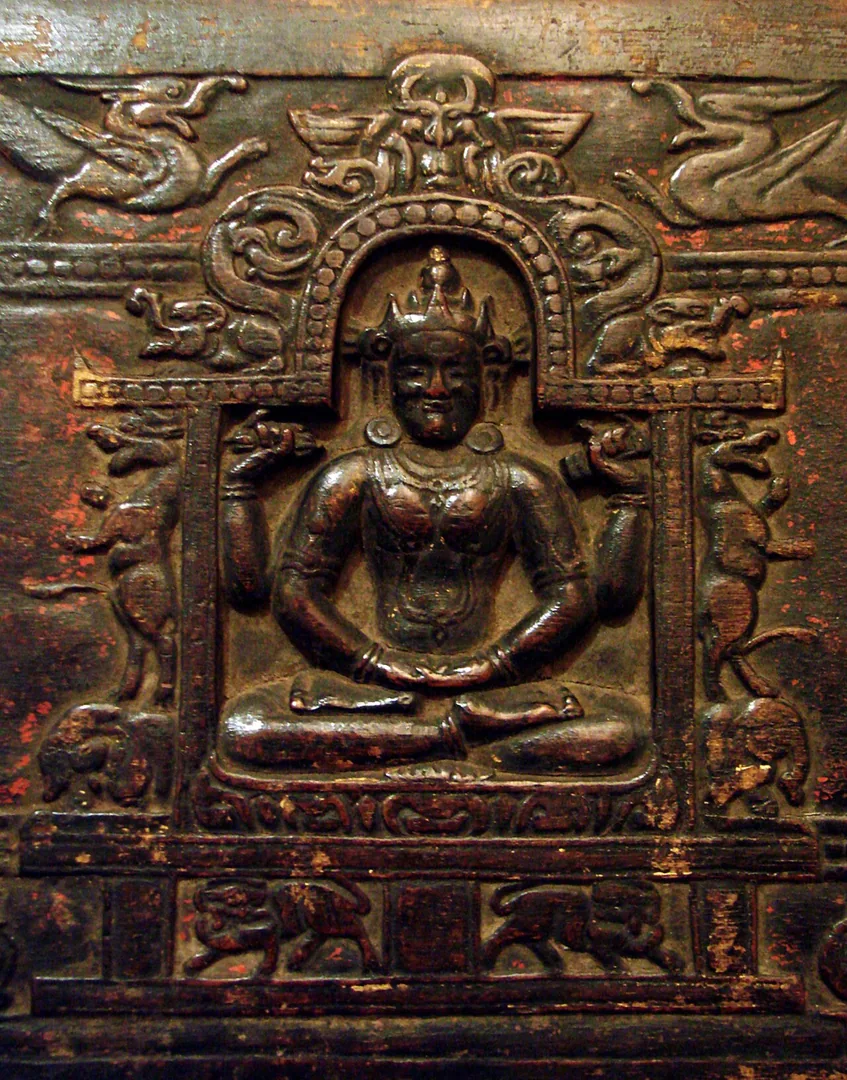
Śūnyatā (Emptiness) & the Two Truths (Madhyamaka)
In Nāgārjuna’s Middle Way philosophy, “emptiness” (stong-pa-nyid) never means nothing exists; it means nothing exists in frozen isolation—and precisely because things lack rigid self-nature, seeds sprout, suffering changes, and awakening works.