Side-by-Side Iconography Key · Studio 01

Tell Look-Alike Tibetan Deities Apart in 3 Seconds

Even regular museum visitors mix up Vajradhara and Vajrasattva, gilded Śākyamuni and Medicine Buddha, 1,000-Armed Chenrezig and Sitātapatrā, or multi-armed blue Herukas. Compare verified museum plates side by side.

Pair 01

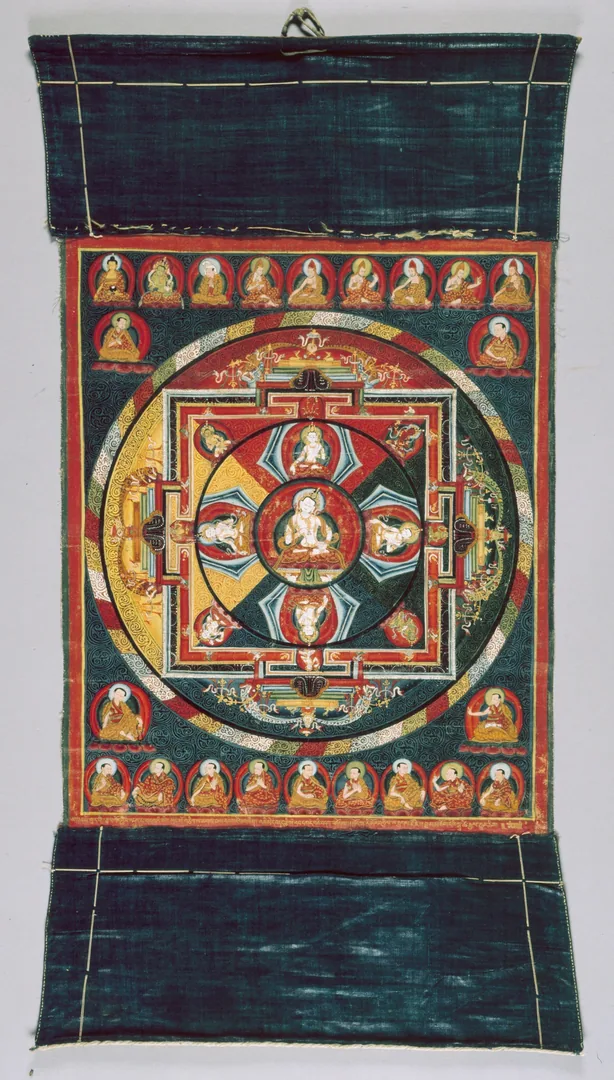
Vajradhara vs. Vajrasattva vs. Samantabhadra

All three represent primordial/tantric Buddhahood—how do you tell them apart in 3 seconds?

3-Second Split Rule: Check body color, clothing, and arm position: Naked dark-blue = Samantabhadra; Crowned dark-blue with crossed wrists = Vajradhara; Crowned snow-white with bell at hip = Vajrasattva!
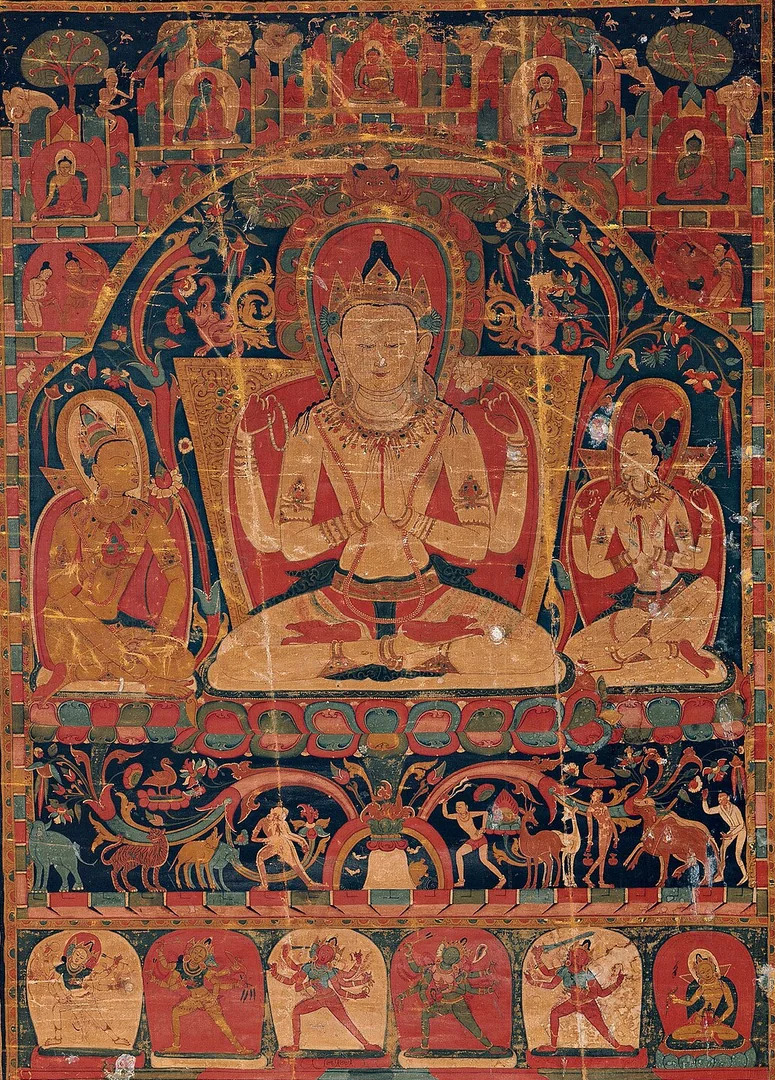
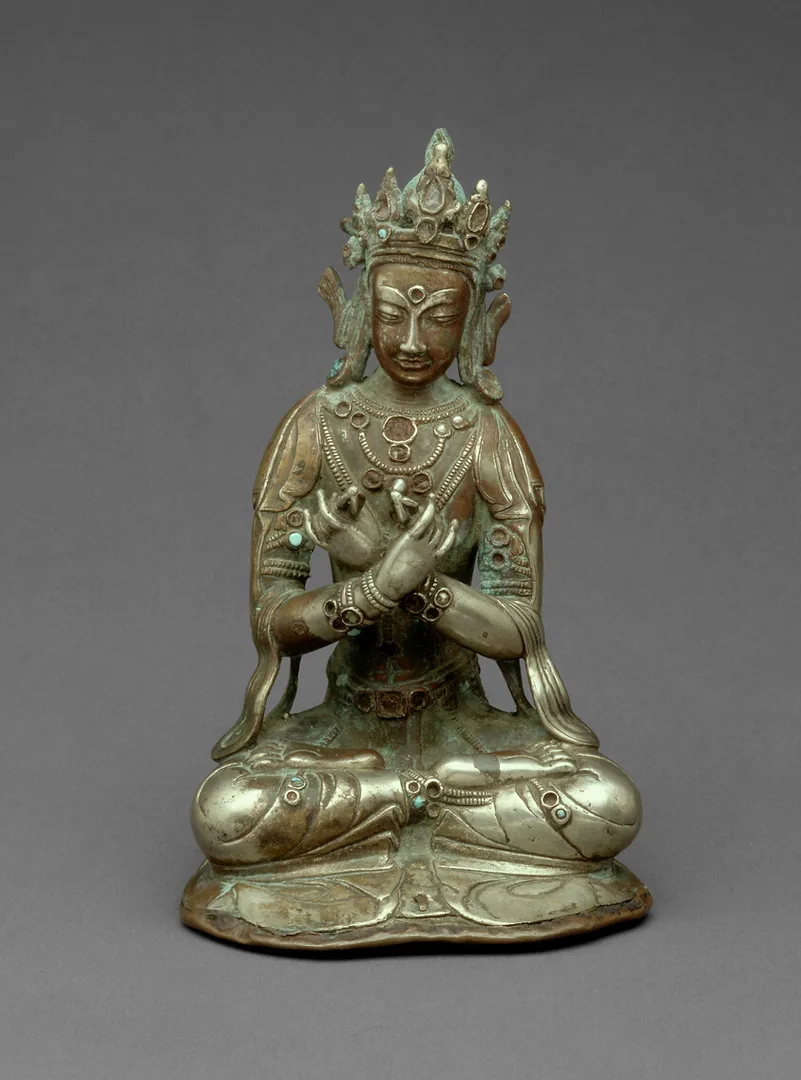
Ādi-Buddha Vajradhara Crossing Vajra and Ghanta at the Heart — The Art Institute of Chicago (148390)
ཀུན་ཏུ་བཟང་པོ་དང་རྡོ་རྗེ་འཆང་།

Ādi-Buddha: Samantabhadra & Vajradhara (Primordial Dharmakāya)

Visual Signature
Deep sapphire blue · Crowned (Vajradhara) or unadorned naked (Samantabhadra)
Hands & Attributes
Vajradhara crosses both wrists at chest (vajrahumkāra mudrā) holding vajra & bell; Samantabhadra rests hands in lap.
Lineage Role
Ultimate Dharmakāya / Tantric origin of Sarma & Nyingma lineages.
Open Full Guide →
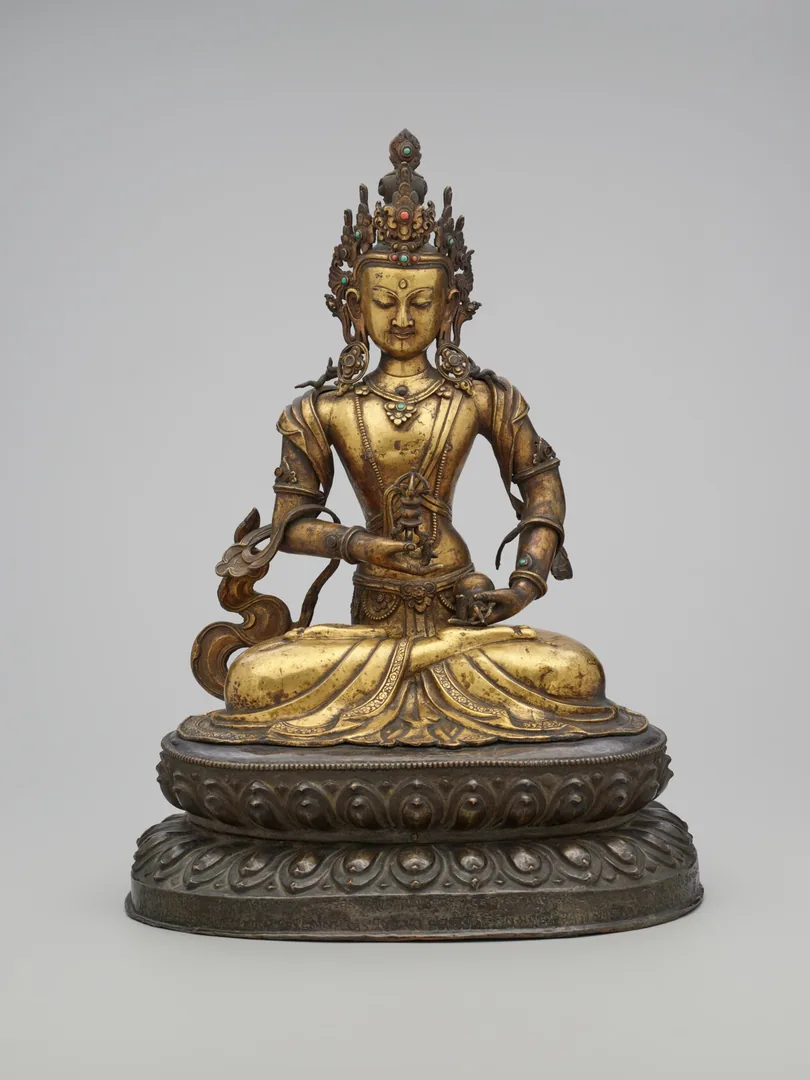
Vajrasattva Holding Vajra and Ghanta Bell — The Art Institute of Chicago (7637)
རྡོ་རྗེ་སེམས་དཔའ།

Vajrasattva (Dorje Sempa)

Visual Signature
Luminous snow-white · Peaceful crowned prince
Hands & Attributes
Arms NEVER crossed: right hand holds five-pronged vajra upright at heart; left hand rests upturned bell against left hip.
Lineage Role
Universal sovereign of purification & the 100-Syllable Mantra across all schools.
Open Full Guide →
Pair 02

Śākyamuni Buddha vs. Medicine Buddha

In gilded bronzes without paint, both wear monastic robes with no crown and hold a bowl—what splits them?

3-Second Split Rule: Look closely at the RIGHT hand over the knee: Palm turned INWARD touching the throne = Śākyamuni; Palm turned OUTWARD holding a leafy myrobalan stem = Medicine Buddha!
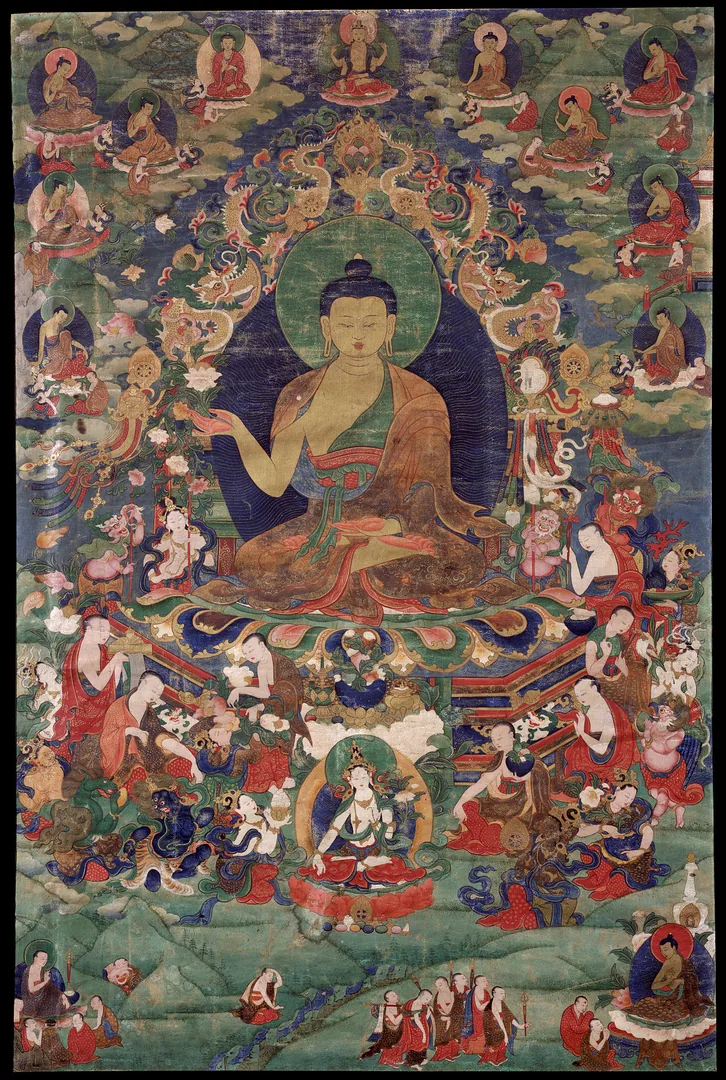
Śākyamuni Buddha Surrounded by Jātaka & Lineage Scenes — Rubin Museum of Art · Google Art Project
ཤཱཀྱ་ཐུབ་པ།

Śākyamuni Buddha (Shakya Thubpa)

Visual Signature
Burnished gold skin · Right palm faces INWARD
Hands & Attributes
Right fingertips touch the lotus seat (bhūmisparśa earth-witness mudrā); left holds plain alms bowl.
Lineage Role
Historical founder of Buddhism in our fortunate aeon.
Open Full Guide →
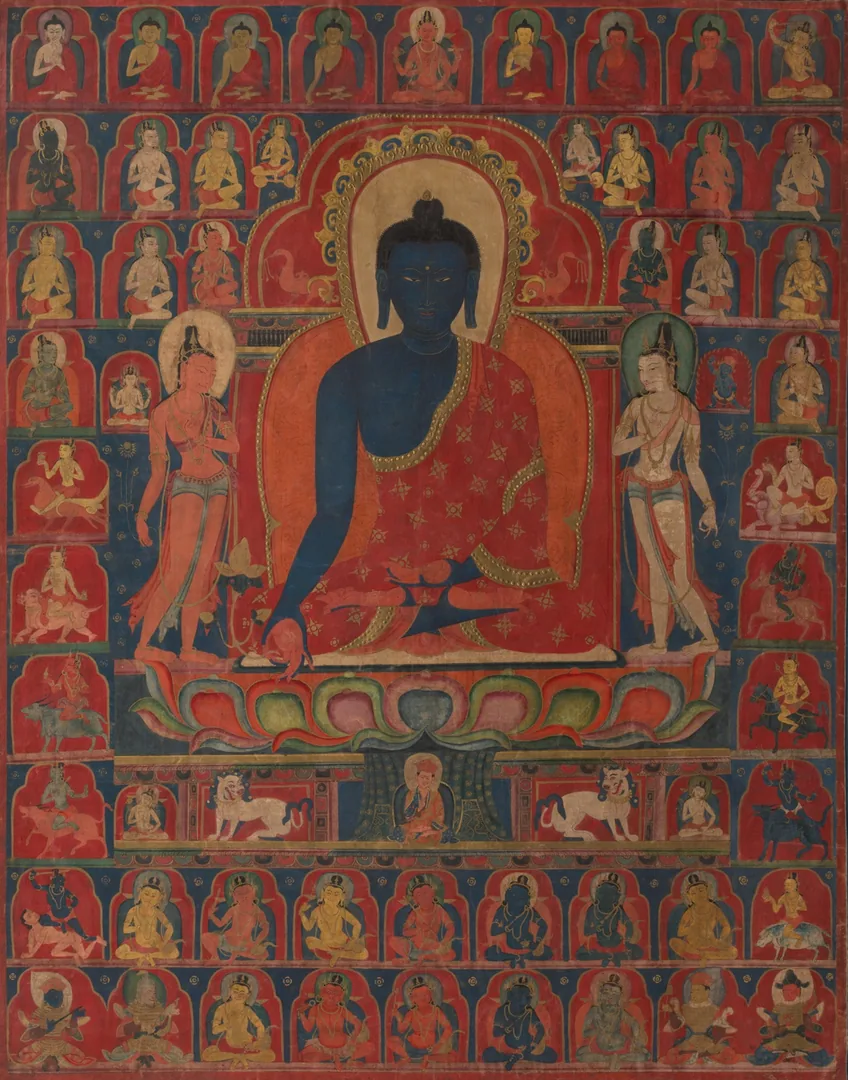
Medicine Buddha Bhaiṣajyaguru with Mandala Retinue — The Art Institute of Chicago (144397)
སངས་རྒྱས་སྨན་བླ།

Medicine Buddha (Bhaiṣajyaguru · Sangye Menla)

Visual Signature
Deep lapis-lazuli blue in thangkas · Right palm faces OUTWARD with plant
Hands & Attributes
Right hand in supreme generosity (varada) pinching a myrobalan (arura) medicinal sprig; left holds nectar bowl.
Lineage Role
Sovereign healer of physical illness and the mental sickness of the Three Poisons.
Open Full Guide →
Pair 03

Green Tārā vs. White Tārā vs. Amitābha

How do leg posture, eye count, and gender distinguish swift protection from longevity equipoise?

3-Second Split Rule: Right foot stepping out onto a lotus footrest = Green Tārā (swift action); Full locked lotus + 7 eyes (forehead, palms, soles) = White Tārā; Ruby-red Buddha with both hands in lap holding bowl/vase = Amitābha / Amitāyus!
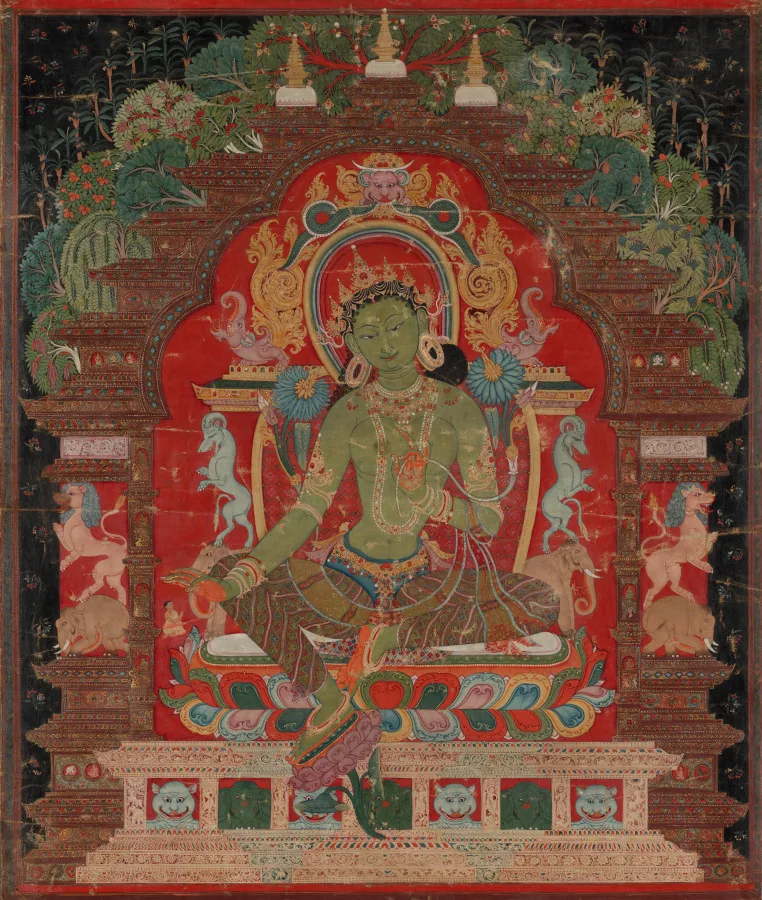
Green Tārā (Śyāmatārā / Sgrol-ljang) — The Cleveland Museum of Art (1970.156)
སྒྲོལ་ལྗང༌།

Green Tārā (Sgrol-ljang)

Visual Signature
Emerald green · Right foot extended forward (lalitāsana)
Hands & Attributes
Two normal eyes; right hand giving mudrā on knee, left holds blue utpala lotus at heart.
Lineage Role
Swift fearlessness, clearing outer & inner Eight Fears.
Open Full Guide →
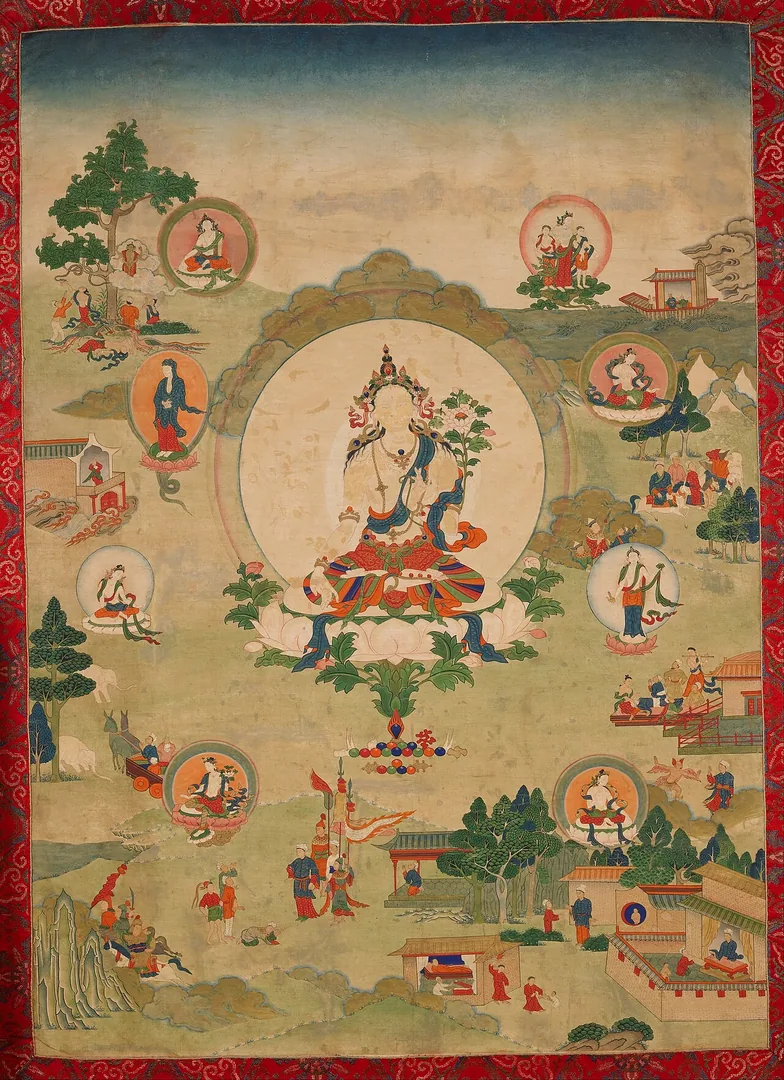
White Tārā of the Seven Eyes (Saptalocanā) — Rubin Museum of Art · Google Art Project
སྒྲོལ་དཀར།

White Tārā (Sgrol-dkar)

Visual Signature
Autumn-moon white · Full cross-legged vajra lotus · 7 Eyes!
Hands & Attributes
Tiny wisdom eyes on forehead, both palms, and both soles (plus two facial eyes = 7 eyes).
Lineage Role
Healing depleted life-force, serenity & longevity triad.
Open Full Guide →
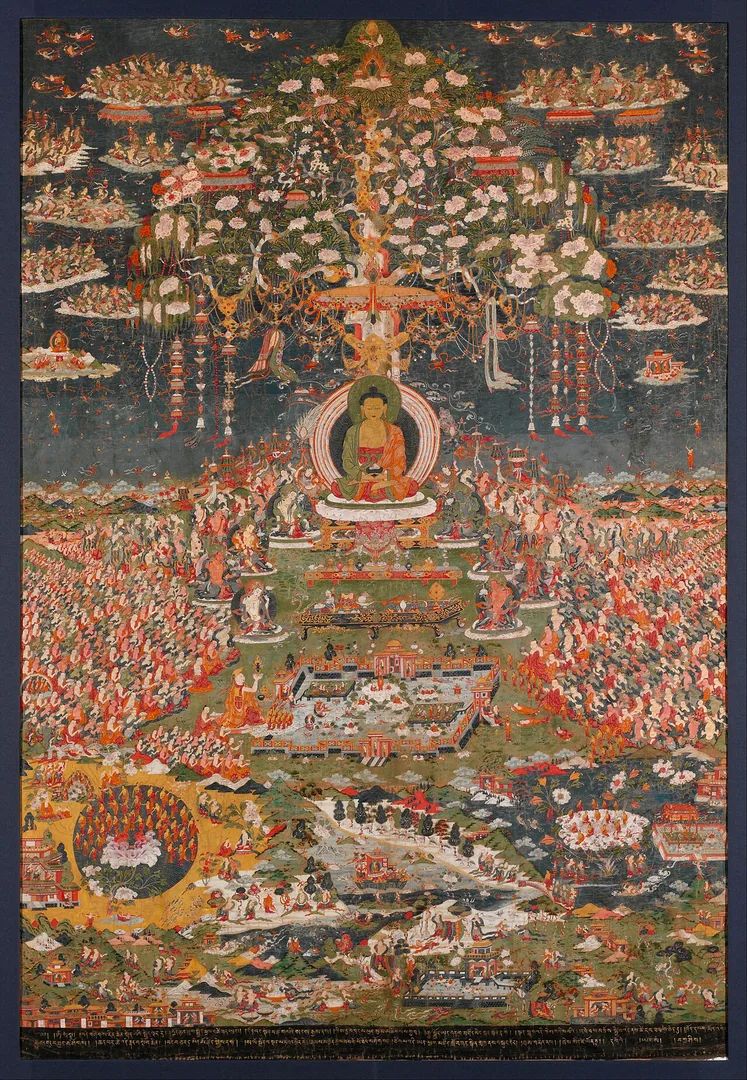
Buddha Amitābha / Amitāyus in Sukhāvatī Pure Land — Walters Art Museum / Open Archive
འོད་དཔག་མེད།

Amitābha (Öpakmé · Buddha of Infinite Light)

Visual Signature
Ruby sunset red · Both hands resting together in lap (dhyāna mudrā)
Hands & Attributes
Monastic robes + alms bowl = Amitābha; Five-Buddha crown + long-life nectar vase = Amitāyus.
Lineage Role
Lord of Sukhāvatī Western Pure Land & Padma Family.
Open Full Guide →
Pair 04

Mañjuśrī vs. Four-Armed Prajñāpāramitā vs. Tsongkhapa

All three radiate saffron-gold and feature the Prajñāpāramitā book and/or wisdom sword—who is who?

3-Second Split Rule: Youthful male swinging sword OVERHEAD = Mañjuśrī; Serene 4-armed FEMALE with teaching hands at chest = Prajñāpāramitā; Tibetan monk wearing tall pointed yellow pandita hat = Je Tsongkhapa!
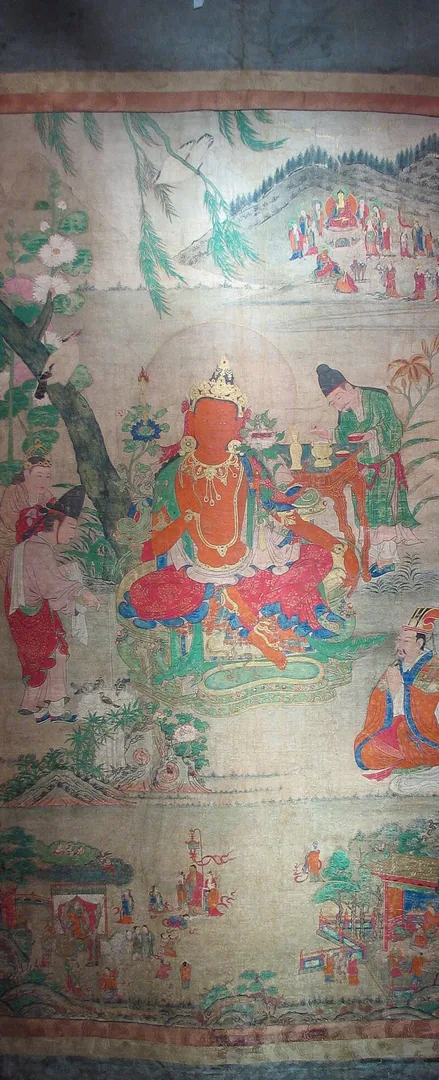
Bodhisattva Mañjuśrī in Landscape Sanctuary — Rubin Museum of Art · Google Art Project
འཇམ་དཔལ་དབྱངས།

Mañjuśrī (Jampelyang)

Visual Signature
Golden youthful prince · 2 arms · Right hand swings flaming sword overhead
Hands & Attributes
Right hand brandishes sword directly; left holds lotus stem supporting scripture at ear level.
Lineage Role
Bodhisattva embodying the incisive analytical wisdom of all Buddhas.
Open Full Guide →
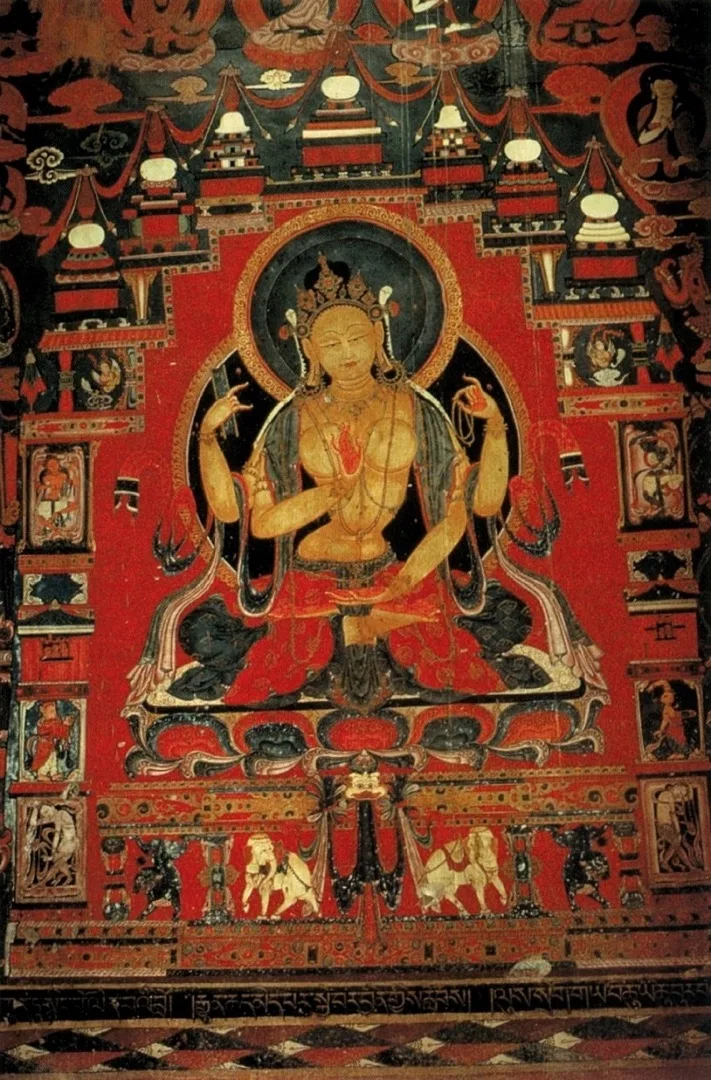
Four-Armed Golden Prajñāpāramitā Enshrined Beneath Eight Stupas at Tholing — Tholing Monastery Mural Archive · Public Domain
ཤེར་ཕྱིན་མ།

Prajñāpāramitā (Yum Chenmo · Great Mother of All Buddhas)

Visual Signature
Golden maternal goddess · Usually 4 arms · No overhead slashing posture
Hands & Attributes
Primary hands form Dharmacakra teaching mudrā at heart; outer hands hold pecha book & mala/vajra.
Lineage Role
Yum Chenmo—Great Mother of All Buddhas & personification of emptiness.
Open Full Guide →
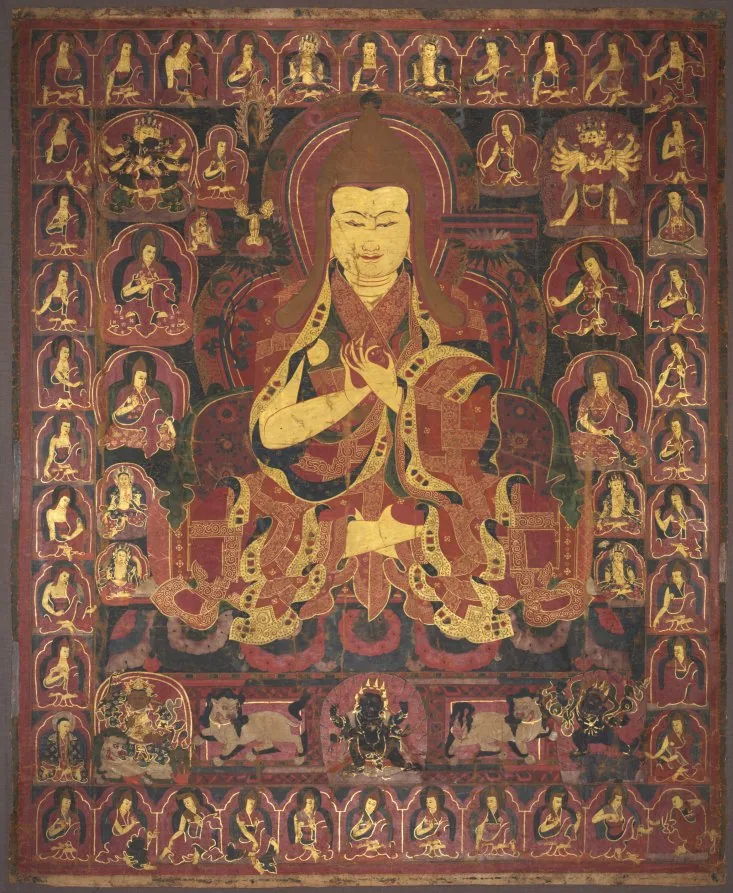
Je Tsongkhapa (Lobsang Drakpa), Founder of the Gelug Order — The Cleveland Museum of Art (1981.33)
རྗེ་ཙོང་ཁ་པ།

Je Tsongkhapa (Lobsang Drakpa · 1357–1419)

Visual Signature
Historical Tibetan monk · Pointed yellow Pandita hat + monastic robes
Hands & Attributes
Both hands form teaching mudrā at chest while two lotus stems support sword (right) & book (left) at shoulders.
Lineage Role
Founder of the Gelug school & author of the Lamrim Chenmo (1357–1419).
Open Full Guide →
Pair 05

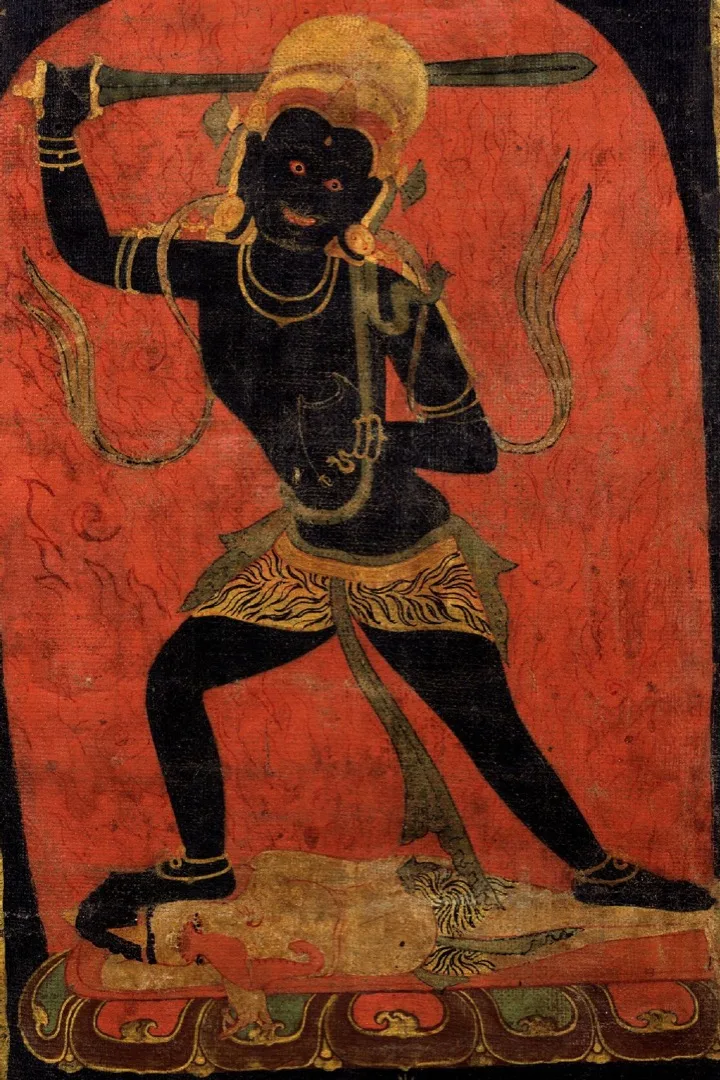
Vajrapāṇi vs. Blue Acala (Miyowa)

Both are compact, blazing sapphire-blue two-armed wrathful protectors—what single detail separates them?

3-Second Split Rule: Check the raised RIGHT hand: Holding a five-pronged VAJRA scepter = Vajrapāṇi; Swinging a straight FLAMING SWORD (often with one knee touching the ground) = Blue Acala!
Vajrapāṇi Citta Mandala (Sarvadurgati Pariśodhana) — The Art Institute of Chicago (103305)
ཕྱག་ན་རྡོ་རྗེ།

Vajrapāṇi (Chana Dorje · Wielder of the Thunderbolt)

Visual Signature
Midnight blue · Wide warrior lunge · Right hand brandishes VAJRA
Hands & Attributes
Right hand hurls or raises five-pronged vajra overhead; left forms tarjanī mudrā (often with lasso).
Lineage Role
Lord of Secrets (Guhyapati), compiler of all tantras & awakened power.
Open Full Guide →
Pair 06

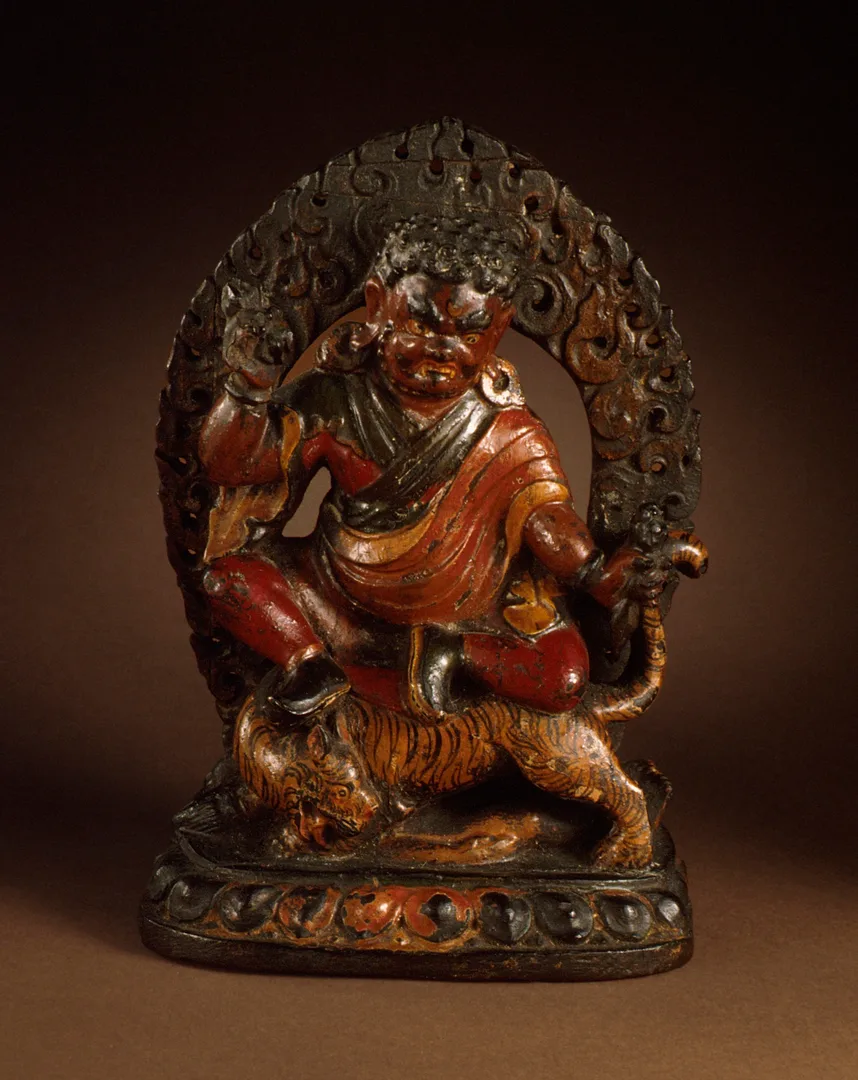
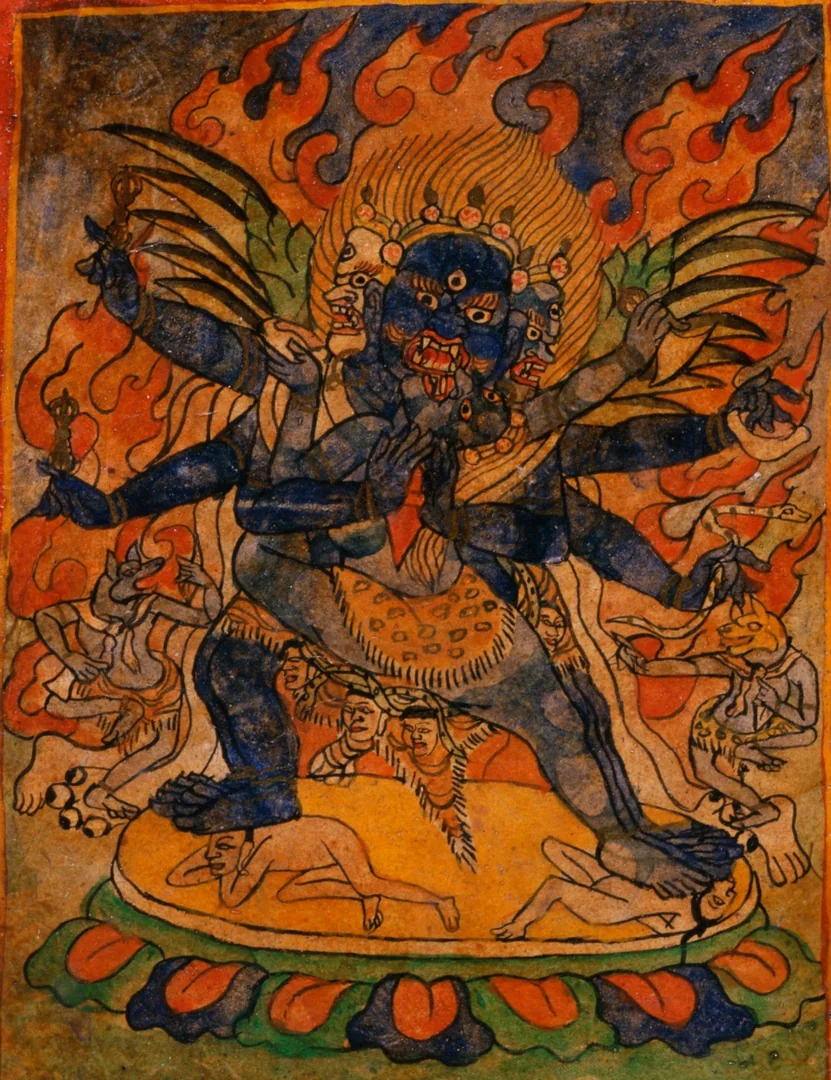
Dorje Drolö vs. Vajrakīlaya (Dorje Phurba)

Both wield the three-bladed phurba ritual dagger amidst flames—how do you distinguish them instantly?

3-Second Split Rule: 1 face, 2 arms, standing on a PREGNANT TIGRESS = Dorje Drolö (Guru Rinpoche’s wrathful form); Winged 3 faces, 6 arms in yab-yum rolling the phurba between TWO CENTRAL PALMS (or lower body shaped as a blade) = Vajrakīlaya!
Padmasambhava in Wrathful Form as Dorje Drolö Atop a Pregnant Tigress — Los Angeles County Museum of Art (M.86.281)
རྡོ་རྗེ་གྲོ་ལོད།

Dorje Drolö (Wrathful Padmasambhava on the Tigress)

Visual Signature
Dark maroon-brown · 1 face, 2 arms · Rides a leaping pregnant tigress!
Hands & Attributes
Right hand raises vajra overhead; left hand thrusts iron phurba downward; wears Tibetan brocade cloak & boots.
Lineage Role
Eighth manifestation of Padmasambhava revealed at Paro Taktsang (Tiger’s Nest).
Open Full Guide →
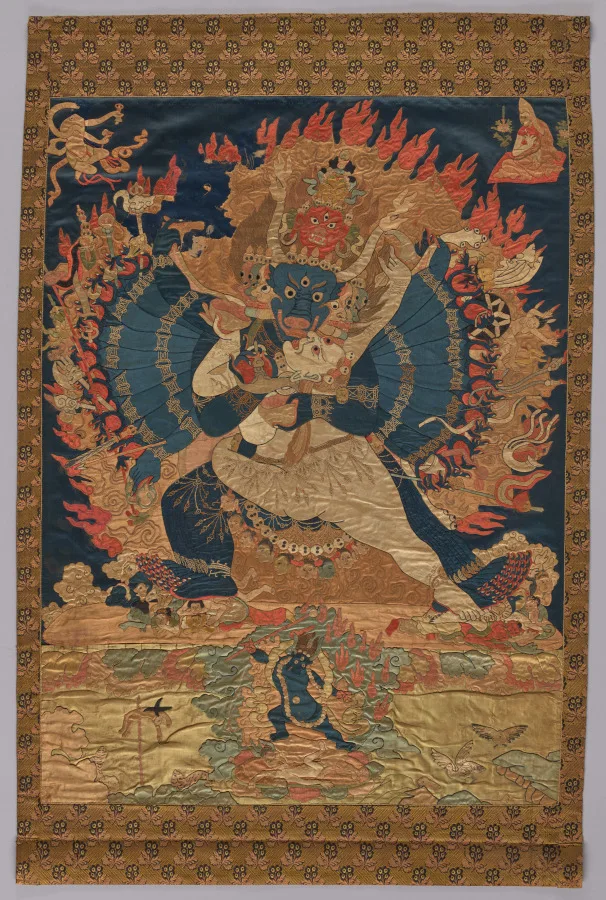
Winged Three-Faced, Six-Armed Vajrakīlaya (Vajrakumāra) in Yab-Yum Rolling the Phurba — Los Angeles County Museum of Art (AC1998.253.6)
རྡོ་རྗེ་ཕུར་པ།

Vajrakīlaya / Vajrakumāra (Dorje Phurba · Obstacle-Transmuting Heruka)

Visual Signature
Midnight blue · Spread Garuḍa wings · 3 faces, 6 arms in yab-yum rolling phurba
Hands & Attributes
Primary pair of hands rolls a giant phurba at heart embracing Dīptacakrā; outer four hands hold 9- & 5-pronged vajras, flame, and trident.
Lineage Role
Heruka of awakened Buddha-activity transmuting deep-rooted obstacles.
Open Full Guide →
Pair 07

Cakrasaṃvara vs. Hevajra vs. Yamāntaka

Multi-armed blue Anuttarayoga yidams look overwhelming at first glance—what single visual shortcut unlocks all three?

3-Second Split Rule: Horned BUFFALO head (34 arms) = Yamāntaka; 16 hands holding ONLY white SKULLCUPS (no weapons!) = Hevajra; 12 arms crossing vajra & bell while stretching an ELEPHANT HIDE behind his shoulders = Cakrasaṃvara!
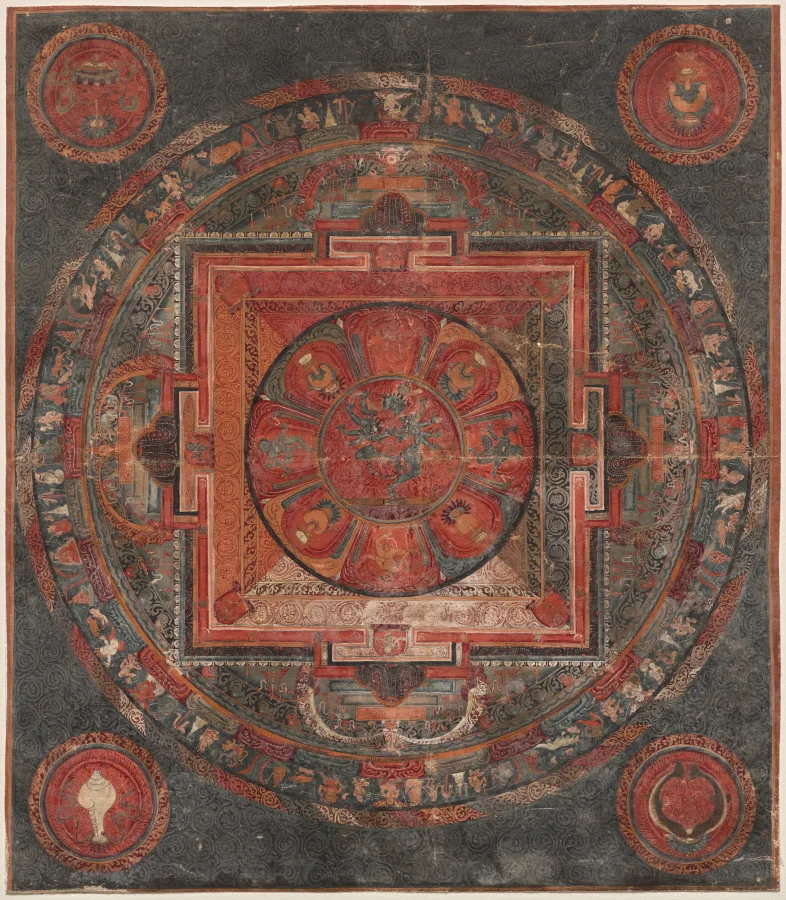
Mandala of Cakrasaṃvara and Vajravārāhī Ringed by Eight Charnel Grounds — The Cleveland Museum of Art (1960.211)
འཁོར་ལོ་བདེ་མཆོག

Cakrasaṃvara (Khorlo Demchog · Wheel of Supreme Bliss)

Visual Signature
4 faces, 12 arms · Upper two hands stretch an elephant hide across back
Hands & Attributes
Primary hands cross vajra & bell embracing crimson Vajravārāhī; crescent moon in topknot.
Lineage Role
Mother-Tantra sovereign of Kagyu, Gelug & Sakya.
Open Full Guide →
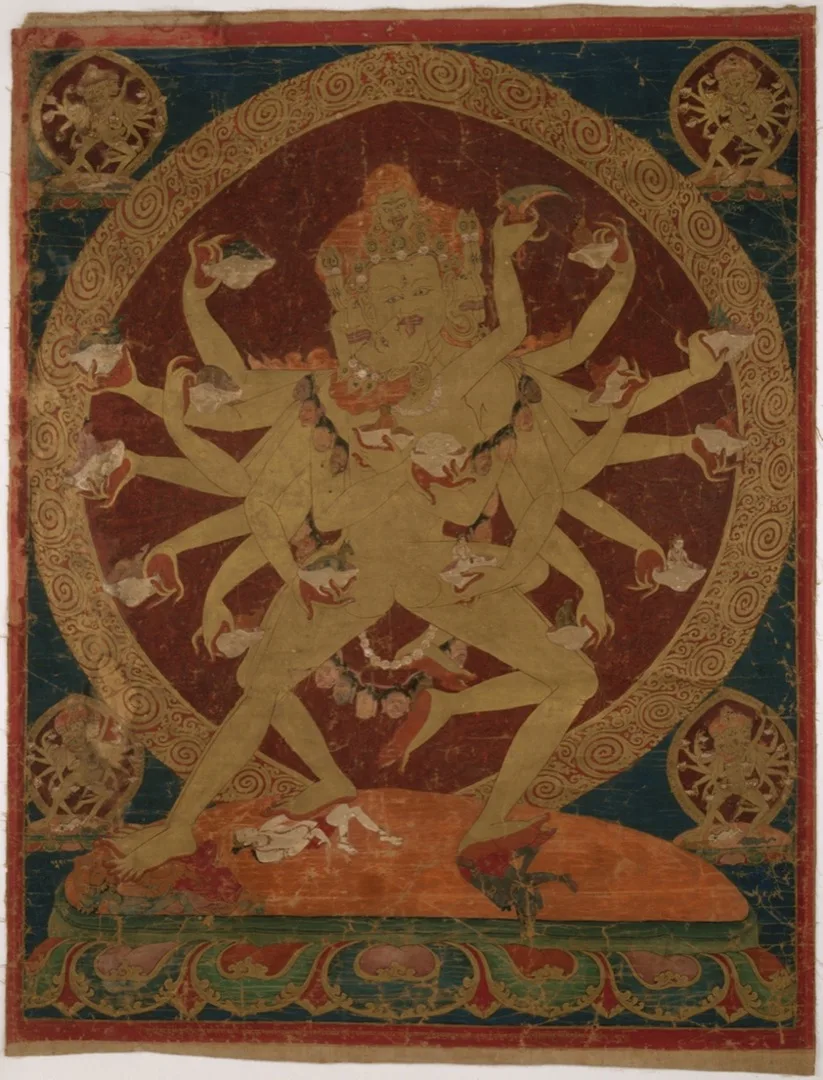
Hevajra Kapāladhara and Nairātmyā Dancing with Sixteen Skullcups — The Art Institute of Chicago (1997.707 / 148424)
ཀྱེ་རྡོ་རྗེ།

Hevajra & Nairātmyā (Kye Dorje · Bliss-Emptiness Mother Tantra)

Visual Signature
8 faces, 16 arms, 4 legs · Every single hand holds a white kapāla skullcup!
Hands & Attributes
Right 8 skullcups hold animals (elephant, horse, lion…); left 8 hold elemental deities; embraces Nairātmyā.
Lineage Role
Central yidam of the Sakya Lamdre (“Path & Fruit”) & Marpa Kagyu.
Open Full Guide →
Yamāntaka Vajrabhairava and Consort Vajravetālī in Wisdom Flames — The Cleveland Museum of Art (1918.548)
རྡོ་རྗེ་འཇིགས་བྱེད།

Yamāntaka / Vajrabhairava (Dorje Jigje · Ender of Death)

Visual Signature
9 faces (central horned water-buffalo face + peaceful Mañjuśrī at apex), 34 arms, 16 legs
Hands & Attributes
Primary hands hold curved kartika chopper & skullcup; 32 outer hands fan out with weapons & elephant skin.
Lineage Role
Wrathful Mañjuśrī who conquers death (Yama) through emptiness.
Open Full Guide →
Pair 08

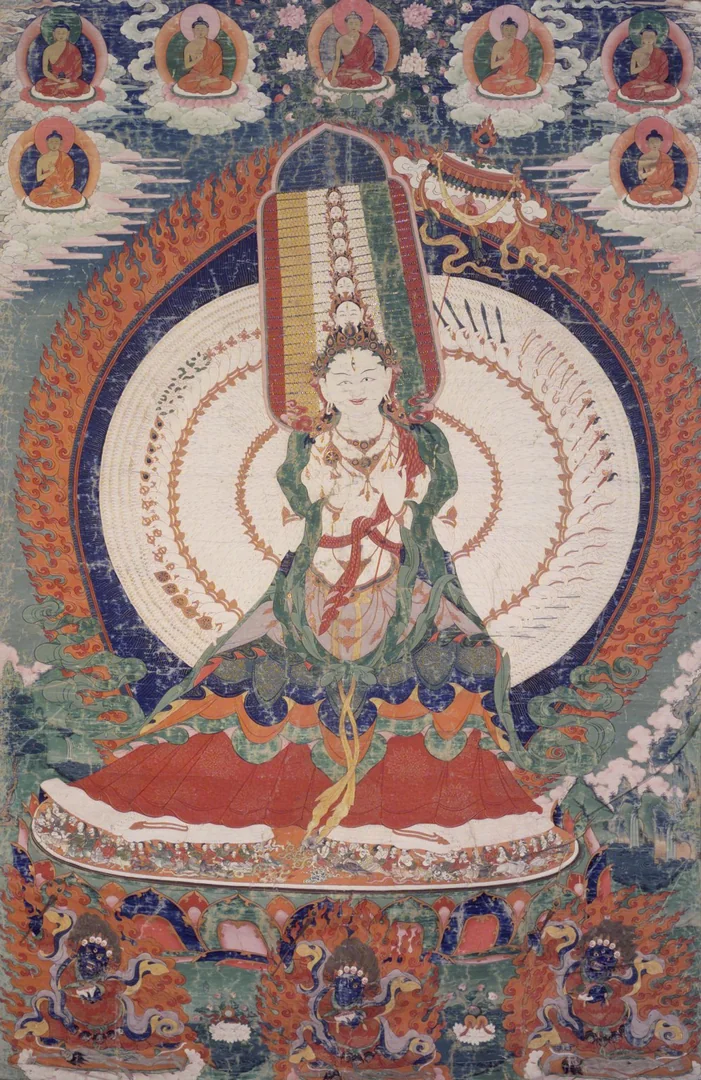
Avalokiteśvara (incl. 1,000-Armed) vs. Sitātapatrā (White Parasol)

When you meet a snow-white deity with a dazzling fan of 1,000 eye-marked arms in a Tibetan gallery, why isn’t it always Thousand-Armed Avalokiteśvara?

3-Second Split Rule: Seated 4-armed holding crystal mala & lotus (or standing straight on two feet with 11 stacked heads and central palms in prayer) = Avalokiteśvara; Wide dynamic WARRIOR LUNGE, towering 5-color stack of 1,000 faces, raising a tall WHITE PARASOL & golden wheel = Sitātapatrā!
Four-Armed Avalokiteśvara (Ṣaḍakṣarī Lokeśvara) — Potala Collection Archive · Public Domain
སྤྱན་རས་གཟིགས།

Avalokiteśvara (Chenrezig)

Visual Signature
Peaceful stillness · 4-armed lotus posture (or 11 heads standing straight)
Hands & Attributes
Central palms cup wish-granting jewel at heart; outer hands hold crystal mālā & white lotus (never a parasol).
Lineage Role
Bodhisattva of Universal Compassion & patron protector of Tibet (Oṃ Maṇi Padme Hūṃ).
Open Full Guide →