Prajñāpāramitā (Yum Chenmo · Great Mother of All Buddhas)
Four-Armed Saffron-Gold Embodiment of Transcendent Wisdom Giving Birth to Buddhas of Past, Present & Future
Affectionately revered in Tibet as Yum Chenmo (“The Great Mother”), golden four-armed Prajñāpāramitā is the luminous sculptural and painted personification of the Perfection of Wisdom sutras (including the Heart and Diamond Sutras)—teaching that direct insight into emptiness is the maternal womb from which every Buddha across all three times is born.
ཨོཾ་ག་ཏེ་ག་ཏེ་པཱ་ར་ག་ཏེ་པཱ་ར་སཾ་ག་ཏེ་བོ་དྷི་སྭཱ་ཧཱ།
Devanāgarī: ॐ गते गते पारगते पारसंगते बोधि स्वाहा · Liturgical Reading: Om ga-te ga-te pa-ra-ga-te pa-ra-sang-ga-te bo-dhi so-ha
Gone, gone, gone beyond, gone altogether beyond—O Awakening, Svāhā! (Open Mahāyāna mantra of the Heart Sūtra, Toh 21)
Why Is Empty Wisdom Called “Great Mother” Instead of an Abstract Equation?
In modern languages, “emptiness” () easily sounds cold, clinical, or nihilistic. Indian Nālandā masters and Tibetan translators prevented that misunderstanding through a striking metaphor from the Perfection of Wisdom in Eight Thousand Lines (Aṣṭasāhasrikā, Toh 12): just as children cannot be born without a mother, neither Śākyamuni nor any past or future Buddha could awaken without realizing the absence of rigid, independent self-nature. Emptiness is therefore not a sterile void—it is the fertile, open space (Yum Chenmo) making compassion, change, and enlightenment possible.
Our 15th-century mural plate from Tholing Monastery (founded in 997 CE by Rinchen Zangpo in Western Tibet’s Guge Kingdom) shows how Himalayan artists translated this text into living pigment: golden Prajñāpāramitā sits serenely beneath a canopy of eight enlightenment stupas, her upper hand lifting the volume of the sutra while Tibetan Uchen verses run along the dado below.
From Heart Sūtra Exorcism to Machig Labdrön’s Chöd & Monastic Curriculum
Across Tibet, Prajñāpāramitā lives simultaneously in three arenas: scholastic philosophy, liturgical protection, and women’s contemplative lineage. In monastic universities (Sera, Drepung, Ganden, Sakya, Larung), monks and nuns spend five to six years debating Maitreya’s Abhisamayālaṃkāra (Ornament of Clear Realization, Toh 3786), which maps the hidden meditative path structure inside the Prajñāpāramitā sutras. In daily ritual, Tibetan monastics chant the Heart Sūtra (Sher-snying, Toh 21) accompanied by rhythmic hand-claps (zlog-pa)—because realizing that attacker, attacked, and fear lack inherent existence is considered the highest protection. And in the 11th century, Tibet’s celebrated female siddha Machig Labdrön (1055–1149), revered as a human emanation of Yum Chenmo, founded Chöd (“Cutting Through Ego”), the only Tibetan Buddhist lineage transmitted back into India.
| Canonical Sūtra | Tohoku No. | Length | Living Role in Tibetan Culture |
|---|---|---|---|
| Śatasāhasrikā (100,000 Lines · ’Bum) | Toh 8 | 12 massive pecha volumes | Carried around fields & villages in joyous spring Bumkor harvest processions |
| Aṣṭasāhasrikā (8,000 Lines · Brgyad-stong-pa) | Toh 12 | 1 volume (32 chapters) | Earliest layer; prized for gold-on-indigo illuminated manuscripts |
| Heart Sūtra (Bhagavatī-prajñāpāramitā-hṛdaya) | Toh 21 | 25 verses (full frame) | Chanted daily across all schools (retains prologue & Buddha’s applause at end) |
| Perfection of Wisdom in One Letter (Ekākṣarī) | Toh 23 | Single syllable “A” (ཨ) | Ultimate condensation: unborn primordial openness of Dzogchen & Mahāmudrā |
How It Is Practiced in Living Tradition
Openly recited across all Mahāyāna and Vajrayāna traditions through the Heart Sūtra (whose Tibetan Kangyur version Toh 21 includes the complete narrative frame of the Buddha entering absorptive samādhi on Vulture Peak while Avalokiteśvara answers Śāriputra), and honored during village Bumkor scripture-carrying festivals across Tibet and Bhutan. Formal tantric sādhana visualizations of four-armed or two-armed Prajñāpāramitā are practiced cleanly with oral transmission (lung) from a lineage teacher.
Common Questions & Clarifications
How can I tell a golden Prajñāpāramitā statue apart from Mañjuśrī or White/Golden Tārā?
Check gender and arms: Mañjuśrī is a youthful male bodhisattva prince whose right hand brandishes a flaming sword overhead while his left holds a lotus supporting the book. Prajñāpāramitā is distinctly female (with full breasts and maternal poise), most famously four-armed with her primary hands in teaching or meditation mudrā and no overhead sword in her classic peaceful four-armed form.
Primary Sources & Further Reading
- Bhagavatī-prajñāpāramitā-hṛdaya (Heart Sūtra, Toh 21) & Aṣṭasāhasrikā Prajñāpāramitā (Toh 12), 84000: Translating the Words of the Buddha
- Edward Conze, The Prajñāpāramitā Literature & Iconography of the Perfection of Wisdom (Munshiram Manoharlal / Royal Asiatic Society)
- Michelle Sorensen & Jérôme Edou, Machig Labdrön and the Foundations of Chöd: Embodying Yum Chenmo (Snow Lion)
Connected in the Mandala Graph
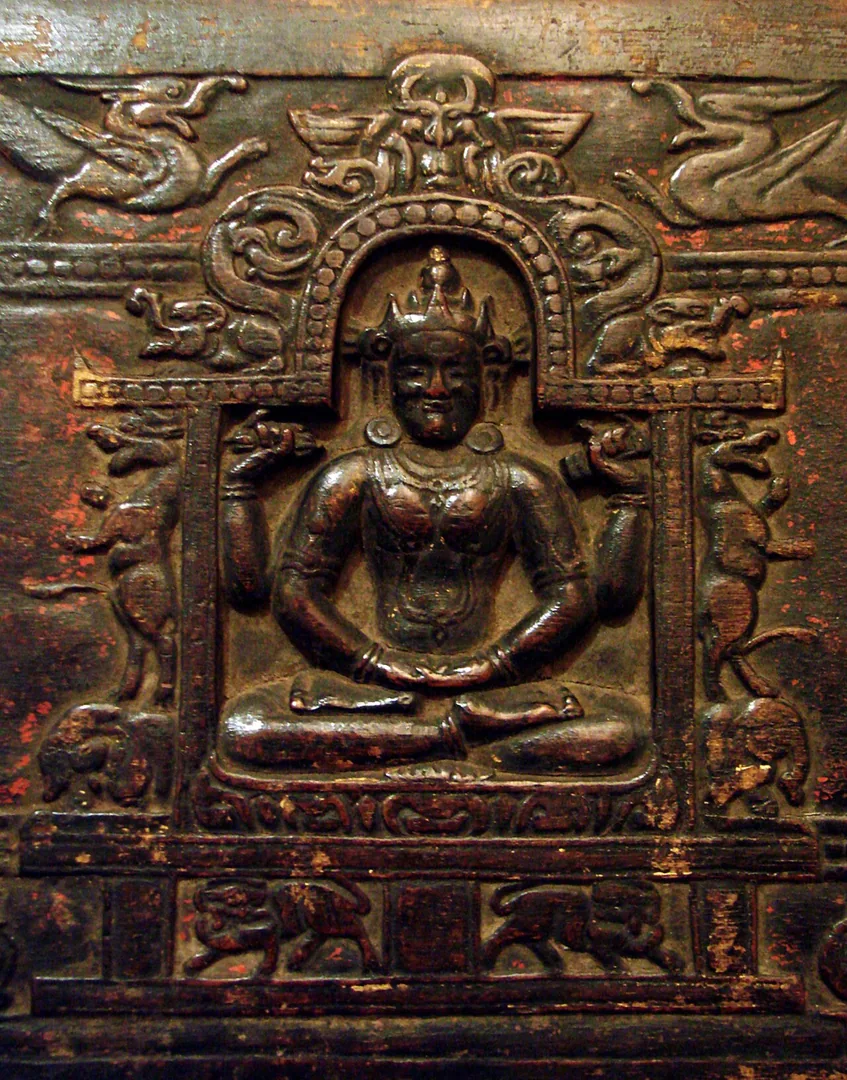
Śūnyatā (Emptiness) & the Two Truths (Madhyamaka)
In Nāgārjuna’s Middle Way philosophy, “emptiness” (stong-pa-nyid) never means nothing exists; it means nothing exists in frozen isolation—and precisely because things lack rigid self-nature, seeds sprout, suffering changes, and awakening works.
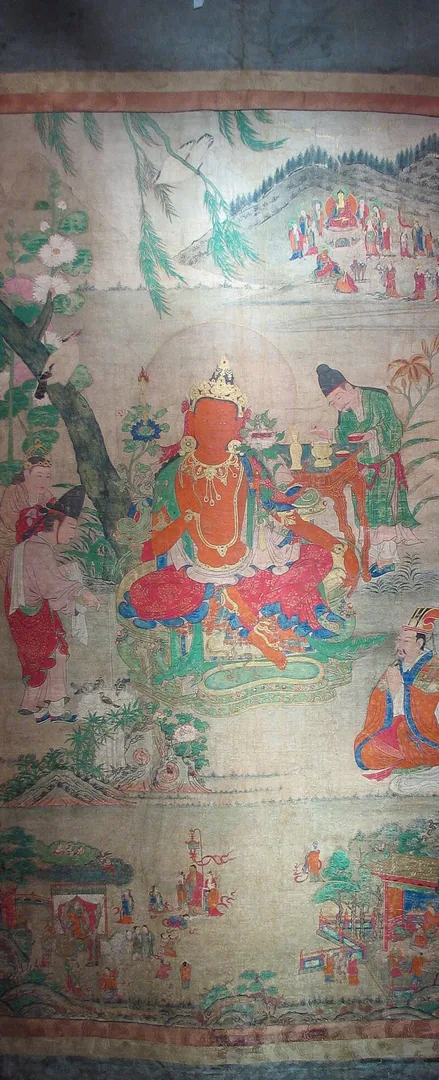
Mañjuśrī (Jampelyang)
Radiant saffron-gold in hue, Mañjuśrī raises a blazing sword overhead with his right hand to slice right through conceptual confusion, while holding the Prajñāpāramitā Sūtra on a lotus at his heart.
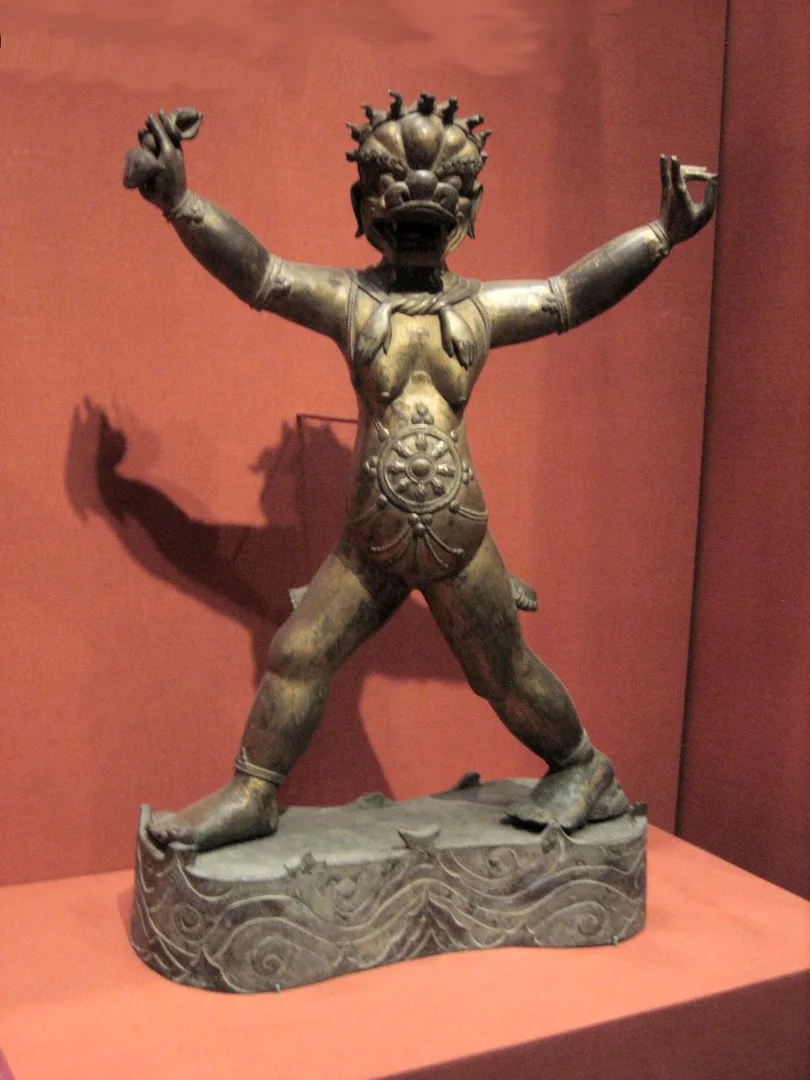
Siṃhamukhā (Senge Dongma · Lion-Faced Wisdom Ḍākinī)
Dancing on one foot in a halo of wisdom fire with a snow-white roaring lioness face atop a sapphire-blue body, Siṃhamukhā is no worldly spirit but an enlightened dharmakāya wisdom-ḍākinī—celebrated equally in Nyingma terma, Sakya’s Thirteen Golden Dharmas, and Gelug monasteries for dissolving psychic negativity and curses back into emptiness.
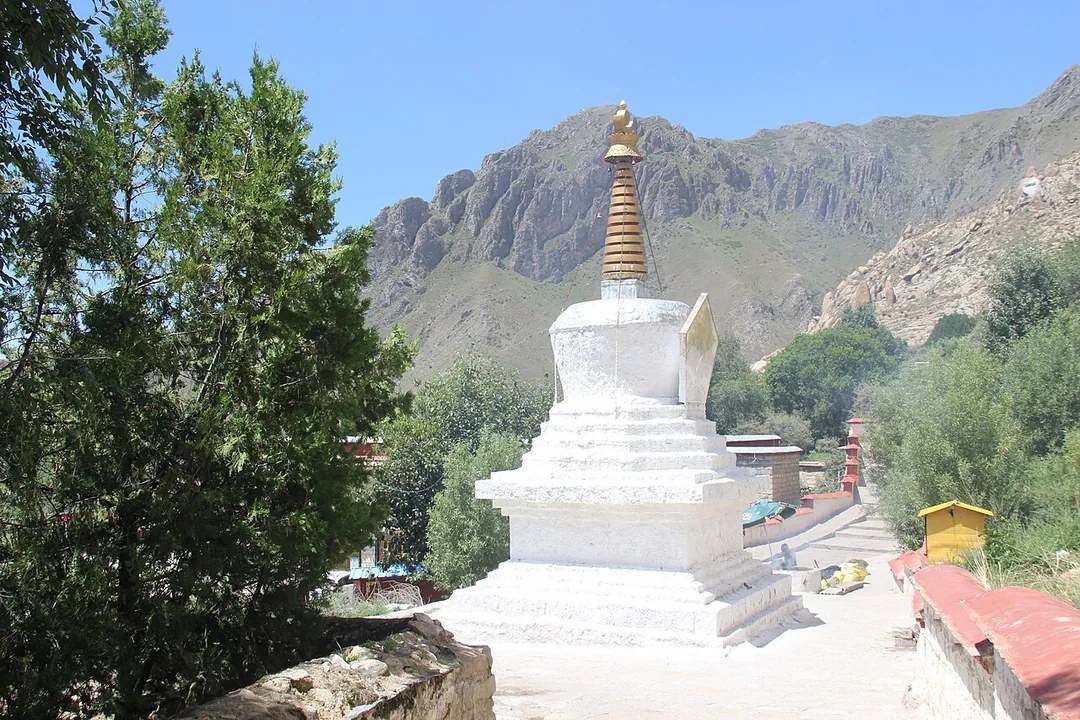
Tibetan Monastic Debate & the Three Great Seats (Sera, Drepung, Ganden)
Every afternoon under the trees of Sera, Drepung, and Ganden monasteries, hundreds of monks pair off—one standing to test definitions with sharp claps, one seated calmly defending consistency—preserving classical Indian Nālandā logic (pramāṇa) as a living anti-dogma discipline.