Sitātapatrā / Uṣṇīṣasitātapatrā (Dukkar · White Parasol Buddha-Mother)
Thousand-Headed, Thousand-Armed Sovereign Radiating from Śākyamuni’s Crown Uṣṇīṣa to Shelter All Beings
Known across Tibet as Dukkar (“She of the White Parasol”), Uṣṇīṣasitātapatrā springs directly from the enlightened crown protuberance (uṣṇīṣa) of Śākyamuni Buddha—raising a vast, cooling white canopy of non-dual wisdom over sentient beings to turn back conflict, fear, illness, and inner turmoil across every school of Tibetan and East Asian Buddhism.
ཧཱུྃ་མ་མ་ཧཱུྃ་ནི་སྭཱ་ཧཱ།
Devanāgarī: हूं मम हूं नि स्वाहा · Liturgical Reading: Hung ma-ma hung ni so-ha
Concise peaceful-protective essence mantra (upahṛdaya) of Sitātapatrā: “Hūṃ! Shelter and safeguard (mama) in indestructible awakened awareness—svāhā!”
Born from the Buddha’s Crown: Why a White Sunshade Became Asia’s Emblem of Fearlessness
In ancient Indian royal etiquette, a white silk parasol (sitātapatra) held above a monarch’s head was both an emblem of peaceful sovereignty and a literal shelter from scorching tropical heat. When the Sitātapatrā Dhāraṇī Sūtra (Toh 590–593) opens in the Heaven of the Thirty-Three (Trāyastriṃśa), the gods led by Śakra are fleeing an assault by asura titans. Śakra rushes to Śākyamuni Buddha—who neither raises an army nor utters a curse. Instead, resting in silent samādhi, the Buddha lets a ray of fearless white light stream from his uṣṇīṣa (the wisdom-protuberance atop a Buddha’s crown, invisible to ordinary measurement because awakened compassion has no ceiling).
Personified as Uṣṇīṣasitātapatrā (“Invincible Aparājitā”), that crown-light unfurls a canopy as wide as space itself: cooling the fever of hatred, litigation, nightmares, and collective panic. Historically, her liturgy formed one of the deepest cultural bridges between Tibet, Mongolia, and China: in the 13th century, Chögyal Phagpa and Sakya translator Shes-rab-rgyal-mtshan (沙啰巴) introduced the Tibetan Sitātapatrā rite (T. 976) to the Yuan court, where a ceremonial white silk umbrella embroidered with Sanskrit seed syllables was paraded around capital city walls on the 15th of the second lunar month to bless all residents—parallel to Chinese monastics chanting the closely related Śūraṅgama Mantra (T. 945) every dawn!
Cosmic 1,000-Armed Dukkar vs. Peaceful 2-Armed Dukkar vs. 1,000-Armed Chenrezig
In Himalayan art collections—exemplified by our 18th-century Brooklyn Museum thangka (84.188)—visitors almost always pause before Sitātapatrā’s dazzling circular fan of white hands and ask: “Isn’t that Thousand-Armed Avalokiteśvara (Guanyin)?” Checking just four structural cues settles the identification instantly:
| Feature | 1,000-Armed Sitātapatrā (Brooklyn 84.188) | Peaceful 2-Armed Sitātapatrā | 1,000-Armed Avalokiteśvara (Chenrezig) |
|---|---|---|---|
| Heads & Crown | Towering rectangular/conical stack of 1,000 faces in 5 Buddha-family colors (white, yellow, green, red, blue) | 1 peaceful white maiden face wearing a five-leaf bodhisattva crown (often with 7 or 3 eyes) | Exactly 11 stacked heads (9 peaceful + 1 wrathful + red Amitābha Buddha at the very top) |
| Primary Hands | Holds an 8-spoked Dharma wheel at chest + tall shaft of the jeweled WHITE PARASOL rising aloft! | Left hand raises the white parasol stem at heart; right extends in supreme generosity (varada) | Central two palms pressed together in prayer (añjali) clasping a wish-fulfilling jewel—NO parasol |
| Leg Stance | Wide dynamic warrior lunge (pratyālīḍha) stepping across obstacles with 1,000 feet | Seated in full vajra-lotus or graceful half-lotus on a moon disc | Stands completely upright & still with two feet together on a lotus |
How It Is Practiced in Living Tradition
Chanted across Gelug, Sakya, Kagyu, and Nyingma monasteries every morning to clear collective obstacles, travelers’ hazards, and disharmony, and frequently carved or hung as a protective wheel above Tibetan household doorways alongside the Eight Auspicious Symbols. While her sutra praise and short peaceful essence mantra circulate widely, formal tantric repelling rites (bzlog-pa) rely on oral transmission (lung) and lineage guidance.
Common Questions & Clarifications
How are Tibet’s Sitātapatrā Dhāraṇī and East Asia’s Śūraṅgama Mantra related?
They are sister recensions of the same Indian Sitātapatroṣṇīṣa dhāraṇī corpus! Both invoke the blazing white parasol emerging from the Tathāgata’s uṣṇīṣa and share long parallel Sanskrit passages praising the Seven Past Buddhas and directional guardians—transmitted to Tang China inside the Śūraṅgama tradition (T. 945) and translated directly from Sanskrit palm leaves into the Tibetan Kangyur (Toh 590–593).
Primary Sources & Further Reading
- Ārya-tathāgatoṣṇīṣasitātapatrā-aparājitā-mahāpratyaṅgirā-parama-siddha-nāma-dhāraṇī (Derge Kangyur Toh 590 & Toh 591), 84000: Translating the Words of the Buddha
- Miranda Shaw, Buddhist Goddesses of India (Princeton University Press, 2006), Chapter 15: “Sitātapatrā: Goddess of the White Parasol”
- Brooklyn Museum Open Collection (84.188): 18th-Century Tibetan Thangka of Thousand-Headed, Thousand-Armed Uṣṇīṣasitātapatrā
Connected in the Mandala Graph
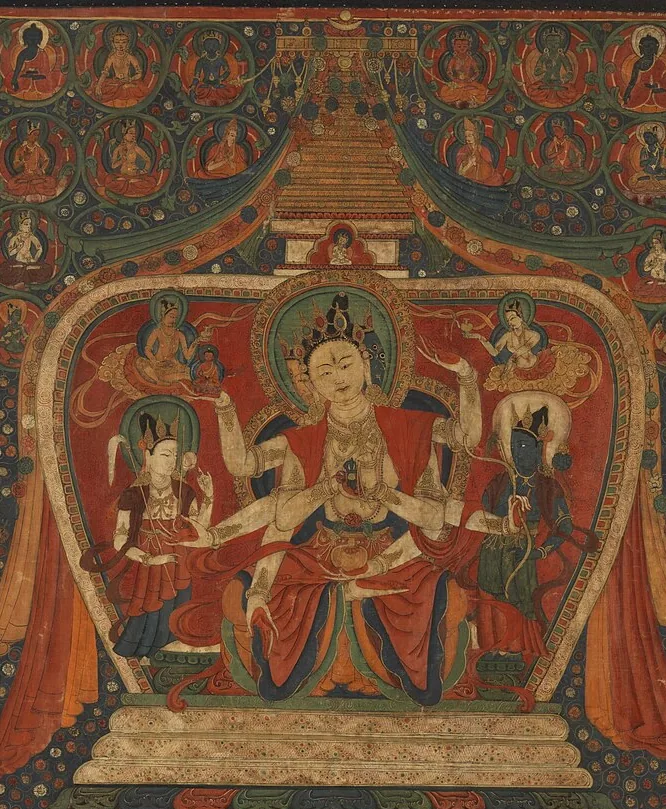
Uṣṇīṣavijayā (Namgyalma · Victorious Crown Wisdom)
Emanating as blinding white light from the crown protuberance (uṣṇīṣa) of Śākyamuni Buddha, three-faced eight-armed Namgyalma unites peaceful healing, protective strength, and karmic purification—completing Tibet’s revered Three Long-Life Deities.
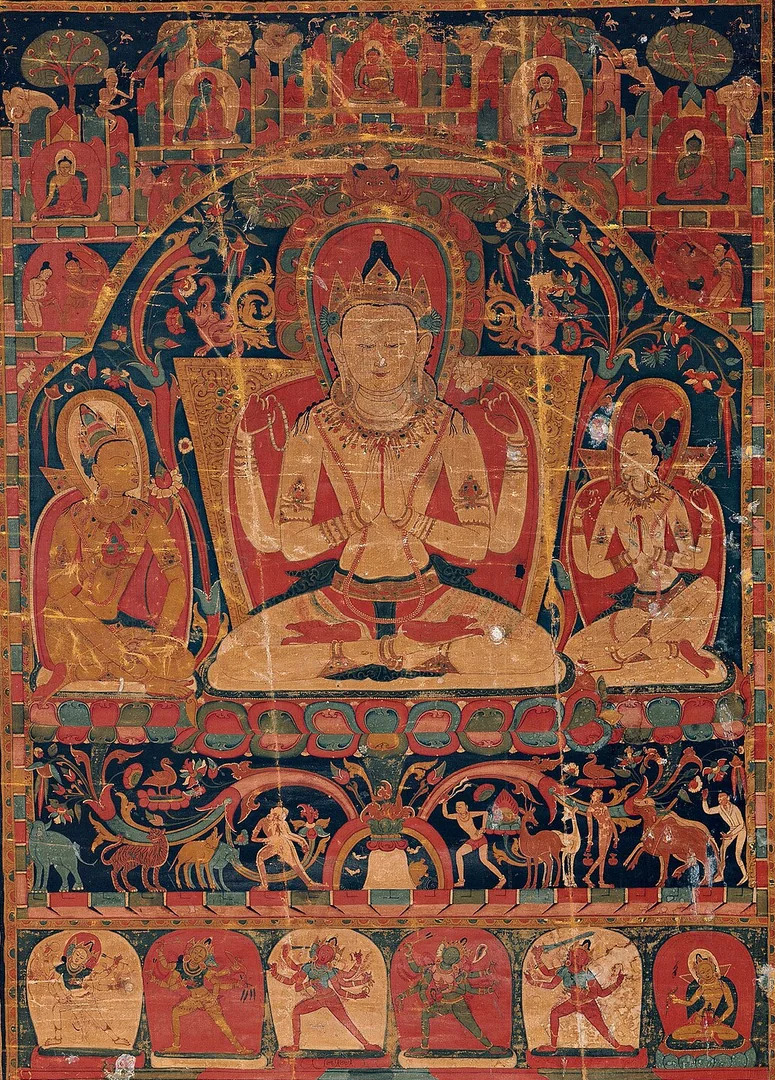
Avalokiteśvara (Chenrezig)
Known in Tibetan as Chenrezig (“One Who Gazes with Unwavering Eyes”), the four-armed white form embodies impartial compassion united with emptiness, associated with the Six-Syllable Mantra Oṃ Maṇi Padme Hūṃ.
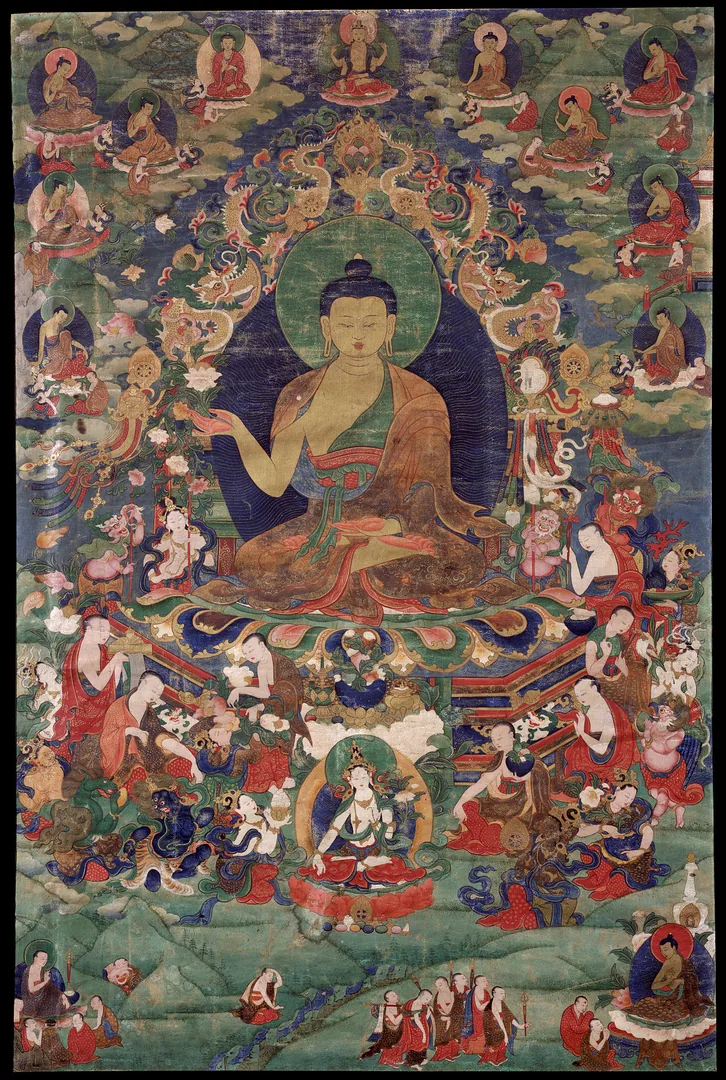
Śākyamuni Buddha (Shakya Thubpa)
Known in Tibetan as Shakya Thubpa (“Mighty Sage of the Śākyas”), the historical Buddha sits in unadorned monastic robes, touching the earth with his right fingertips to witness impartial awakening while cradling an iron alms bowl in his lap.
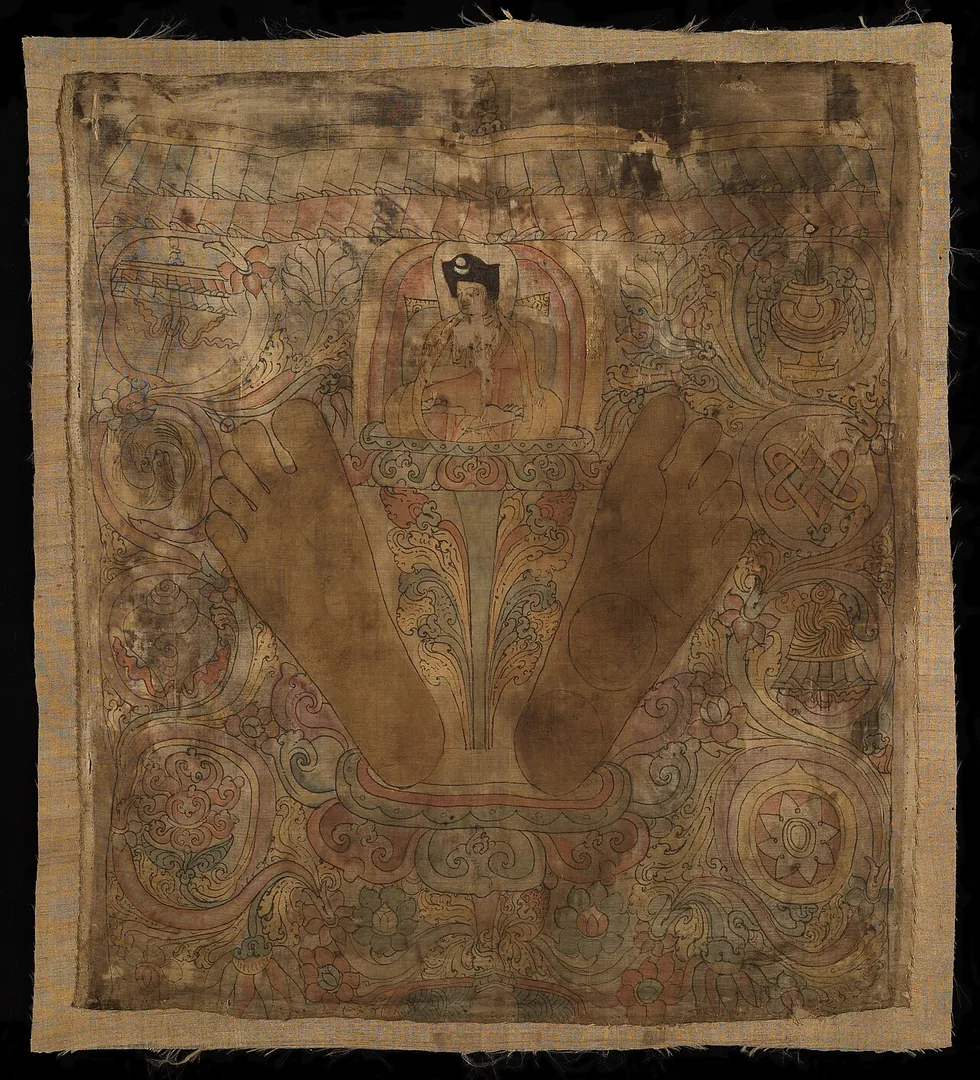
The Eight Auspicious Symbols (Ashtamangala)
Originally royal coronation offerings in ancient India and reinterpreted as attributes of the Buddha’s awakened body, speech, and mind, these eight emblems form the foundational grammar of Tibetan visual design.