Cakrasaṃvara (Khorlo Demchog · Wheel of Supreme Bliss)
Preeminent Mother-Tantra Yidam of Mount Kailash, Nāropa, Marpa & Milarepa
Celebrated across Himalayan art and pilgrimage as the indwelling mandala deity of Mount Kailash, sapphire-blue Cakrasaṃvara embraces crimson wisdom-ḍākinī Vajravārāhī with crossed vajra and bell—embodying Mother Tantra’s realization that great bliss and emptiness are indivisible.
Decoding the Museum Masterpiece: Sapphire Heruka, Crimson Vajravārāhī & Two Extremes Underfoot
Few sculptures in Newar, Pala Indian, and Tibetan art achieve the dynamic grace of Cakrasaṃvara (Khorlo Demchog, “Wheel of Supreme Bliss”). In Buddhist Mother Tantra (Yoginī-tantra), “supreme bliss” (mahāsukha) never denotes ordinary hedonistic craving; it names the uncontrived openness and warmth experienced when the tight knot of dualistic ego-grasping dissolves into emptiness. His deep sapphire-blue body represents changeless dharmakāya compassion; atop his ascetic dreadlocks rest a wish-fulfilling jewel, a crossed viśvavajra (accomplishing all enlightened activities), and a tilted white crescent moon cooling the fever of affliction.
Whether rendered in his classic four-faced, twelve-armed form (stretching a flayed elephant skin of conquered ignorance across his back while holding a ḍamaru drum, axe, chopper, trident, skullcup, vajra-lasso, and four-faced Brahmā head) or his distilled one-faced, two-armed Sahaja (“Co-emergent”) form, his central hands cross in Vajrahūṃkāra mudra holding vajra and bell around crimson Vajravārāhī (རྡོ་རྗེ་ཕག་མོ།, “Adamantine Sow,” whose tiny wild-boar head symbolizes rooting up foundational delusion avidyā into pure space). Their yab-yum embrace visualizes compassionate method (upāya) and emptiness-realizing wisdom (prajñā) as one indivisible reality. Beneath their striding feet lie red Kālarātri and black Bhairava—representing not sectarian triumph over neighbors, but the inner transcendence of nihilism and eternalism (chad-mtha’ and rtag-mtha’), attachment and egoic pride.
Mount Kailash’s Living Mandala & the Three Indian Mahāsiddha Lineages
Unlike mandalas envisioned solely in temple paintings, the Cakrasaṃvara Mūlatantra (Toh 368) maps twenty-four sacred pilgrimage sites (pīṭha) onto living Asian geography—identified across Tibetan tradition with Mount Kailash (གངས་རིན་པོ་ཆེ།, Gangs Rin-po-che, Enlightened Body), Lapchi (Speech), and Tsari (Mind). When Tibetan pilgrims walk the fifty-two-kilometer high-altitude kora circuit around snow-domed Kailash—where the cotton-clad poet-yogi Jetsün Milarepa meditated in caves and famously glided on a morning sunbeam to the summit in friendly spiritual contest with Bön master Naro Bönchung—they view the mountain itself as the self-arisen crystal palace of Cakrasaṃvara and Vajravārāhī.
Transmitted from India’s Eighty-Four Mahāsiddhas through Tilopa, Nāropa, and Marpa Lotsāwa, Cakrasaṃvara became the heart yidam of every Kagyu lineage (anchoring the Six Yogas of Nāropa and Mahāmudrā), one of the central tantric pillars of the Sakya patriarchs (whose celebrated Naro Khechari Vajravārāhī derives directly from this cycle), and the supreme Mother-Tantra deity in Je Tsongkhapa’s Gelug synthesis. Across these non-sectarian streams, Tibetan colleges preserve three principal Indian siddha traditions:
| Siddha Lineage | Tibetan Name | Mandala Structure & Emphasis |
|---|---|---|
| 1. Lūipa Tradition | Lu-i-pa lugs | 62-deity architectural palace; foundational for Gelug & Sakya ritual precision |
| 2. Ghaṇṭāpāda (Bell) Tradition | Dril-bu-pa lugs | 5-deity outer & renowned Body-Mandala (lus-dkyil); prized across Kagyu, Sakya & Gelug |
| 3. Kṛṣṇācārya (Kāṇha) Tradition | Nag-po-pa lugs | 13-deity mandala emphasizing yogic activity & dakini oral instructions |
How It Is Practiced in Living Tradition
Honored openly by pilgrims circumambulating Mount Kailash, Tsari, and Swayambhunath / Pharping in Kathmandu Valley, and commemorated on the 10th and 25th lunar days (Tsok / Ḍākinī feast days) across Kagyu, Sakya, and Gelug monasteries. In strict fidelity to Vajrayāna samaya, personal practice of Cakrasaṃvara’s liturgical sadhana, body-mandala, and inner Mother-Tantra completion yogas (such as Tummo and Clear Light) requires authentic fourfold empowerment (abhiṣeka / dbang), oral transmission (lung), and close experiential instruction (tri / khrid) from a qualified lineage master.
Common Questions & Clarifications
Why do museum statues of Cakrasaṃvara and Vajravārāhī depict an embrace (Yab-Yum)?
In Mahāyāna and Vajrayāna philosophy, complete awakening requires two wings that can never be separated: compassionate method (upāya, active care for beings, personified as male yab) and transcendent wisdom (prajñā, direct insight into emptiness, personified as female yum). Depicting them in embrace illustrates visually that compassion without wisdom is blind, wisdom without compassion is dry, and true liberation unites clarity and warmth without duality.
Who is crimson Vajravārāhī, and why is a tiny wild boar’s head hidden in her hair?
Known in Tibetan as Dorje Phagmo (རྡོ་རྗེ་ཕག་མོ།), Vajravārāhī is the preeminent wisdom-ḍākinī across Kagyu, Sakya, and Gelug lineages, revered both in union with Cakrasaṃvara and as an independent dancing crimson yidam. In the Bhavacakra hub, the pig symbolizes primal ignorance (avidyā); Vajravārāhī’s tiny boar head above her right ear or crown signifies that the very energy of fundamental ignorance has been transmuted directly into all-pervading space wisdom (dharmadhātu-jñāna).
Primary Sources & Further Reading
- Śrīcakrasaṃvara-nāma-mahāyoginī-tantrarāja (Laghusaṃvara, Toh 368), trans. David B. Gray, The Cakrasamvara Tantra (Columbia University Press, 2007)
- Je Tsongkhapa, Illumination of All Hidden Meanings (bDe-mchog sbas-don kun-gsal), trans. David B. Gray (Columbia University Press, 2017)
- Toni Huber, The Cult of Pure Crystal Mountain & Sacred Geography of Cakrasaṃvara (Oxford University Press, 1999)
Connected in the Mandala Graph
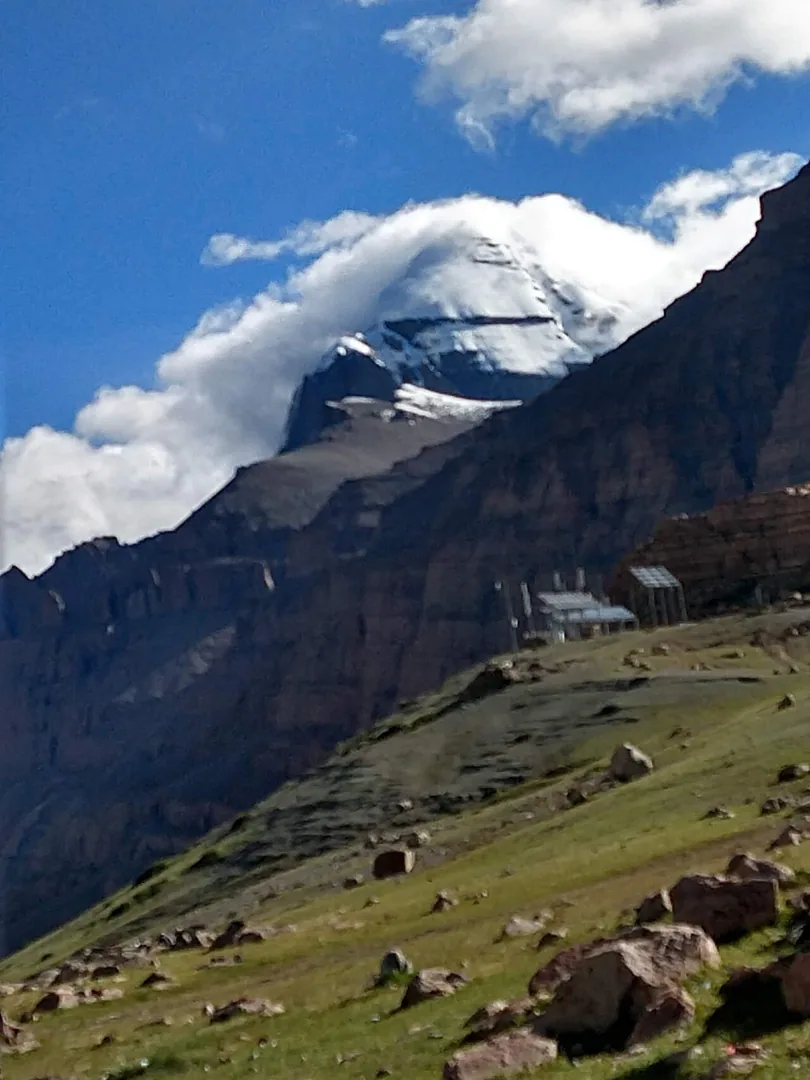
Mount Kailash (Gang Rinpoche) & Kora
Known in Tibetan as Gang Rinpoche (“Precious Jewel of Snows”), this four-sided peak in western Ngari feeds four of Asia’s greatest rivers and remains intentionally unclimbed out of shared reverence across Tibetan Buddhism, Bön, Hinduism, and Jainism.
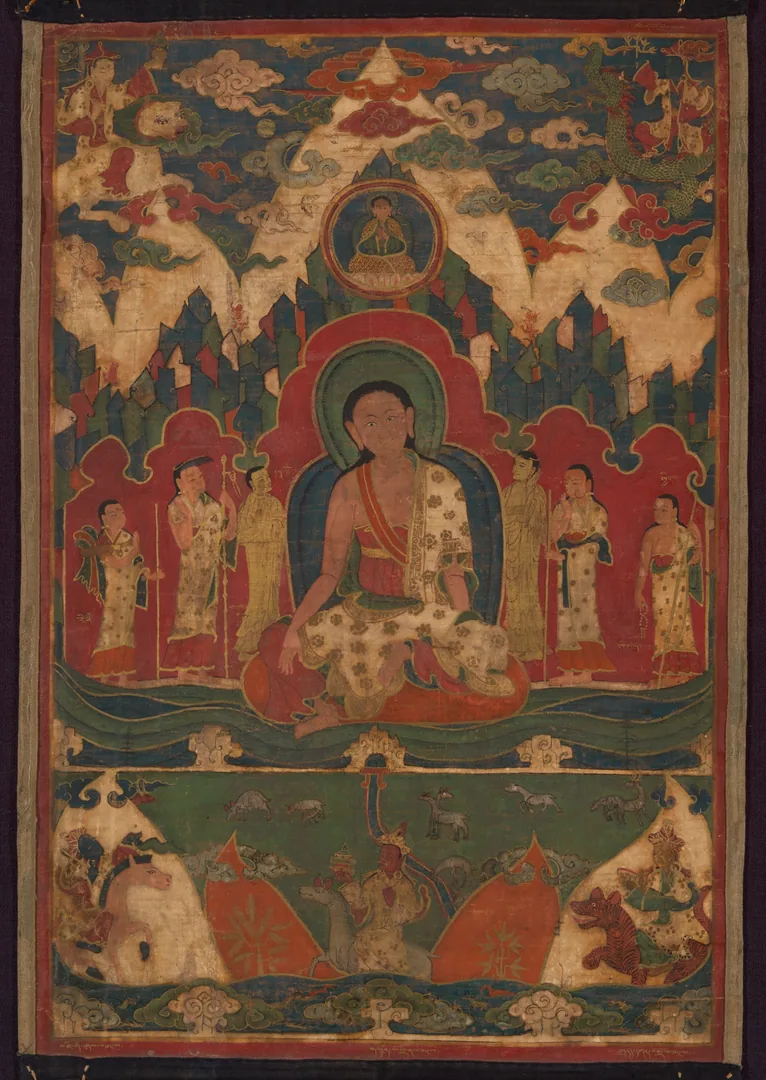
Jetsün Milarepa (1052–1135 · Tibet’s Cotton-Clad Poet-Yogi)
Seated in alpine cave solitude wearing a single white cotton cloth (repa), skin tinged pale green from years of wild nettle soup and right palm cupped at his ear singing spontaneous Vajra Songs (mgur), Milarepa proves no past mistake places awakening out of reach.
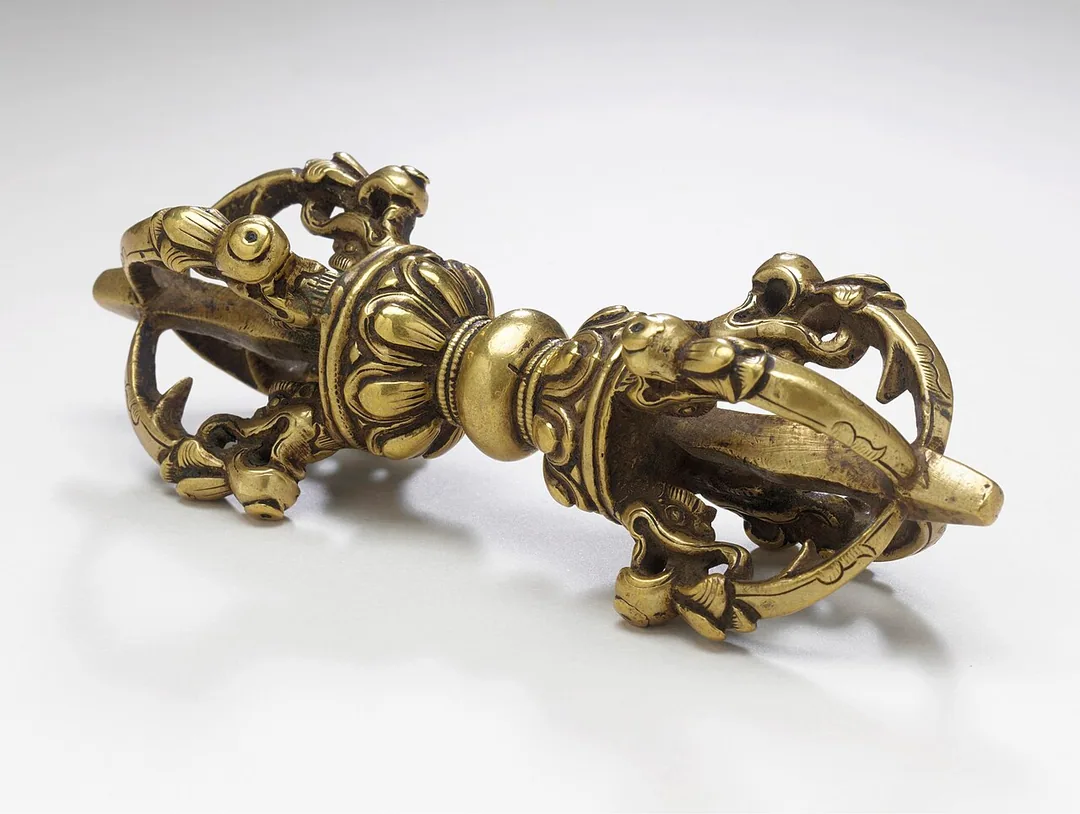
Vajra & Bell (Dorje & Drilbu · རྡོ་རྗེ་དང་དྲིལ་བུ།)
Never separated on a Tibetan altar, the brass five-pronged vajra held in the right hand embodies indestructible compassionate method (upāya), while the hollow bronze bell held in the left proclaims wisdom realizing emptiness (prajñā).
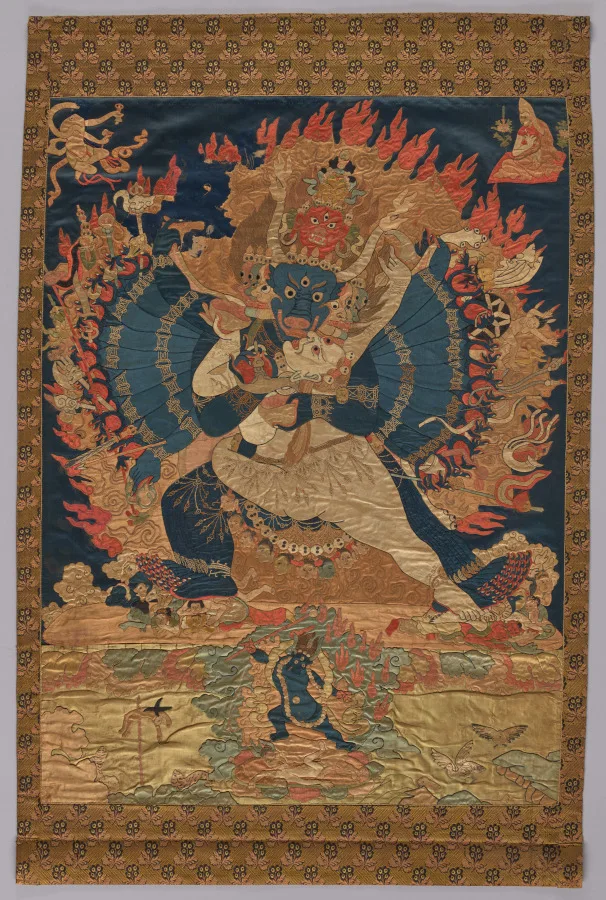
Yamāntaka / Vajrabhairava (Dorje Jigje · Ender of Death)
When gentle persuasion cannot halt the relentless momentum of mortality and karmic compulsion, gentle Mañjuśrī—Bodhisattva of Wisdom—manifests as horned, buffalo-headed Vajrabhairava (“Adamantine Terrifier”), crowning nine fierce faces with Mañjuśrī’s own serene golden visage to conquer death through emptiness.