Kangyur, Tengyur & Terma: Architecture of the Tibetan Canon (藏文大藏经架构)
How 108 + 225 Volumes, Tohoku (Toh) Numbers, Derge Woodblocks & the Three Buddhist Canons Fit Together
Translated over six centuries directly from Sanskrit palm-leaf manuscripts under standardized imperial lexicons, the Tibetan Buddhist Canon splits cleanly into the 108-volume Kangyur (“Translated Words of the Buddha,” Toh 1–1108) and 213–225-volume Tengyur (“Translated Treatises,” Toh 1109–4569)—preserving thousands of Nālandā classics lost in India.
Why Tibetan Translations Can Reconstruct Lost Sanskrit Word-for-Word—and How “Toh” Numbers Work
In 814 CE under Emperor Sadnalegs at Samye, Indian scholars and Tibetan lotsāwas compiled the Mahāvyutpatti (བྱེ་བྲག་ཏུ་རྟོགས་པར་བྱེད་པ་ཆེན་པོ།, Great Volume of Precise Understanding)—history’s first state-mandated bilingual Sanskrit-Tibetan technical dictionary of 9,565 terms. Every Sanskrit prefix (upa-, abhi-, sam-), root, and philosophical compound was assigned a single fixed Tibetan equivalent. As a result, when medieval Sanskrit palm-leaf libraries at Nālandā and Vikramaśīla perished in the twelfth and thirteenth centuries, modern scholars found they could reconstruct lost Indian masterpieces of Dignāga, Candrakīrti, and Āryadeva with astonishing precision from the Tibetan canon!
Fourteenth-century encyclopedist Butön Rinchen Drup (བུ་སྟོན་རིན་ཆེན་གྲུབ།) organized this vast corpus into two halves: (1) Kangyur (བཀའ་འགྱུར།, pronounced Kan-gyur), discourses and tantras spoken or blessed by the Buddha; and (2) Tengyur (བསྟན་འགྱུར།, Ten-gyur), systematic treatises, commentaries, medicine, grammar, and art manuals by Indian masters. When you see Toh 21 (Heart Sūtra) or Toh 442 (Guhyasamāja) on Mandala Atlas, Toh refers to the 1934 Tohoku Imperial University catalog of the celebrated 1733 Derge Parkhang (སྡེ་དགེ་པར་ཁང་།) crimson-ink woodblock edition in Kham—still hand-printed from over 217,000 birchwood blocks today!
High-Order Synthesis: Cross-Walking the Three Surviving Buddhist Canons (Tibetan · Chinese · Pāli)
Buddhism today survives in three complete classical scriptural canons, each crystallized during a different historical wave of Indian Buddhist intellectual life. Placing them side by side solves immediately why certain texts appear in both Beijing and Lhasa while others exist uniquely in one language:
| Dimension | Tibetan Canon (Kangyur + Tengyur) | Chinese Canon (e.g. Taishō Tripiṭaka) | Pāli Canon (Tipiṭaka) |
|---|---|---|---|
| Primary Translation Era | 7th–13th c. CE (Peak late Nālandā & Vikramaśīla Sanskrit) | 2nd–11th c. CE (Kushan Silk Road through Tang & Northern Song) | Oral 5th–1st c. BCE; written down 1st c. BCE in Sri Lanka |
| Standard Citation ID | Toh 1–1108 (Kangyur) · Toh 1109–4569 (Tengyur) | Taishō T. 1–2920 (85–100 vols; searchable on CBETA) | PTS / SuttaCentral codes (DN, MN, SN, AN, KN) |
| Vinaya (Monastic Code) | Mūlasarvāstivāda Vinaya (Toh 1–7, 13 vols — universal across Tibet) | 5 Vinayas preserved; Dharmaguptaka (Four-Part Vinaya, T. 1428) practiced | Theravāda Vinaya Piṭaka |
| Unique Strengths | Complete late Indian Pramāṇa logic, Candrakīrti Prāsaṅgika, & all 4 Tantra classes | Four Āgamas (T. 1–151), early Mahāyāna, Xuanzang Yogācāra & East Asian commentaries | Complete early Nikāya discourses & Theravāda Abhidhamma |
| Native Tibetan Works? | Kept SEPARATE in Collected Works (Sungbum / གསུང་འབུམ།) & Terma collections! | Integrated into later volumes of the Chinese Canon itself | Commentaries (Aṭṭhakathā) kept adjacent outside root Tipiṭaka |
Kama vs. Terma & Sungbum: What Lives Outside the Kangyur and Tengyur?
First-time researchers often search the Kangyur for Tsongkhapa’s Chenmo, Longchenpa’s Seven Treasuries, or Karma Lingpa’s Bardo Thödol—and cannot find them! That is because Tibetan bibliography enforces a crystal-clear distinction: Kangyur and Tengyur contain almost exclusively Indic translations. Indigenous Tibetan scholarship lives in thousands of volumes of Sungbum (གསུང་འབུམ།, Collected Works of Tibetan Masters), while the Nyingma and Bön traditions additionally preserve Kama (བཀའ་མ།, Unbroken Long Oral-Textual Transmission) alongside Terma (གཏེར་མ།, Revealed Treasure Texts) compiled in Jamgön Kongtrul’s monumental 63-volume Rinchen Terdzö (རིན་ཆེན་གཏེར་མཛོད།).
How It Is Practiced in Living Tradition
In Tibetan culture, physical scriptures (pecha) are revered as the Speech Body (gsung-rten) of the Buddha: folios are wrapped in saffron cloth between carved wooden boards (glegs-shing), placed on the highest shelf above statues, never stepped over or set on bare ground, and carried clockwise around fields during spring Bumkor (“Turning the Hundred-Thousand Prajñāpāramitā”) processions.
Common Questions & Clarifications
Why did Ming Yongle (1410) and Qing Kangxi/Qianlong courts commission imperial Kangyur editions in red cinnabar ink?
The 1410 Yongle Kangyur was actually the first printed edition of the Tibetan Kangyur in world history (carved in Nanjing/Beijing in crisp vermilion ink and gifted to Sakya, Karma Kagyu, and Tsongkhapa’s lineages!), while Kangxi’s 1669 Dragon Canon (Longzangjing) at Taiwan’s National Palace Museum was hand-written in pure gold paste on deep-indigo Tibetan paper.
Primary Sources & Further Reading
- 84000: Translating the Words of the Buddha — Interactive Reading Room of the Derge Kangyur & Tengyur
- Ui Hakuju et al., A Complete Catalogue of the Tibetan Buddhist Canons (Bkaḥ-ḥgyur and Bstan-ḥgyur), Tohoku Imperial University, 1934
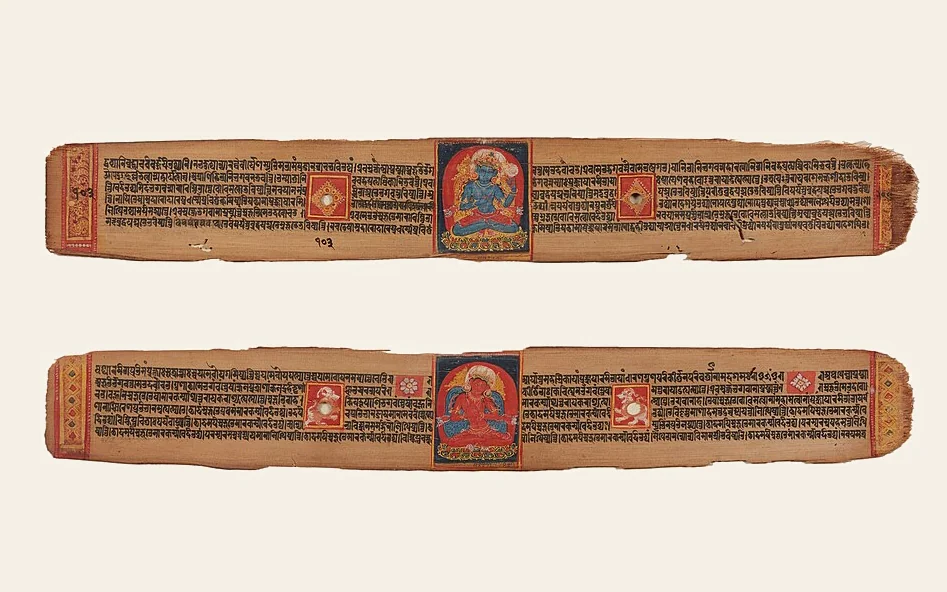
- The Metropolitan Museum of Art (1984.480a, b · CC0): 12th-Century Illuminated Wooden Prajñāpāramitā Sūtra Manuscript Covers
Connected in the Mandala Graph
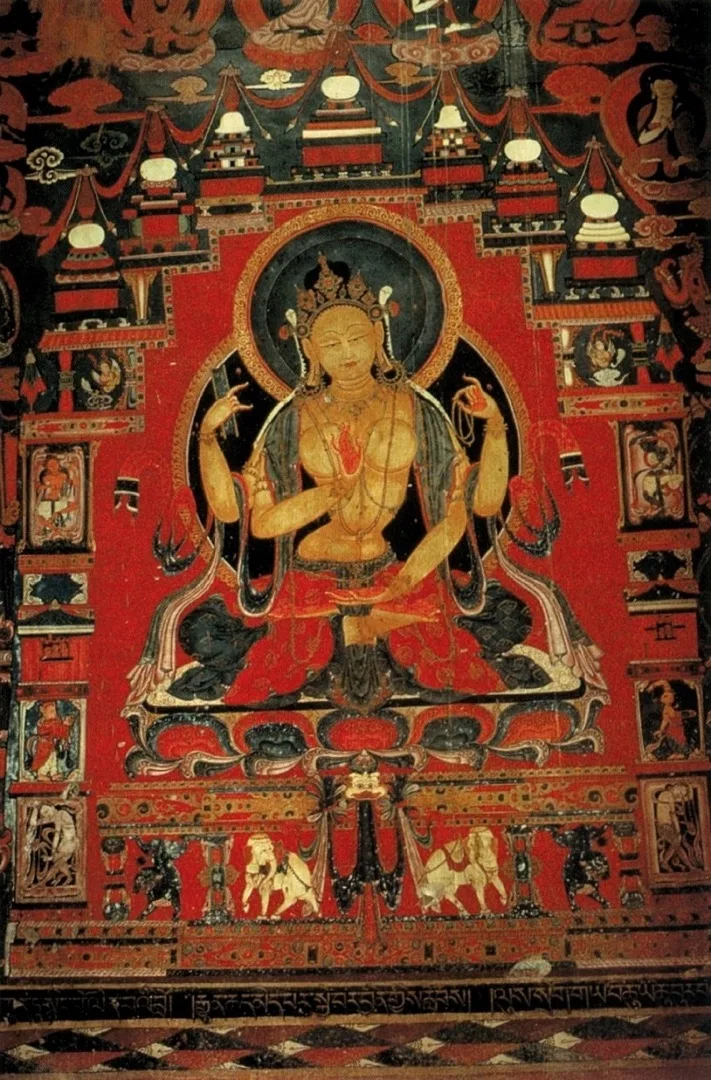
Prajñāpāramitā (Yum Chenmo · Great Mother of All Buddhas)
Affectionately revered in Tibet as Yum Chenmo (“The Great Mother”), golden four-armed Prajñāpāramitā is the luminous sculptural and painted personification of the Perfection of Wisdom sutras (including the Heart and Diamond Sutras)—teaching that direct insight into emptiness is the maternal womb from which every Buddha across all three times is born.
The Heart Sūtra (Sherab Nyingpo · 心经)
In 260 Chinese characters (and a slightly longer framed dialogue in the Tibetan Kangyur), Avalokiteśvara explains to Śāriputra why seeing emptiness—interdependent openness—dissolves fear.
Tibetan Monastic Debate & the Three Great Seats (Sera, Drepung, Ganden)
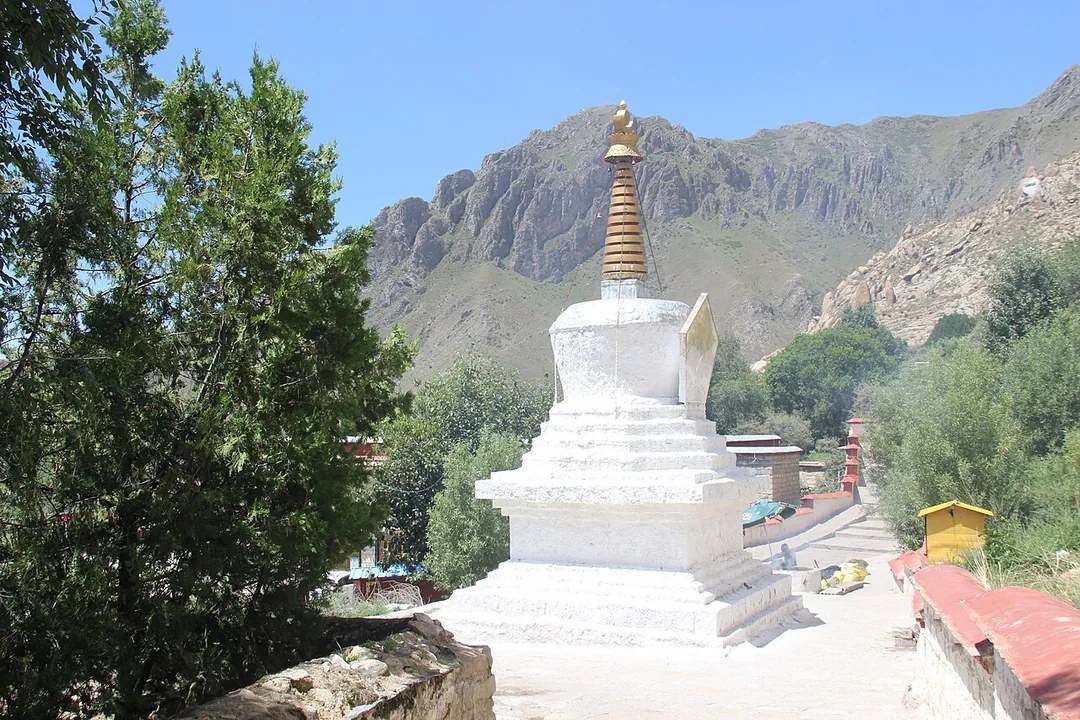
Every afternoon under the trees of Sera, Drepung, and Ganden monasteries, hundreds of monks pair off—one standing to test definitions with sharp claps, one seated calmly defending consistency—preserving classical Indian Nālandā logic (pramāṇa) as a living anti-dogma discipline.
The Four Tibetan Schools & Bön Explained Clearly
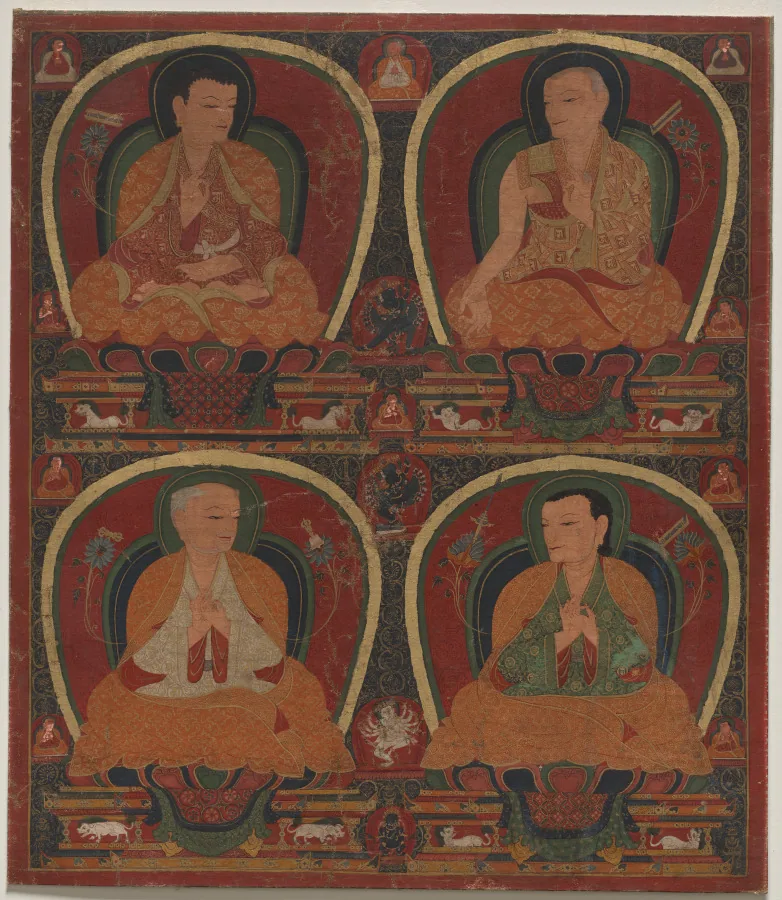
Sharing the exact same Kangyur and Tengyur Buddhist canon, Tibet’s four major Buddhist schools differ not in core creed, but in historical translation era, pedagogical sequence, and meditative emphasis.