The Seven-Line Prayer to Guru Rinpoche (Tsik Dün Soldeb)
The King of Vajrayāna Invocations · Outer, Inner & Dzogchen Layers
Revered across the Himalayas as the primordial invocation spoken by wisdom ḍākinīs at Nālandā, these seven metered Tibetan lines summon Padmasambhava outwardly as historical teacher and inwardly as the unborn clarity of one’s own mind (rigpa).
How Five Hundred Scholars Learned Seven Lines in Identical Dreams
Traditional Tibetan histories recount that when non-Buddhist debaters challenged the scholars of Nālandā University in ancient India, five hundred Buddhist panditas simultaneously dreamed of the peaceful-wrathful ḍākinī Simhamukhā instructing them to face northwest toward Oddiyāna and chant seven rhythmic lines. Instantly Padmasambhava appeared, resolved the philosophical impasse, and concealed the prayer throughout later terma revelations—so virtually every treasure revealer (tertön) across a thousand years rediscovered this exact same seven-line invocation at the doorway of their texts.
Line-by-Line Bilingual Companion
Below is the complete classical text framed by seed syllables, paired with plain-language notes showing both its outer historical imagery and its inner contemplative meaning:
| Interpretive Layer | Oddiyāna Northwest | Lotus Stem & Heart | Guru Padmasambhava |
|---|---|---|---|
| 1. Outer Historical | Swat Valley / Dhanakośa Lake | Miraculous thousand-petaled lotus | 8th-c. master invited to Tibet |
| 2. Inner Subtle Body | Crown / heart channel nexus | Eight-petaled heart cakra | Indestructible vital essence (thig-le) |
| 3. Secret Dzogchen | All-ground turning toward liberation | Unstained emptiness & clarity | Self-arisen awareness (rigpa) |
吽!鄔金剎土西北隅,蓮莖花胚之座上,希有殊勝成就者,世稱名號蓮花生。
HŪṂ! In the northwest border of the land of Oddiyāna, upon the pollen-heart of a lotus stem, you attained the marvelous supreme accomplishment, renowned everywhere as the Lotus-Born (Padmasambhava).
Lines 1–4 (Object of Refuge): Outwardly, Oddiyāna in the Swat Valley where the master appeared unstained; inwardly, luminous awareness (lotus) blooming right amid human experience without clinging.
空行眷屬眾圍繞,我隨汝尊而修持,為賜加持祈降臨!咕如唄瑪悉地吽。
Surrounded by a vast retinue of many ḍākinīs, following in your footsteps I practice—please approach and bestow your transformative blessing! GURU PADMA SIDDHI HŪṂ.
Lines 5–7 (Aspiration & Union): “Following you I practice” means not passively waiting for rescue, but training one’s own heart until teacher and innate wisdom are recognized as inseparable.
How It Is Practiced in Living Tradition
Sung in hauntingly slow, resonant Tibetan melodies at the opening of morning sessions across monasteries from Ladakh and Sikkim to Kham and Amdo.
Common Questions & Clarifications
Why does the Seven-Line Prayer begin with the single syllable HŪṂ?
Mipham Rinpoche explains that HŪṂ is the self-arisen seed syllable of awakened mind: sounding it at the threshold cuts ordinary conceptual chatter in a single stroke before a word of poetry begins.
How are the Seven-Line Prayer and the 12-Syllable Vajra Guru Mantra used together?
Traditionally one chants the Seven-Line Prayer three or seven times to establish heartfelt presence and view, then transitions smoothly into counting the twelve-syllable Vajra Guru Mantra (Oṃ Āḥ Hūṃ Vajra Guru Padma Siddhi Hūṃ) on the mala.
Primary Sources & Further Reading
- Jamgön Mipham Rinpoche, White Lotus: An Explanation of the Seven-Line Prayer to Guru Padmasambhava (trans. Padmakara Translation Group)
Connected in the Mandala Graph
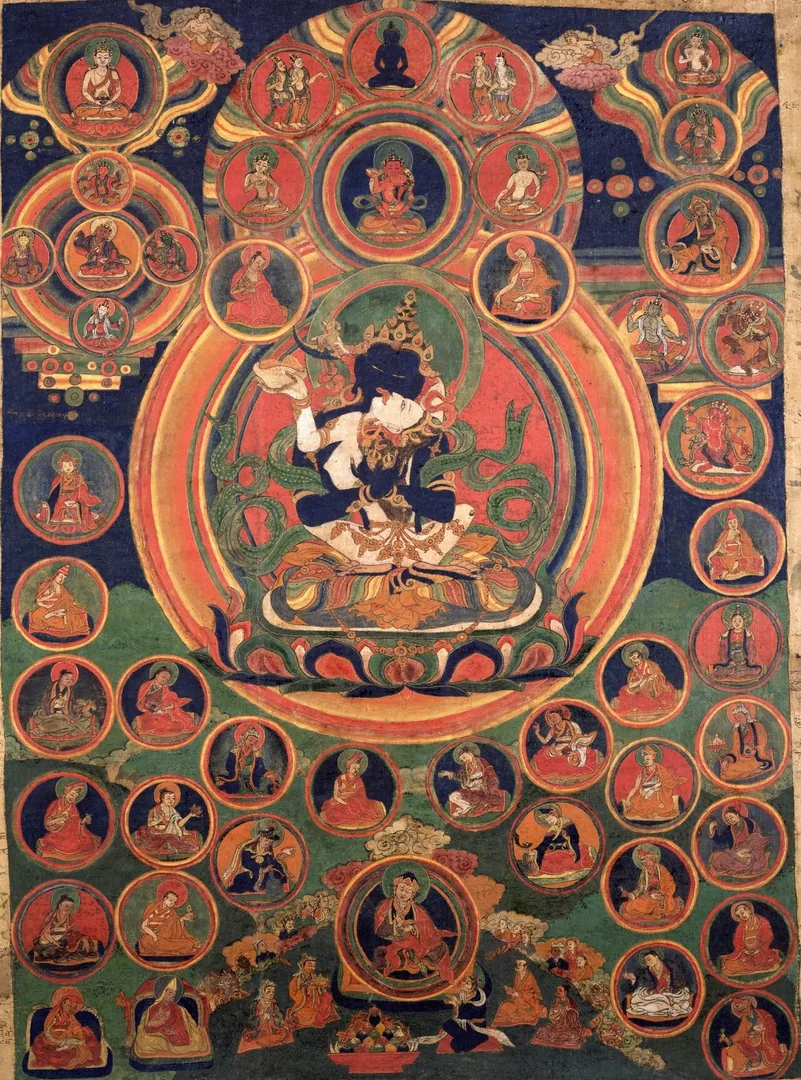
Padmasambhava (Guru Rinpoche)
Invited from Oddiyāna and Nālandā to Tibet by King Trisong Detsen in the 8th century, Padmasambhava (“Lotus-Born”) consecrated Samye Monastery and harmonized Himalayan indigenous spirits with Buddhist Dharma.
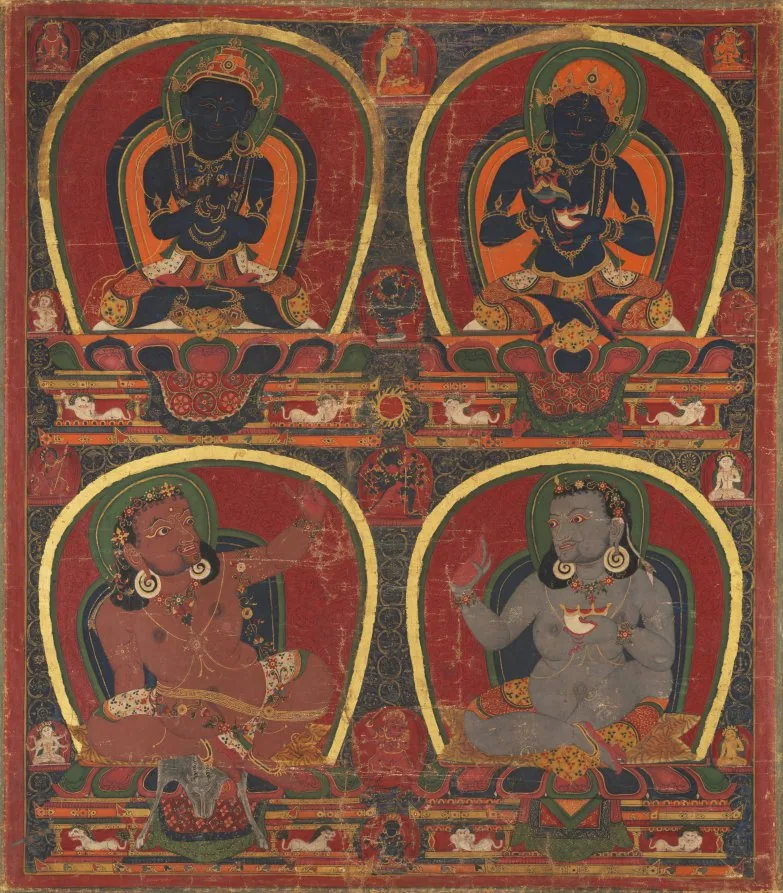
Oṃ Āḥ Hūṃ Vajra Guru Padma Siddhi Hūṃ (Vajra Guru Mantra)
Known across the Himalayas as the Vajra Guru Mantra, these twelve syllables align body, speech, and mind (Oṃ Āḥ Hūṃ) with indestructible wisdom (Vajra), noble guidance (Guru), and unstained compassion (Padma) to clear obstacles on the path.
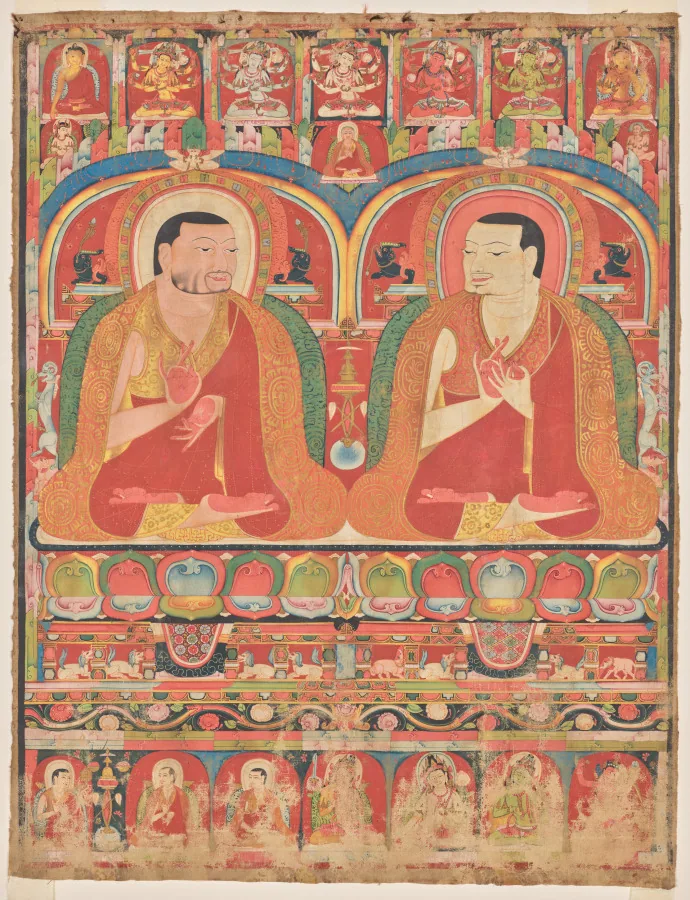
Dzogchen & Mahāmudrā: Resting in the Nature of Mind
Celebrated across Himalayan contemplative life as two rivers reaching the exact same ocean, Nyingma/Bön Dzogchen (“Great Perfection”) and Kagyu/Gelug Mahāmudrā (“Great Seal”) point directly to the luminous, unfabricated awareness already present beneath fleeting thoughts.
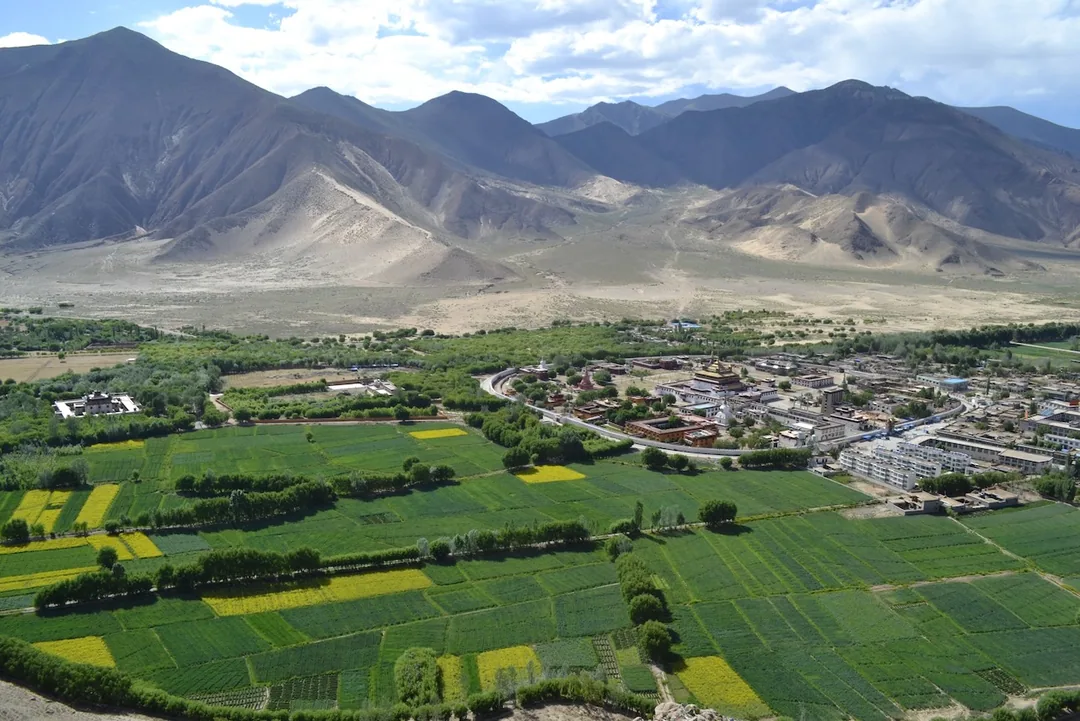
Jokhang Temple & Samye Monastery
Built in the 7th and 8th centuries respectively, Lhasa’s Jokhang anchors Tibetan devotional pilgrimage around the Jowo Śākyamuni, while Samye in Lhoka realizes an entire three-dimensional mandala in stone, timber, and earth.