Vajrasattva Mantra & the Hundred Syllables
The Six-Syllable Essence & Liturgical Promise of Non-Abandonment
Whether recited in its full 100-syllable Sanskrit invocation or its six-syllable essence Oṃ Vajrasattva Hūṃ, this mantra asks awakening awareness to remain steady beside us while we clean the slate.
Returning honestly to unadorned awareness.
What the Hundred Syllables Actually Say in Plain Language
Many people memorize the Hundred-Syllable Mantra phonetically without realizing it is a deeply moving Sanskrit prayer in direct address: “Oṃ! Keep the bond, Vajrasattva! Stand solidly beside me (tiṣṭha dṛḍho me bhava), remain satisfied with me, nourish me, hold me with affection (anurakto me bhava), grant clarity in all actions, and make my mind virtuous and radiant (śriyaḥ kuru hūṃ ha ha ha ha hoḥ)—O Blessed One of all Tathāgatas, do not abandon me (mā me muñca)!”
Notice the tone: there is zero groveling before a wrathful judge. Instead, it invokes the unbreakable bond between our flawed present state and our own indestructible clarity.
嗡 班雜薩埵薩瑪雅 · 瑪努巴拉雅 · 班雜薩埵底諾巴 · 底叉知桌美巴哇
Oṃ vajrasattva samaya manupālaya! Vajrasattva tvenopatiṣṭha, dṛḍho me bhava — Oṃ! Guard the sacred bond, O Vajrasattva! Stand close beside me, remain firm and steadfast for me.
Stanza 1 (Syllables 1–25): Invoking unshakeable presence when we feel fractured by regret.
蘇埵卡約美巴哇 · 蘇波卡約美巴哇 · 阿努拉多美巴哇 · 薩瓦悉地瑪美抓雅擦
Sutoṣyo me bhava, supoṣyo me bhava, anurakto me bhava, sarva-siddhiṃ me prayaccha — Be well pleased with me, nourish me deeply, hold me with warm affection, and grant all accomplishments.
Stanza 2 (Syllables 26–53): Healing shame through unconditional acceptance rather than self-punishment.
薩瓦嘎瑪蘇雜美 · 積當希央古如吽 · 哈哈哈哈霍 · 巴嘎萬薩瓦達他嘎達
Sarva-karmasu ca me cittaṃ śriyaḥ kuru hūṃ! Ha ha ha ha hoḥ! Bhagavan sarva-tathāgata — In all my actions make my mind lucid and glorious—Hūṃ! Ha ha ha ha hoḥ! O Blessed One of all Tathāgatas,
Stanza 3 (Syllables 54–82): Restoring confidence in everyday action, crowned by the four syllables of fearless joy.
班雜瑪美母雜 · 班雜巴哇 · 瑪哈薩瑪雅薩埵阿(吽呸)
Vajra mā me muñca! Vajrī bhava, mahā-samaya-sattva āḥ! — Do not abandon me! Make me indivisible from the vajra nature, O Great Bond-Being—Āḥ!
Stanza 4 (Syllables 83–100): Sealing non-duality in timeless unborn openness (Āḥ).
How It Is Practiced in Living Tradition
Practitioners recite 21 repetitions of the Six-Syllable Mantra or 3 repetitions of the Hundred Syllables before sleep.
Common Questions & Clarifications
What do the four “Ha Ha Ha Ha” syllables near the end mean?
They are not laughter in the casual sense, but four joyful exclamations representing the Four Immeasurables, Four Empowerments, and the four stages of awakened bliss free from shame.
Primary Sources & Further Reading
- Jamgön Kongtrul Lodrö Thayé, The Torch of Certainty (Ngöndro commentary)
Connected in the Mandala Graph
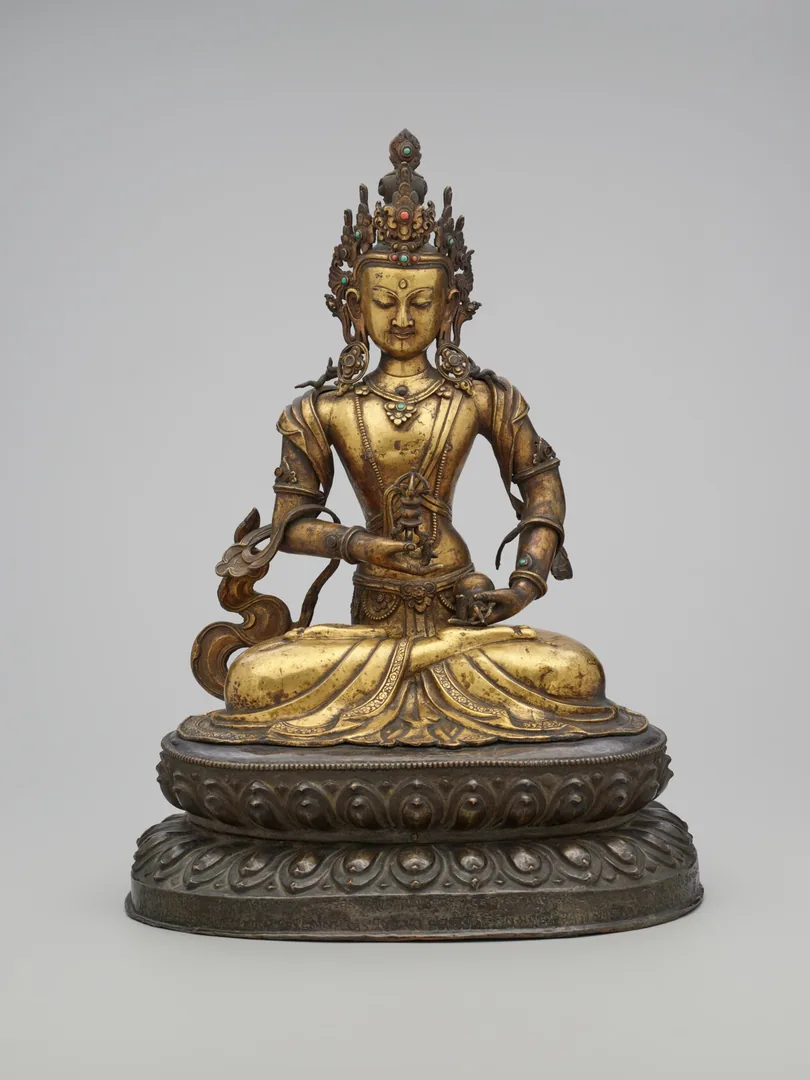
Vajrasattva (Dorje Sempa)
Radiant crystal-white in sambhogakāya ornaments, holding a five-pronged vajra at his heart and a silver bell at his hip, Vajrasattva embodies the indestructible purity underlying transient human mistakes.
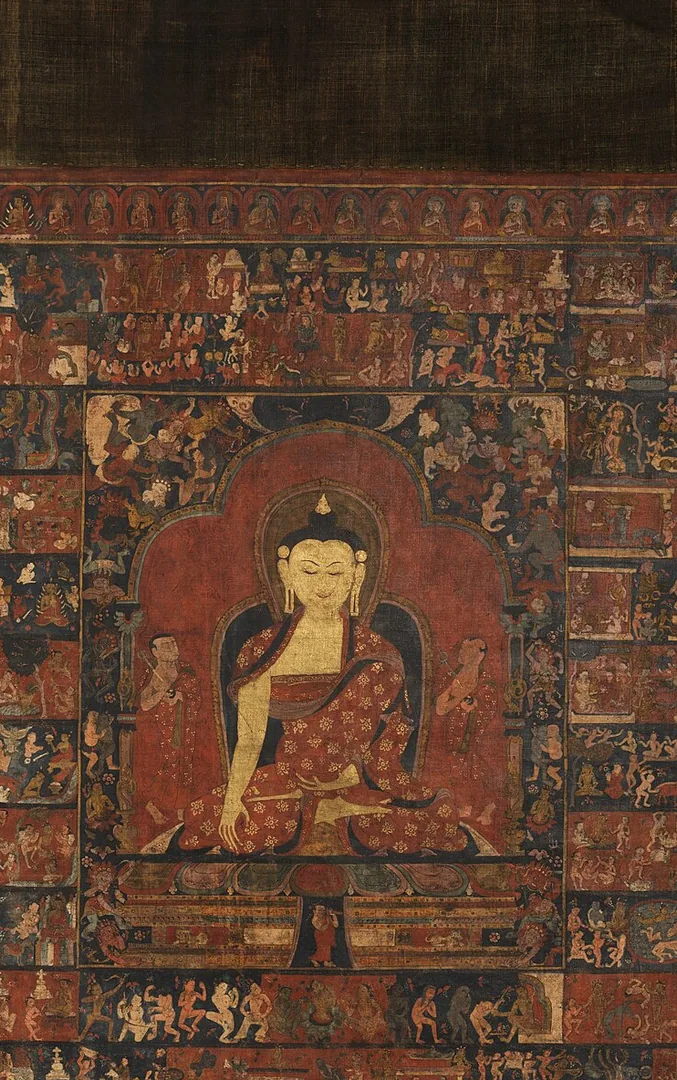
Karma & Interdependence: Why It Is Never Fatalism
In Sanskrit and Tibetan (las), karma literally means “action,” never “predestined fate.” While past choices shape today’s conditions, how one responds right now writes the next cause.
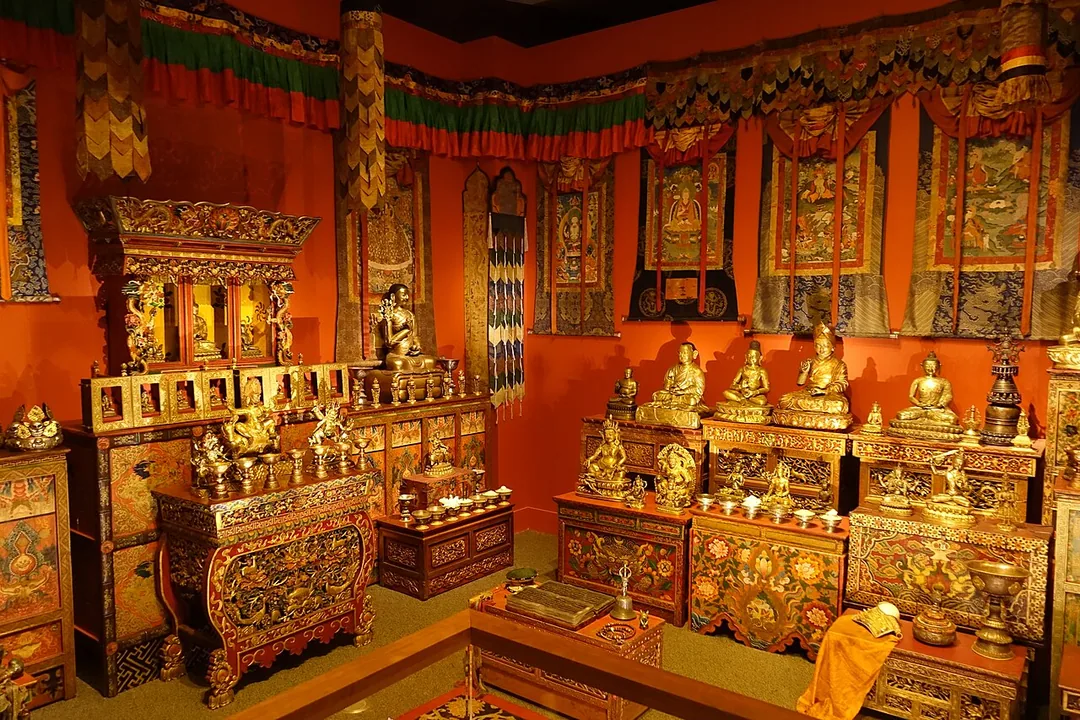
Dedication of Merit (Bsngo-ba · 回向)
No Tibetan contemplation, sutra reading, or prayer-wheel turn ends abruptly; it concludes with bsngo-ba (“turning toward”)—deliberately widening a private wish so everyone walking the same hard road is included.
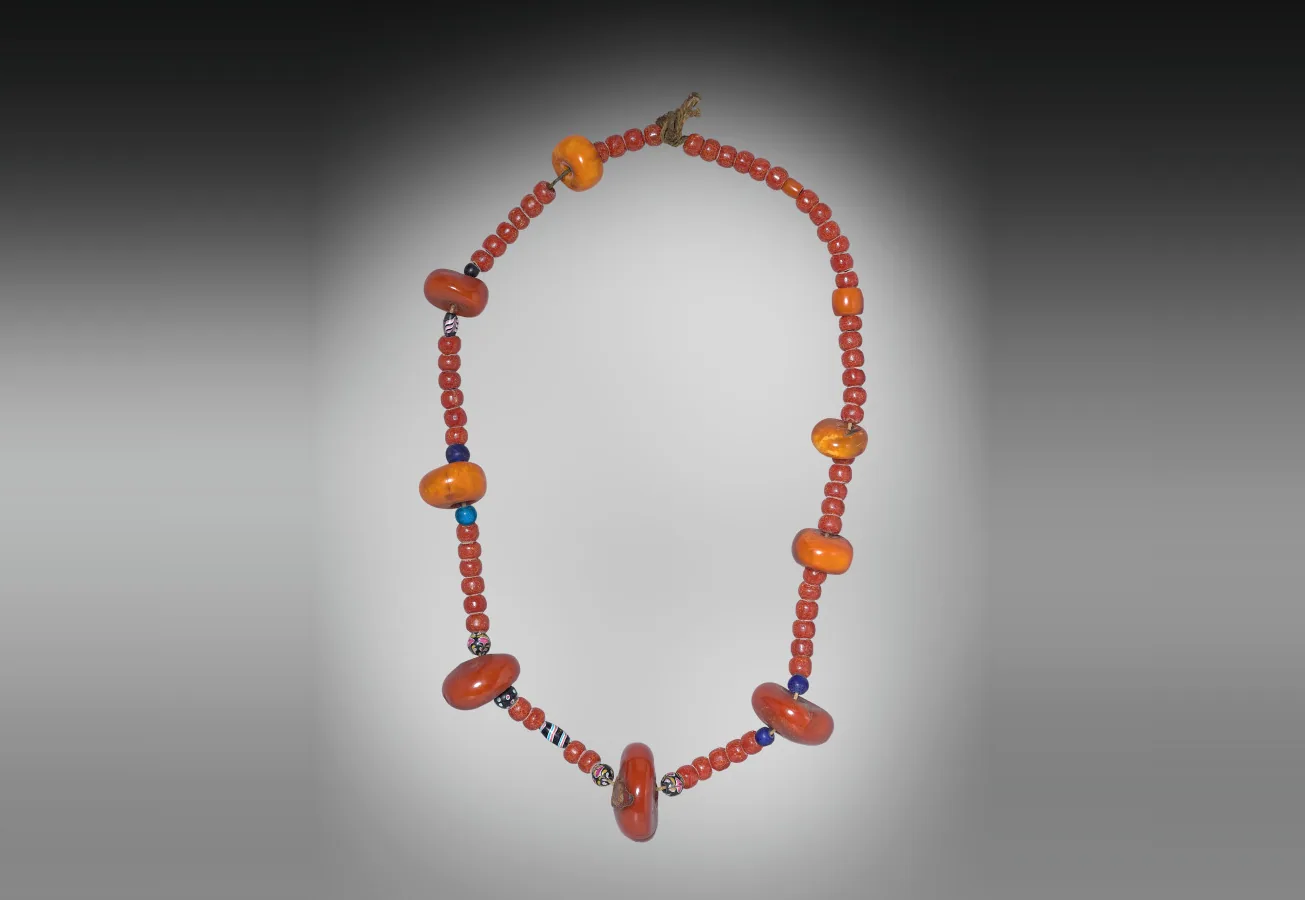
The 108-Bead Mala (Phreng-ba)
Called phreng-ba (“garland”) in Tibetan, a 108-bead mala serves as a tactile anchor for breath and mantra recitation—keeping body, speech, and wandering mind together.