Damchen Dorje Legpa (Vajrasādhu · Oath-Bound Terma Guardian)
Padmasambhava’s Oath-Bound Protector of Revealed Treasures (Terma), Riding a Snow Lion or Billy Goat in Domed Hat
Completing the Nyingma Three Roots Guardians (Ma-Za-Dor Sum) and revered equally across Karma Kagyu and Rimé lineages, Damchen Dorje Legpa (“Oath-Bound Good Vajra,” Sanskrit Vajrasādhu) was bound under vajra oath by Padmasambhava in the 8th century to guard Tibet’s concealed spiritual treasures (Terma)—depicted either as a ruby-red Himalayan general in a domed cane hat riding a white snow lion, or in his fierce blacksmith emanation (Garwa Nagpo) riding a twisted-horn red billy goat with hammer and tiger-skin bellows.
Snow-Lion General vs. Billy-Goat Blacksmith: Why Dorje Legpa Has Two Famous Forms
When browsing museum bronzes (such as the Nationaal Museum van Wereldculturen’s gilt-copper sculpture) or Nyingma protector thangkas, viewers quickly notice that Damchen Dorje Legpa appears in two vivid, complementary guises—often painted right next to each other as principal and emanation:
In his Principal Warrior / General Aspect (དམ་ཅན་སེང་ཞོན།), he rides a roaring white snow lion, wearing a broad-brimmed domed cane hat (theb-zhwa) topped with a vajra finial and rich silk brocade robes, raising a nine-pronged meteoric-iron vajra in his right hand. In his Wrathful Blacksmith Aspect (མགར་བ་ནག་པོ།, Garwa Nagpo), he rides a reddish-brown billy goat with twisted horns (ར་སྐྱེས་ཁམ་པ།), swinging an iron blacksmith’s hammer (ཐོ་བ།) in his right hand while pumping tiger-skin bellows (སྦུད་པ།) with his left! Far from a random folkloric quirk, the blacksmith’s forge is a classic Vajrayāna metaphor: pumping the bellows of prāṇa-wind to ignite primordial wisdom fire, then hammering the crude ore of stubborn egoic habits on the anvil of emptiness until it becomes indestructible vajra gold.
| Aspect & Tibetan Name | Mount (Vāhana) | Right & Left Hand Implements | Symbolic & Liturgical Emphasis |
|---|---|---|---|
| 1. Snow-Lion Riding General · དམ་ཅན་སེང་ཞོན། | White Himalayan Snow Lion with turquoise mane | Right: 9-pronged meteoric-iron vajra · Left: heart of ego-clinging at chest | Fearless fourfold confidence guarding Padmasambhava’s Terma treasures & retreat boundaries |
| 2. Billy-Goat Riding Blacksmith · མགར་བ་ནག་པོ། (Garwa Nagpo) | Reddish-brown billy goat with spiraled horns (ra-skyes) | Right: iron blacksmith’s hammer (tho-ba) · Left: tiger-skin forge bellows (sbud-pa) | Fierce swift activity: fanning wisdom-fire (bellows) & hammering stubborn delusions on the anvil |
What “Damchen” (Oath-Bound) Means in Tibetan Cultural History
The title Damchen (དམ་ཅན།, dam-can) literally means “Possessor of the Oath.” According to classic Tibetan histories such as the Padma Kathang (Chronicles of Padmasambhava), when the eighth-century Indian tantric master [Padmasambhava](/deities/padmasambhava/) traveled through Tsang Oyuk and western Tibet on his way to consecrate Samye Monastery, indigenous mountain and martial spirits tested his realization with rockslides and storms. Resting in unshakeable meditative equipoise, Guru subdued their pride, placed his vajra upon their crowns, conferred bodhisattva and tantric vows, and gave their leader the ordination name Dorje Legpa (“Good Vajra” / Vajrasādhu).
From that day forward, Dorje Legpa became a dedicated guardian of the Dharma—especially honoured by Nyingma treasure-revealers (Tertöns) when opening concealed caskets, by Karma Kagyu monasteries (from Tsurphu to Rumtek), and in the nineteenth-century lineages of Jamyang Khyentse Wangpo and Jamgön Kongtrul.
Sacred Genealogy & Five-Family Mandala Position
Third of the Nyingma Three Roots Guardians (Ma-Za-Dor Sum): oath-bound Terma protector empowered by Padmasambhava, riding a white snow lion (or red billy goat as blacksmith Garwa Nagpo) with vajra, hammer, and bellows.
Source Buddhas, Crown Sovereign & Root Yidams
How It Is Practiced in Living Tradition
Encountered across Nyingma, Kagyu, and Rimé temples—often invoked through golden-libation tea offerings (serkyem) before undertaking retreats, pilgrimages, or textual projects so obstacles are transformed into supportive conditions. As with all tantric protector cycles, formal practice is grounded in refuge in the Three Jewels, altruistic bodhicitta, and lineage transmission (lung) from a qualified teacher.
Common Questions & Clarifications
Why does Dorje Legpa wear a round, wide-brimmed cane or felt hat unlike other wrathful protectors?
Called a bse-theb (བསེ་ཐེབ།) or lacquered cane/leather hat topped with a half-vajra finial, it reflects classical Tibetan aristocratic and military riding attire—instantly distinguishing him in thangka protector rows from Indian-style skull-crowned figures!
Primary Sources & Further Reading
- Padma bka’-thang (The Chronicles of Padmasambhava) & Mipham Rinpoche’s Collected Liturgies for Damchen Dorje Legpa (Vajrasādhu)
- Nationaal Museum van Wereldculturen / Wereldmuseum (Public Domain): Gilt-Bronze Figure of Vajrasādhu (Damchen Dorje Legpa)
- Museum Plate Record: Damchen Dorje Legpa (Vajrasādhu · Oath-Bound Terma Protector in Domed Hat Atop His Mount) — 18th–19th century · Tibet · Nationaal Museum van Wereldculturen / Wereldmuseum (Public Domain)
Connected in the Mandala Graph
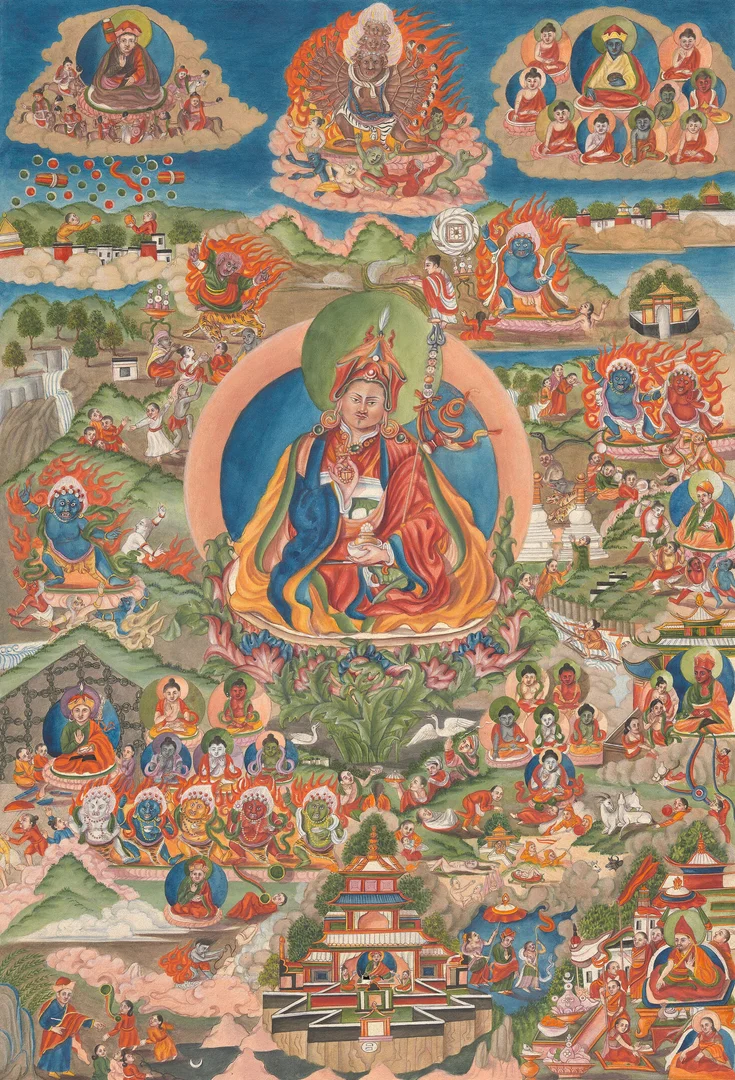
Padmasambhava (Guru Rinpoche)
Invited from Oddiyāna and Nālandā to Tibet by King Trisong Detsen in the 8th century, Padmasambhava (“Lotus-Born”) consecrated Samye Monastery and harmonized Himalayan indigenous spirits with Buddhist Dharma.
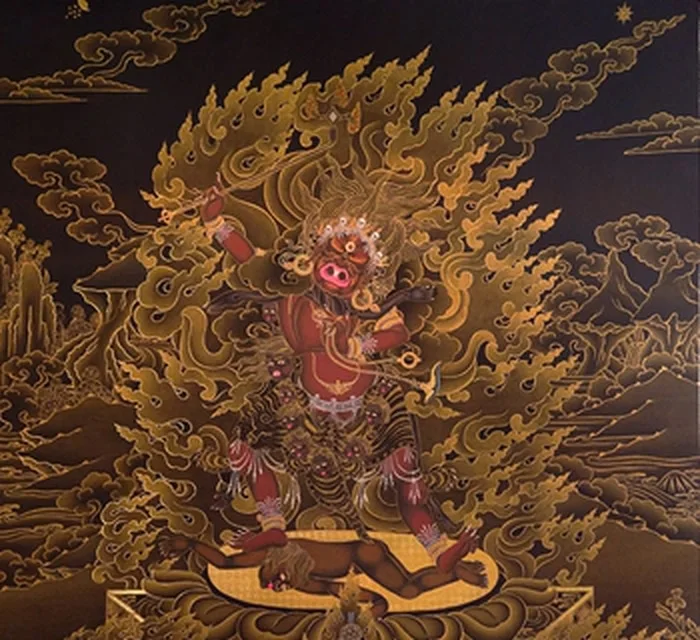
Ekajaṭī (Ralchikma · One-Braided Dzogchen Wisdom Guardian)
Foremost of the Nyingma Three Roots Guardians (Ma-Za-Dor Sum), dark maroon-black Ekajaṭī (“She Who Has a Single Topknot,” Tibetan Ralchikma or Ngagsungma, “Protectress of Secret Mantra”) is the direct wrathful emanation of Dharmakāya Mother Samantabhadrī—her single braid, single central eye, single fang, and single breast visually encoding the non-dual Single Sphere (thig-le nyag-gcig) of Dzogchen awareness.
Za Rāhula (Drangsong Chenpo · Nine-Headed Planetary Dzogchen Guardian)
Second of the Nyingma Three Roots Guardians (Ma-Za-Dor Sum), smoky purple-black Za Rāhula (“Great Planetary Sovereign,” Tibetan Drangsong Chenpo) is a wrathful emanation of Vajrapāṇi unmistakable in Himalayan art: nine stacked wrathful heads topped by a cawing raven head, a torso and belly-face blazing with 1,000 watchful eyes, a coiled nāga-serpent lower body, and four hands drawing a bow and arrow.
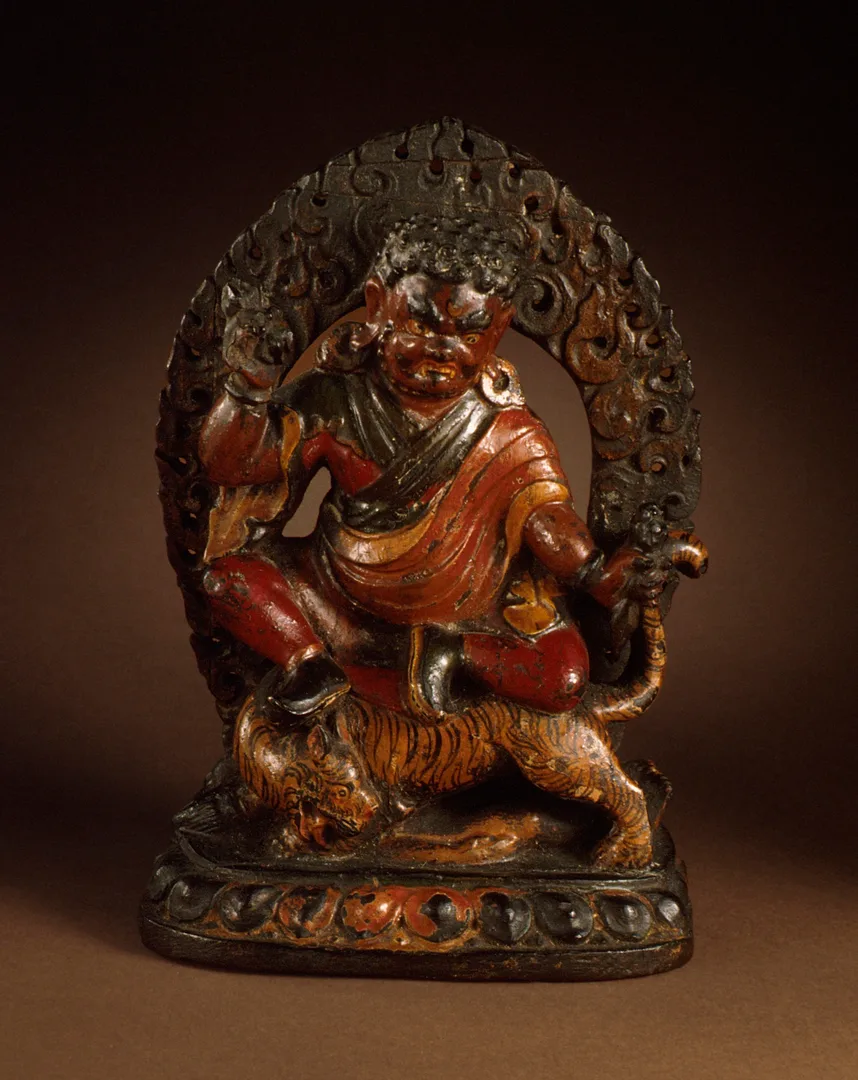
Dorje Drolö (Wrathful Padmasambhava on the Tigress)
Standing in a blaze of dark maroon flames atop a roaring pregnant tigress—actually wisdom consort Yeshe Tsogyal in fierce emanation—Dorje Drolö is the eighth and wildest of Padmasambhava’s Eight Manifestations, revered at Bhutan’s cliffside Taktsang (“Tiger’s Nest”) for shattering spiritual hypocrisy and turbulent-age obstacles.