Ekajaṭī (Ralchikma · One-Braided Dzogchen Wisdom Guardian)
Fierce Emanation of Samantabhadrī Embodying Non-Dual Single-Pointed Rigpa (One Braid, One Eye, One Fang, One Breast)
Foremost of the Nyingma Three Roots Guardians (Ma-Za-Dor Sum), dark maroon-black Ekajaṭī (“She Who Has a Single Topknot,” Tibetan Ralchikma or Ngagsungma, “Protectress of Secret Mantra”) is the direct wrathful emanation of Dharmakāya Mother Samantabhadrī—her single braid, single central eye, single fang, and single breast visually encoding the non-dual Single Sphere (thig-le nyag-gcig) of Dzogchen awareness.
The Philosophy of the “Four Ones”: Why One Braid, One Eye, One Fang & One Breast?
To an uninitiated viewer, a dark maroon-black goddess on a black-ground (nag-thang) thangka with a single eye in the center of her forehead, a single fang, and a single breast at the center of her chest might look like a fierce mythological Cyclops. In Nyingma Dzogchen (Atiyoga) commentaries—from Vimalamitra’s Vima Nyingthig to Longchen Rabjam and Jigme Lingpa’s Longchen Nyingthig (ཀློང་ཆེན་སྙིང་ཐིག)—every single “One” is a precise philosophical pointer to non-dual awareness (རིག་པ།, ):
1. One Turquoise-Braided Topknot (རལ་པ་གཅིག): All eighty-four thousand Dharma gates and all phenomena of saṃsāra and nirvāṇa are bound within a single ultimate nature (dharmatā).
2. One Central Wisdom Eye (སྤྱན་གཅིག): Ordinary two eyes symbolize dualistic grasping (subject vs. object, self vs. other); Ekajaṭī’s single central eye gazes unblinkingly into the single sphere (ཐིག་ལེ་ཉག་གཅིག, thig-le nyag-gcig) free from duality.
3. One Downward Fang (མཆེ་བ་གཅིག): Pierces right through the root of ego-fixation and broken .
4. One Central Breast (ནུ་མ་གཅིག): Nourishes fortunate practitioners with the undivided nectar of primordial purity (ka-dag) and spontaneous presence (lhun-grub).
| Guardian & Syllable | 3-Second Visual Cue | Hands, Mount & Attire | Awakened Source & Lineage Role |
|---|---|---|---|
| Ekajaṭī (“Ma” · ཨེ་ཀ་ཛཱ་ཊི།) | Dark maroon-black · 1 topknot, 1 eye, 1 fang, 1 breast | Holds torn heart of ego & iron wolf + skullcup; wears human-skin shawl & tiger skirt | Direct emanation of Samantabhadrī; sovereign Queen of Mamos guarding Dzogchen Nyingthig |
| Za Rāhula (“Za” · གཟའ་རཱ་ཧུ་ལ།) | Smoky purple-black · 9 stacked heads topped by a RAVEN head · 1,000 eyes · Coiled serpent tail | 4 arms drawing bow & arrow, holding makara banner & snake-lasso; roaring belly-face | Wrathful Vajrapāṇi emanation; governs planetary/time cycles & subtle-body wind-channels |
| Damchen Dorje Legpa (“Dor” · དམ་ཅན་རྡོ་རྗེ་ལེགས་པ།) | Ruby-red bearded warrior · Wears domed cane/felt hat · Rides snow lion or red billy goat | Right swings 9-pronged vajra (or blacksmith hammer); left holds heart or tiger-skin bellows | Bound under oath by Padmasambhava; chief guardian of concealed Terma treasures & Tertöns |
Two Traditions of Ekajaṭī: Blue Tārā Retinue vs. Nyingma Dzogchen Sovereign
Museum visitors and practitioners often notice two distinct iconographic streams bearing the name Ekajaṭī. In Indian Kriyā/Yoga Tantra cycles transmitted by Atiśa and Sakya masters (such as the retinue of Green Tārā or Kurukullā, Toh 476), Blue Ekajaṭī (Ugratārā) appears with a normal pair of eyes (or three eyes), two or four arms holding a chopper and skullcup. By contrast, in the Nyingma Inner Tantras—transmitted through Sri Singha, Padmasambhava, and Vimalamitra—she manifests in her ultimate Atiyoga form with the single central eye, single tooth, and single breast, presiding over [Za Rāhula](/deities/rahula/) and [Damchen Dorje Legpa](/deities/dorje-legpa/) at the base of the Longchen Nyingthig Refuge Tree.
Sacred Genealogy & Five-Family Mandala Position
Chief of the Nyingma Three Roots Guardians (Ma-Za-Dor Sum): direct wrathful emanation of Dharmakāya Samantabhadrī with one braid, one central eye, one fang, and one breast encoding non-dual rigpa.
Source Buddhas, Crown Sovereign & Root Yidams
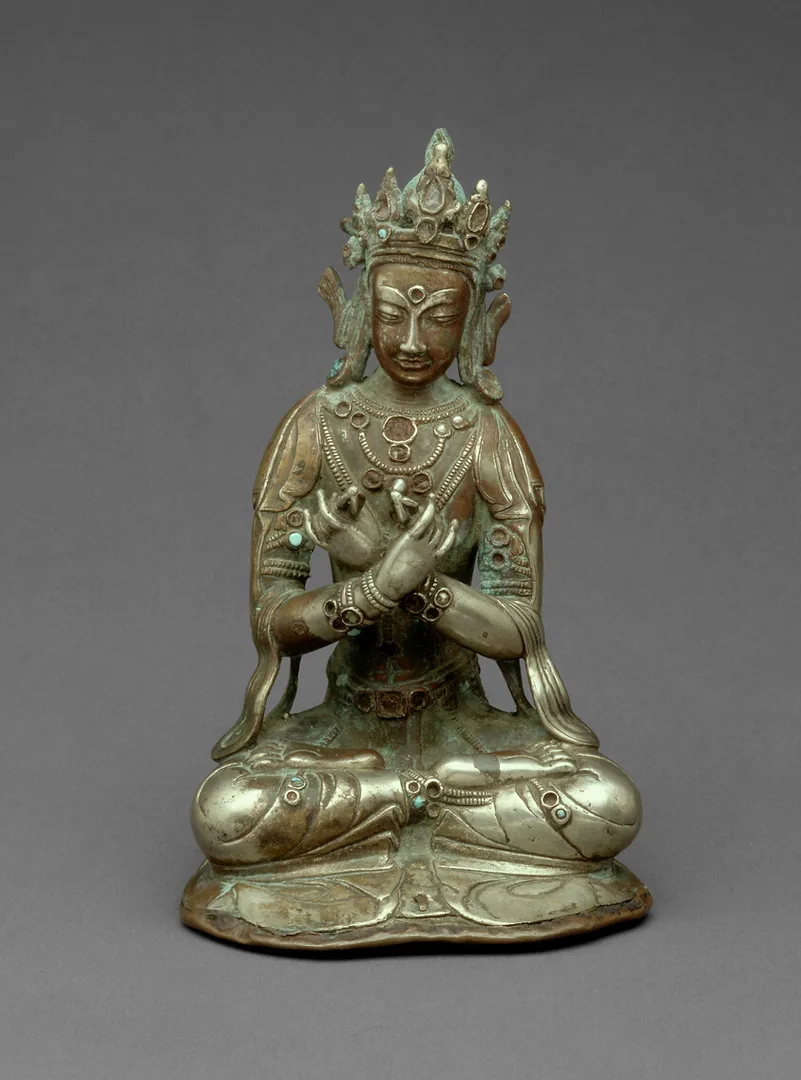
In the Dzogchen Nyingthig tantras, Ekajaṭī manifests directly from Dharmakāya Mother Samantabhadrī as the single-eyed guardian of non-dual rigpa.
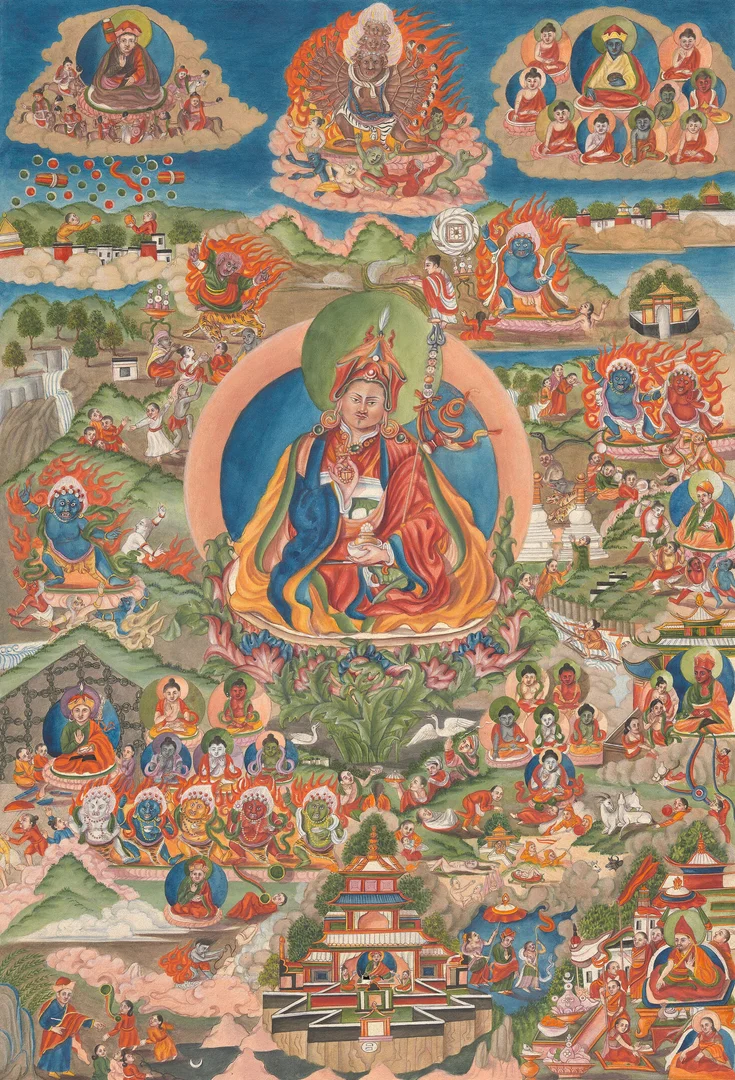
Padmasambhava and Vimalamitra entrusted the innermost Heart-Essence (Nyingthig) cycles to Ekajaṭī as chief of the Ma-Za-Dor Sum triad.
Yab-Yum Consorts & Sacred Triads
Ekajaṭī (Ma), Za Rāhula (Za), and Damchen Dorje Legpa (Dor) stand together as the Nyingma Three Roots Guardians (Ma-Za-Dor Sum).
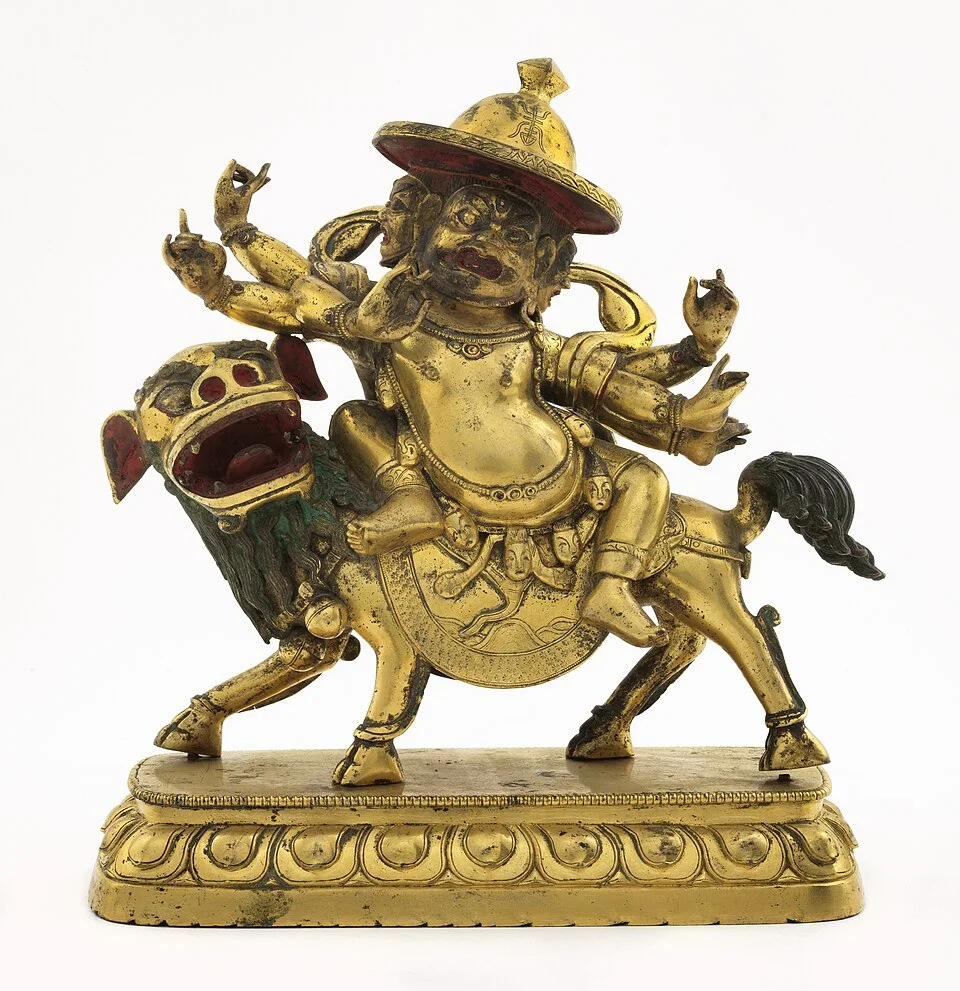
Together with Za Rāhula, Ekajaṭī and Damchen Dorje Legpa guard the Nyingma Inner Tantras and Terma revelations.
How It Is Practiced in Living Tradition
Presented here through an art-historical and philosophical lens: in Nyingma monasteries and retreat centers (drubdra), Ekajaṭī, Za Rāhula, and Damchen Dorje Legpa are honored together in daily evening protector liturgies. Because Ma-Za-Dor Sum belong to the innermost Dzogchen Nyingthig cycle, their specific wrathful protector mantras and fulfillment rites (kangso) are never recited casually; traditional engagement relies on receiving Nyingma empowerment (dbang), oral transmission (lung), and maintaining pure samaya vows of non-harming and bodhicitta.
Common Questions & Clarifications
Why is there a small turquoise iron wolf or hawk near Ekajaṭī’s left hand?
Called the “iron wolf of wind-swift awareness” (ལྕགས་སྤྱང་།), the messenger wolf dispatched from her left hand symbolizes the instantaneous, unobstructed responsiveness (rtsal) of primordial wisdom tracking down and dissolving subtle dualistic delusions before they can solidify.
Primary Sources & Further Reading
- Ārya-ekajaṭā-sādhana & Tantric Cycles (Derge Kangyur Toh 476 / Toh 832 Guhyagarbha Protector Retinue), 84000 Canon
- Longchen Rabjam & Jigme Lingpa, Longchen Nyingthig Protector Cycle (Ma-gza’-rdor gsum) & Nebesky-Wojkowitz, Oracles and Demons of Tibet
- Nyingma Nagthang Thangka Open Archive (Public Domain): Ekajaṭī (Ralchikma), Tibet, 18th–19th Century
- Museum Plate Record: Ekajaṭī (Ralchikma · One-Braided Dzogchen Wisdom Protectress) on Black Ground (Nagthang) — 18th–19th century · Tibet (Nyingma Lineage) · Nyingma Nagthang Thangka Open Archive · Public Domain (Public Domain)
Connected in the Mandala Graph
Ādi-Buddha: Samantabhadra & Vajradhara (Primordial Dharmakāya)
Placed at the very apex of every Tibetan refuge tree and thangka lineage, the Ādi-Buddha (“Primordial Buddha”) is never a creator god who made the universe, but the timeless, uncompounded nature of mind itself—depicted naked and sky-blue as Samantabhadra in Nyingma Dzogchen, or crowned in royal silks crossing vajra and bell as Vajradhara in Kagyu, Sakya, and Gelug.
Padmasambhava (Guru Rinpoche)
Invited from Oddiyāna and Nālandā to Tibet by King Trisong Detsen in the 8th century, Padmasambhava (“Lotus-Born”) consecrated Samye Monastery and harmonized Himalayan indigenous spirits with Buddhist Dharma.
Za Rāhula (Drangsong Chenpo · Nine-Headed Planetary Dzogchen Guardian)
Second of the Nyingma Three Roots Guardians (Ma-Za-Dor Sum), smoky purple-black Za Rāhula (“Great Planetary Sovereign,” Tibetan Drangsong Chenpo) is a wrathful emanation of Vajrapāṇi unmistakable in Himalayan art: nine stacked wrathful heads topped by a cawing raven head, a torso and belly-face blazing with 1,000 watchful eyes, a coiled nāga-serpent lower body, and four hands drawing a bow and arrow.
Damchen Dorje Legpa (Vajrasādhu · Oath-Bound Terma Guardian)
Completing the Nyingma Three Roots Guardians (Ma-Za-Dor Sum) and revered equally across Karma Kagyu and Rimé lineages, Damchen Dorje Legpa (“Oath-Bound Good Vajra,” Sanskrit Vajrasādhu) was bound under vajra oath by Padmasambhava in the 8th century to guard Tibet’s concealed spiritual treasures (Terma)—depicted either as a ruby-red Himalayan general in a domed cane hat riding a white snow lion, or in his fierce blacksmith emanation (Garwa Nagpo) riding a twisted-horn red billy goat with hammer and tiger-skin bellows.