Maitreya (Jampa · 弥勒菩萨 / 强巴佛)
The Loving Future Buddha Seated Ready to Rise & Sino-Tibetan Iconographic Divergence
Regent of Tuṣita Heaven and the Fifth Buddha of this fortunate eon—uniquely recognized in Himalayan art by his “throne-seated” bhadrāsana posture with both feet planted on a lotus, ready to stand and enter the world.
ཨོཾ་མཻ་ཏྲི་མ་ཧཱ་མཻ་ཏྲི་མཻ་ཏྲི་ཡེ་སྭཱ་ཧཱ།
Devanāgarī: ॐ मैत्रि महामैत्रि मैत्रिये स्वाहा · Liturgical Reading: Om mai-tri ma-ha mai-tri mai-tri-ye so-ha
Open sūtra-root invocation of Maitreya’s vow (Toh 643): “Oṃ! Loving-kindness, vast loving-kindness—unto the Embodiment of Loving-Kindness, may this aspiration take root, svāhā!”
3-Second Museum Key: Why Maitreya Sits “On a Chair” With a Stūpa in His Crown
Walk into Tashilhunpo Monastery in Shigatse (home to the 26-meter gilt-copper Jampa statue cast in 1914), Labrang’s Golden-Roof Maitreya Temple, or any museum gallery of Himalayan bronzes, and one figure immediately breaks the cross-legged rule: Maitreya (བྱམས་པ།) sits upright on a high lion throne in bhadrāsana (བཟང་པོའི་བཞུགས་སྟངས།), both knees bent at ninety degrees and both soles resting squarely on a lotus footstool. Rather than locked meditative withdrawal, this posture captures kinetic readiness—a regent poised on the edge of his throne in Tuṣita (དགའ་ལྡན།, Ganden) Heaven, ready at the first ripened moment to stand up and descend into our world.
When Maitreya appears in seated bodhisattva form (as in early Pāla-Kadampa bronzes or Eight Great Bodhisattvas sets), two micro-details distinguish him instantly from Avalokiteśvara and Mañjuśrī: (1) a miniature caitya / stūpa (མཆོད་རྟེན།) nestled inside his matted hair-chignon—symbolizing the stūpa of Śākyamuni’s teacher Kāśyapa atop Mount Kukkuṭapāda, from which Maitreya will receive Śākyamuni’s monastic robe—and (2) a golden water flask (རིལ་བ་སྤྱི་བླུགས།, kuṇḍikā) resting on a nāgapuṣpa (ironwood blossom, the tree under which Maitreya will awaken) beside his left shoulder.
Cross-Tradition Synthesis: Why Tibetan Jampa Looks Nothing Like China’s “Laughing Monk”
One of the biggest surprises for travelers moving between East Asian temples and Tibetan monasteries is discovering that the slender, crowned, regal Jampa and the jovial, bare-bellied Laughing Buddha (Budai) in Chinese temple entrance halls refer to the exact same future Buddha! Tracing the Sanskrit root from Gandhāra across two geographic routes reveals one of Asian art history’s most fascinating divergences:
| Tradition & Canonical Basis | Primary Visual Appearance | Posture & Handheld Cues | Core Theological Emphasis |
|---|---|---|---|
| 1. Indian Gandhāra & Pāla Prototype (2nd–12th c.) | Princely ascetic-bodhisattva with flowing locks, torque necklace & monastic/royal drapery | Seated cross-legged or bhadrāsana; right hand abhaya/dharmacakra, left hand holds kuṇḍikā water flask directly | Brahmin-prince heir to Śākyamuni awaiting descent from Tuṣita |
| 2. Tibetan & Himalayan Jampa (Toh 109 / Toh 3786–3790) | Towering golden Buddha in monk robes OR 13-ornament Sambhogakāya crown | Upright bhadrāsana (both feet on lotus); hands in Dharmacakra mudrā; kuṇḍikā flask + wheel on shoulder blossoms | Author of the Five Maitreya Treatises (Asaṅga lineage) & imminent teacher of universal loving-kindness |
| 3. Tang / Korean / Japanese Miroku (T. 452–455) | Slender contemplative bodhisattva (early) or crowned Tuṣita Buddha in murals | Pensive “half-cross-legged” pose (ankle over knee, finger lightly touching cheek) or bhadrāsana | Quiet contemplation in Tuṣita pondering how to awaken beings |
| 4. Post-Song Chinese “Budai” Maitreya (10th c. Fenghua Monk Qici) | Laughing, rotund wandering Chan monk with open robe, Hemp Cloth Sack & rosary | Relaxed seated sprawl surrounded by children; holds cloth bag (budai) of boundless generosity | Folk-Chanemanation (nirmāṇakāya) embodying vast belly of tolerance & everyday joy |
Scholastic Backbone: Asaṅga and the Five Treatises of Maitreya
In Tibetan intellectual history, Maitreya is not merely a distant figure of future prophecy—he is the direct inspirer of the Vast Conduct Lineage (རྒྱ་ཆེན་སྤྱོད་བརྒྱུད།), complementing Mañjuśrī and Nāgārjuna’s Profound View Lineage. According to classical accounts, fourth-century master Asaṅga (ཐོགས་མེད།) meditated for twelve years in a cave before perceiving Maitreya only after setting aside self-concern to tend a wounded dog; brought to Tuṣita, Asaṅga transcribed the Five Treatises of Maitreya (བྱམས་ཆོས་སྡེ་ལྔ།, Toh 3786–3790).
Among them, the Abhisamayālaṃkāra (Ornament of Clear Realization, མངོན་རྟོགས་རྒྱན།) serves for four to six years as the structural map of the Prajñāpāramitā sūtras in Tibetan monastic colleges, while the Uttaratantra (Sublime Continuum, རྒྱུད་བླ་མ།, parallel to Chinese Ratnagotravibhāga T. 1611) anchors Tibetan teachings on luminous (བདེ་གཤེགས་སྙིང་པོ།).
How It Is Practiced in Living Tradition
Every major Tibetan monastery houses a dedicated Maitreya hall (Byams-khang), and during the Great Prayer Festival (Mönlam Chenmo) in the first lunar month, a monumental image of Jampa is carried in clockwise procession (Byams-pa gdan-’dren, “Inviting Maitreya”) as an aspiration to meet ethical renewal and peace in future lives.
Common Questions & Clarifications
Why is Tuṣita Heaven called “Ganden” in Tibetan—the exact same name as Tsongkhapa’s monastery?
Sanskrit Tuṣita literally means “The Joyous Realm,” which early Tibetan translators rendered faithfully as Ganden (དགའ་ལྡན།, dga’-ldan, “Endowed with Joy”). When Je Tsongkhapa founded his mother monastery east of Lhasa in 1409, it was named Ganden in direct homage to Maitreya’s Tuṣita academy.
Primary Sources & Further Reading
- Ārya-maitri-pratijñā-nāma-dhāraṇī (Derge Kangyur Toh 643) & Maitreyavyākaraṇa (Toh 199), 84000 Canon
- Asaṅga / Maitreyanātha, Ornament of Clear Realization (Abhisamayālaṃkāra, Toh 3786) & Sublime Continuum (Uttaratantra, Toh 4024)
- Rubin Museum of Art (Google Art Project Public Domain): Bodhisattva Maitreya Seated in Bhadrāsana
Connected in the Mandala Graph
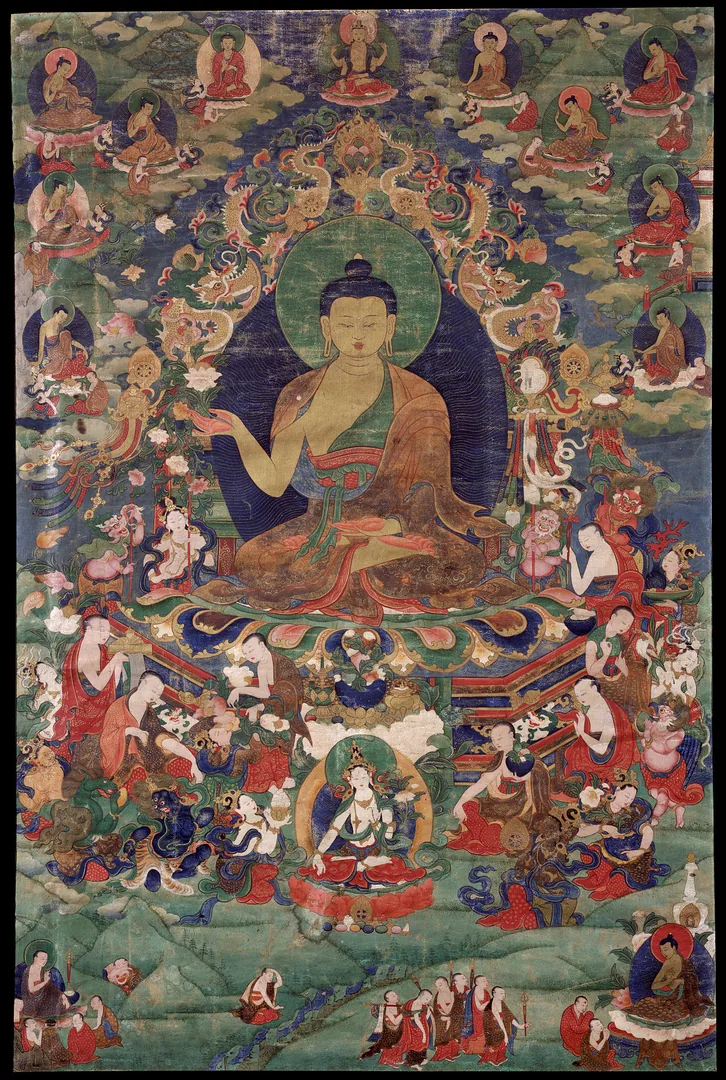
Śākyamuni Buddha (Shakya Thubpa)
Known in Tibetan as Shakya Thubpa (“Mighty Sage of the Śākyas”), the historical Buddha sits in unadorned monastic robes, touching the earth with his right fingertips to witness impartial awakening while cradling an iron alms bowl in his lap.
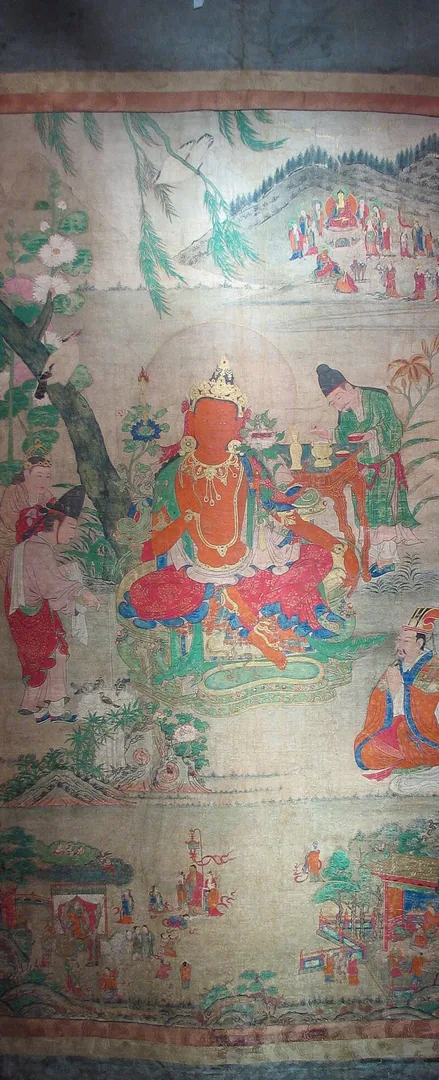
Mañjuśrī (Jampelyang)
Radiant saffron-gold in hue, Mañjuśrī raises a blazing sword overhead with his right hand to slice right through conceptual confusion, while holding the Prajñāpāramitā Sūtra on a lotus at his heart.
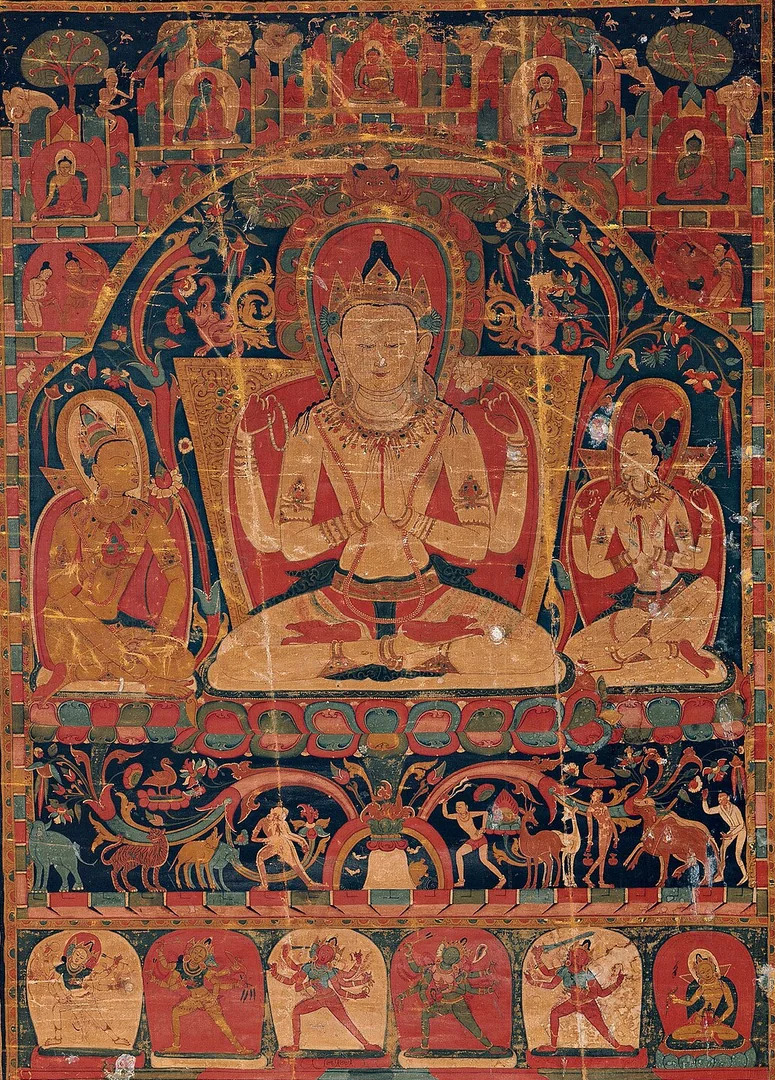
Avalokiteśvara (Chenrezig)
Known in Tibetan as Chenrezig (“One Who Gazes with Unwavering Eyes”), the four-armed white form embodies impartial compassion united with emptiness, associated with the Six-Syllable Mantra Oṃ Maṇi Padme Hūṃ.
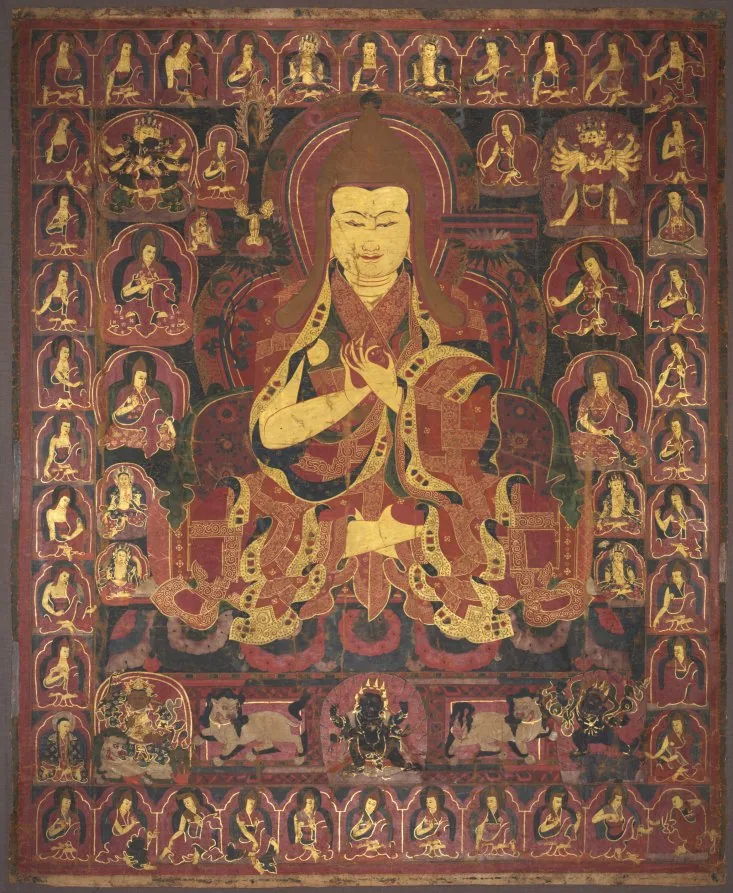
Je Tsongkhapa (Lobsang Drakpa · 1357–1419)
Born in Amdo Tsongkha (modern Qinghai Kumbum) in 1357, Je Rinpoche studied across Sakya, Kagyu, Jonang, and Kadampa masters before founding Ganden Monastery—uniting rigorous Nālandā logic, pure Vinaya discipline, and Tantric contemplation into one seamless graduated path (Lamrim).