Red Jambhala (Dzambhala Marpo)
Padma-Family Magnetizing Abundance, Harmonious Conditions & Merit
Radiating ruby-crimson light in Amitābha and Vajrasattva’s Padma-Vajra stream, Red Jambhala presides over magnetizing activity (vaśīkaraṇa): harmonizing human relationships, attracting supportive conditions for ethical work, and dissolving interpersonal scarcity.
Padma Magnetizing Activity: Why Red Symbolizes Harmonious Conditions
In the Tibetan Five-Buddha-Family mandala, ruby-red is the color of the Western Padma (Lotus) Family presided over by Amitābha—whose Discriminating Awareness Wisdom (sor-rtog ye-shes) transmutes grasping attachment into magnetic warmth and empathy. Within the Five Jambhalas, Red Jambhala embodies this exact vaśīkaraṇa (magnetizing/harmonizing) function.
Whereas Yellow Jambhala focuses on foundational generosity and White Jambhala on healing acute destitution, Red Jambhala addresses a different obstacle practitioners face in the world: isolation, fractured collaboration, and lack of supportive companions or patrons when undertaking virtuous projects.
Solo Seated vs. Yab-Yum Consort Forms in Museum Paintings
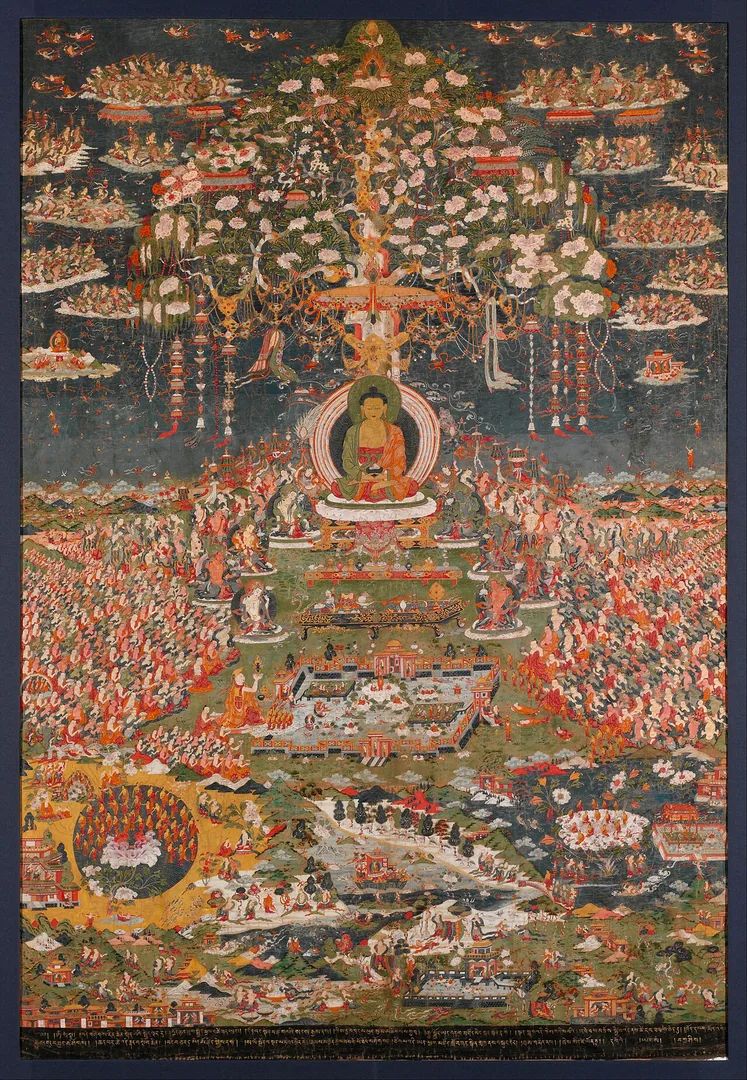
In Five-Jambhala thangka sets (such as the Nationaal Museum van Wereldculturen scroll TM-4655-1), Red Jambhala sits in royal ease wearing a five-jeweled crown, holding a radiant wish-fulfilling jewel (cintāmaṇi) or treasury casket in his right hand and the jewel-mongoose in his left. In inner Sakya and Nyingma lineages emanating from Vajrasattva, he also appears in union (yab-yum) with the red wealth goddess Vasudhārā (Nor-rgyun-ma), holding an iron hook and jewel noose to signify the inseparability of skillful means and abundant generosity.
Sacred Genealogy & Five-Family Mandala Position
Ruby-red magnetizing Jambhala of the Western Padma Family (Toh 3525) in Sakya and Nyingma lineages, naturally gathering meritorious resources and harmonious conditions without grasping.
Source Buddhas, Crown Sovereign & Root Yidams
How It Is Practiced in Living Tradition
Historically favored by householders, artisans, and monastic stewards responsible for community harmony and fundraising for temple libraries and clinics.
Common Questions & Clarifications
How do you distinguish Red Jambhala from Kurukullā or Two-Armed Red Tārā?
Check body build and left-hand attribute: Red Jambhala has a stout yakṣa-king build and always squeezes a jewel-spitting MONGOOSE under his left arm; Kurukullā and Red Tārā are slender female deities holding a floral bow/arrow or red utpala lotus.
Primary Sources & Further Reading
- Tengyur Toh 3525 · Rakta-Jambhala Sādhana & Sakya Golden Dharmas Archive
- Nationaal Museum van Wereldculturen: Five Jambhalas Thangka (TM-4655-1)
- Museum Plate Record: Red Jambhala (Padma Family Sovereign of Magnetizing Abundance) in Five-Jambhala Mandala — 18th–19th century · Tibet · Nationaal Museum van Wereldculturen (TM-4655-1) (Public Domain)
Connected in the Mandala Graph
Yellow Jambhala (Dzambhala Serpo)
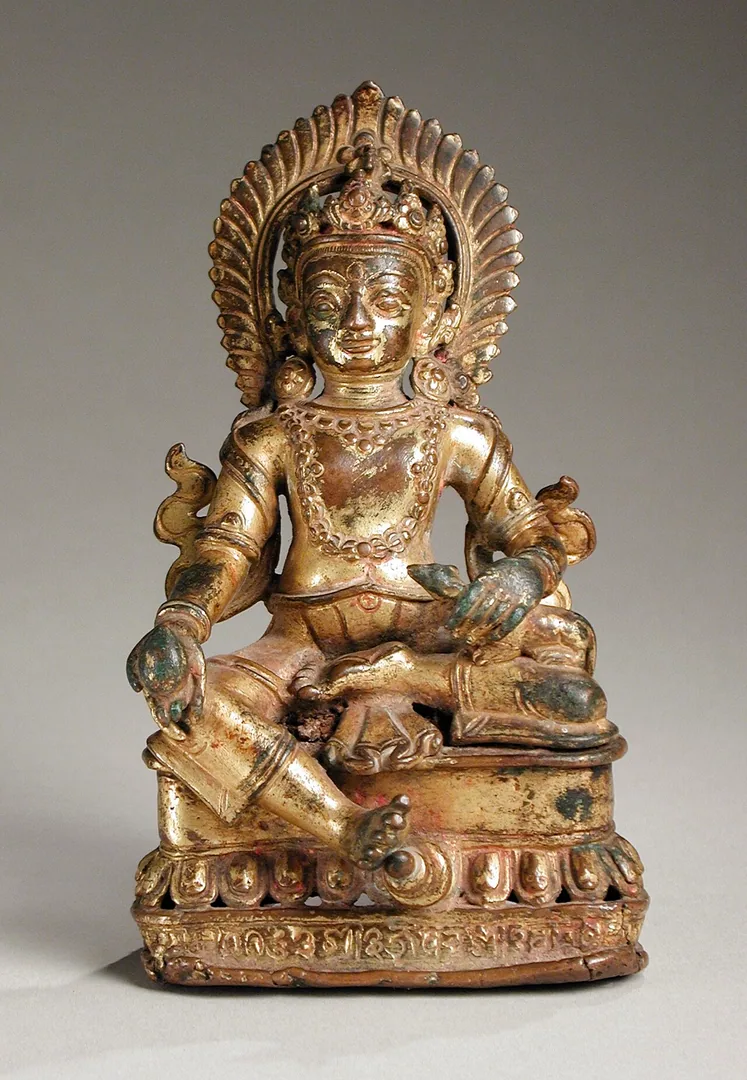
Seated in royal ease with a golden body, holding a citron fruit in his right hand and a jewel-disgorging mongoose under his left arm, Yellow Jambhala embodies Buddhist abundance: freeing practitioners from survival panic and miserliness so Dharma and generosity can flourish.
White Dragon-Riding Jambhala (Dzambhala Karpo)
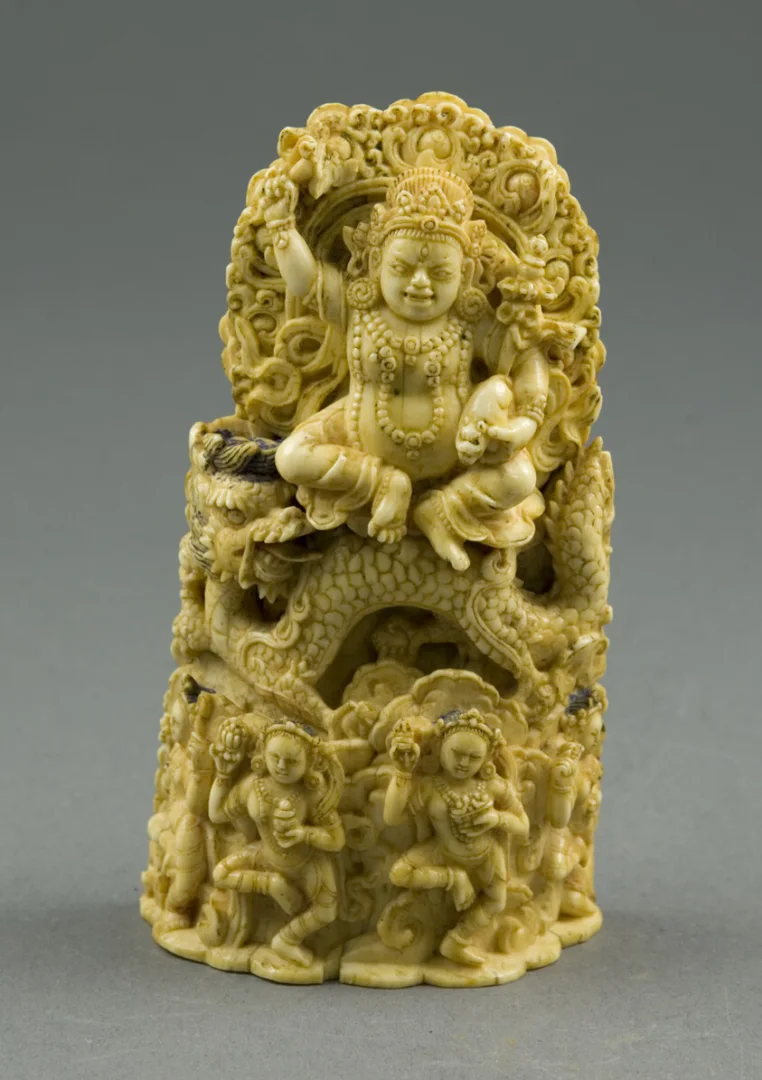
Born from the compassionate tear of Bodhisattva Avalokiteśvara and brought to Tibet by Atiśa Dīpaṃkara (982–1054), White Jambhala rides a roaring turquoise snow-dragon surrounded by four directional ḍākinīs—pacifying extreme destitution, illness, and misfortune so bodhicitta can flourish.
Green Jambhala (Dzambhala Janggu)
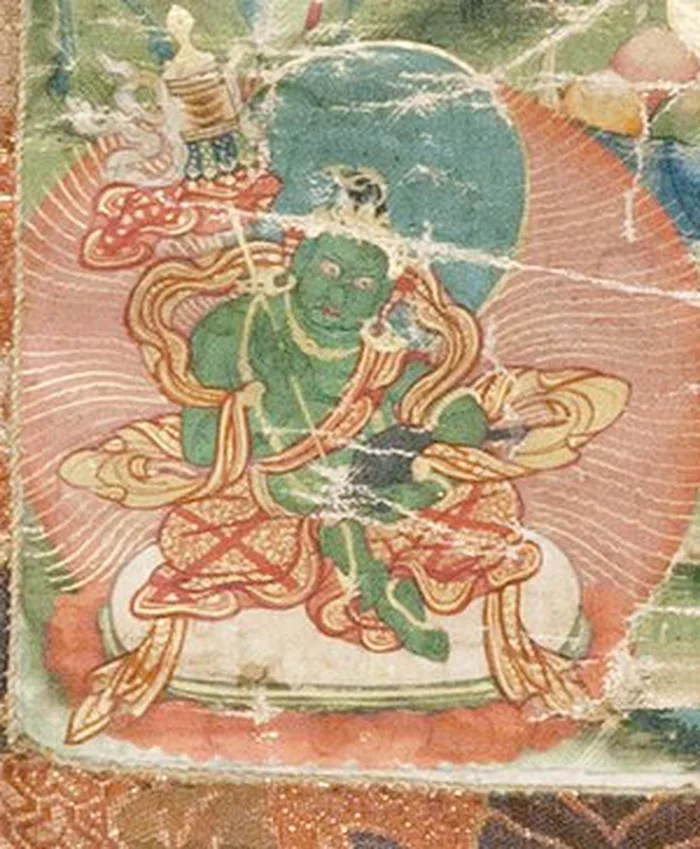
Manifesting in the emerald-green radiance of the Northern Karma (Enlightened Action) Family of Amoghasiddhi and Green Tārā, Green Jambhala clears stagnation, procrastination, and jealous obstruction so ethical undertakings reach swift completion.
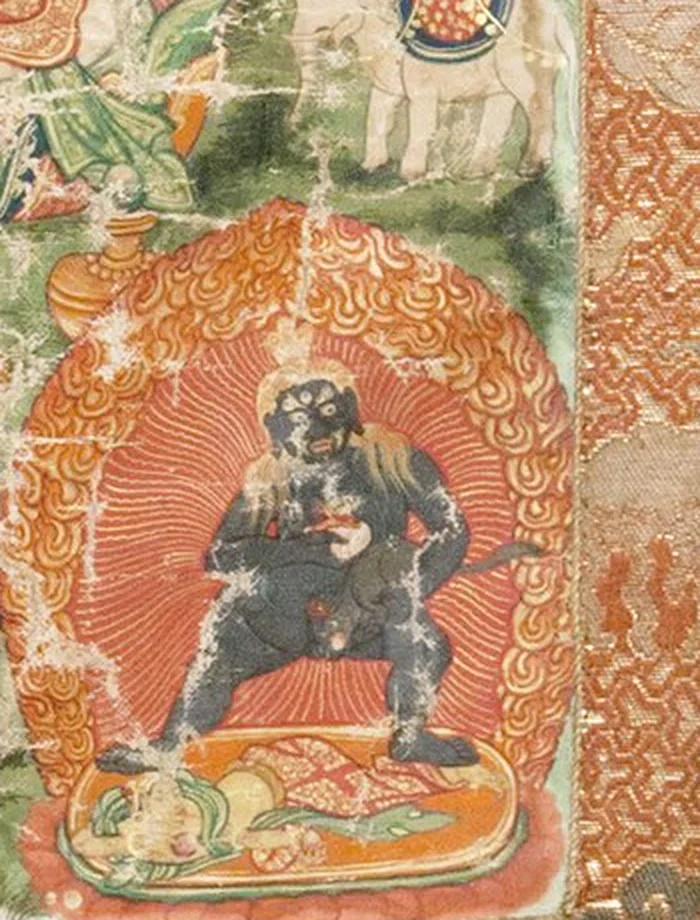
Black Jambhala (Dzambhala Nagpo · Kubera)
Emanating from Akṣobhya Buddha in the Eastern Vajra Family and transmitted through Ārya Nāgārjuna and Bari Lotsāwa (b. 1040), Black Jambhala stands naked and wrathful upon a subdued lord of wealth, holding a blood-filled kapāla skullcup at his chest and a jewel-mongoose in his left hand.