Black Jambhala (Dzambhala Nagpo · Kubera)
Vajra-Family Wrathful Standing Guardian · Cutting Acute Hardship & Resentment
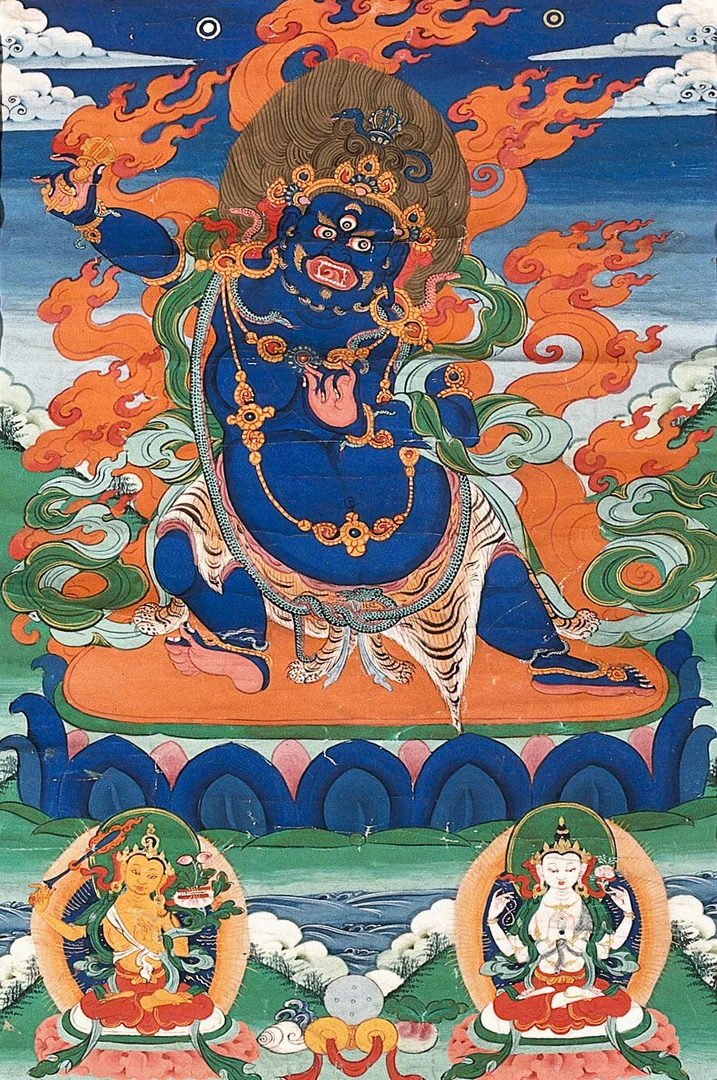
Emanating from Akṣobhya Buddha in the Eastern Vajra Family and transmitted through Ārya Nāgārjuna and Bari Lotsāwa (b. 1040), Black Jambhala stands naked and wrathful upon a subdued lord of wealth, holding a blood-filled kapāla skullcup at his chest and a jewel-mongoose in his left hand.
Why Is Black Jambhala Standing Naked and Holding a Skullcup?
Among the Five Jambhalas, Black Jambhala (Kṛṣṇa Jambhala, Toh 3522–3524) has the most striking and unmistakable iconography. While Yellow, Red, and Green Jambhala sit in royal silks on lotus cushions, Black Jambhala stands in a compact, wrathful posture completely naked (digambara) except for living serpent (nāga) necklaces, bracelets, and anklets, with three blazing eyes and a crown of five skulls.
Every detail encodes Akṣobhya’s Eastern Vajra Family wisdom: nakedness signifies naked awareness () stripped of all worldly pretension and hypocrisy; eight serpent ornaments signify mastery over the subterranean nāga treasure-lords and transmutation of anger; standing upon a yellow wealth-lord signifies trampling arrogant materialism; and the skullcup held at his heart signifies transmuting the lifeblood of ego-clinging directly into wisdom nectar.
Bari Lotsāwa’s Sakya Transmission & Gilt-Bronze Identification
Brought from India to Tibet in the 11th century by Bari Rinchen Drak (1040–1112, Second Throne-Holder of Sakya), Black Jambhala became one of the most treasured wealth protectors across Sakya, Kagyu, and Gelug monasteries. On unpainted gilt-bronze sculptures where black pigment is absent, collectors sometimes confuse him with Yellow Jambhala—until they check two instant clues: standing legs (never seated) and a hemispherical skullcup at the chest (never a lemon-shaped citron on the knee).
Sacred Genealogy & Five-Family Mandala Position
Wrathful standing Black Jambhala (Dzambhala Nagpo, Toh 3522) of Akṣobhya’s Eastern Vajra Family, transmitted by Śākyaśrībhadra and Bari Lotsāwa—holding a kapāla skull-cup and mongoose to rapidly crush extreme destitution.
Source Buddhas, Crown Sovereign & Root Yidams
How It Is Practiced in Living Tradition
Traditionally practiced with water-offering (chu-gtor) over a small bronze image to clear sudden misfortune, debt, and resentment, anchored in Akṣobhya’s unshakeable equanimity.
Common Questions & Clarifications
How do you distinguish Black Jambhala from Two-Armed Mahākāla (Bernagchen / Panjaranātha)?
Check the LEFT hand and clothing: Black Jambhala is naked and his left hand squeezes a jewel-spitting MONGOOSE at his hip; Mahākāla holds a curved chopper (kartika) AND skullcup in both hands at his chest (and Bernagchen wears a heavy black cloak while Panjaranātha balances a horizontal stick across his elbows).
Primary Sources & Further Reading
- Tengyur Toh 3522–3524 · Ārya Nāgārjuna (tr. Bari Lotsāwa), Śrī-Kṛṣṇa-Jambhala-Sādhana
- Nationaal Museum van Wereldculturen: Five Jambhalas Thangka (TM-4655-1)
- Museum Plate Record: Black Jambhala (Kubera · Standing Wrathful Wealth Guardian with Skullcup & Mongoose) — 18th–19th century · Tibet · Nationaal Museum van Wereldculturen (TM-4655-1) (Public Domain)
Connected in the Mandala Graph
Yellow Jambhala (Dzambhala Serpo)
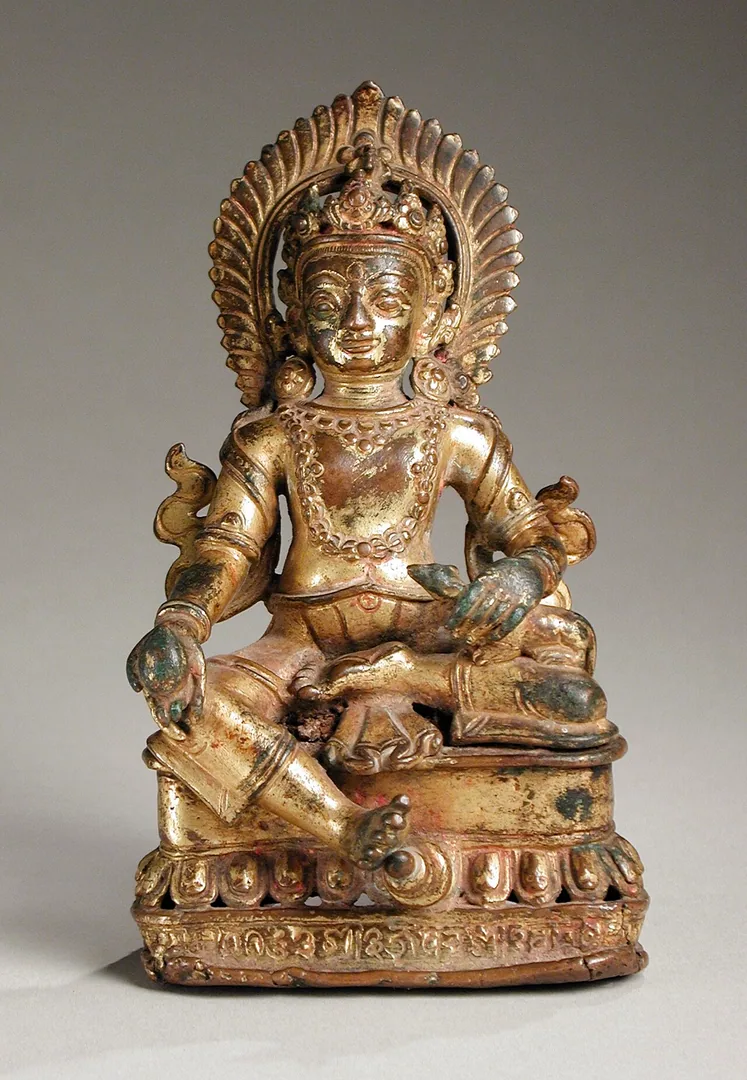
Seated in royal ease with a golden body, holding a citron fruit in his right hand and a jewel-disgorging mongoose under his left arm, Yellow Jambhala embodies Buddhist abundance: freeing practitioners from survival panic and miserliness so Dharma and generosity can flourish.
White Dragon-Riding Jambhala (Dzambhala Karpo)
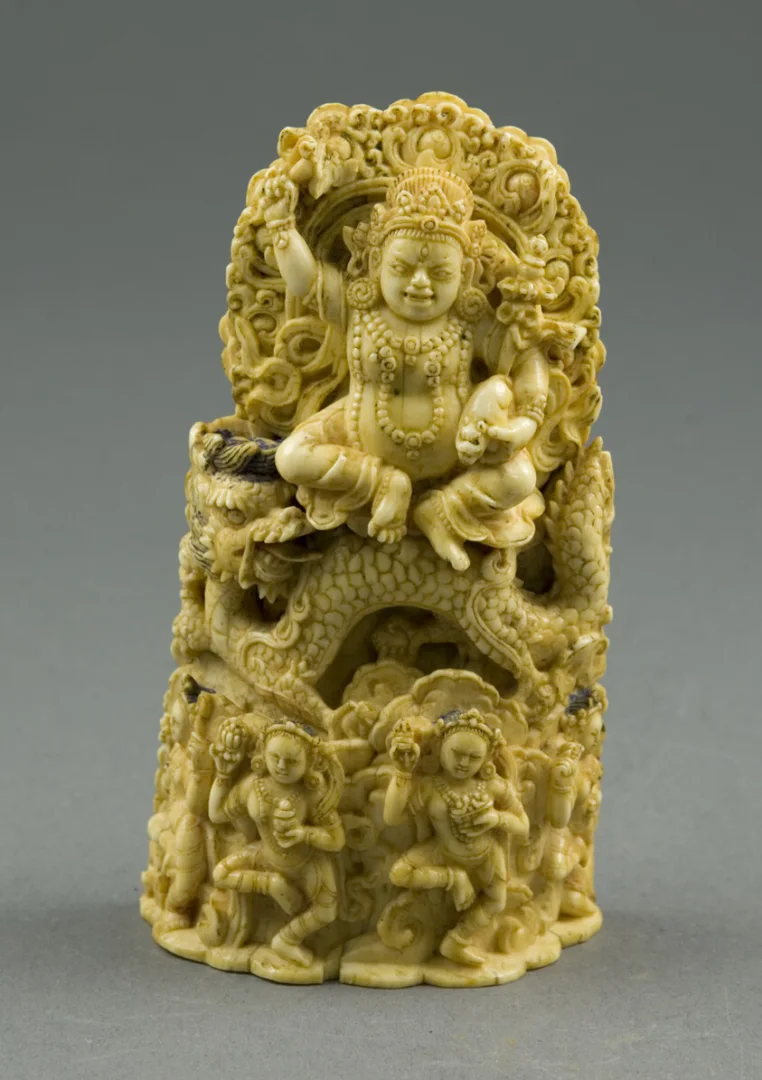
Born from the compassionate tear of Bodhisattva Avalokiteśvara and brought to Tibet by Atiśa Dīpaṃkara (982–1054), White Jambhala rides a roaring turquoise snow-dragon surrounded by four directional ḍākinīs—pacifying extreme destitution, illness, and misfortune so bodhicitta can flourish.
Red Jambhala (Dzambhala Marpo)
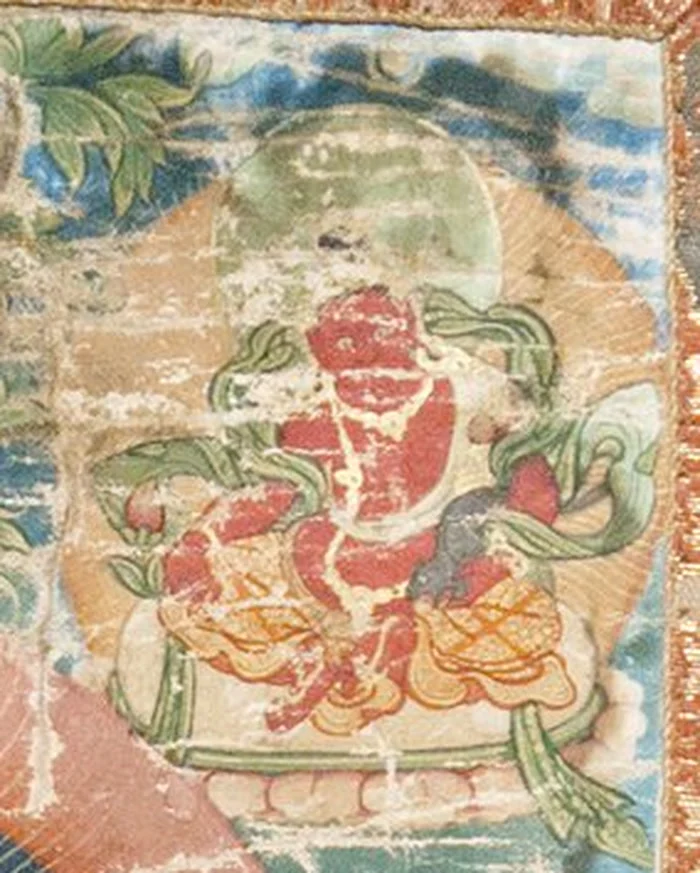
Radiating ruby-crimson light in Amitābha and Vajrasattva’s Padma-Vajra stream, Red Jambhala presides over magnetizing activity (vaśīkaraṇa): harmonizing human relationships, attracting supportive conditions for ethical work, and dissolving interpersonal scarcity.
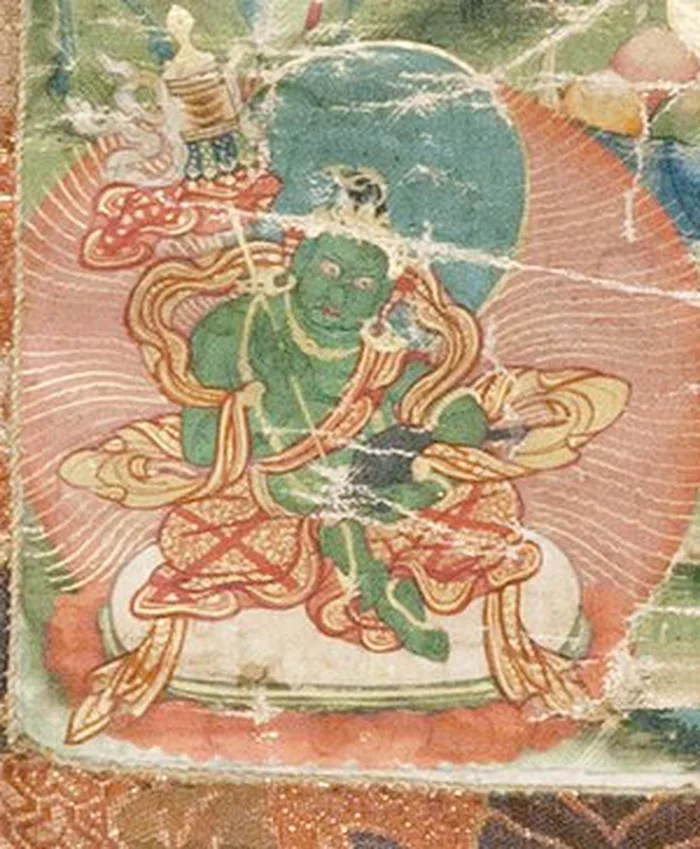
Green Jambhala (Dzambhala Janggu)
Manifesting in the emerald-green radiance of the Northern Karma (Enlightened Action) Family of Amoghasiddhi and Green Tārā, Green Jambhala clears stagnation, procrastination, and jealous obstruction so ethical undertakings reach swift completion.