White Dragon-Riding Jambhala (Dzambhala Karpo)
Avalokiteśvara’s Tear Emanation · Relieving Poverty, Illness & Karmic Obstacles
Born from the compassionate tear of Bodhisattva Avalokiteśvara and brought to Tibet by Atiśa Dīpaṃkara (982–1054), White Jambhala rides a roaring turquoise snow-dragon surrounded by four directional ḍākinīs—pacifying extreme destitution, illness, and misfortune so bodhicitta can flourish.
Born from Avalokiteśvara’s Tear: Atiśa’sEncounter with the Starving Beggar
In the (Toh 3520–3521), the origin of White Dragon-Riding Jambhala is rooted directly in universal compassion rather than worldly fortune-hunting. When Bodhisattva Avalokiteśvara gazed upon beings trapped in famine, illness, and karmic debt, tears fell from his eyes; from his right tear arose White Jambhala, vowing to lift destitute practitioners out of physical exhaustion so they could cultivate the path.
Traditional Tibetan hagiography records that while the Indian master Atiśa Dīpaṃkara Śrījñāna was walking on pilgrimage toward Bodh Gayā, he came across an emaciated beggar dying of starvation. Having no food left in his bowl, Atiśa offered his own flesh in radical bodhisattva compassion—at which moment the beggar dissolved into light and revealed himself as White Jambhala riding a turquoise dragon, entrusting the five-deity mandala directly to Atiśa.
Iconography of the Five-Deity Dragon Mandala
On museum bronzes and thangkas (such as Art Institute of Chicago 144399), White Jambhala exhibits a semi-wrathful three-eyed face crowned with red Amitābha in his flaming orange hair. Unlike Yellow Jambhala who sits directly on a lotus cushion holding a citron, White Jambhala straddles a roaring emerald-turquoise dragon (’brug) whose claws clutch wishes-granting jewels—signifying thunderous, unobstructed compassionate action across sky and earth.
Around his dragon throne stand four directional ḍākinīs representing the Four Enlightened Activities: blue Vajra in the East (pacifying anger), yellow Ratna Ḍākinī in the South (increasing merit), red Padma Ḍākinī in the West (magnetizing harmony), and green Karma Ḍākinī in the North (swiftly clearing obstacles).
Sacred Genealogy & Five-Family Mandala Position
Dragon-riding White Jambhala (Dzambhala Karpo Drukgyon, Toh 3520) transmitted by Atiśa Dīpaṃkara—born from the right tear of Avalokiteśvara to dispel poverty, illness, and karmic misfortune.
How It Is Practiced in Living Tradition
Practiced across Kadampa, Sakya, and Gelug traditions with clean water-offering (chu-gtor) and compassionate charity toward the sick and poor—emphasizing healing of illness and transmuting anger into clarity.
Common Questions & Clarifications
How do you tell White Jambhala apart from White Mahākāla in 3 seconds?
Count the arms and check beneath the feet: White Jambhala has 2 arms and rides a green DRAGON; White Mahākāla has 6 arms and stands on two elephant-headed figures holding a wish-fulfilling jewel and skullcup at his chest.
Primary Sources & Further Reading
Connected in the Mandala Graph
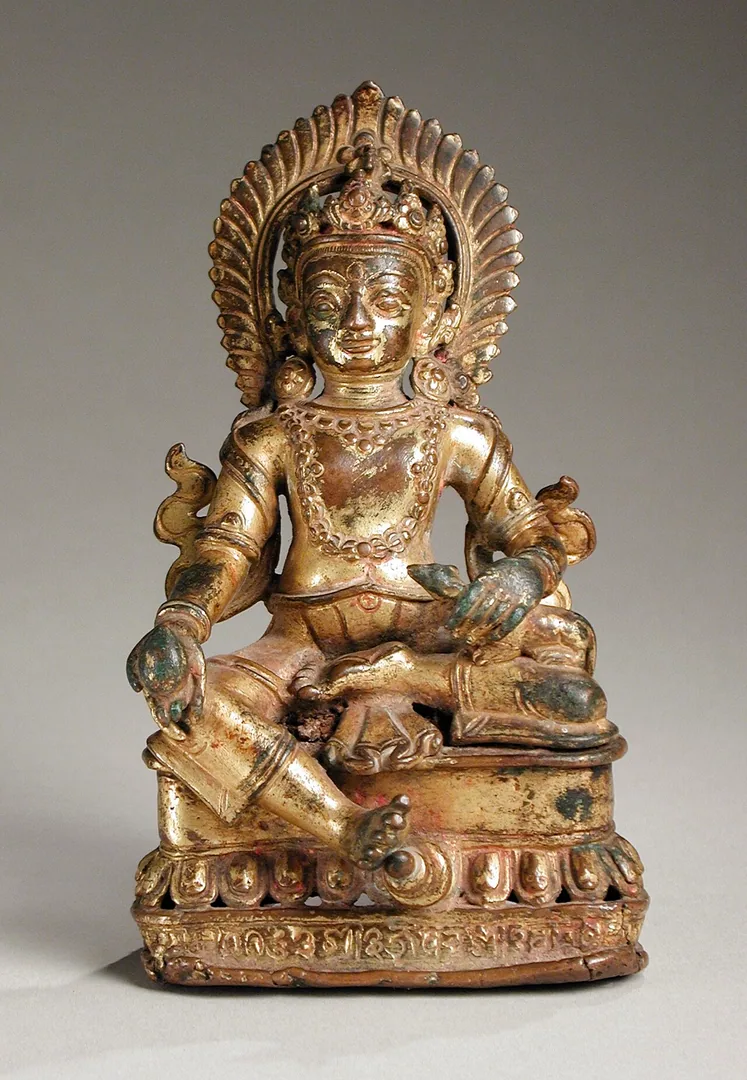
Yellow Jambhala (Dzambhala Serpo)
Seated in royal ease with a golden body, holding a citron fruit in his right hand and a jewel-disgorging mongoose under his left arm, Yellow Jambhala embodies Buddhist abundance: freeing practitioners from survival panic and miserliness so Dharma and generosity can flourish.
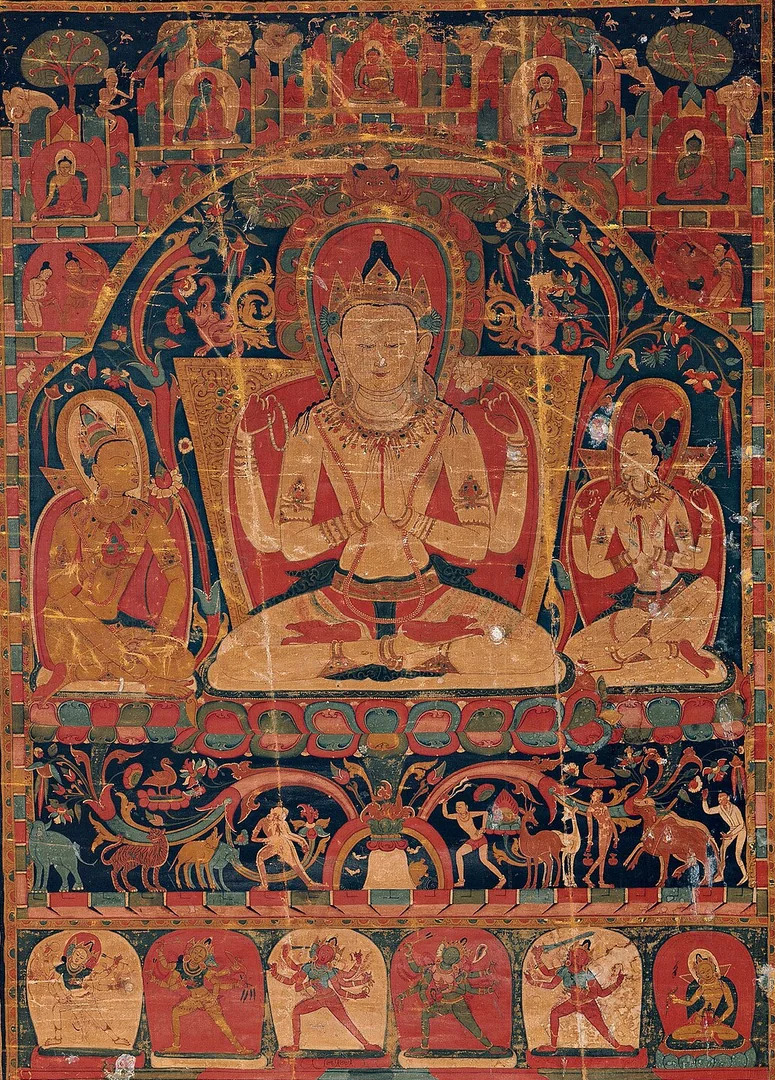
Avalokiteśvara (Chenrezig)
Known in Tibetan as Chenrezig (“One Who Gazes with Unwavering Eyes”), the four-armed white form embodies impartial compassion united with emptiness, associated with the Six-Syllable Mantra Oṃ Maṇi Padme Hūṃ.
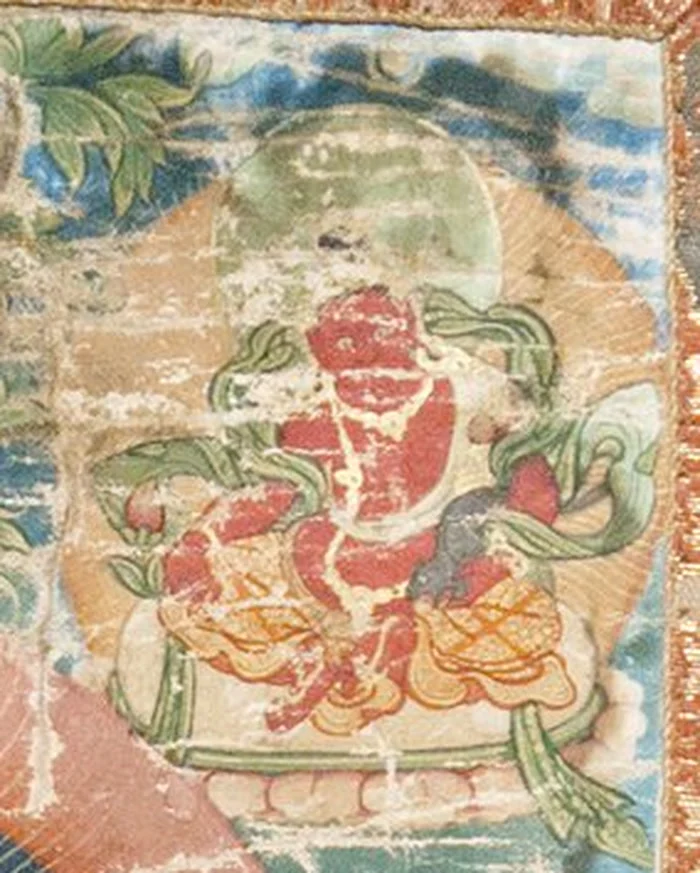
Red Jambhala (Dzambhala Marpo)
Radiating ruby-crimson light in Amitābha and Vajrasattva’s Padma-Vajra stream, Red Jambhala presides over magnetizing activity (vaśīkaraṇa): harmonizing human relationships, attracting supportive conditions for ethical work, and dissolving interpersonal scarcity.
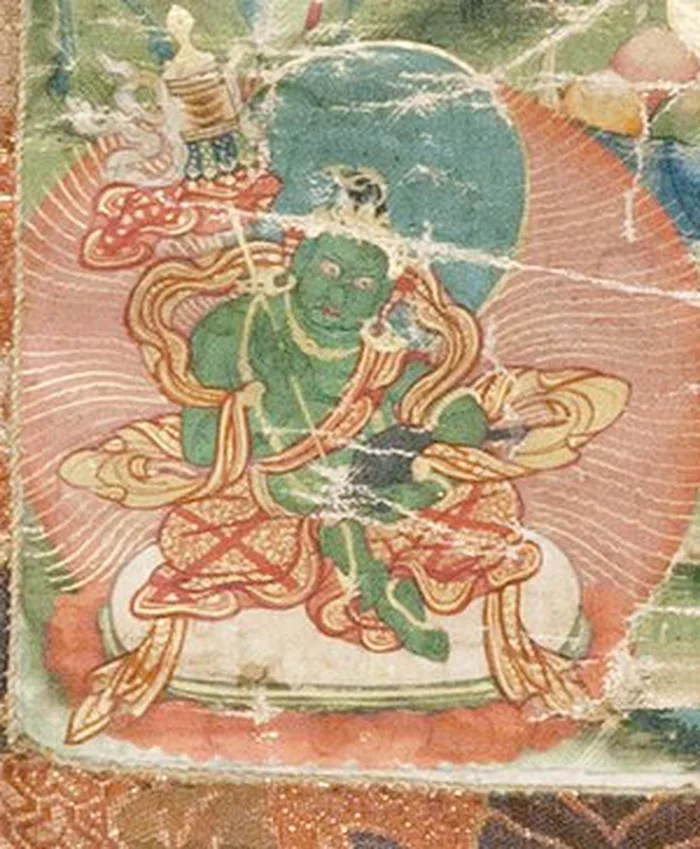
Green Jambhala (Dzambhala Janggu)
Manifesting in the emerald-green radiance of the Northern Karma (Enlightened Action) Family of Amoghasiddhi and Green Tārā, Green Jambhala clears stagnation, procrastination, and jealous obstruction so ethical undertakings reach swift completion.