Green Jambhala (Dzambhala Janggu)
Karma-Family Sovereign of Swift Accomplishment & Unobstructed Virtuous Action
Manifesting in the emerald-green radiance of the Northern Karma (Enlightened Action) Family of Amoghasiddhi and Green Tārā, Green Jambhala clears stagnation, procrastination, and jealous obstruction so ethical undertakings reach swift completion.
Why the Northern Karma Family Governs Swift Execution
In Tibetan Buddhist psychology, the root mental poison blocking the Northern Karma Family is envy and competitive comparison (īrṣyā / phrag-dog), which paralyzes constructive action. When transmuted into Amoghasiddhi’s All-Accomplishing Wisdom (bya-ba grub-pa’i ye-shes), that energy shines as emerald-green wind—the same swift compassionate momentum embodied by Green Tārā.
Green Jambhala applies this All-Accomplishing Wisdom directly to livelihood and service: helping practitioners overcome chronic hesitation, bureaucratic or external bottlenecks, and the envy of competitors while maintaining pure ethical vows.
Visual Identification in Five-Jambhala Thangkas
In classical Five-Jambhala paintings (such as Nationaal Museum van Wereldculturen TM-4655-1), Green Jambhala is immediately identifiable by his deep malachite-green skin, peaceful-yet-stern yakṣa crown, right foot resting upon a white conch shell over a lotus petal, and the jewel-disgorging mongoose held at his left hip.
Sacred Genealogy & Five-Family Mandala Position
Emerald-green Jambhala of Amoghasiddhi’s Northern Karma Family, swiftly clearing obstacles to virtuous undertakings and ripening enlightened activity.
How It Is Practiced in Living Tradition
Recited alongside Green Tārā praises by practitioners launching new community initiatives, travels, or studios, pairing diligence with generosity.
Common Questions & Clarifications
How do you tell Green Jambhala apart from Green Tārā at a glance?
Green Tārā is a slender peaceful female bodhisattva holding a blue utpala lotus stem at her heart; Green Jambhala is a stout bearded male yakṣa king holding a citron/banner and squeezing a jewel-spitting mongoose.
Primary Sources & Further Reading
- Jamgön Kongtrul Lodrö Thayé, Rinchen Terdzö (Treasury of Precious Termas) — Five Jambhalas Section
- Nationaal Museum van Wereldculturen: Five Jambhalas Thangka (TM-4655-1)
- Museum Plate Record: Green Jambhala (Karma Family Sovereign of Swift Accomplishment) in Five-Jambhala Mandala — 18th–19th century · Tibet · Nationaal Museum van Wereldculturen (TM-4655-1) (Public Domain)
Connected in the Mandala Graph
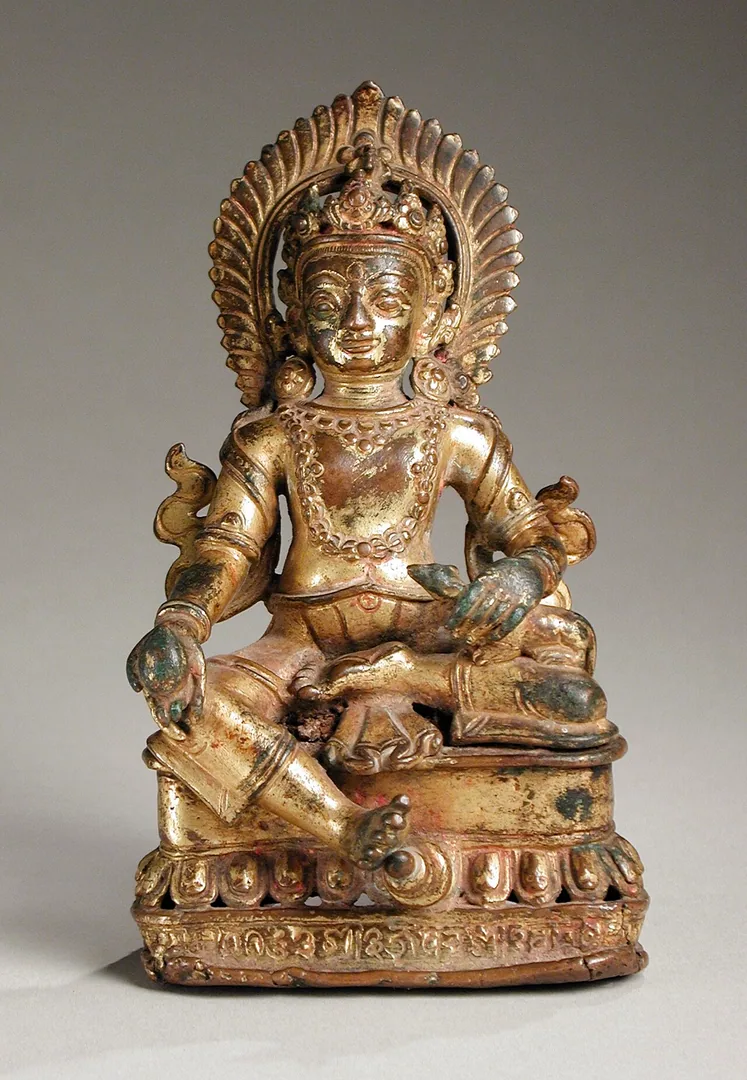
Yellow Jambhala (Dzambhala Serpo)
Seated in royal ease with a golden body, holding a citron fruit in his right hand and a jewel-disgorging mongoose under his left arm, Yellow Jambhala embodies Buddhist abundance: freeing practitioners from survival panic and miserliness so Dharma and generosity can flourish.
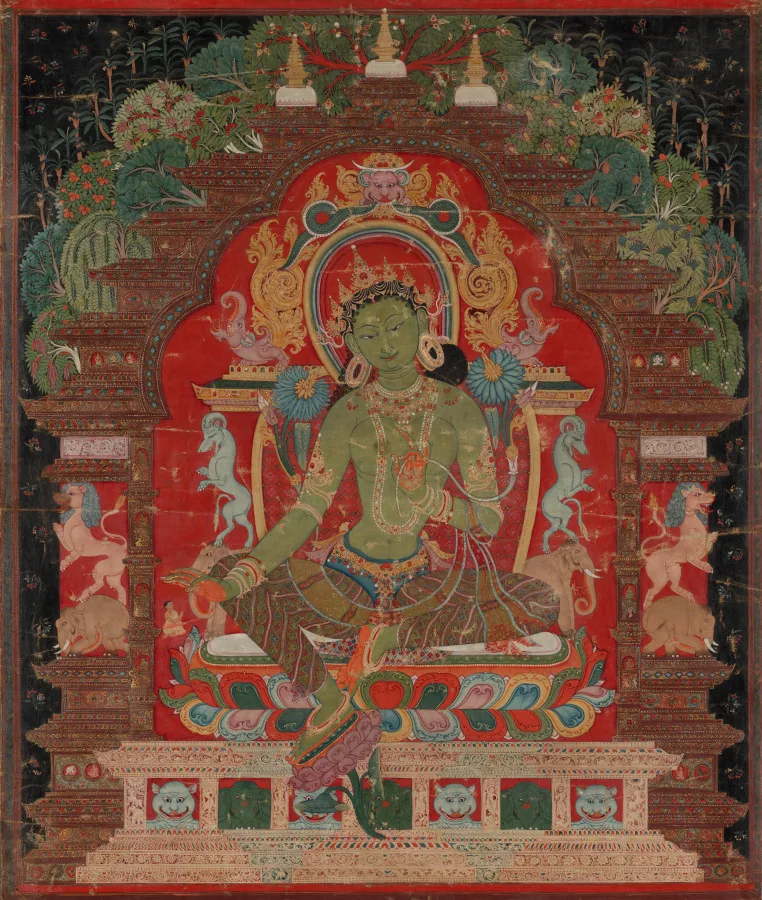
Green Tārā (Sgrol-ljang)
Seated in royal ease with her right foot already stepping off the lotus cushion, Green Tārā embodies enlightened compassion in immediate motion—green being the color of the Wind/Action Buddha Family.
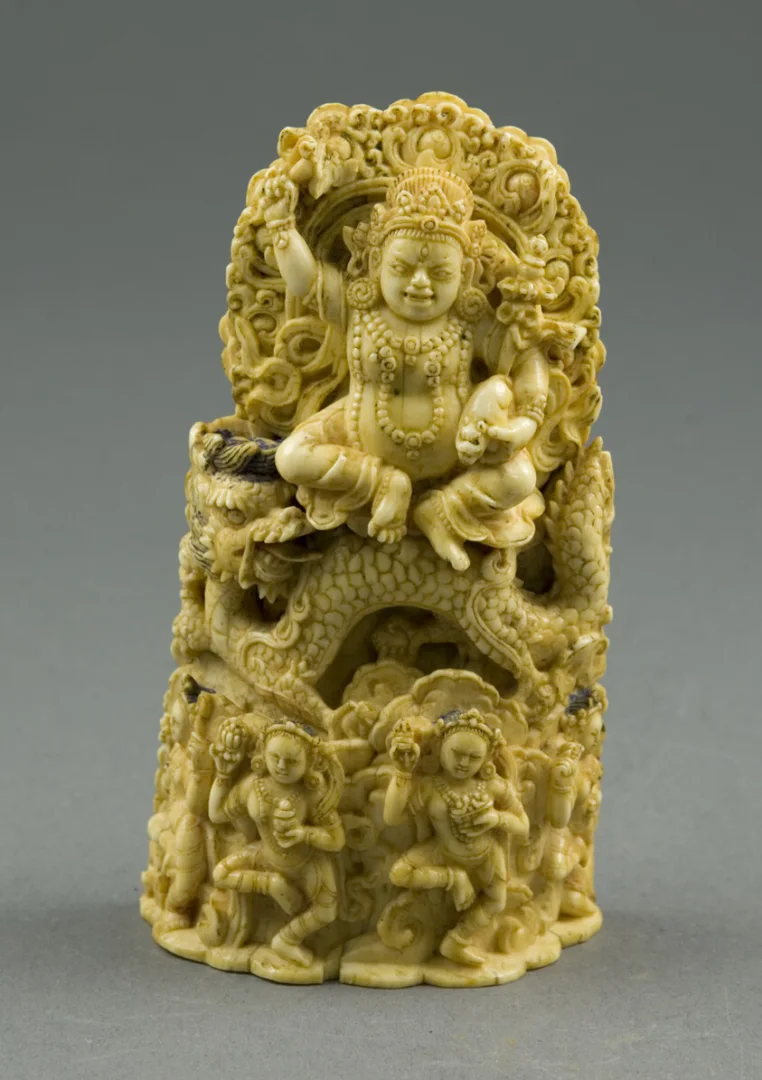
White Dragon-Riding Jambhala (Dzambhala Karpo)
Born from the compassionate tear of Bodhisattva Avalokiteśvara and brought to Tibet by Atiśa Dīpaṃkara (982–1054), White Jambhala rides a roaring turquoise snow-dragon surrounded by four directional ḍākinīs—pacifying extreme destitution, illness, and misfortune so bodhicitta can flourish.
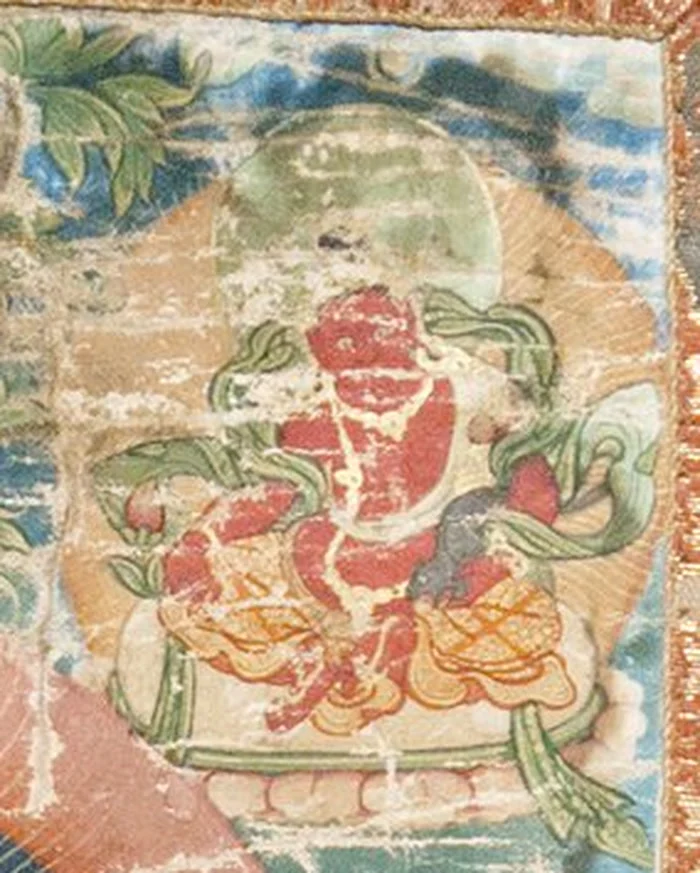
Red Jambhala (Dzambhala Marpo)
Radiating ruby-crimson light in Amitābha and Vajrasattva’s Padma-Vajra stream, Red Jambhala presides over magnetizing activity (vaśīkaraṇa): harmonizing human relationships, attracting supportive conditions for ethical work, and dissolving interpersonal scarcity.