Lamrim, Ngöndro & the Four/Nine Classes of Tantra (显密道次第与密续总图)
How Three Scopes of Motivation, Preliminaries, and Tantra Classes Fit Together Across Every Tibetan Lineage
Far from being a grab-bag of disconnected rituals, Tibetan Buddhism organizes every sūtra and tantra along a single architectural spine: from Atiśa’s Three Scopes of Lamrim and the mind-turning preliminaries (Ngöndro) through the graduated classes of Tantra—culminating in non-dual wisdom and compassion.
Why Tantra Without Sūtra Foundation Fails: Atiśa’s 1042 Blueprint & Ngöndro
In 1042 CE, King Jangchub Ö of Western Tibet (Guge) sacrificed his own ransom to invite the great Vikramaśīla abbot Atiśa (ཇོ་བོ་རྗེ་དཔལ་ལྡན་ཨ་ཏི་ཤ།, 982–1054) across the Himalaya with a single urgent question: Are Sūtra monastic ethics and Vajrayāna Tantra contradictory, or how can one person practice both without confusion? Atiśa’s 68-verse reply, A Lamp for the Path to Enlightenment (བྱང་ཆུབ་ལམ་གྱི་སྒྲོན་མ།, Toh 3947), became the master architectural blueprint of all Tibetan Buddhism.
Atiśa showed that every teaching of the Buddha fits seamlessly into Three Progressive Scopes of Motivation (སྐྱེས་བུ་གསུམ།): (1) Initial Scope, taking care of cause-and-effect so one harms neither oneself nor others; (2) Intermediate Scope, recognizing the hamster-wheel dissatisfaction of cyclic existence (saṃsāra) and cultivating genuine renunciation; and (3) Great Scope, awakening bodhicitta and realizing emptiness—only upon which Vajrayāna tantra acts as a swift lightning vehicle! In living practice, every school distills this foundation into Ngöndro (སྔོན་འགྲོ།, Preliminaries): the Four Mind-Turning Reflections (precious human birth, impermanence, karma, defects of saṃsāra) followed by the Uncommon Preliminaries (Refuge & Bodhicitta prostrations before a Tsogshing merit field, Vajrasattva 100-syllable purification, Maṇḍala offering, and Guru Yoga).
| Tradition | Sūtra / Lamrim Roadmap Text | Preliminary (Ngöndro) Classic | Pinnacle Tantric & Nature-of-Mind System |
|---|---|---|---|
| Nyingma · རྙིང་མ། | Longchenpa, Finding Rest in the Nature of Mind (ངལ་གསོ་སྐོར་གསུམ།) | Patrul Rinpoche, Words of My Perfect Teacher (ཀུན་བཟང་བླ་མའི་ཞལ་ལུང་།) | Nine Yānas culminating in Mahāyoga, Anuyoga & Atiyoga (Dzogchen Trekchö/Tögal) |
| Kagyu · བཀའ་བརྒྱུད། | Gampopa, Jewel Ornament of Liberation (ཐར་པ་རིན་པོ་ཆེའི་རྒྱན། — blending Kadampa + Milarepa!) | Ninth Karmapa / Jamgön Kongtrul, Torch of Certainty (ངེས་དོན་སྒྲོན་མེ།) | Cakrasaṃvara / Vajrayoginī, Six Yogas of Nāropa & Essence/Tantric Mahāmudrā |
| Sakya · ས་སྐྱ། | Sakya Paṇḍita, Clarifying the Sage’s Intent (ཐུབ་པའི་དགོངས་གསལ།) & Parting from Four Attachments | Three Visions (སྣང་གསུམ།: impure, yogic experience, pure vision) inside Lamdre | Hevajra Root Tantra & Virūpa’s Lamdre (“Path & Fruit” — Saṃsāra-Nirvāṇa Inseparable) |
| Gelug · དགེ་ལུགས། | Je Tsongkhapa, Great Treatise on the Stages of the Path (ལམ་རིམ་ཆེན་མོ།, 1402) | Jorcho (སྦྱོར་ཆོས། Six Preparatory Practices) + Nine-Round Guru Yoga (Ganden Lhagyama) | Great Exposition of Secret Mantra (སྔགས་རིམ་ཆེན་མོ།) & Guhyasamāja / Cakrasaṃvara / Yamāntaka union |
| Jonang · ཇོ་ནང་། | Dolpopa & Tāranātha’s Graded Path of the Three Persons (སྐྱེས་བུ་གསུམ་གྱི་ལམ་རིམ།) | Kālacakra uncommon preliminaries & Shentong view training | Kālacakra Tantra & Six-Branch Yoga (Ṣaḍaṅga-yoga / སྦྱོར་དྲུག) |
The Four / Six Classes of Tantra: Mapping Mandala Atlas Deities & Why Samaya Matters
In the New Translation (Sarma) schools—Sakya, Kagyu, Gelug, and Jonang—all Vajrayāna scriptures in the are classified into Four Classes of Tantra (རྒྱུད་སྡེ་བཞི།) according to how they balance outer ritual purity with inner non-dual contemplation; the Ancient (Nyingma) school shares the three outer classes (Kriyā, Upa/Caryā, Yoga) and subdivides Highest Yoga into Three Inner Tantras (Mahāyoga, Anuyoga, Atiyoga).
Traditional Tibetan texts offer a playful classical metaphor showing how dualistic distance between practitioner and awakened wisdom gradually dissolves across the four classes—from gazing respectfully from afar (Kriyā) and conversing like trusted friends (Caryā), to clasping hands (Yoga) and complete non-dual union (Anuttarayoga)! Mapping the deities of Mandala Atlas onto these classes instantly clarifies both iconography and ethical stewardship:
| Tantra Class (Sarma / Nyingma) | Contemplative Method & View | Representative Deities on Mandala Atlas | Traditional Transmission & Access Norm |
|---|---|---|---|
| 0. Sūtra / Pāramitāyāna (显乘波罗蜜多乘) | Six Perfections, analytical emptiness & causal bodhisattva path | Śākyamuni, Maitreya, Amitābha, Prajñāpāramitā, Eight Great Bodhisattvas | 100% open canonical sūtras, praises & aspirations for all readers |
| 1. Kriyā Tantra · བྱ་རྒྱུད། (Action Tantra) | Emphasizes outer cleanliness, vegetarian/pure offerings & front-generation reverence | Green Tārā, White Tārā, Medicine Buddha, Four-Armed Chenrezig, Uṣṇīṣavijayā, Sitātapatrā, Mārīcī | Praises & peaceful essence mantras widely shared openly; formal self-generation requiresjenang/lung |
| 2–3. Caryā & Yoga Tantra · སྤྱོད་རྒྱུད། / རྣལ་འབྱོར་རྒྱུད། | Balances outer conduct with inner samādhi (Caryā); emphasizes four seals & Five-Buddha mandala (Yoga) | Vairocana (Kunrig), Mañjuśrīnāmasaṃgīti outer cycles, Vajrasattva Yoga cycles | Philosophical architecture studied openly; ritual mandala empowerment conferred in monasteries |
| 4. Anuttarayoga / Mahā–Anu–Atiyoga (无上瑜伽 / 内三续) | Generation & Completion stages (subtle winds/channels/clear light) or direct recognition of Rigpa | Guhyasamāja, Cakrasaṃvara, Hevajra, Yamāntaka, Kālacakra, Vajrayoginī, Vajrakīlaya, Mahottara Heruka | Documented on Mandala Atlas strictly via art history & philosophy; practice requires Wang, Lung & Tri! |
How It Is Practiced in Living Tradition
Whether a practitioner enters a Gelug shedra, a Kagyu three-year retreat, a Sakya academy, or a Nyingma mountain hermitage, every authentic curriculum begins at the exact same gate: contemplating the Four Thoughts That Turn the Mind toward Dharma and cultivating an uncontrived good heart (bodhicitta).
Common Questions & Clarifications
Why do traditional Ngöndro preliminaries repeat each practice 100,000 times?
Masters like Patrul Rinpoche explain that lifelong habits of distraction and self-centeredness are etched into body, speech, and mind through millions of repetitions—so intellectual reading alone rarely rewires deep reflexes; sustained embodied repetition (100,000 plus a 10% supplement = 111,111) turns Dharma from book theory into marrow-deep habit, though quality of mind always outweighs mechanical counting.
Primary Sources & Further Reading
- Atiśa Dīpaṃkara Śrījñāna, A Lamp for the Path to Enlightenment (Bodhipathapradīpa, Derge Tengyur Toh 3947, 1042 CE)
- Je Tsongkhapa, The Great Treatise on the Stages of the Path to Enlightenment (Lamrim Chenmo) & Patrul Rinpoche, Words of My Perfect Teacher
- The Metropolitan Museum of Art (1993.479 · CC0): Early 12th-Century Tibetan Kadampa Portrait of Atiśa
Connected in the Mandala Graph
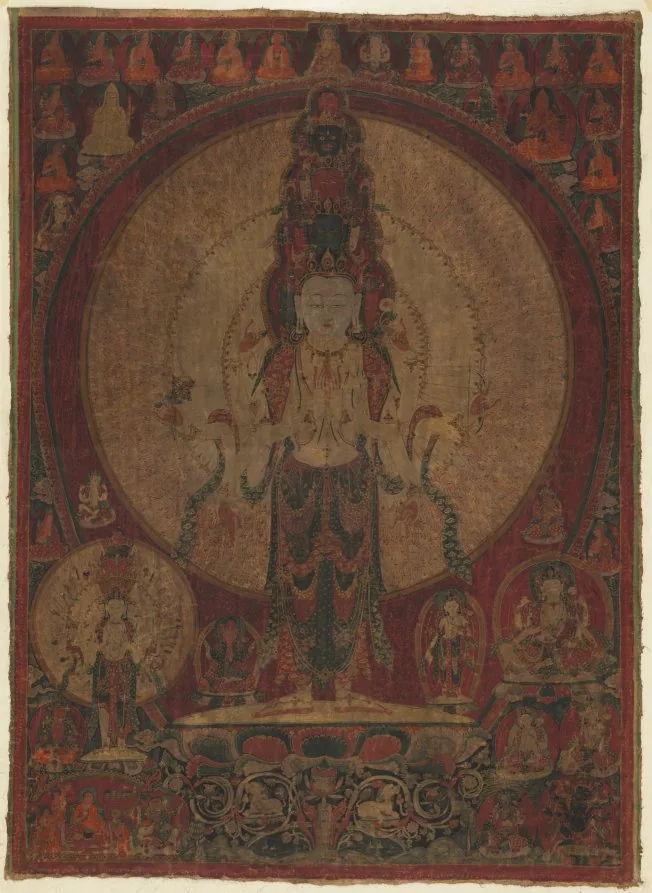
Bodhicitta, Lojong & Tonglen (Mind Training in Seven Points)
Defined as the awakened heart uniting boundless compassion for all beings with wisdom aiming at complete enlightenment, bodhicitta is trained in everyday friction through Lojong slogans and the breath-based meditation of Tonglen (“giving and taking”).
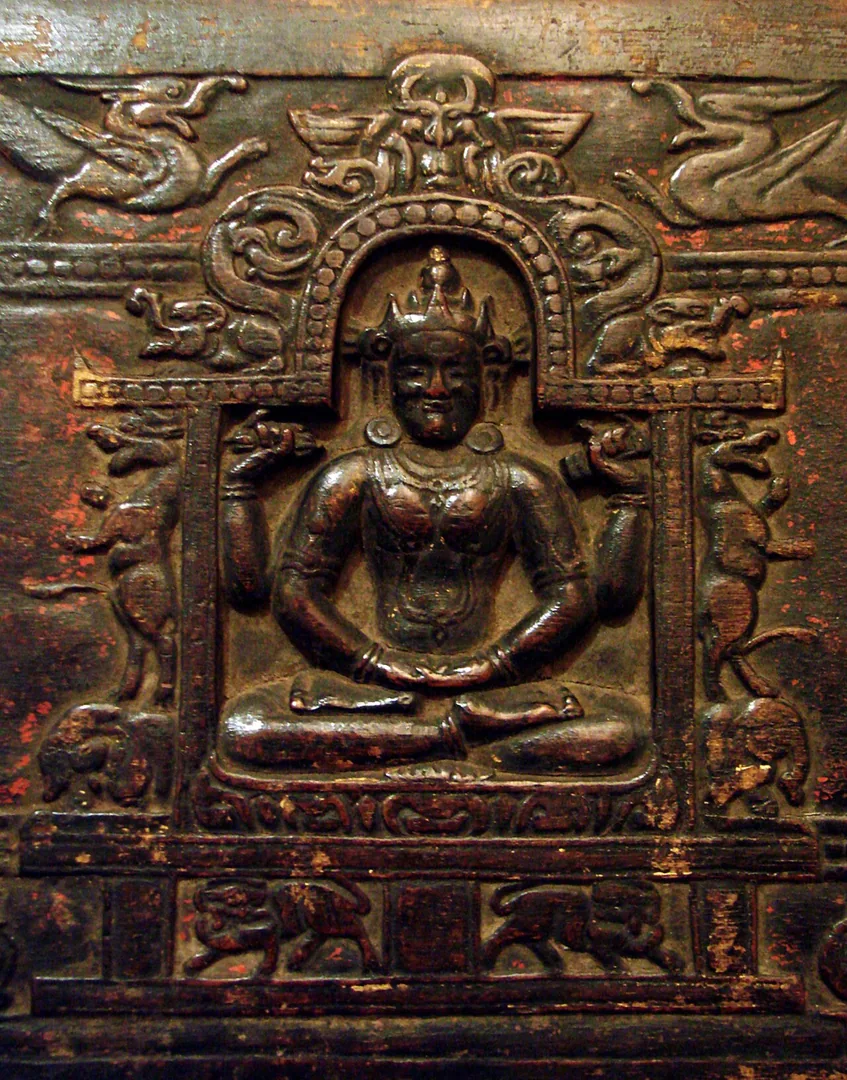
Śūnyatā (Emptiness) & the Two Truths (Madhyamaka)
In Nāgārjuna’s Middle Way philosophy, “emptiness” (stong-pa-nyid) never means nothing exists; it means nothing exists in frozen isolation—and precisely because things lack rigid self-nature, seeds sprout, suffering changes, and awakening works.
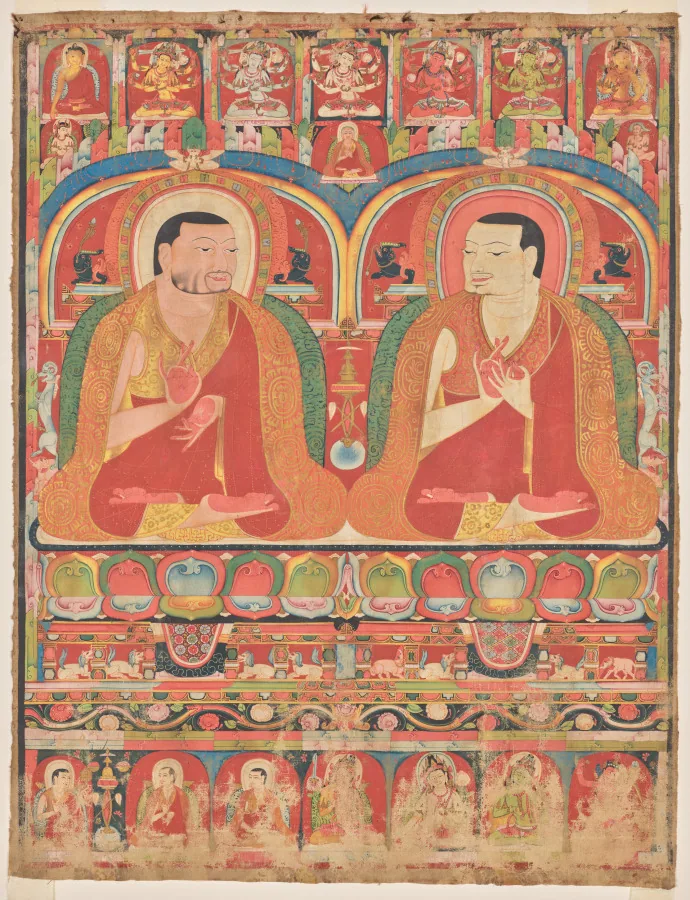
Dzogchen & Mahāmudrā: Resting in the Nature of Mind
Celebrated across Himalayan contemplative life as two rivers reaching the exact same ocean, Nyingma/Bön Dzogchen (“Great Perfection”) and Kagyu/Gelug Mahāmudrā (“Great Seal”) point directly to the luminous, unfabricated awareness already present beneath fleeting thoughts.
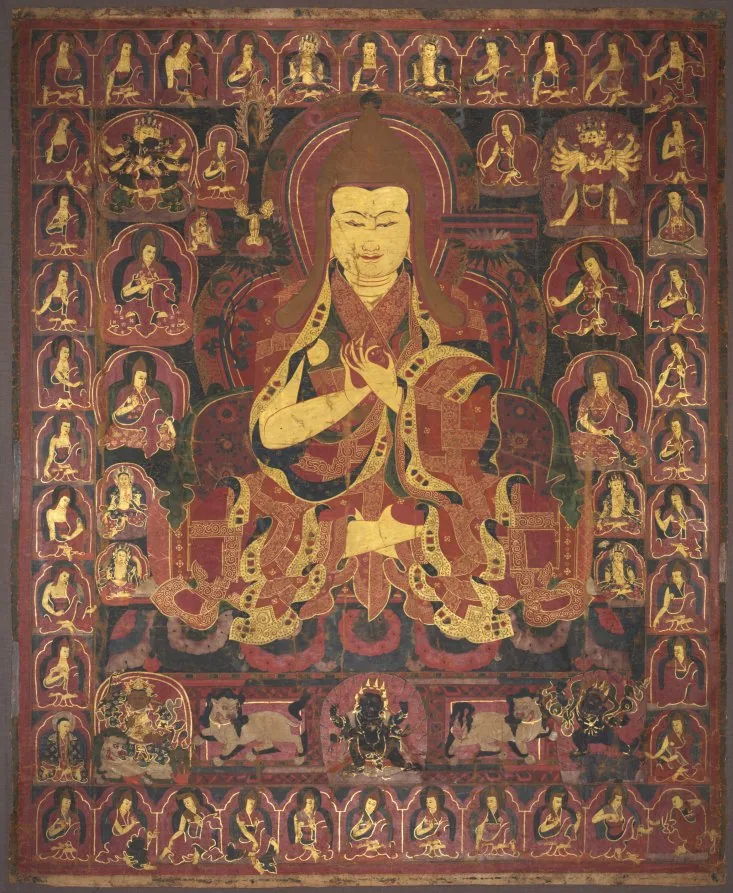
Je Tsongkhapa (Lobsang Drakpa · 1357–1419)
Born in Amdo Tsongkha (modern Qinghai Kumbum) in 1357, Je Rinpoche studied across Sakya, Kagyu, Jonang, and Kadampa masters before founding Ganden Monastery—uniting rigorous Nālandā logic, pure Vinaya discipline, and Tantric contemplation into one seamless graduated path (Lamrim).