Guhyasamāja (Sangwa Düpa · “Secret Assembly”)
Foundational Father-Tantra Yidam Uniting Illusory Body & Clear Light Across Ārya & Jñānapāda Lineages
Revered across Tibetan monasticism as the “King of Tantras” (Toh 442), Guhyasamāja (“Secret Assembly” of awakened body, speech, and mind) anchors the Father-Tantra (pha-rgyud) tradition—teaching in exquisite precision how subtle winds and consciousness purify ordinary death, bardo, and rebirth into the rainbow-like Illusory Body and Clear Light.
Why Museums Show Both Blue & Golden Guhyasamājas: Ārya vs. Jñānapāda
Visitors comparing thangkas at the Rubin Museum, Art Institute of Chicago, and Tibetan Tantric Colleges immediately notice two distinct color palettes for Guhyasamāja. Both stem from towering 8th–9th century Indian Nālandā commentators on the Guhyasamāja Tantra (Toh 442), preserved side by side in Tibet thanks to great translators like Rinchen Zangpo (958–1055), Marpa , and Gö Lotsāwa:
In the Ārya lineage (’Phags-lugs, traced to tantric Nāgārjuna, Āryadeva, and Candrakīrti’s Pradīpoddyotana commentary, Toh 1785), the central deity is sapphire-blue Akṣobhyavajra surrounded by a 32-deity mandala. In the Jñānapāda lineage (Ye-shes-zhabs-lugs, founded by Master Buddhajñānapāda and illustrated in our Rubin Museum plate), the central figure is saffron-gold Guhyasamāja Mañjuvajra—integrating Mañjuśrī’s wisdom sword and lotus into a 19-deity mandala.
| Lineage | Central Form & Color | Mandala Size | Key Implements & Tibetan Strongholds |
|---|---|---|---|
| Ārya Lineage (’Phags-lugs) | Akṣobhyavajra · Deep Sapphire Blue (3 faces: blue, white, red) | 32 Deities | Vajra, bell, wheel, lotus, gem, sword · Core Father-Tantra of Marpa, Sakya & Je Tsongkhapa (Gyütö / Gyümé) |
| Jñānapāda Lineage (Ye-shes-zhabs) | Mañjuvajra · Saffron Gold (3 faces: gold, blue, white) | 19 Deities | Flaming sword, lotus, wheel & bow/arrow · Revered in Ngor-Sakya, Rinchen Zangpo & Kadampa art |
Why Seated Peacefully? Father-Tantra Alchemy of Wind, Mind & Illusory Body
Whereas Mother Tantras like Cakrasaṃvara and Hevajra adopt dynamic dancing postures emphasizing inner bliss-emptiness wisdom (prabhāsvara), Father Tantras led by Guhyasamāja specialize in the Pure Illusory Body (sgyu-lus, māyādeha)—how the subtlest life-wind (prāṇa / rlung, the “mount” of consciousness) crystallizes into an indestructible rainbow form capable of serving beings effortlessly.
Je Tsongkhapa famously declared that Nāgārjuna’s Pañcakrama (Five Stages, Toh 1802) of Guhyasamāja held the master key unlocking the entire tantric canon, placing Guhyasamāja first in the Gelug triad of Guhyasamāja, Cakrasaṃvara, and Yamāntaka (gSang-bDe-’Jigs gsum). Both male and female figures possess six arms and identical crowns to show that awakened method and emptiness mirror one another in complete symmetry.
How It Is Practiced in Living Tradition
Celebrated in Tibetan monastic culture through the multi-chordal deep harmonic chanting (gyüké) of Upper and Lower Tantric Colleges (Gyütö and Gyümé) in Lhasa and exile, and studied in art history through Ngor and Central Tibetan mandalas. In strict accordance with Anuttarayoga samaya, personal visualization and Five-Stage (Pañcakrama) completion-stage practice require full fourfold Guhyasamāja empowerment (dbang), oral transmission (lung), and close commentary instruction (khrid) from a qualified lineage holder.
Common Questions & Clarifications
What does “Secret” mean in Guhyasamāja (“Secret Assembly”)?
Not sectarian secrecy for power, but self-secrecy: Candrakīrti’s commentary explains that the awakened inseparability of body, speech, and mind remains naturally “hidden” (guhya) from ordinary dualistic grasping, yet effortlessly “assembled” (samāja) within every sentient being’s subtlest clear-light nature.
Primary Sources & Further Reading
- Sarvatathāgatakāyavākcittarahasya-guhyasamāja-nāma-mahākalparāja (Toh 442) & Candrakīrti’s Pradīpoddyotana (Toh 1785)
- Nāgārjuna, Pañcakrama (Five Stages, Toh 1802) & Christian K. Wedemeyer, Āryadeva’s Lamp that Integrates the Practices (Columbia University Press, 2007)
- Rubin Museum of Art Open Archive: 17th-Century Central Tibetan Thangka of Guhyasamāja Mañjuvajra
Connected in the Mandala Graph
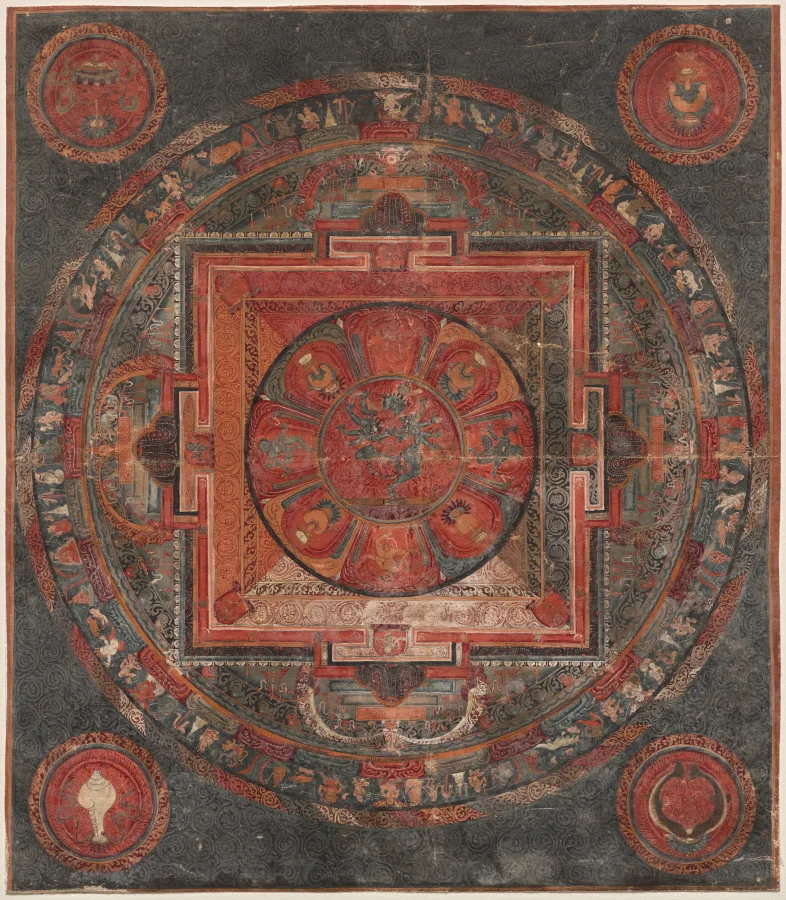
Cakrasaṃvara (Khorlo Demchog · Wheel of Supreme Bliss)
Celebrated across Himalayan art and pilgrimage as the indwelling mandala deity of Mount Kailash, sapphire-blue Cakrasaṃvara embraces crimson wisdom-ḍākinī Vajravārāhī with crossed vajra and bell—embodying Mother Tantra’s realization that great bliss and emptiness are indivisible.
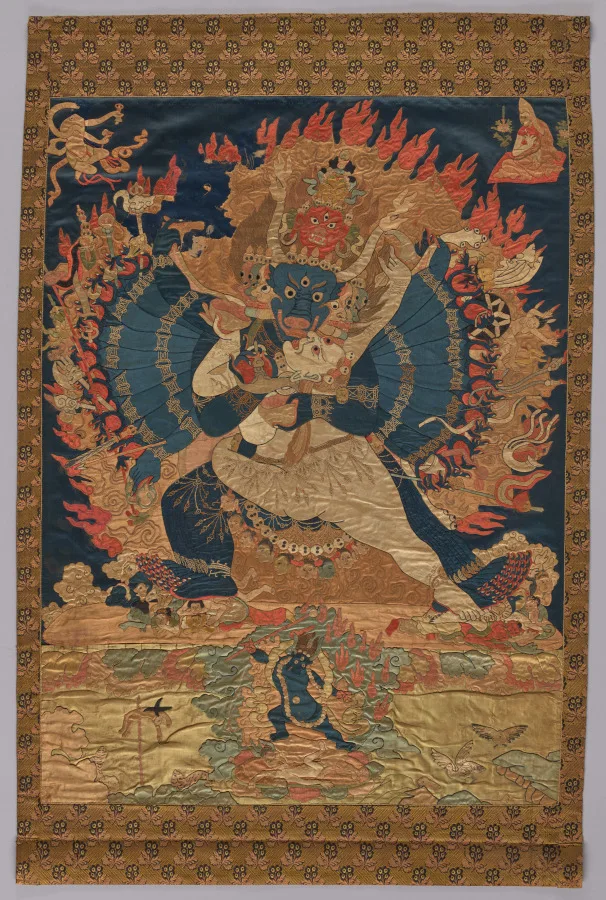
Yamāntaka / Vajrabhairava (Dorje Jigje · Ender of Death)
When gentle persuasion cannot halt the relentless momentum of mortality and karmic compulsion, gentle Mañjuśrī—Bodhisattva of Wisdom—manifests as horned, buffalo-headed Vajrabhairava (“Adamantine Terrifier”), crowning nine fierce faces with Mañjuśrī’s own serene golden visage to conquer death through emptiness.
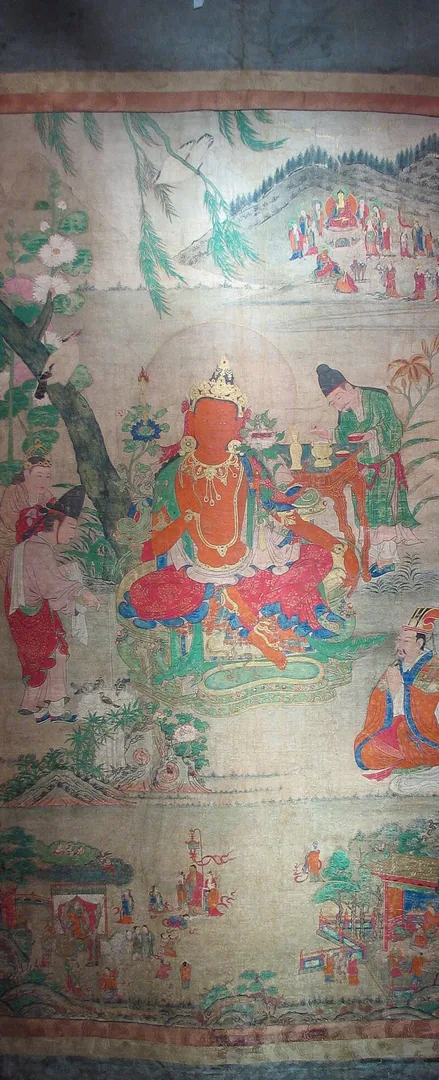
Mañjuśrī (Jampelyang)
Radiant saffron-gold in hue, Mañjuśrī raises a blazing sword overhead with his right hand to slice right through conceptual confusion, while holding the Prajñāpāramitā Sūtra on a lotus at his heart.
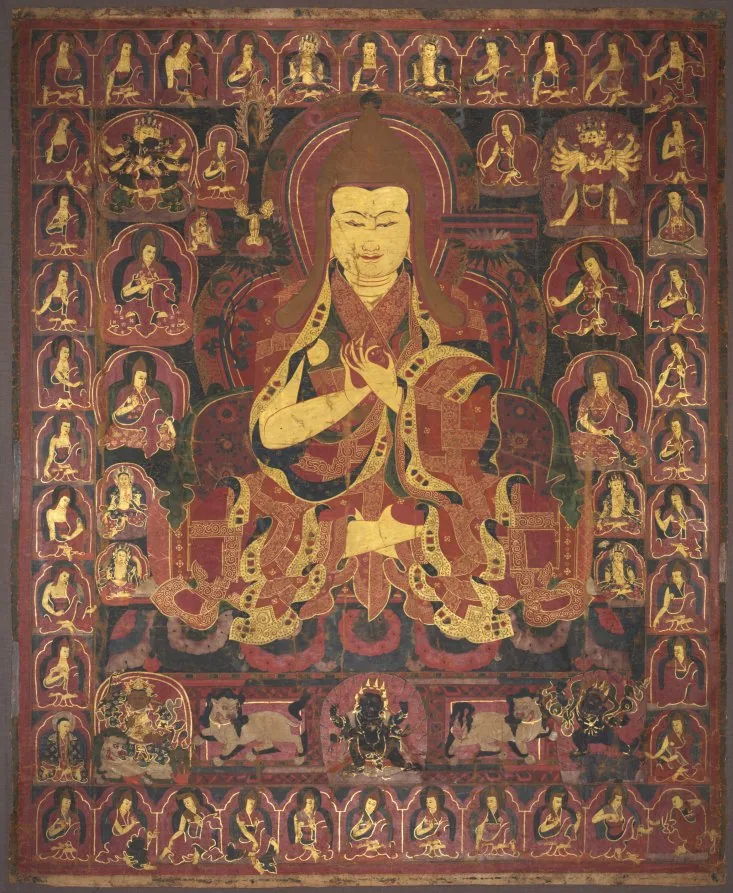
Je Tsongkhapa (Lobsang Drakpa · 1357–1419)
Born in Amdo Tsongkha (modern Qinghai Kumbum) in 1357, Je Rinpoche studied across Sakya, Kagyu, Jonang, and Kadampa masters before founding Ganden Monastery—uniting rigorous Nālandā logic, pure Vinaya discipline, and Tantric contemplation into one seamless graduated path (Lamrim).