Palden Lhamo / Śrīdevī (Glorious Goddess · Magzor Gyalmo)
Only Major Female Supramundane Dharma Protector Riding Her Swift Mule Across the Ocean of Saṃsāra
Riding side-saddle atop a swift yellow-white mule across a boiling sea of blood, bearing a sun in her navel, a crescent moon in her hair, and a pair of divination dice on her saddle, Palden Lhamo (Śrīdevī) is Tibet’s most celebrated female supramundane Wisdom Protector—guardian of Lhasa’s Jokhang Temple, the Dalai and Panchen lineages, and ethical Dharma practice.
How to Read Every Detail on Her Mule: Peacock Canopy, Dice & the Eye Behind
Few Tibetan paintings reward close museum inspection as richly as Palden Lhamo (Magzor Gyalmo, “Queen Who Repels Armies of Negativity”), vividly preserved in our 18th-century LACMA thangka beneath Je Tsongkhapa. According to classical Tibetan sacred narrative, when a cruel ancient king in Lanka refused to abandon bloodshed, the enlightened queen vowed to sever any dynastic continuation of tyranny rather than let millions suffer—escaping northward on a winged mule. When an arrow struck her mount’s haunch, she pulled it free and healed the wound into an all-seeing wisdom eye so nothing behind her on the spiritual path could ever ambush practitioners unseen.
Every ornament around her forms a visual encyclopedia of Himalayan cosmology: overhead arches a peacock-feather parasol (symbolizing poison transmuted into radiance); at her navel glows a fiery sun disc while a cool crescent moon rests in her orange flame-like hair (uniting solar and lunar subtle channels); dangling from her venomous-snake saddle straps hang a pair of bone divination dice (sho/mo—used in traditional Tibetan Palden Lhamo Mo prognostication) and a crimson pouch representing the containment of epidemic diseases; while flanking her bridle stride the lion-headed Makaravaktrā (guiding in front) and makara-headed Siṃhavaktrā (following behind).
Lhamo Latso Vision Lake, Jokhang’s “Fairy Festival” & Rimé Reverence
In Tibetan cultural geography, Palden Lhamo is intimately linked with Lhamo Latso (ལྷ་མོའི་བླ་མཚོ།)—a high-altitude glacial oval lake at 5,100 m in Gyaca (Lhoka), revered since the Second Dalai Gendün Gyatso founded Chokorgyel Monastery nearby in 1509 as an oracle mirror reflecting auspicious signs during major monastic searches. Equally beloved in Lhasa civic life is Pelha Ri-trö (“Palden Lhamo Festival,” popularly called Women’s / Fairy Day) on the 15th day of the 10th Tibetan lunar month, when thousands of pilgrims offer khatags and barley at the Jokhang Temple courtyard before dawn.
While celebrated as the foremost protector of the Gelug school, Śrīdevī’s worship predates Gelug by centuries across Sakya (as Rematī), Karma & Drukpa Kagyu (four-armed Dudsolma in the Black Cloak Bernagchen retinue), and Nyingma (Mamo Ekajaṭī / Rematī cycles).
| Form Name | Arms & Mount | Distinctive Attributes | Primary Lineage |
|---|---|---|---|
| Magzor Gyalmo | 2 arms · Yellow-white mule | Sandalwood vajra-club & skullcup · Peacock parasol & dice | Gelug (Jokhang, Ganden, Sera, Drepung, Tashilhunpo) |
| Dudsolma (Māra-Subduing) | 4 arms · Dark mule | Sword, skullcup, trident & spear alongside Bernagchen Mahākāla | Karma Kagyu & Nyingma |
| Tsungma Rematī | 2 or 4 arms · Mule over red sea | Serpent lasso, club & tally stick (khram-shing) | Sakya & Ngor protector chapels |
How It Is Practiced in Living Tradition
Revered openly by lay pilgrims at Lhasa’s Jokhang Temple (especially on the 15th of the 10th lunar month) and commemorated in daily monastic tea-offering (serkyem) prayers for peace, ethical harmony, and the flourishing of study. Because wrathful Dharmapāla invocation and fulfillment liturgies (kangso) carry strict Vajrayāna samaya commitments, personal liturgical practice requires appropriate initiation (rjes-gnang / dbang) and oral transmission (lung) from a qualified lineage master, and action mantras are intentionally omitted here.
Common Questions & Clarifications
Is Palden Lhamo a worldly spirit propitiated for personal revenge or material luck?
Never! Classical texts classify Palden Lhamo strictly as an awakened Wisdom Protector (ye-shes kyi chos-skyong)—a tenth-bhūmi bodhisattva (identified in peaceful aspect with Sarasvatī, goddess of learning and eloquence) manifesting fierce compassion solely to protect practitioners’ ethical integrity and bodhicitta against inner delusion, never to harm sentient beings.
Primary Sources & Further Reading
- René de Nebesky-Wojkowitz, Oracles and Demons of Tibet: The Cult and Iconography of the Tibetan Protective Deities (Oxford University Press, 1956), Ch. II “dPal ldan lha mo”
- Miranda Shaw, Buddhist Goddesses of India & Tibet (Princeton University Press, 2006)
- Los Angeles County Museum of Art (LACMA): Thangka of Śrīdevī (Palden Lhamo) Beneath Je Tsongkhapa, 1750–1850
Connected in the Mandala Graph
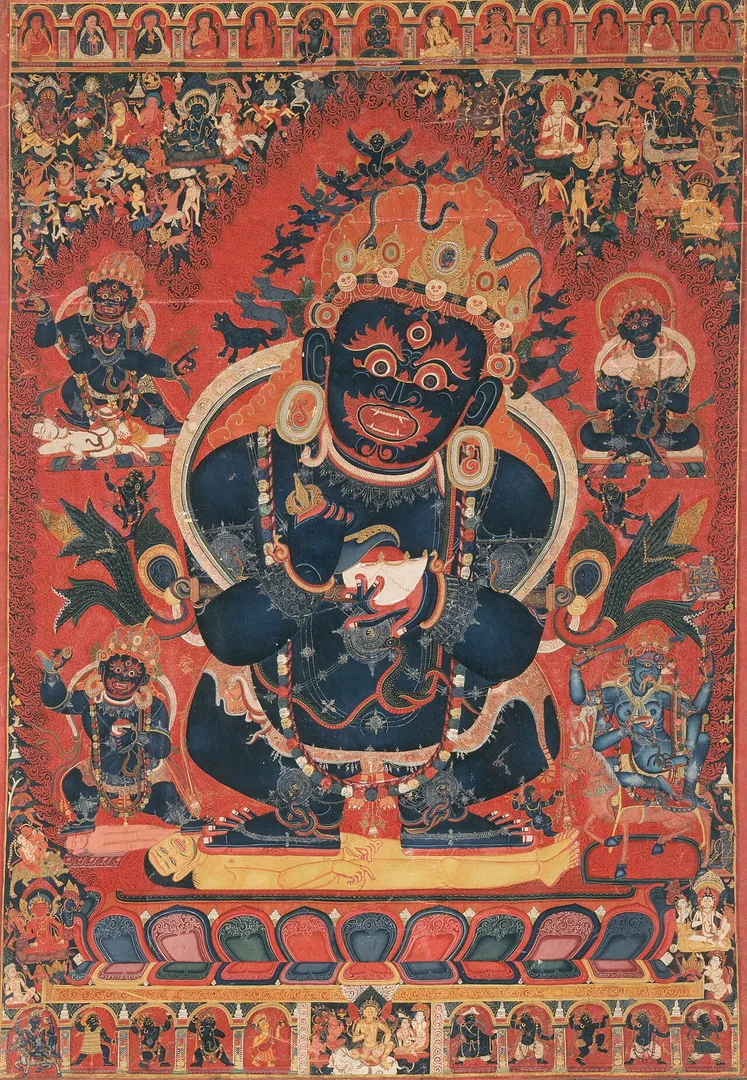
Mahākāla (Gönpo · Wisdom Dharma Protector)
Known simply in Tibetan as Gönpo (“The Protector”), Mahākāla (“Great Black One” / “Beyond Time”) manifests Avalokiteśvara’s compassion in fierce midnight-blue form—shattering self-deception and guarding ethical integrity across Kagyu, Sakya, and Gelug monasteries.
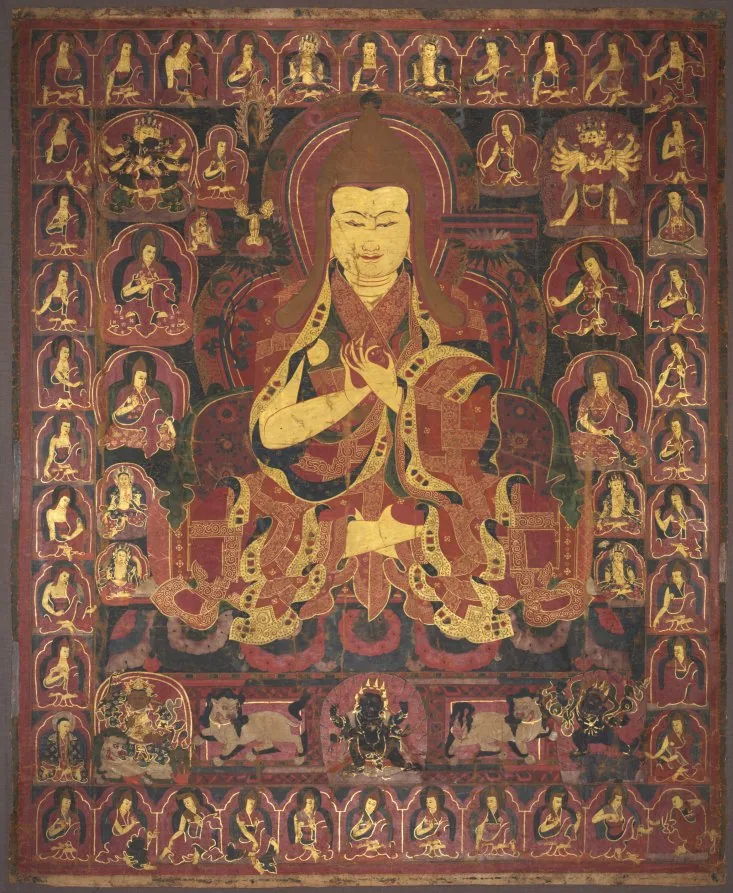
Je Tsongkhapa (Lobsang Drakpa · 1357–1419)
Born in Amdo Tsongkha (modern Qinghai Kumbum) in 1357, Je Rinpoche studied across Sakya, Kagyu, Jonang, and Kadampa masters before founding Ganden Monastery—uniting rigorous Nālandā logic, pure Vinaya discipline, and Tantric contemplation into one seamless graduated path (Lamrim).
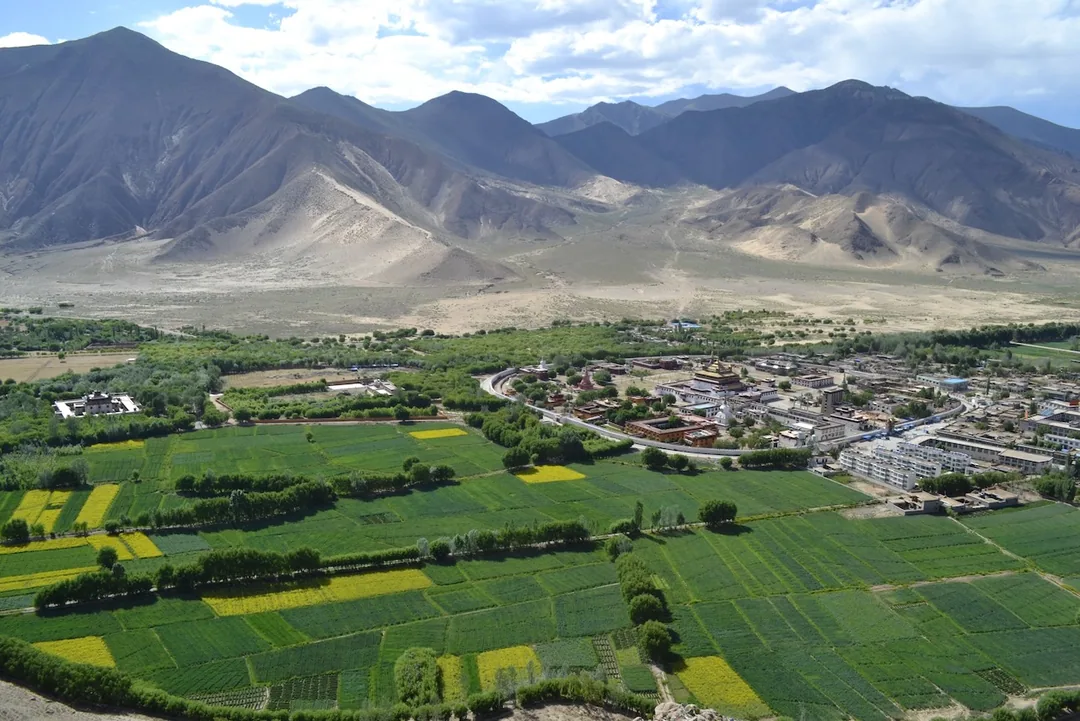
Jokhang Temple & Samye Monastery
Built in the 7th and 8th centuries respectively, Lhasa’s Jokhang anchors Tibetan devotional pilgrimage around the Jowo Śākyamuni, while Samye in Lhoka realizes an entire three-dimensional mandala in stone, timber, and earth.
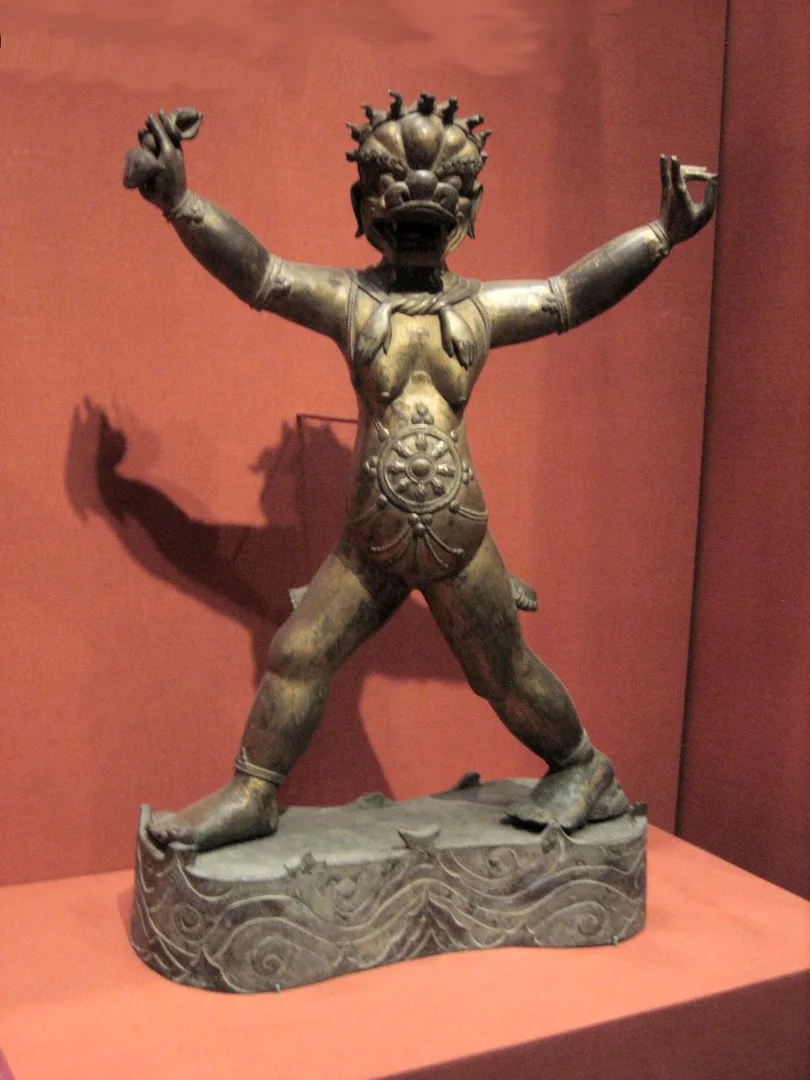
Siṃhamukhā (Senge Dongma · Lion-Faced Wisdom Ḍākinī)
Dancing on one foot in a halo of wisdom fire with a snow-white roaring lioness face atop a sapphire-blue body, Siṃhamukhā is no worldly spirit but an enlightened dharmakāya wisdom-ḍākinī—celebrated equally in Nyingma terma, Sakya’s Thirteen Golden Dharmas, and Gelug monasteries for dissolving psychic negativity and curses back into emptiness.