Side-by-Side Iconographic Disambiguation · Toh 438 & Toh 3655

Green Tārā vs. White Tārā: Posture, Seven Wisdom Eyes & Mantras Compared

Both are beloved forms of Ārya Tārā (“The Liberator”), yet Tibetan sculptors and thangka masters encode two distinct spiritual functions into their legs, eyes, and mantras: swift emerald action stepping into the world versus serene moon-white longevity.

ཏཱཾ
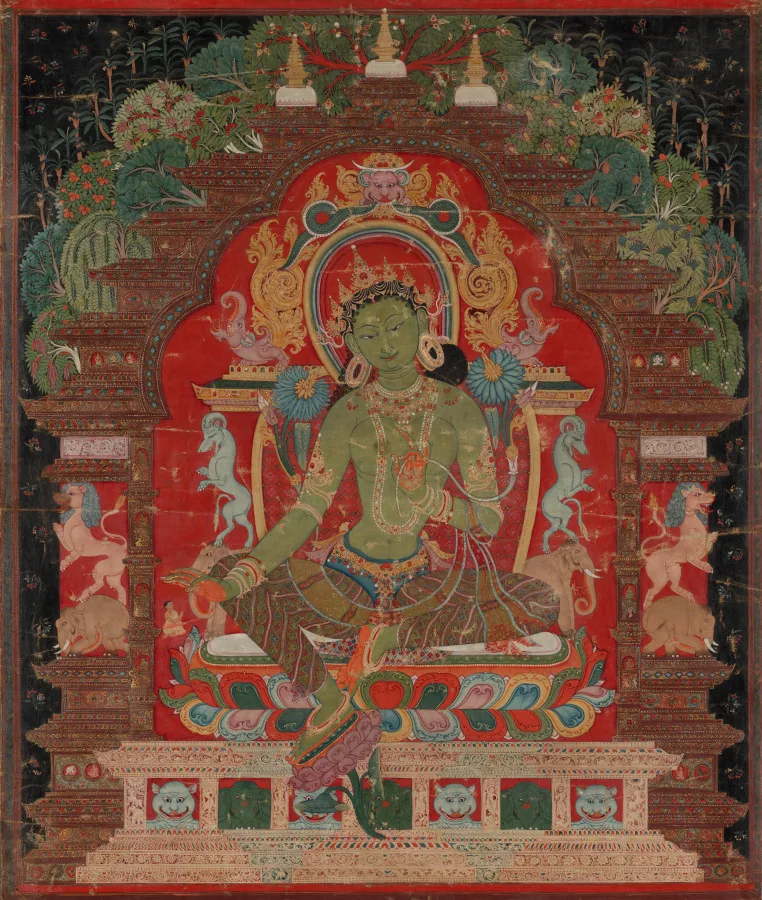
Green Tārā (Śyāmatārā / Sgrol-ljang) — The Cleveland Museum of Art (1970.156)
Swift Liberator · Sgrol-ljang
སྒྲོལ་ལྗང༌།

Green Tārā (Sgrol-ljang)

Emerald-green female bodhisattva with her right leg stepping forward onto a small lotus, holding blue night-lotuses (utpala) at both shoulders.

c. 1260s · Central Tibet (Kadampa–Nepali style) · The Cleveland Museum of Art (1970.156) (CC0 1.0)

Open Full Iconography Guide →
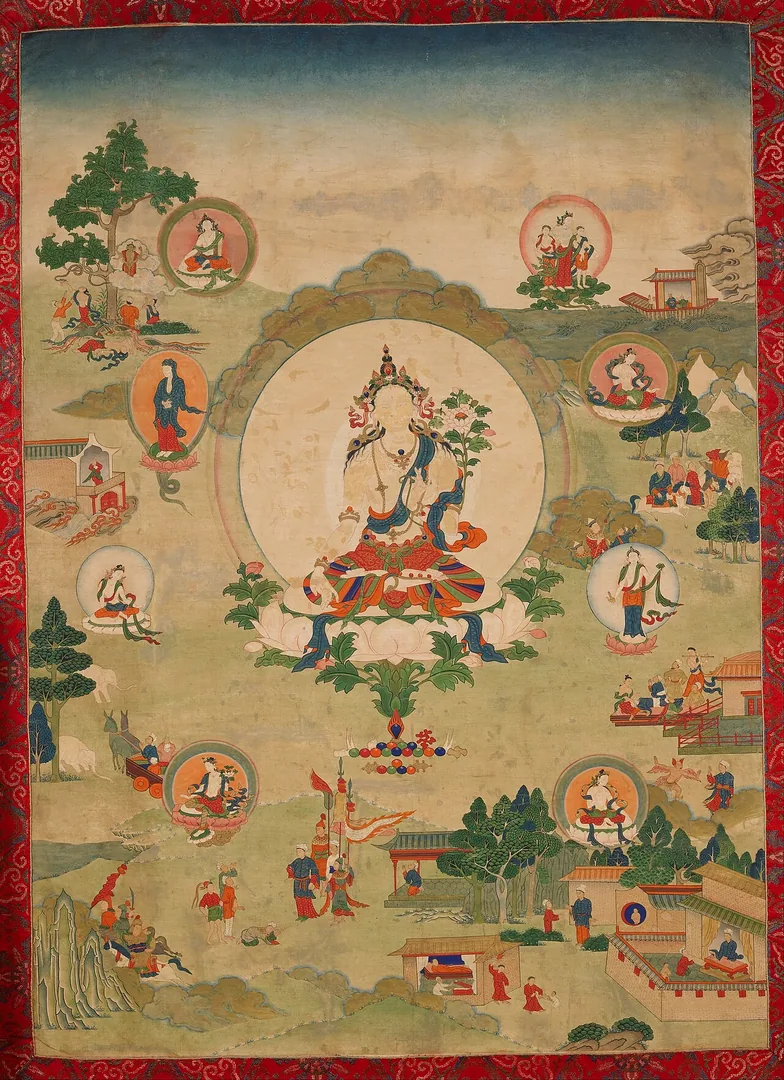
White Tārā of the Seven Eyes (Saptalocanā) — Rubin Museum of Art · Google Art Project
Seven-Eyed Longevity · Sgrol-dkar
སྒྲོལ་དཀར།

White Tārā (Sgrol-dkar)

Snow-white female deity in full cross-legged lotus posture (unlike Green Tārā’s extended leg) with tiny eyes painted on her forehead, palms, and soles.

18th century · Eastern Tibet (Khams) · Rubin Museum of Art · Google Art Project (Public Domain)

Open Full Iconography Guide →

1 · Eight-Point Iconographic & Liturgical Comparison

Notice what both forms share first: each holds her right hand at the knee in supreme generosity (*varadamudrā*, welcoming beings to refuge) and her left hand at the heart in the Three Jewels refuge gesture (*vitarka/kartarī*) holding a lotus stem. Everything else—color, right leg, eye count, and mantra extension—diverges cleanly:

Green Tārā vs. White Tārā: Eight Canonical Iconographic & Liturgical Differences
DimensionGreen Tārā (སྒྲོལ་ལྗང་། · Śyāmatārā)White Tārā (སྒྲོལ་དཀར། · Sitatārā)
3-Second Visual CueEmerald green, right leg stepping out onto a lotus footstoolSnow-moon white, full cross-legged vajra lotus + 7 eyes
Leg PostureArdhaparyaṅkāsana / Lalitāsana: left leg folded in contemplative stillness, right foot extended in swift actionVajraparyaṅkāsana: both legs locked in immovable diamond meditation, anchoring unshakable vitality
Eyes (སྤྱན།)Two compassionate eyes gazing warmly at beings in distressSeven Wisdom Eyes (ཡེ་ཤེས་ཀྱི་སྤྱན་བདུན།): 2 facial eyes + 1 forehead eye + 2 palm eyes + 2 sole eyes
Lotus AttributeBlue night-blooming utpala lotus (ཨུཏྤལ།) at left shoulder (often 3 buds: past, present, future)Full-blooming white sixteen-petalled padma lotus at left shoulder
Buddha FamilyKarma Family (Northern All-Accomplishing Wisdom of Amoghasiddhi, emerald wind energy)Padma / Tathāgata Longevity Stream (paired with Amitāyus & Uṣṇīṣavijayā in the Long-Life Triad, ཚེ་ལྷ་རྣམ་གསུམ།)
Primary Enlightened ActivitySwift protection from the Eight & Sixteen Great Fears (outer danger & inner mental poisons), fearless action, clearing obstaclesHealing illness, restoring depleted life-force (tshe & bla), nurturing longevity, merit, and meditative wisdom
Open Canonical Mantra10-syllable root mantra: ཨོཾ་ཏཱ་རེ་ཏུཏྟཱ་རེ་ཏུ་རེ་སྭཱ་ཧཱ། (Oṃ Tāre Tuttāre Ture Svāhā)Wish-Fulfilling Wheel longevity mantra: ཨོཾ་ཏཱ་རེ་ཏུཏྟཱ་རེ་ཏུ་རེ་མ་མ་ཨཱ་ཡུཿ་པུཎྱ་ཛྙཱ་ན་པུཥྚིཾ་ཀུ་རུ་སྭཱ་ཧཱ། (Oṃ Tāre Tuttāre Ture Mama Āyuḥ-puṇya-jñāna-puṣṭiṃ Kuru Svāhā)
Primary Kangyur / Tengyur TextsHomage to the Twenty-One Tārās (Toh 438), Tārā Who Protects from the Eight Fears (Toh 726)Atiśa Dīpaṃkara’s White Tārā Wish-Fulfilling Wheel (Cintāmaṇicakra, Toh 3655) & Vāgīśvarakīrti’s Cheating Death

2 · Root 10-Syllable Mantra vs. Extended Longevity Mantra

Green Tārā’s open 10-syllable mantra—ཨོཾ་ཏཱ་རེ་ཏུཏྟཱ་རེ་ཏུ་རེ་སྭཱ་ཧཱ། (Oṃ tāre tuttāre ture svāhā)—invokes Tārā across all three levels of liberation: Tāre liberates from mundane dangers and lower-realm suffering, Tuttāre liberates from the eight inner fears of delusion, and Ture liberates from subtle dualistic obscurations into full awakening. White Tārā’s Cintāmaṇicakra liturgy keeps that exact 10-syllable frame and inserts the Sanskrit longevity supplication Mama Āyuḥ-puṇya-jñāna-puṣṭiṃ Kuru (“For me/beings, cause life-span, merit, and wisdom to flourish!”) right before Svāhā. For authentic liturgical chanting recordings, consult open monastic archives such as Garchen Buddhist Institute.

Common Questions & Clarifications

Are Green Tārā and White Tārā two separate goddesses or one enlightened wisdom?

In canonical Mahāyāna and Vajrayāna view, they are two primary expressions of the single Mother of All Buddhas, Ārya Tārā (Jetsün Drolma). Tibetan tradition recounts that when Avalokiteśvara wept over the vastness of samsaric suffering, Green Tārā sprang from the tear of his right eye (dynamic daytime activity that rushes to rescue beings) and White Tārā arose from the tear of his left eye (luminous moonlit serenity that heals and sustains life).

How can I tell an unpainted bronze statue of Green Tārā apart from White Tārā when there is no color?

Ignore pigment completely and check two unmistakable sculptural clues: (1) Look at the right leg—Green Tārā steps her right foot forward onto a small lotus blossom, whereas White Tārā locks both legs in full cross-legged vajra lotus; (2) Look closely at the forehead, palms, and soles—White Tārā of the Wish-Fulfilling Wheel bears incised wisdom eyes on her forehead, open right palm, left palm, and both upturned soles (seven eyes in total).

Why are Green Tārā and White Tārā historically linked to Nepalese Princess Bhṛkuṭī and Tang Princess Wencheng?

In 7th-century Tibetan historical narratives (such as the Mani Kabum and Mirror Illuminating the Royal Genealogies), Dharma King Songtsen Gampo is remembered as an emanation of Avalokiteśvara, while his two Buddhist consorts who brought sacred Śākyamuni statues from Nepal and Chang’an—Princess Bhṛkuṭī and Princess Wencheng—were revered in popular cultural memory as human emanations of Green Tārā and White Tārā respectively.

When do practitioners recite Green Tārā’s 10-syllable mantra versus White Tārā’s longevity mantra?

Green Tārā’s 10-syllable root mantra (Oṃ Tāre Tuttāre Ture Svāhā) is recited across all Tibetan schools when facing acute fear, travel hazards, decisive life transitions, or inner anxiety—and serves as the shared foundation of the Twenty-One Tārās. White Tārā’s extended Cintāmaṇicakra mantra adds the Sanskrit prayer Mama Āyuḥ-puṇya-jñāna-puṣṭiṃ Kuru (“increase my longevity, merit, and wisdom!”) and is especially dedicated during recovery from illness or prayers for elders’ health and long life.

Primary Sources & Museum Records

Explore in the 3D Mandala & Interactive Studios

Spotlight Green Tārā & White Tārā inside the 36-Deity Lineage Graph and 3D Five-Buddha-Family Mandala:
Inspect syllable-by-syllable Tārā phonology & compare 8 more look-alike deity pairs: