ས་གནོན་ཕྱག་རྒྱ།
Earth-Witnessing Mudrā
Bhūmisparśa Mudrā · sa gnon phyag rgya
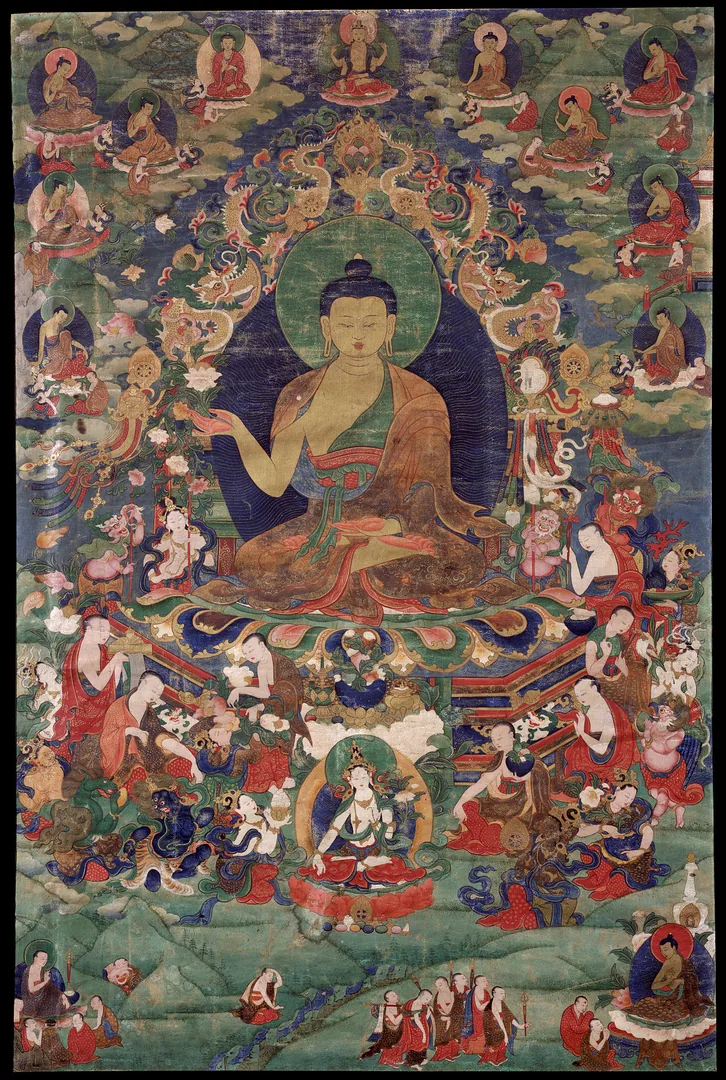
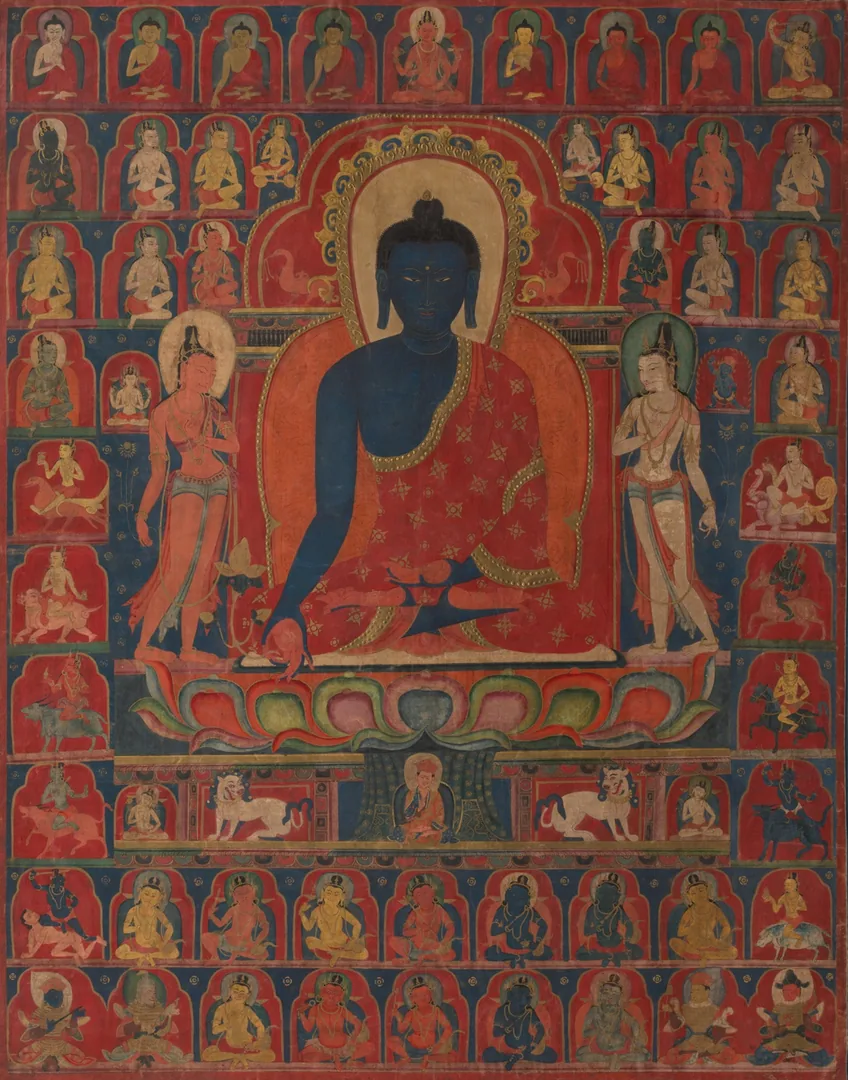
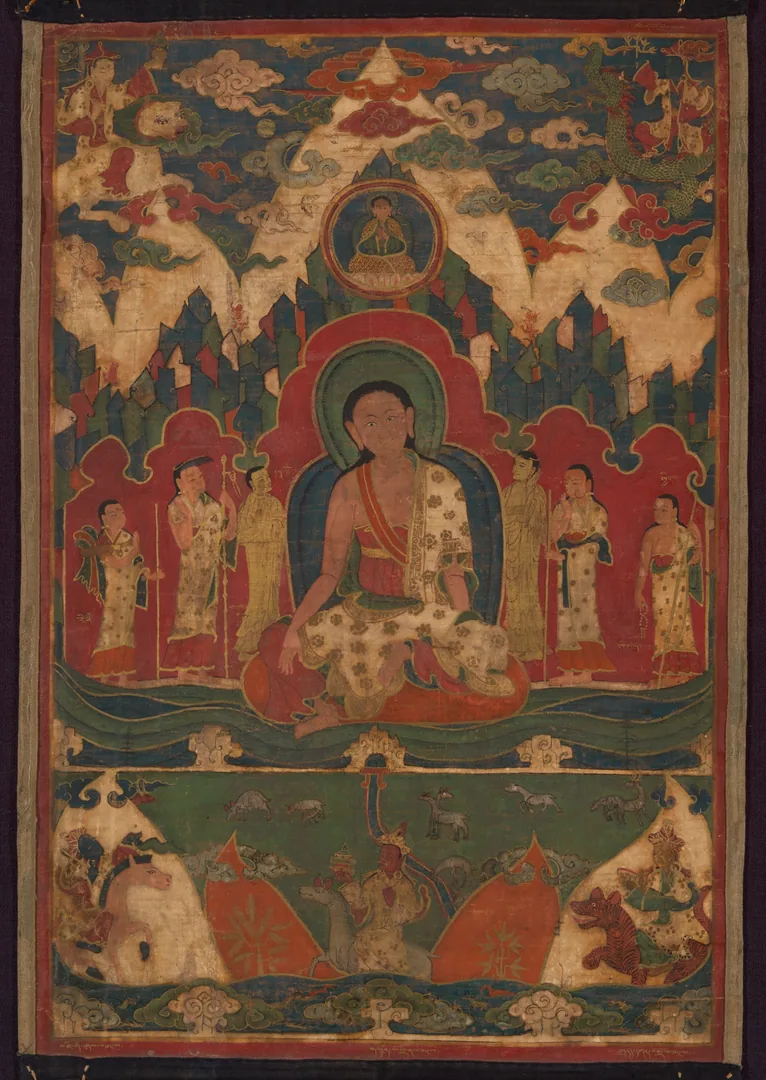
Right hand hangs straight down over the right knee, palm inward, middle fingertip touching the lotus cushion.
Key split: Unlike Varada (palm facing outward toward the viewer), Bhūmisparśa always turns the palm inward so you see the back of the hand.
ཆོས་འཁོར་ཕྱག་རྒྱ།
Turning the Wheel of Dharma
Dharmacakra Mudrā · chos ’khor phyag rgya
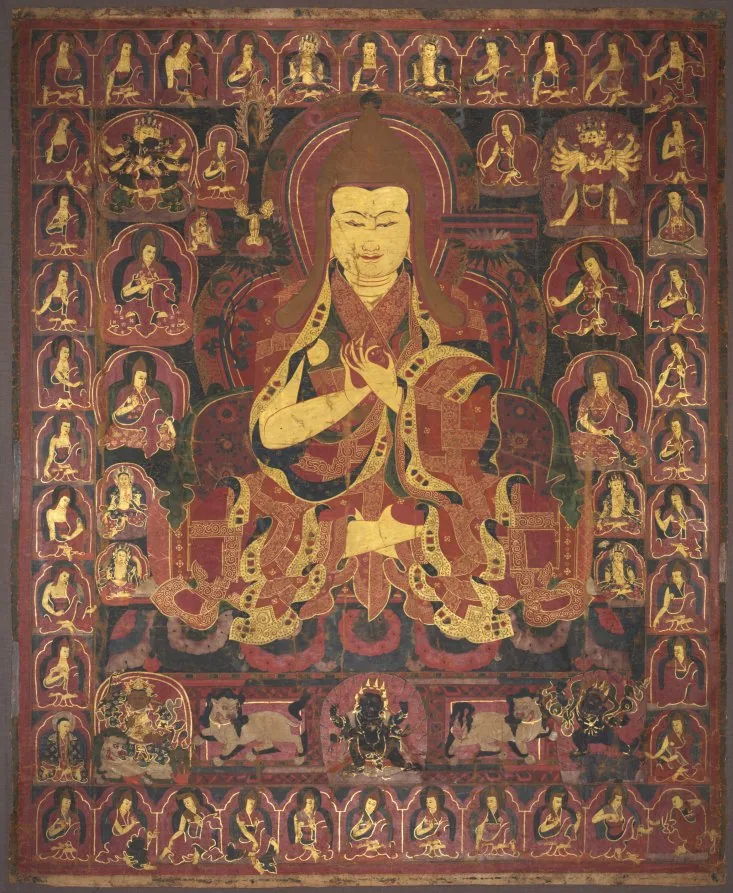
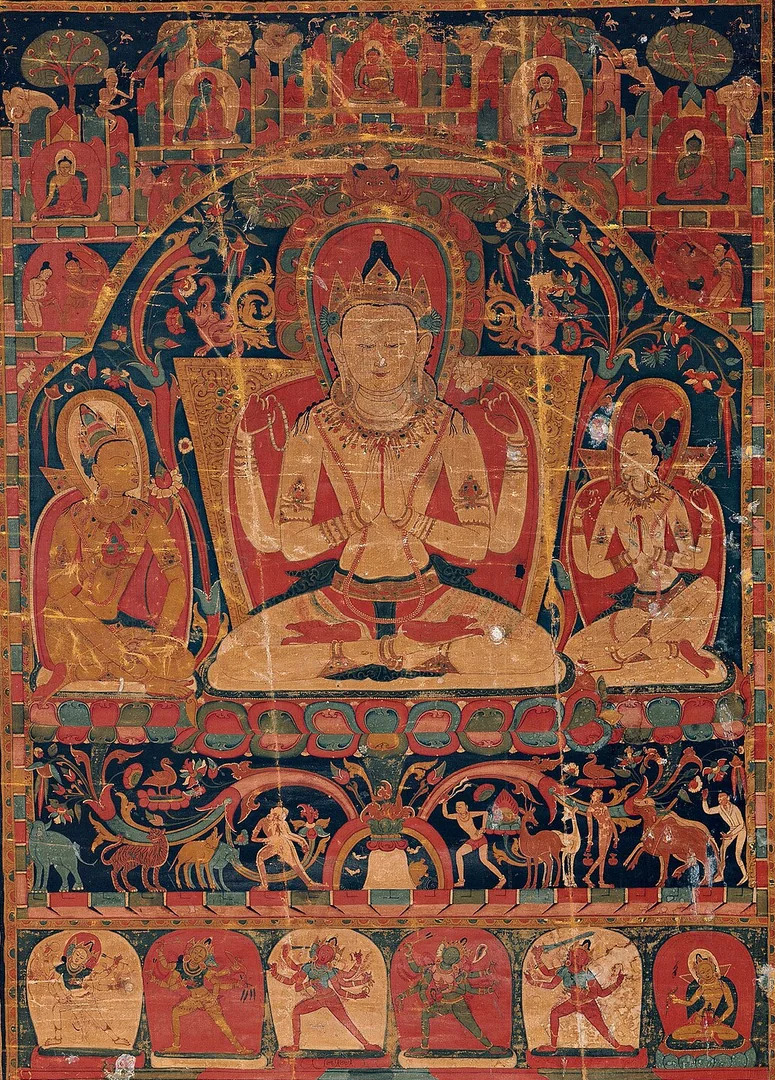
Both hands raised at the heart; thumb and index finger of each hand form touching circles, right palm out and left palm in.
Key split: When held by a monastic scholar wearing a pointed pandita hat (with sword and lotus at the shoulders), it identifies Je Tsongkhapa rather than Maitreya.
མཉམ་བཞག་ཕྱག་རྒྱ།
Meditative Equipoise Mudrā
Dhyāna / Samādhi Mudrā · mnyam bzhag phyag rgya
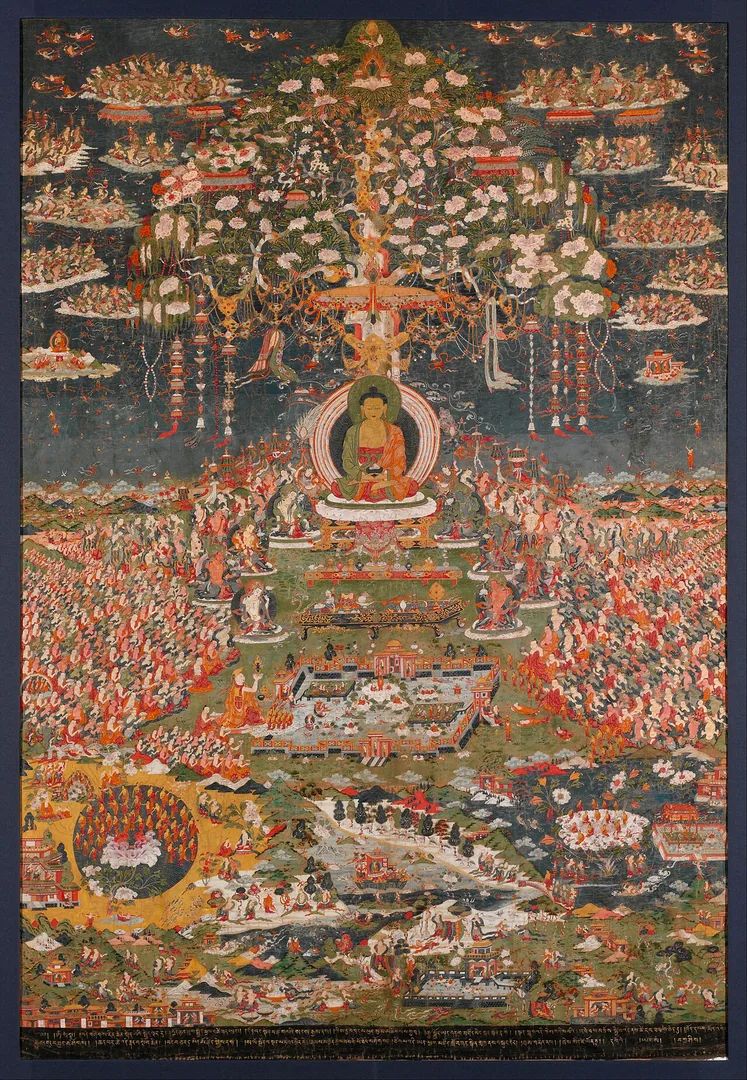
Both hands rest open, palms upward in the lap—right hand atop left—with thumb tips lightly touching to form a calm triangle.
Key split: Monastic robe + alms bowl in Dhyāna = Amitābha; silk crown + jeweled vase in Dhyāna = Amitāyus; naked deep-blue figure in Dhyāna = Ādi-Buddha Samantabhadra.
མཆོག་སྦྱིན་ཕྱག་རྒྱ།
Supreme Generosity Mudrā
Varada Mudrā · mchog sbyin phyag rgya
Right arm extends downward resting on the knee with the palm fully open facing outward toward the viewer.
Key split: If a small tear-shaped fruit rests in the outward-facing right palm of a deep-blue Buddha, it is Medicine Buddha rather than Akṣobhya.
མི་འཇིགས་ཕྱག་རྒྱ།
Fearlessness & Protection Mudrā
Abhaya Mudrā · mi ’jigs phyag rgya
Right hand raised to chest or shoulder height, fingers upright together, open palm facing straight outward.
Key split: All fingers stay straight and upright—unlike Vitarka, where the thumb and index/ring finger pinch together into a circle.
སྐྱབས་སྦྱིན་ཕྱག་རྒྱ།
Three Jewels & Exposition Mudrā
Vitarka / Tri-ratna Mudrā · skyabs sbyin phyag rgya
Hand raised at chest height, palm outward, thumb and ring (or index) finger touching in a ring while three fingers stand upright.
Key split: Green and White Tārā almost always pair right-hand Varada (downward) with left-hand Vitarka / Three Jewels at the heart.
ཐལ་མོ་སྦྱར་བ།
Heart-Lotus Reverence Mudrā
Añjali / Namaskāra Mudrā · thal mo sbyar ba
Both palms pressed gently together at the heart center with a slight hollow space inside like an unopened lotus bud.
Key split: In Tibetan practice, palms are never flattened dead-shut—leaving a subtle lotus hollow honors the luminous Buddha-nature (cintāmaṇi) within.
སྡིགས་མཛུབ་ཕྱག་རྒྱ།
Wrathful Threatening Finger
Tarjanī Mudrā · sdigs mdzub phyag rgya
Index finger points firmly upward or outward while the thumb presses down the middle and ring fingers; often holds a vajra lasso.
Key split: Almost always in the left hand at the chest while the right hand raises a vajra or flaming sword aloft.
རྡོ་རྗེ་ཧཱུྃ་མཛད་ཕྱག་རྒྱ།
Crossed-Wrist Vajra-Hūṃ Mudrā
Vajrahūṃkāra Mudrā · rdo rje hūṃ mdzad phyag rgya
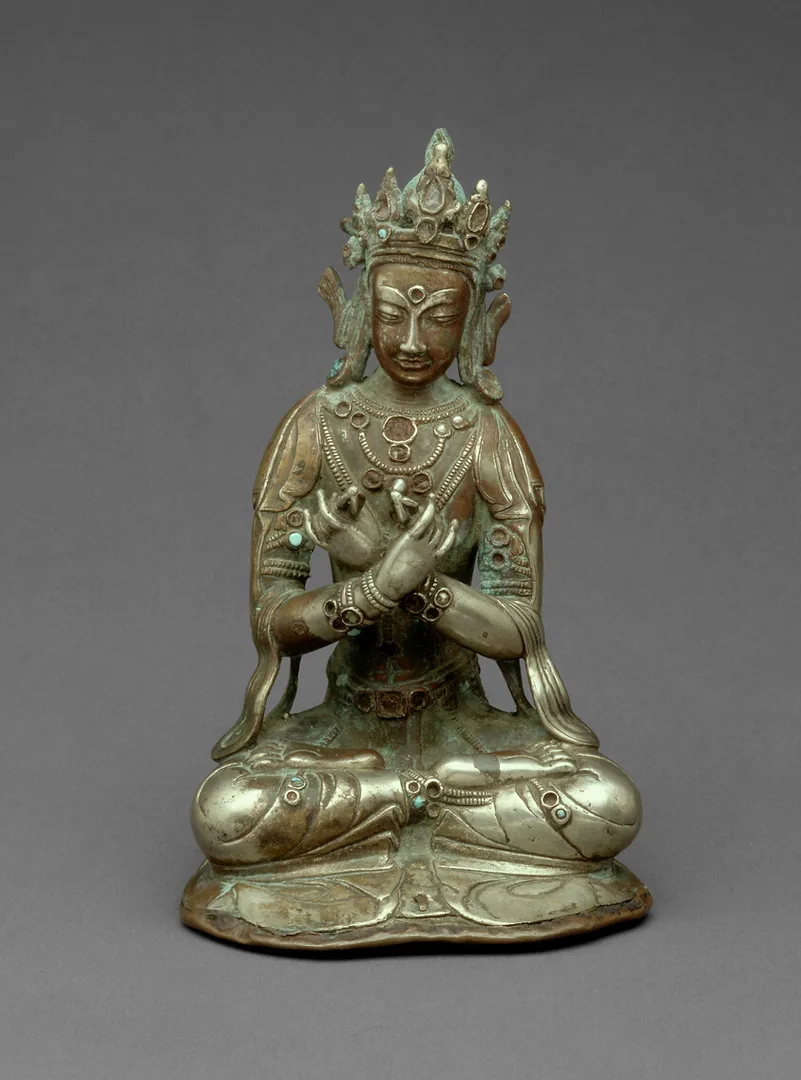
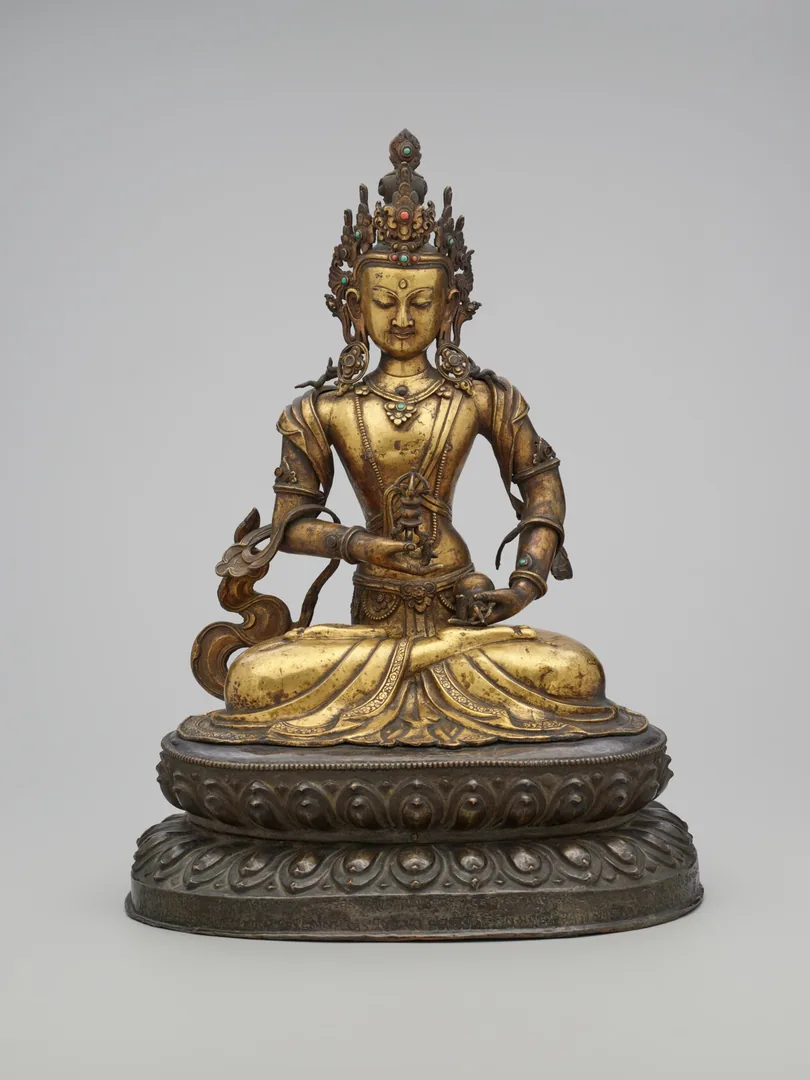
Both wrists cross in an X directly across the heart, right hand holding a five-pronged vajra and left hand holding a bell.
Key split: Single quickest split between Vajradhara and Vajrasattva: Vajradhara crosses both wrists at the heart; Vajrasattva keeps hands apart (vajra at chest, bell at hip).
བྱང་ཆུབ་མཆོག་གི་ཕྱག་རྒྱ།
Supreme Enlightenment Wisdom-Fist
Bodhyagrī / Jñāna-muṣṭi Mudrā · byang chub mchog gi phyag rgya
Left index finger points straight upward at the chest while the right fist wraps firmly around it.
Key split: Distinguished from Dharmacakra by the vertical fist clasping an upright finger rather than two open pinched finger circles.
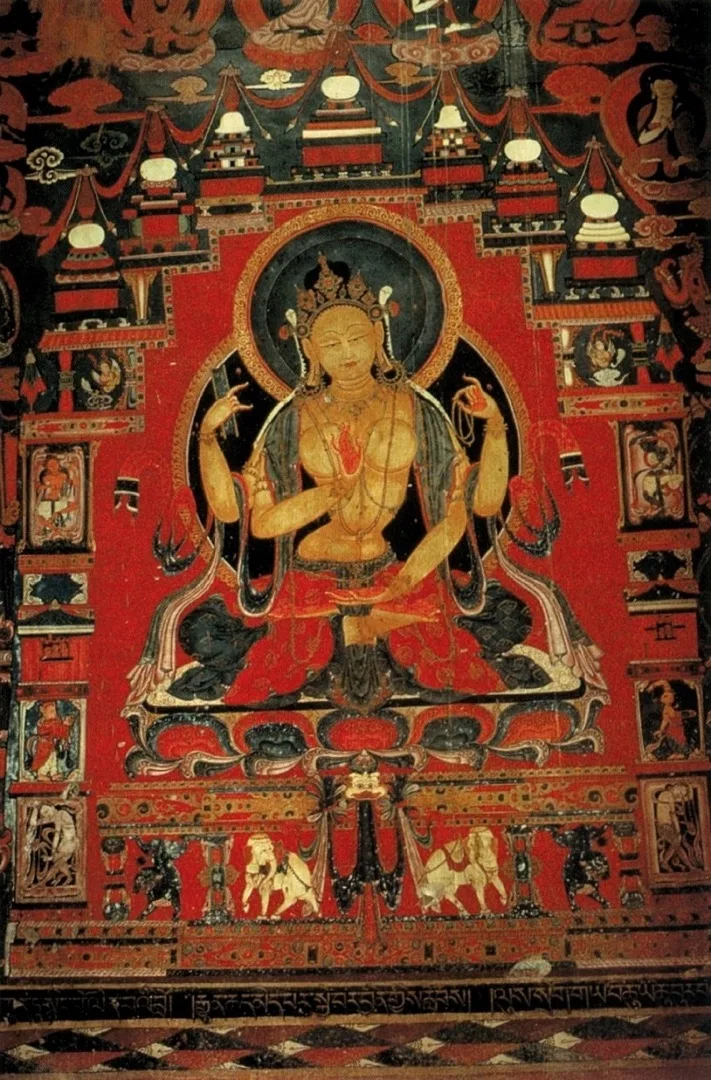
རྡོ་རྗེ་སྐྱིལ་ཀྲུང་།
Full Diamond Lotus Posture
Vajraparyaṅka / Padmāsana · rdo rje skyil krung
Both legs tightly interlocked with each foot resting upturned on the opposite thigh, soles visible from the front.
Key split: White Tārā always sits in full Vajraparyaṅka (both legs tucked in), whereas Green Tārā extends her right foot down onto a small lotus.
རོལ་པའི་སྟབས།
Posture of Royal Ease
Lalitāsana / Ardhaparyaṅka · rol pa’i stabs
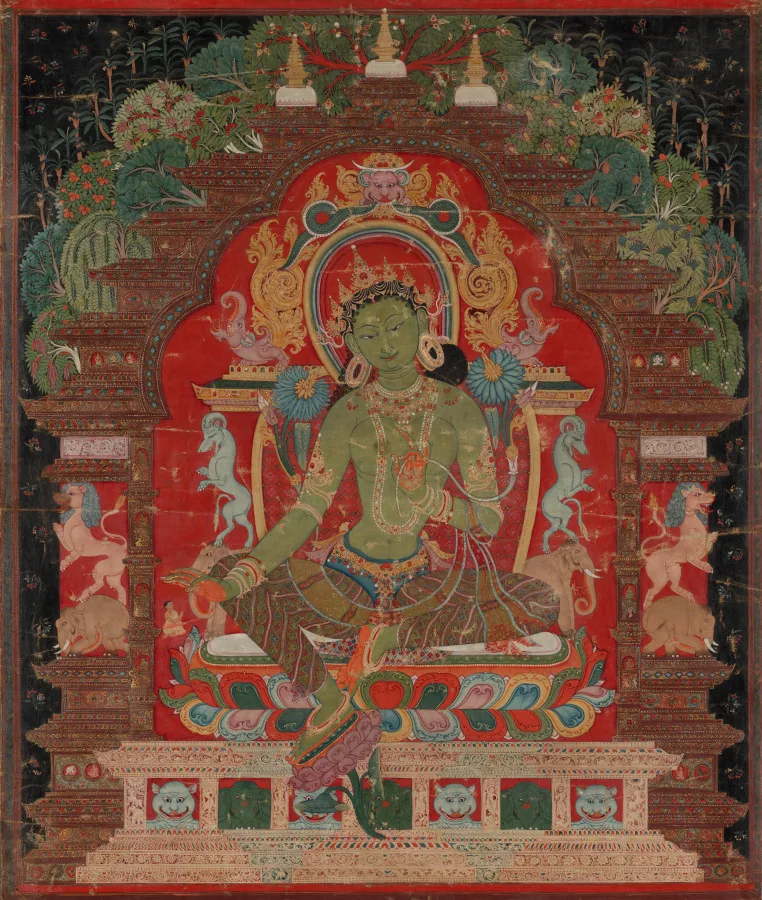
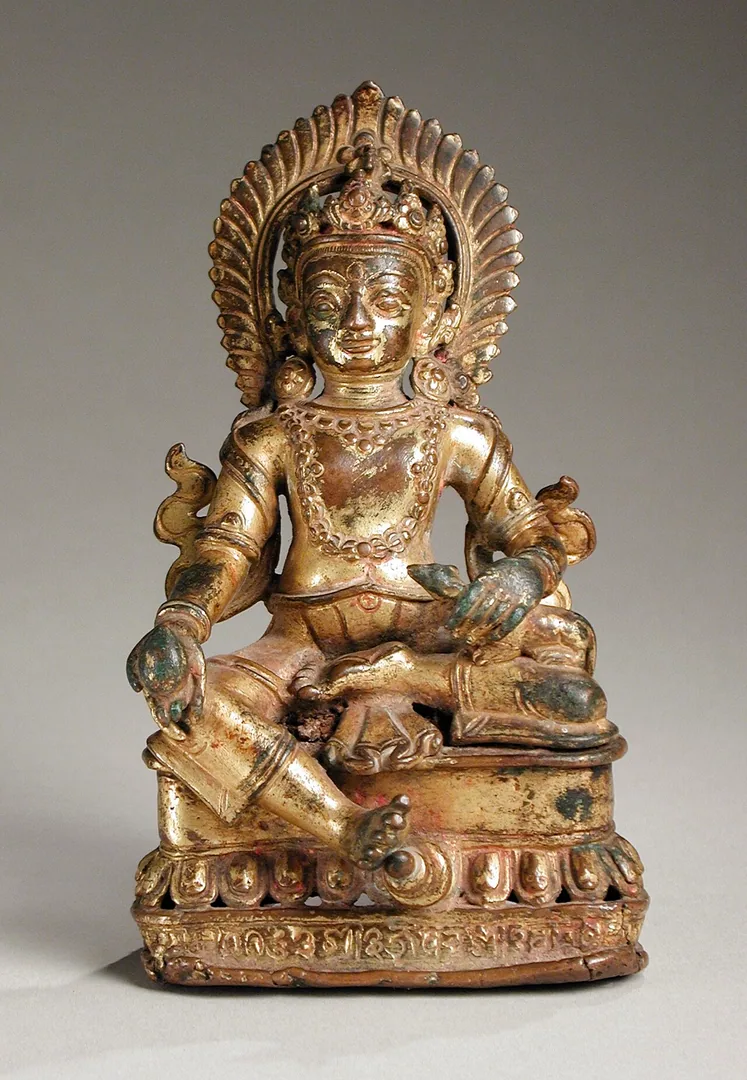
Left leg folded inward horizontally while the right leg steps gracefully forward off the throne onto a small secondary lotus.
Key split: Signature posture of Green Tārā (stepping on a lotus) and Yellow Jambhala (stepping on a white conch shell).
བཟང་པོའི་འདུག་སྟངས།
Auspicious Throne Posture
Bhadrāsana / Pralambapadāsana · bzang po’i ’dug stangs
Seated upright on a raised chair-throne with BOTH feet hanging straight down side by side onto a lotus footrest.
Key split: Whenever you see a peaceful crowned or monastic Tibetan Buddha seated with BOTH feet hanging down, it is almost certainly Maitreya.
སེམས་དཔའི་སྐྱིལ་ཀྲུང་།
Bodhisattva Half-Lotus Posture
Sattvaparyaṅka · sems dpa’i skyil krung
Legs crossed loosely rather than interlocked—right shin rests gently in front of the left with soles tucked rather than upturned.
Key split: Padmasambhava’s signature “Royal Posture” (rgyal po rol pa’i stabs) relaxes the front knee slightly further in kingly ease.
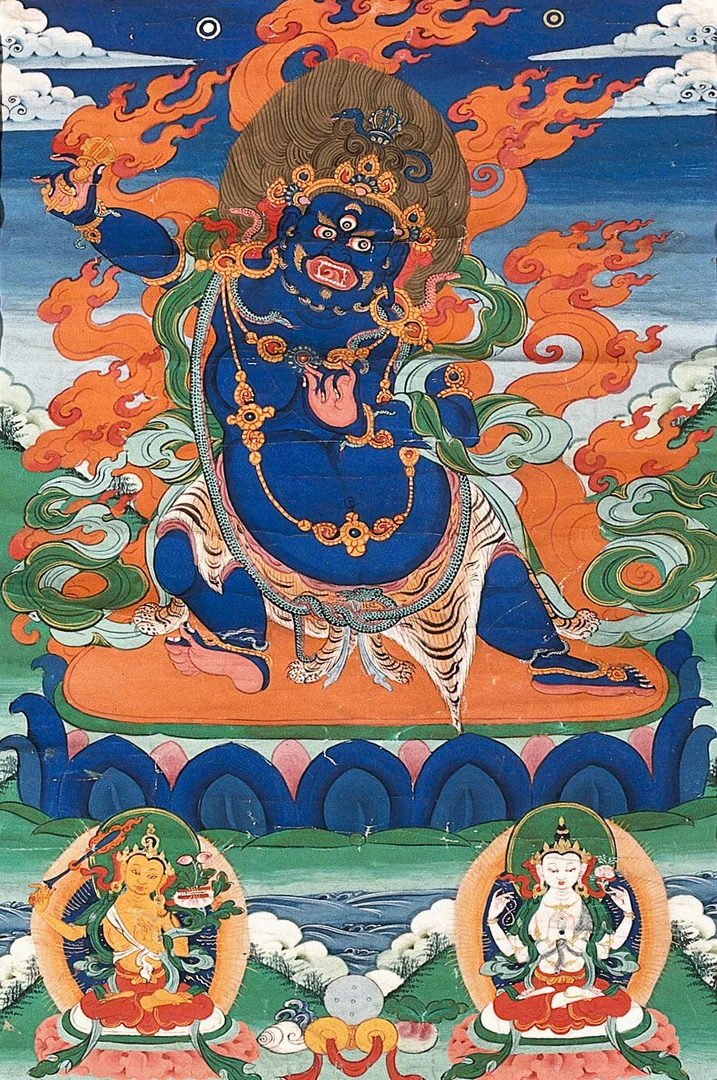
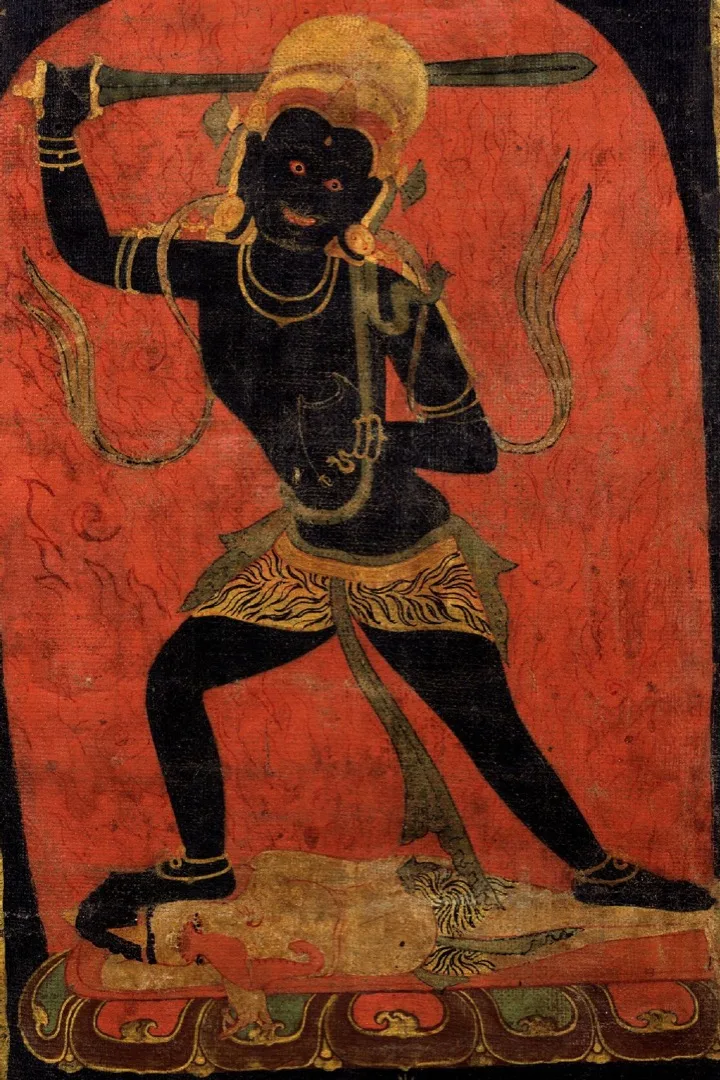
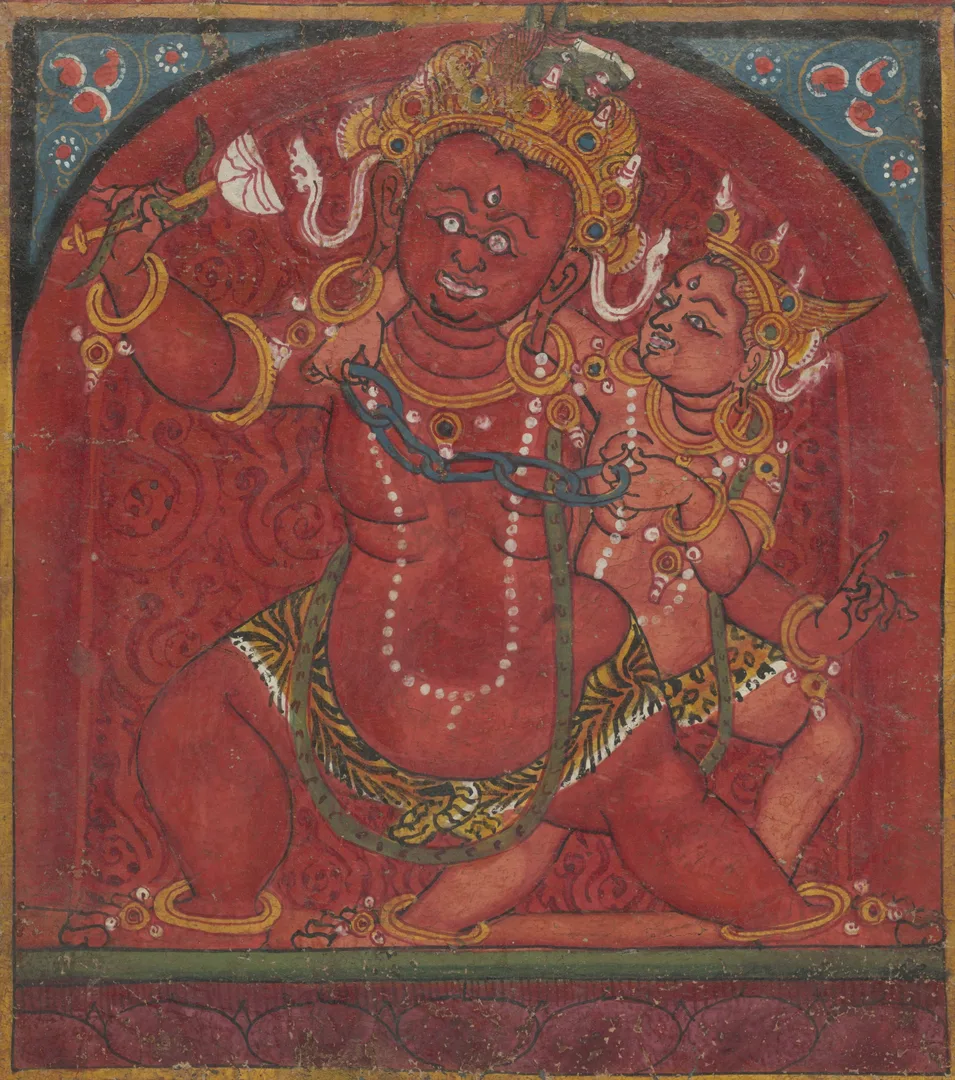
གཡས་བསྐུམ་གཡོན་བརྐྱང་།
Wrathful Warrior Lunge
Pratyālīḍha & Ālīḍha · g.yas bskum g.yon brkyang
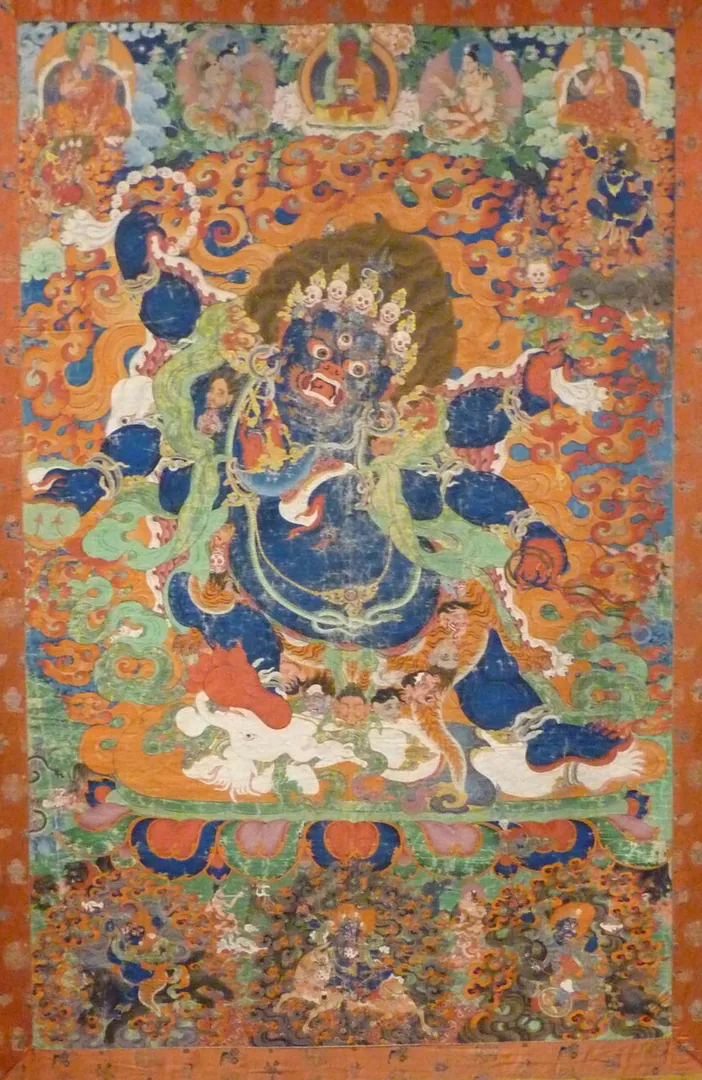
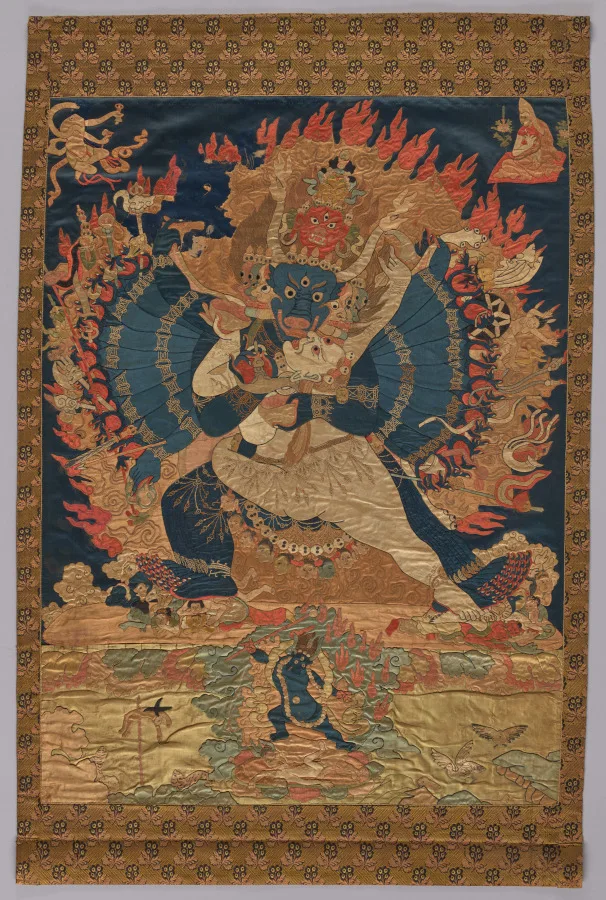
Wide, powerful martial lunge amidst blazing wisdom flames—one knee bent sharply, the opposite leg braced straight behind.
Key split: Pratyālīḍha bends the right knee and extends the left leg; Ālīḍha reverses it (left bent, right extended). Blue Acala kneels on one knee instead.
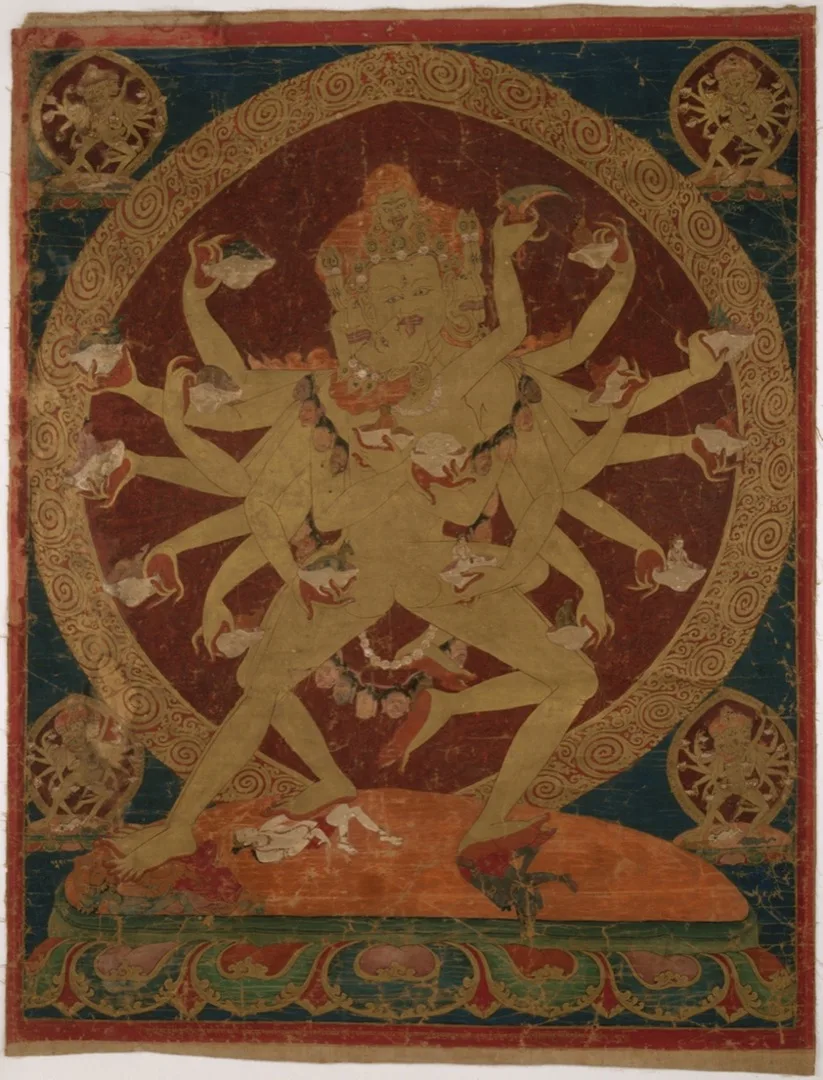
གར་སྟབས།
Ḍākinī Sky-Dancing Posture
Ardhaparyaṅka (Dancing) · gar stabs
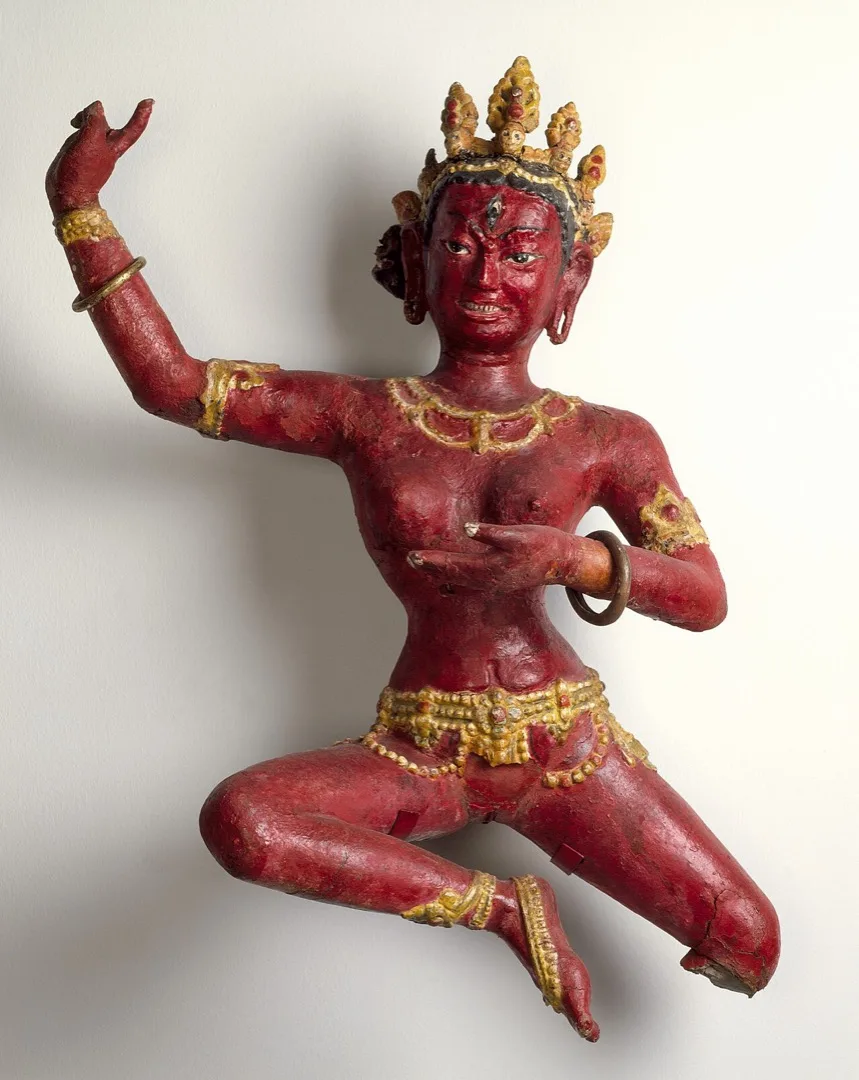
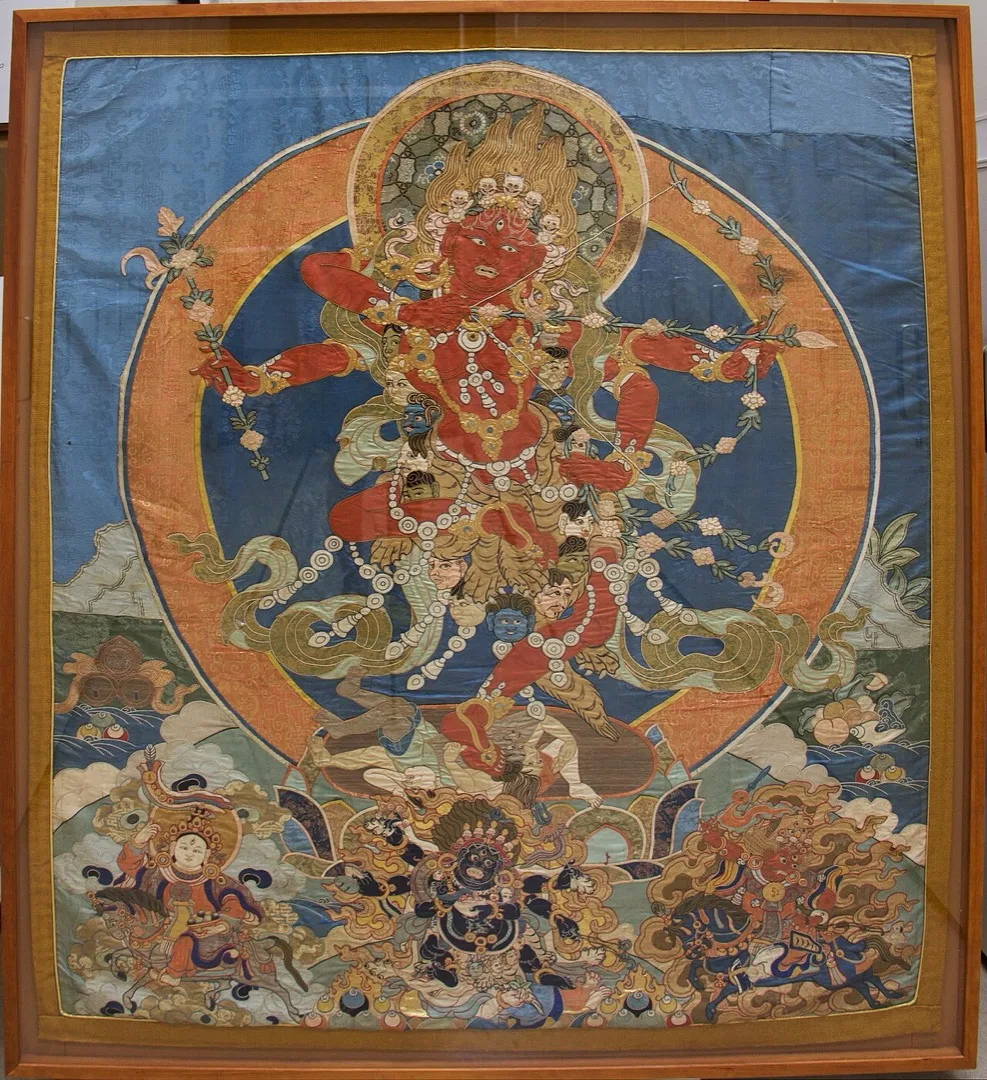
Balances dynamically on the toes of one leg while the other leg is lifted and tucked high against the thigh in ecstatic dance.
Key split: Never confused with peaceful seated figures: one lifted bare heel + flowing silk ribbons + blazing halo instantly signals a wisdom ḍākinī.