ལྷ་ཚོགས། Hall I · Lineage Genealogy, 3D Mandala & Museum Gallery
Pantheon & Deities: Sacred Lineage, 3D Mandala & Gallery
36 Buddhas, Tārās, Yidams, Masters & Protectors across Trikāya tiers, Five Buddha Families & CC0 museum plates · Reading Key ↓
No matching figure among the 36. Try “Tara”, “Manjushri”, or “Mahakala”.
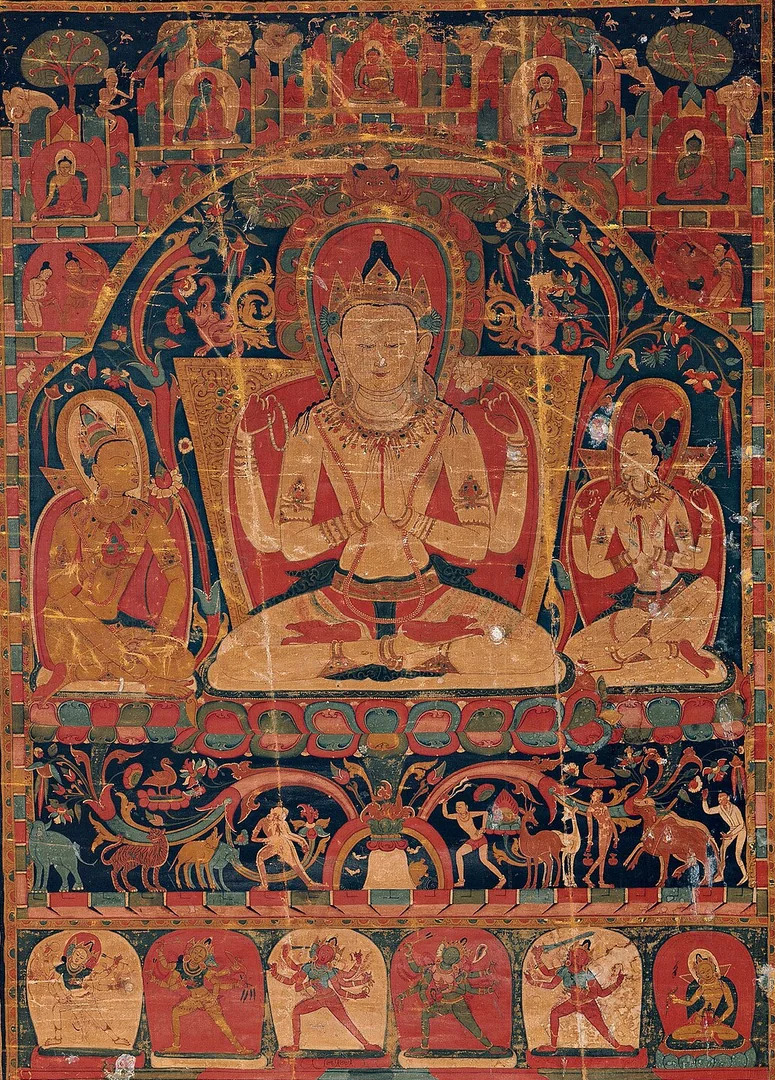
Avalokiteśvara (Chenrezig)
Known in Tibetan as Chenrezig (“One Who Gazes with Unwavering Eyes”), the four-armed white form embodies impartial compassion united with emptiness, associated with the Six-Syllable Mantra Oṃ Maṇi Padme Hūṃ.
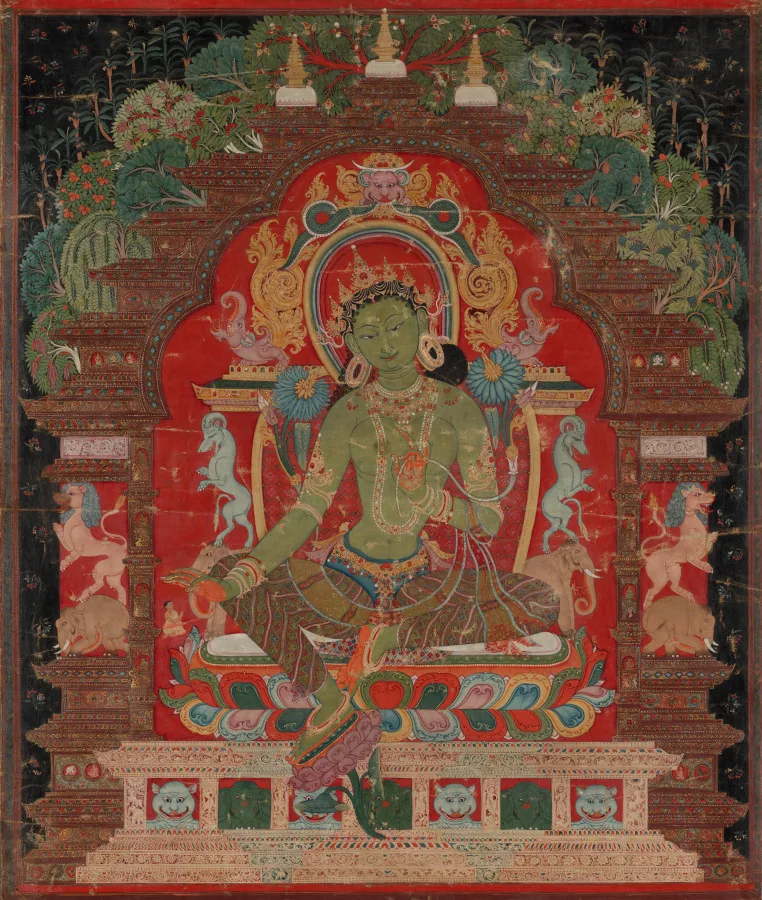
Green Tārā (Sgrol-ljang)
Seated in royal ease with her right foot already stepping off the lotus cushion, Green Tārā embodies enlightened compassion in immediate motion—green being the color of the Wind/Action Buddha Family.
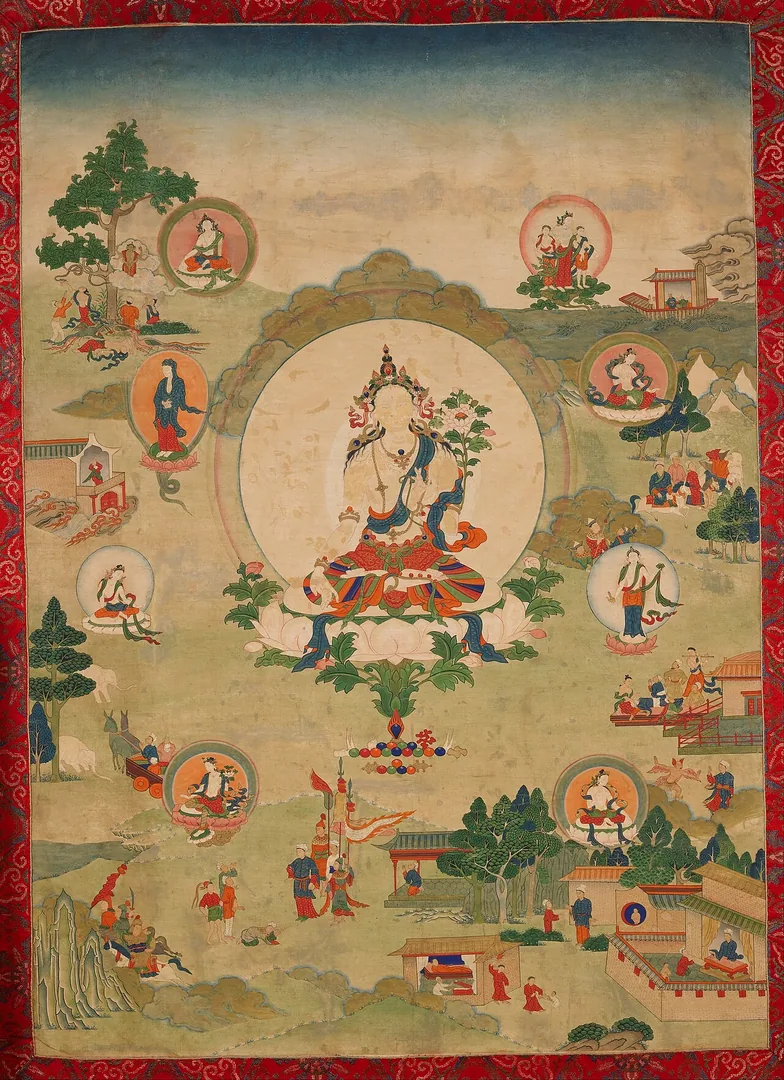
White Tārā (Sgrol-dkar)
Distinguished by seven eyes—on her forehead, palms, soles, and face—White Tārā sits in full vajra posture radiating autumn-moon serenity, forming one of Tibet’s Three Long-Life Deities.
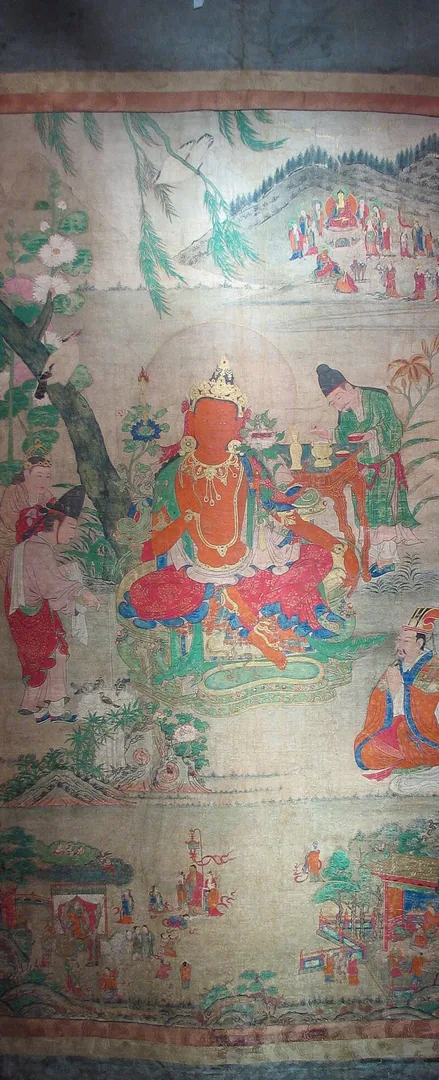
Mañjuśrī (Jampelyang)
Radiant saffron-gold in hue, Mañjuśrī raises a blazing sword overhead with his right hand to slice right through conceptual confusion, while holding the Prajñāpāramitā Sūtra on a lotus at his heart.
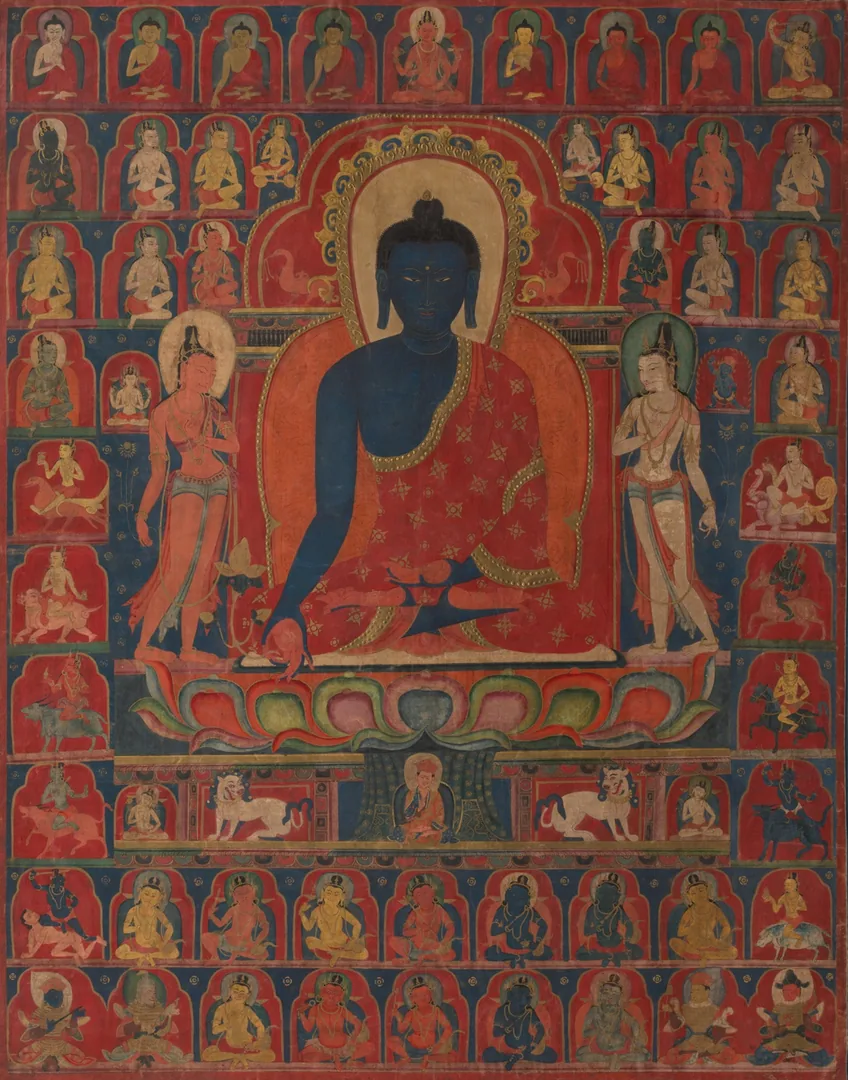
Medicine Buddha (Bhaiṣajyaguru · Sangye Menla)
Radiating deep lapis-lazuli blue, Sangye Menla wears monastic robes, holding an alms bowl of healing nectar in his left hand and a stem of golden myrobalan (arura) in his outstretched right hand.
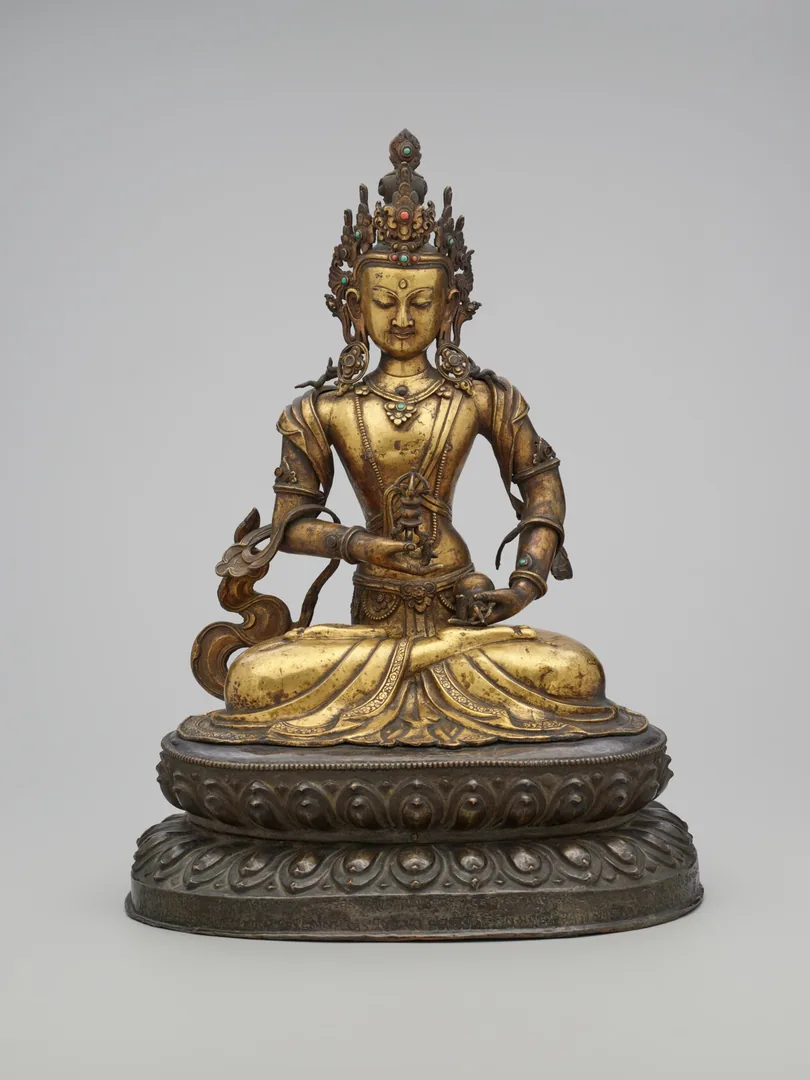
Vajrasattva (Dorje Sempa)
Radiant crystal-white in sambhogakāya ornaments, holding a five-pronged vajra at his heart and a silver bell at his hip, Vajrasattva embodies the indestructible purity underlying transient human mistakes.
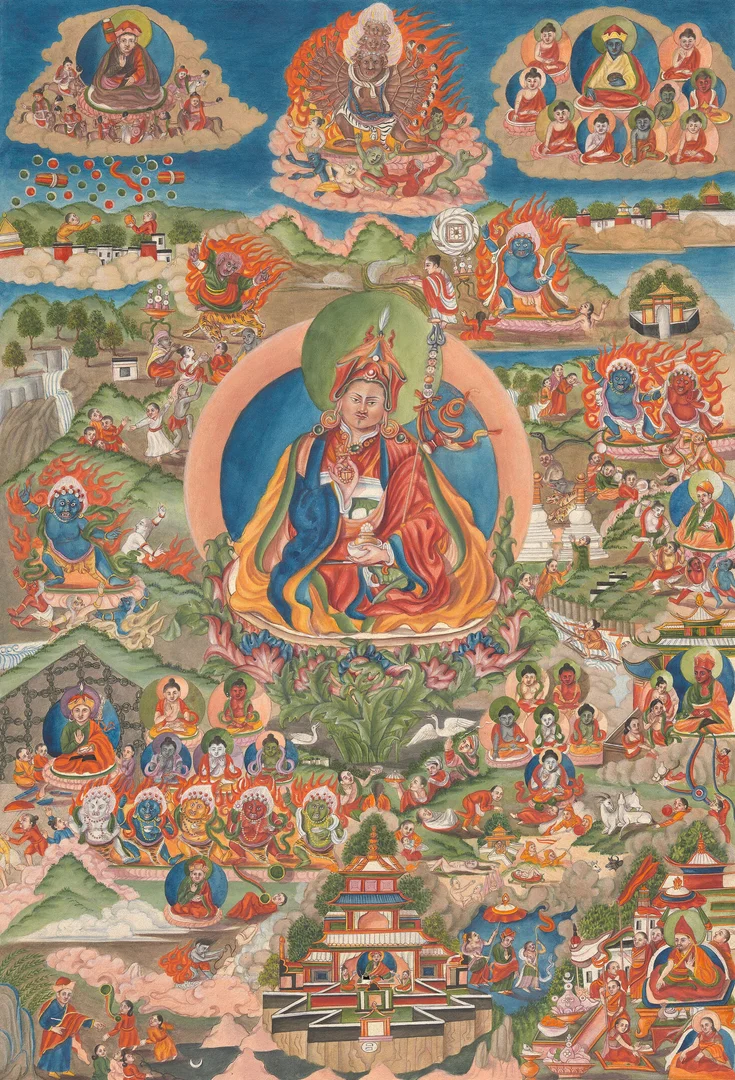
Padmasambhava (Guru Rinpoche)
Invited from Oddiyāna and Nālandā to Tibet by King Trisong Detsen in the 8th century, Padmasambhava (“Lotus-Born”) consecrated Samye Monastery and harmonized Himalayan indigenous spirits with Buddhist Dharma.
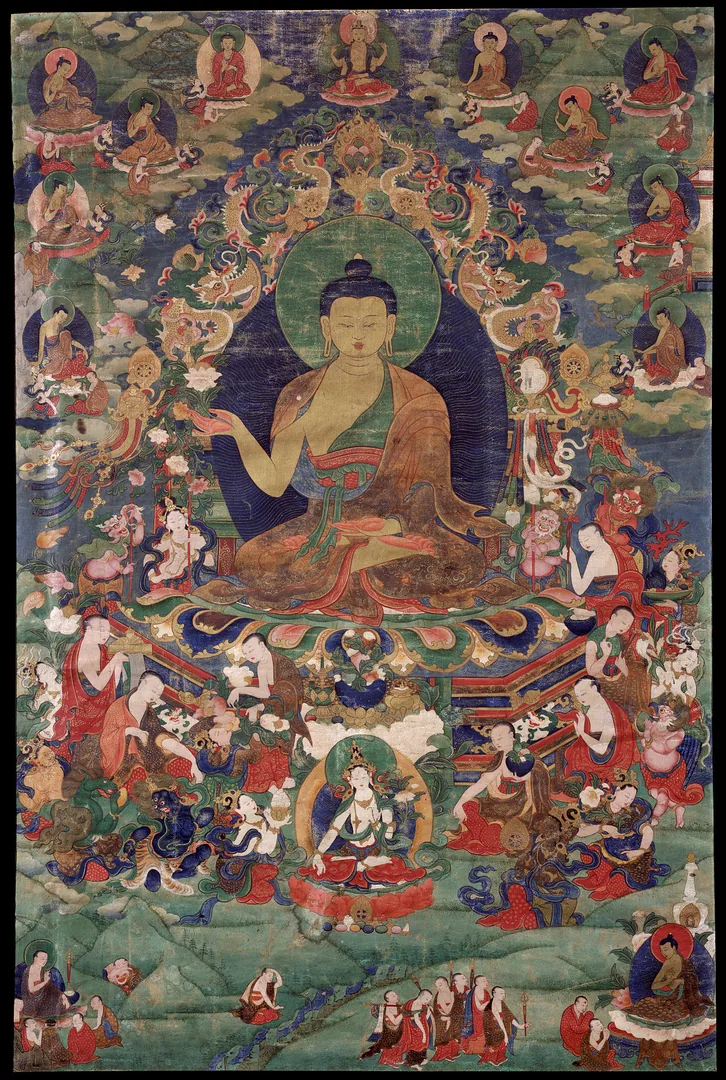
Śākyamuni Buddha (Shakya Thubpa)
Known in Tibetan as Shakya Thubpa (“Mighty Sage of the Śākyas”), the historical Buddha sits in unadorned monastic robes, touching the earth with his right fingertips to witness impartial awakening while cradling an iron alms bowl in his lap.
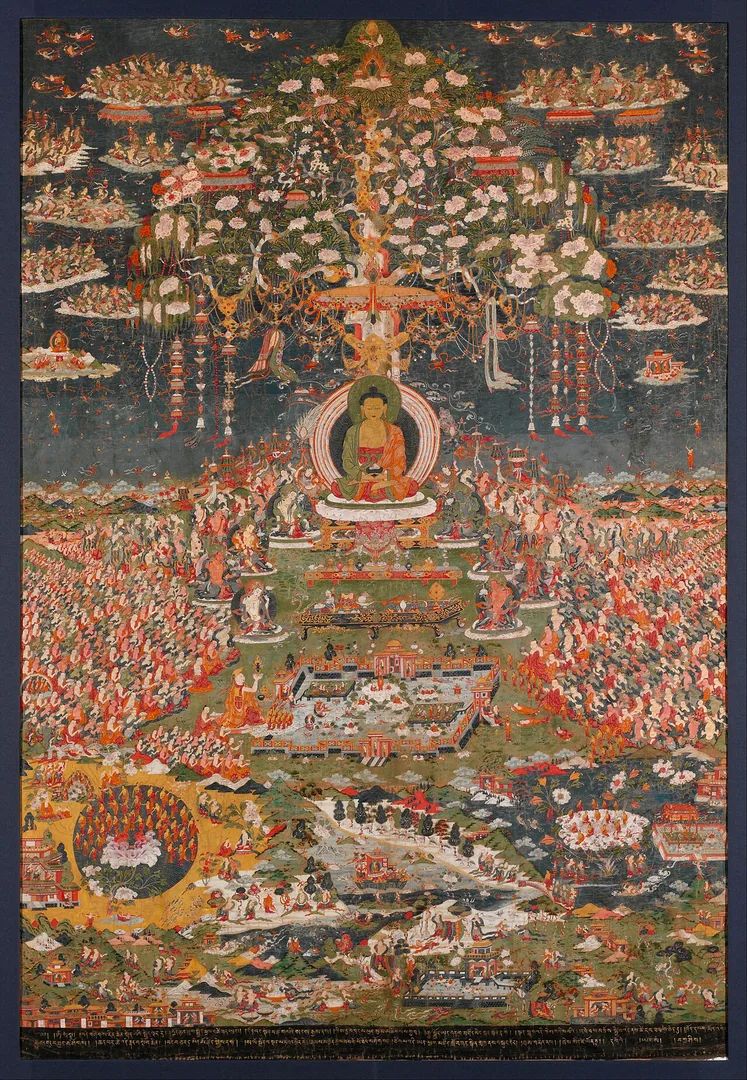
Amitābha (Öpakmé · Buddha of Infinite Light)
Radiating warm sunset-ruby red in the West of the Tibetan mandala, Amitābha (“Infinite Light,” Tibetan Öpakmé) rests both hands in meditation equipoise cradling an alms bowl of ambrosial nectar (amṛta), presiding over the Lotus Family to which Chenrezig and Padmasambhava belong.
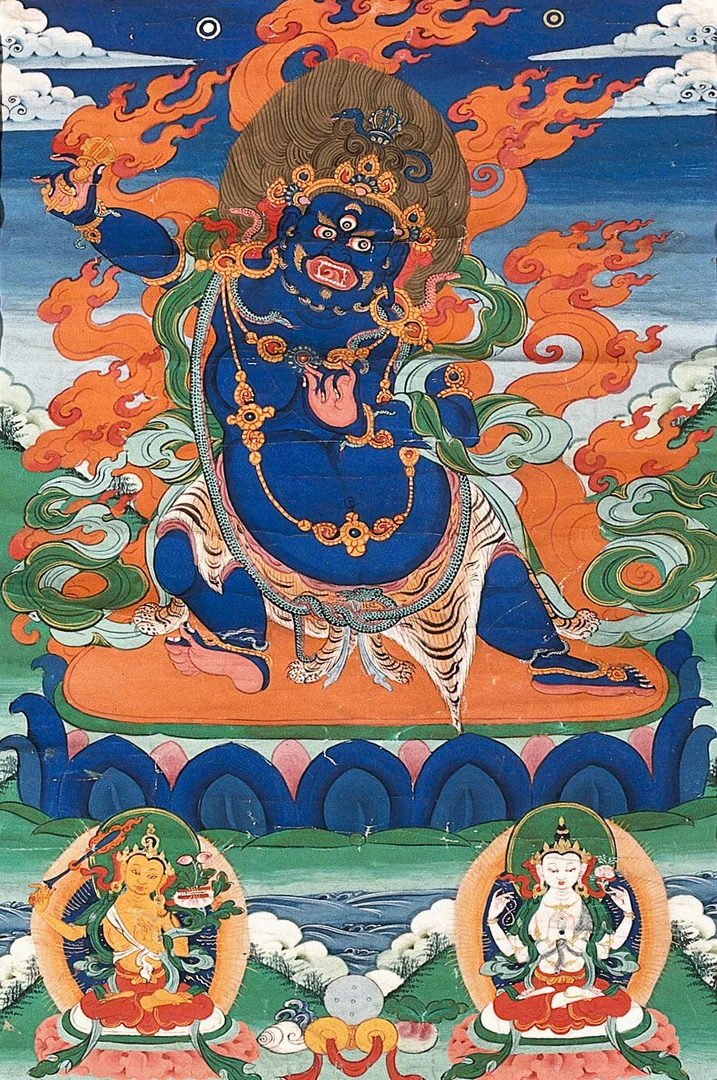
Vajrapāṇi (Chana Dorje · Wielder of the Thunderbolt)
Standing in midnight-blue warrior stance amidst blazing wisdom flames and brandishing a five-pronged vajra overhead, Vajrapāṇi embodies fearless spiritual power—completing Tibet’s beloved Rigsum Gönpo triad alongside Chenrezig (compassion) and Mañjuśrī (wisdom).
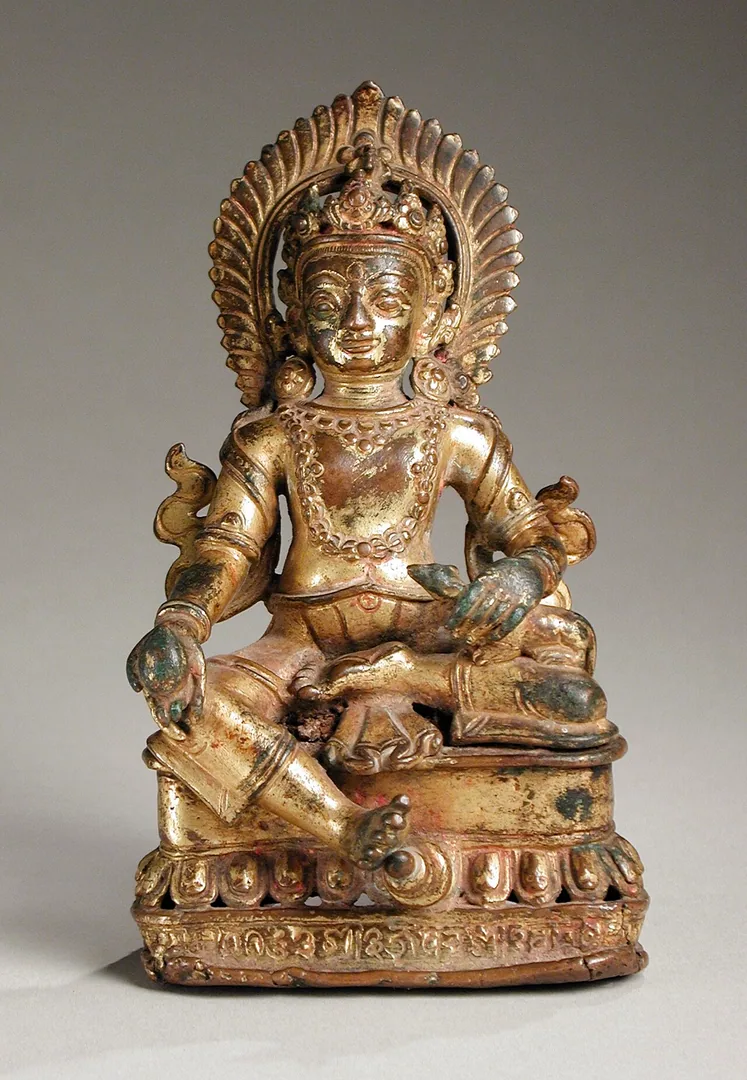
Yellow Jambhala (Dzambhala Serpo)
Seated in royal ease with a golden body, holding a citron fruit in his right hand and a jewel-disgorging mongoose under his left arm, Yellow Jambhala embodies Buddhist abundance: freeing practitioners from survival panic and miserliness so Dharma and generosity can flourish.
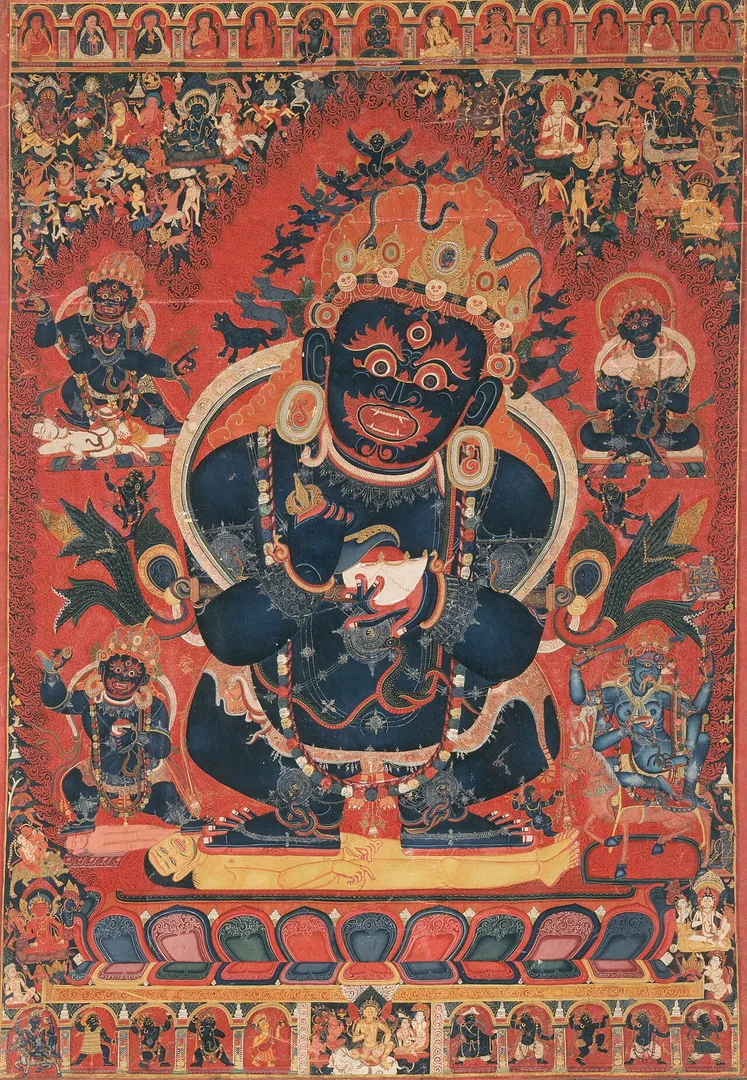
Mahākāla (Gönpo · Wisdom Dharma Protector)
Known simply in Tibetan as Gönpo (“The Protector”), Mahākāla (“Great Black One” / “Beyond Time”) manifests Avalokiteśvara’s compassion in fierce midnight-blue form—shattering self-deception and guarding ethical integrity across Kagyu, Sakya, and Gelug monasteries.
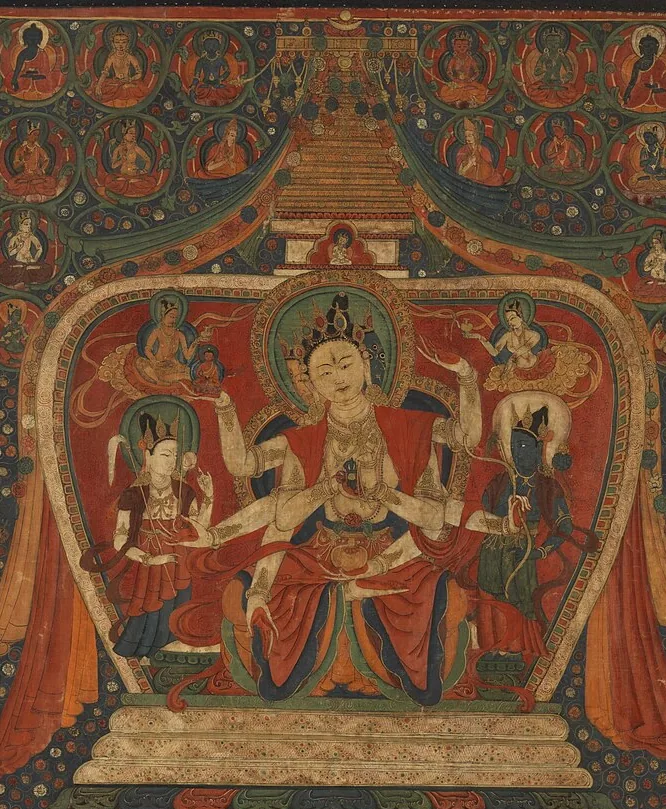
Uṣṇīṣavijayā (Namgyalma · Victorious Crown Wisdom)
Emanating as blinding white light from the crown protuberance (uṣṇīṣa) of Śākyamuni Buddha, three-faced eight-armed Namgyalma unites peaceful healing, protective strength, and karmic purification—completing Tibet’s revered Three Long-Life Deities.
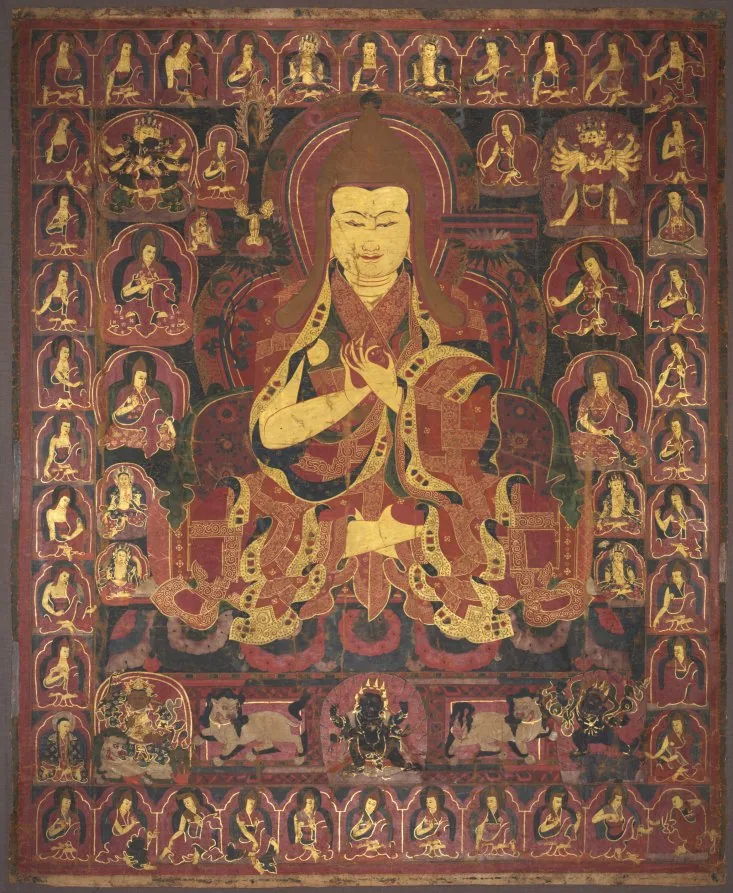
Je Tsongkhapa (Lobsang Drakpa · 1357–1419)
Born in Amdo Tsongkha (modern Qinghai Kumbum) in 1357, Je Rinpoche studied across Sakya, Kagyu, Jonang, and Kadampa masters before founding Ganden Monastery—uniting rigorous Nālandā logic, pure Vinaya discipline, and Tantric contemplation into one seamless graduated path (Lamrim).
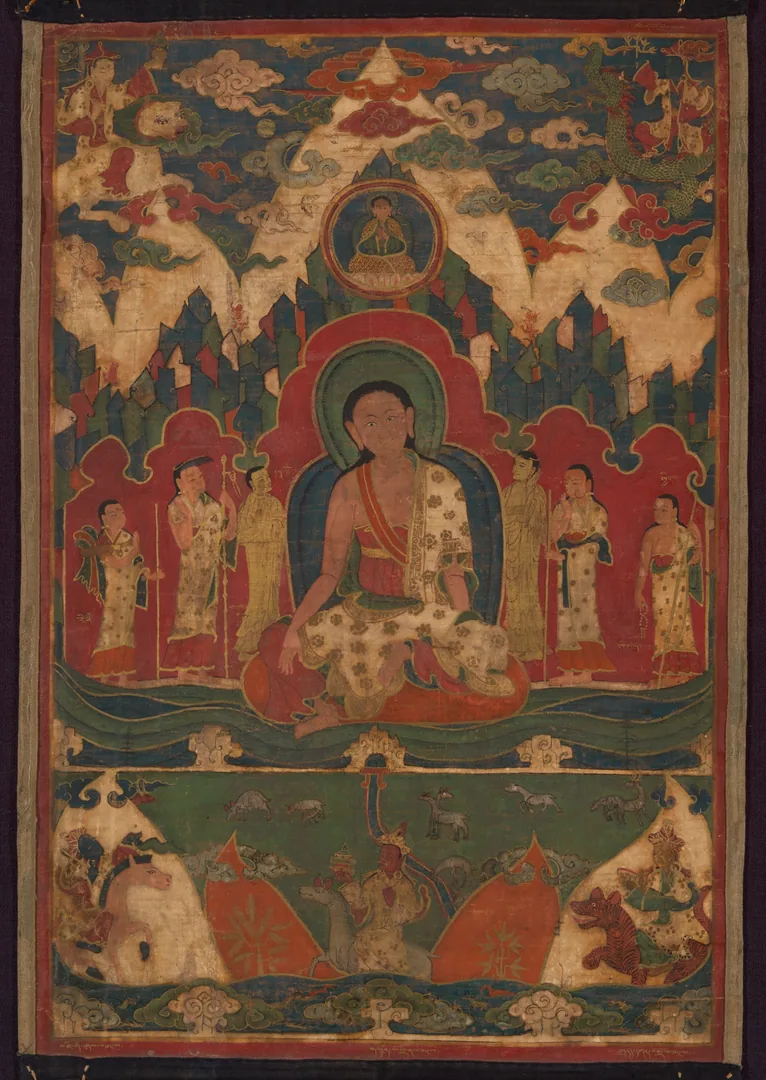
Jetsün Milarepa (1052–1135 · Tibet’s Cotton-Clad Poet-Yogi)
Seated in alpine cave solitude wearing a single white cotton cloth (repa), skin tinged pale green from years of wild nettle soup and right palm cupped at his ear singing spontaneous Vajra Songs (mgur), Milarepa proves no past mistake places awakening out of reach.
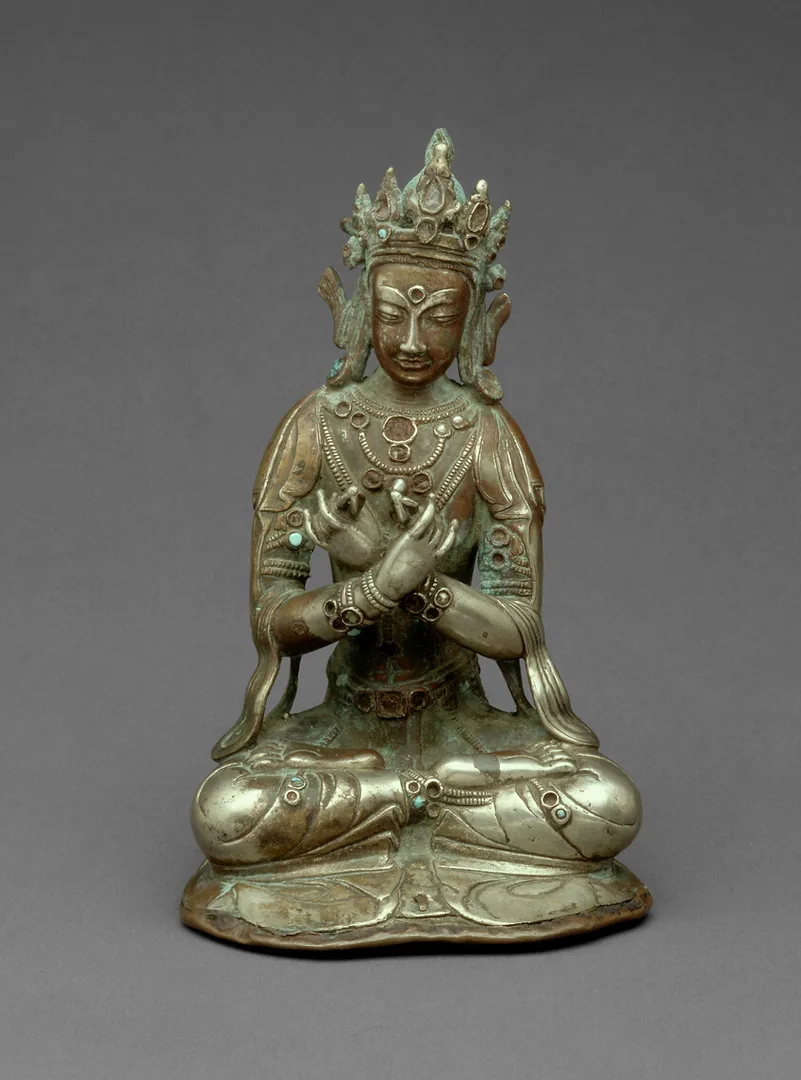
Ādi-Buddha: Samantabhadra & Vajradhara (Primordial Dharmakāya)
Placed at the very apex of every Tibetan refuge tree and thangka lineage, the Ādi-Buddha (“Primordial Buddha”) is never a creator god who made the universe, but the timeless, uncompounded nature of mind itself—depicted naked and sky-blue as Samantabhadra in Nyingma Dzogchen, or crowned in royal silks crossing vajra and bell as Vajradhara in Kagyu, Sakya, and Gelug.
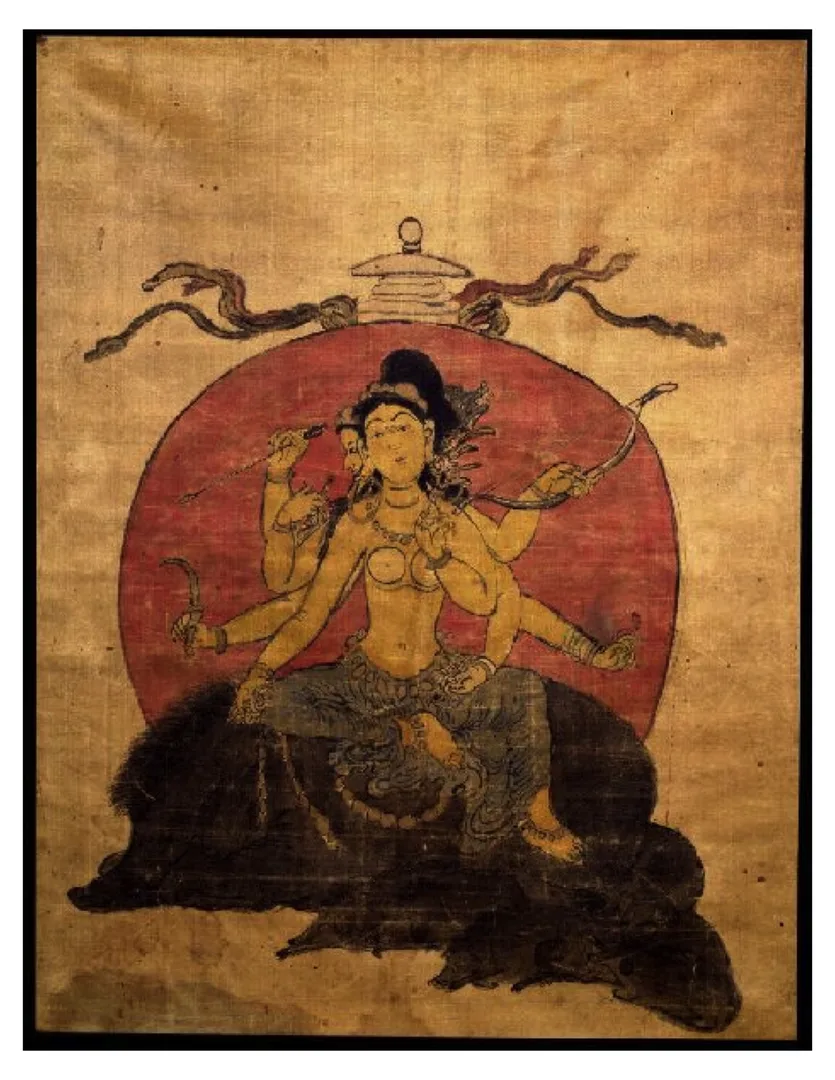
Mārīcī (Özer Chenma · Lady of the Dawn Rays)
Personifying the shimmering rays of dawn that outrun the sun and moon, golden Mārīcī rides a chariot drawn by seven wild boars while holding a needle and thread and a flowering aśoka branch—revered from Lhasa caravan trails to East Asian temples for swift protection on journeys and freedom from fear.
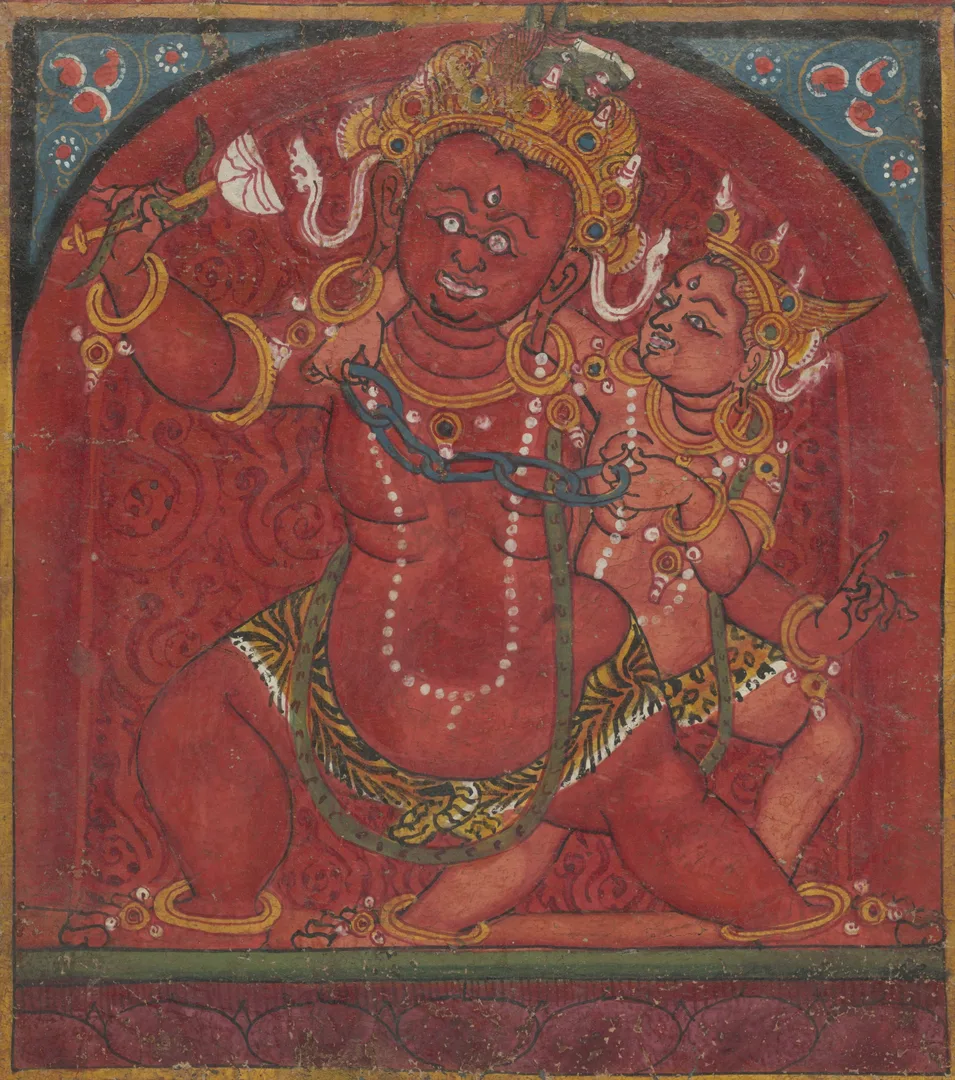
Hayagrīva (Tamdrin · Horse-Headed Wrathful Compassion)
Known in practitioner English and East Asian canons as the “Horse-Headed” Wisdom King (literally haya-grīva / rta-mgrin, “Horse-Necked”), blazing cinnabar-red Hayagrīva is Great Compassion Avalokiteśvara in wrathful form—instantly identified by one or three emerald-green horse heads neighing from his flaming hair.
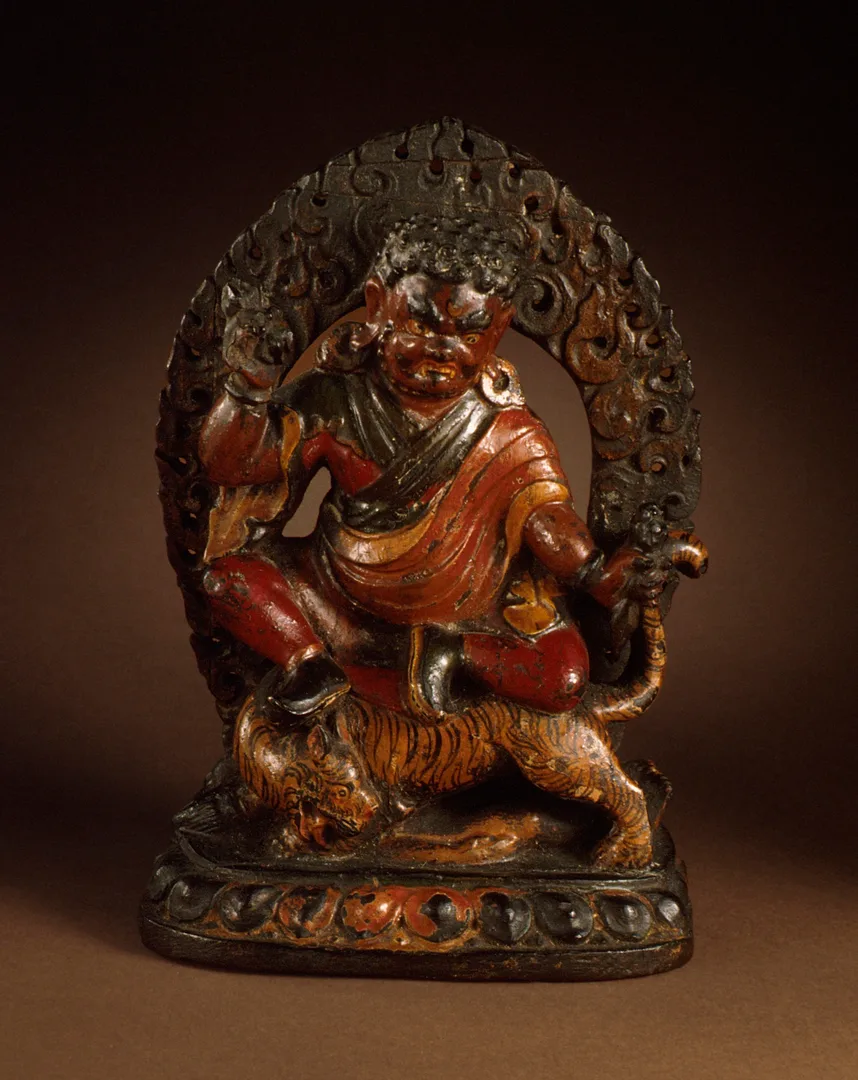
Dorje Drolö (Wrathful Padmasambhava on the Tigress)
Standing in a blaze of dark maroon flames atop a roaring pregnant tigress—actually wisdom consort Yeshe Tsogyal in fierce emanation—Dorje Drolö is the eighth and wildest of Padmasambhava’s Eight Manifestations, revered at Bhutan’s cliffside Taktsang (“Tiger’s Nest”) for shattering spiritual hypocrisy and turbulent-age obstacles.
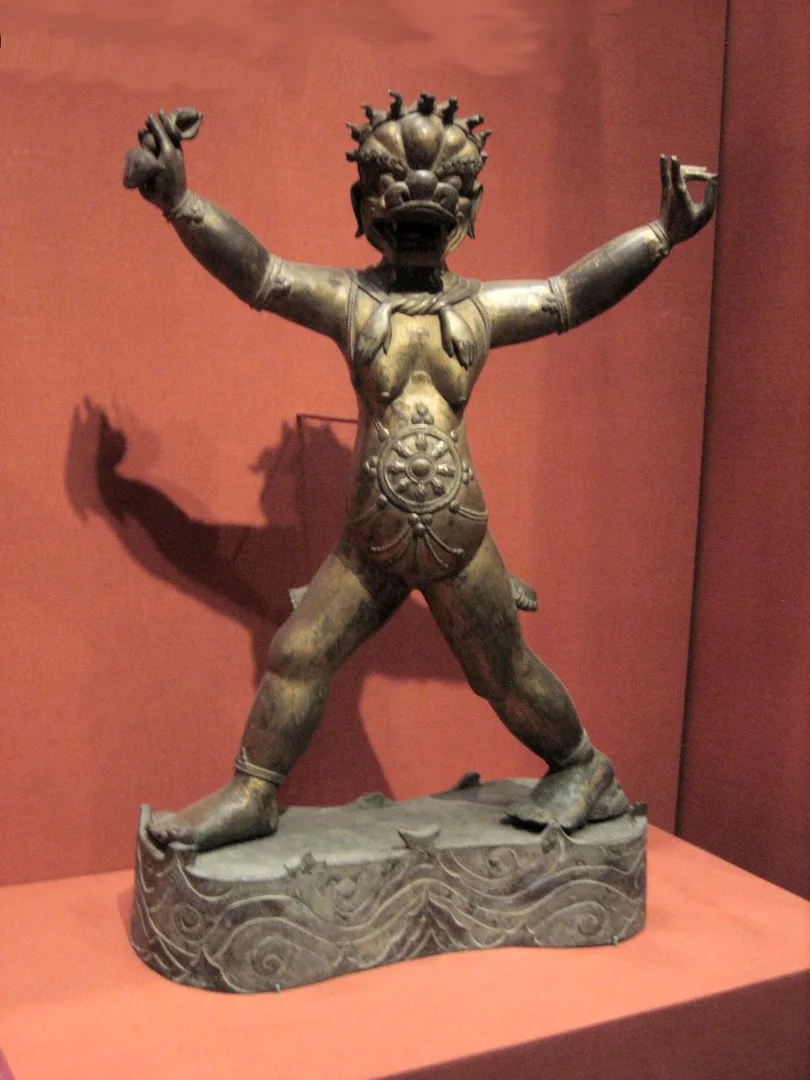
Siṃhamukhā (Senge Dongma · Lion-Faced Wisdom Ḍākinī)
Dancing on one foot in a halo of wisdom fire with a snow-white roaring lioness face atop a sapphire-blue body, Siṃhamukhā is no worldly spirit but an enlightened dharmakāya wisdom-ḍākinī—celebrated equally in Nyingma terma, Sakya’s Thirteen Golden Dharmas, and Gelug monasteries for dissolving psychic negativity and curses back into emptiness.
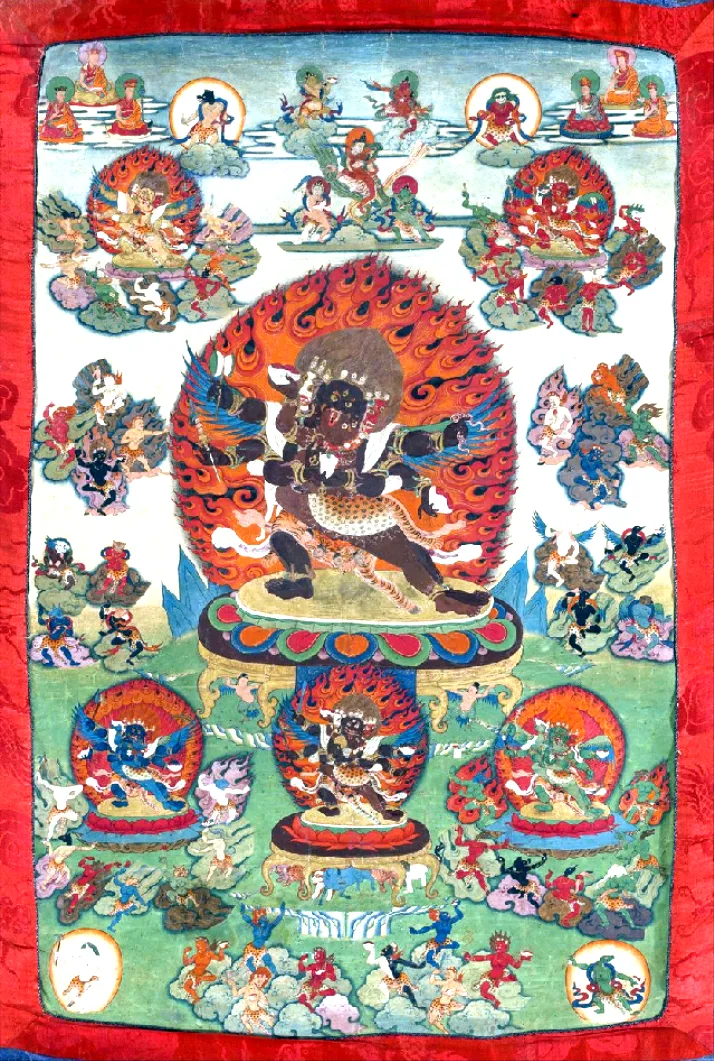
Mahottara Heruka (Chemchok Heruka · Supreme Wrathful Buddha)
Known in Tibetan as Chemchok Heruka (“Supreme Great Blood-Drinker of Ego”), Mahottara Heruka presides at the center of the Nyingma Eight Pronouncements (Kagyé) and dawns first among the fifty-eight wrathful bardo deities—revealing terrifying cosmic power as primordial Buddha Samantabhadra’s own luminous compassion.
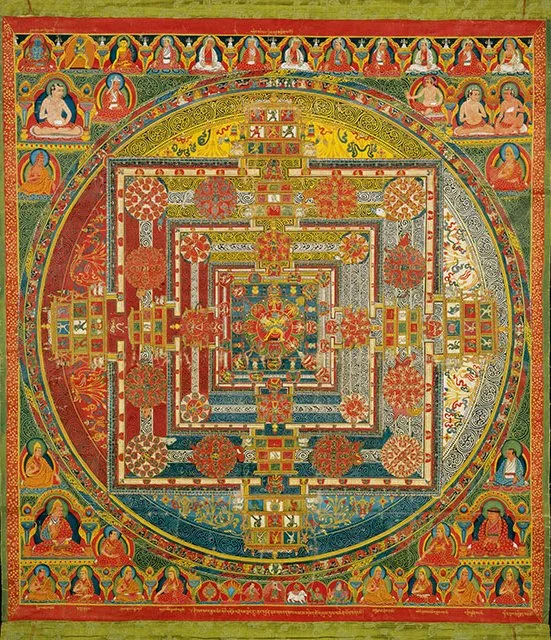
Kālacakra (Wheel of Time · Dus-kyi ’Khor-lo)
Meaning “Wheel of Time,” Kālacakra synchronizes three vast domains into a single non-dual mandala: planetary astronomy and calendar science (Outer), the subtle channels and breaths of the human body (Inner), and the contemplative path purifying both into timeless awakening (Alternative).
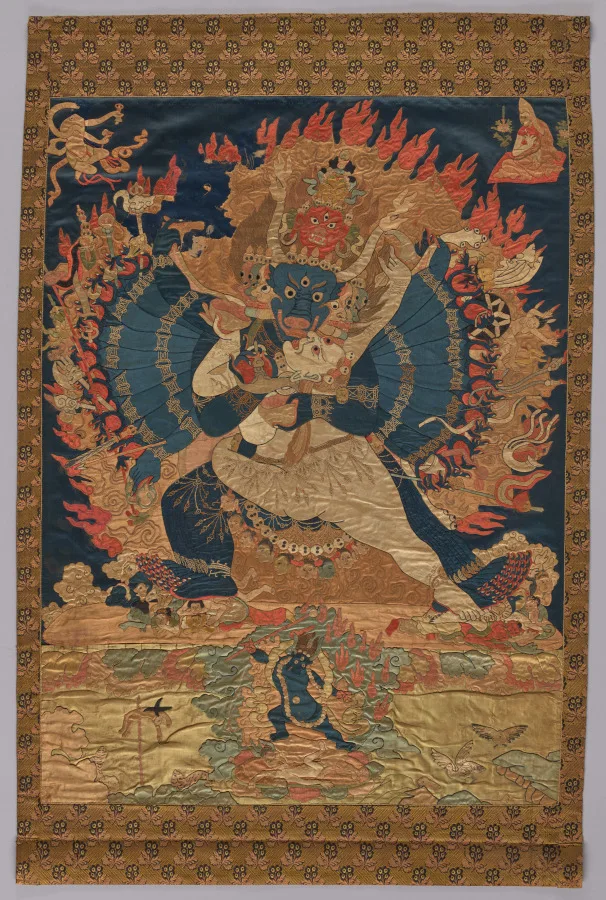
Yamāntaka / Vajrabhairava (Dorje Jigje · Ender of Death)
When gentle persuasion cannot halt the relentless momentum of mortality and karmic compulsion, gentle Mañjuśrī—Bodhisattva of Wisdom—manifests as horned, buffalo-headed Vajrabhairava (“Adamantine Terrifier”), crowning nine fierce faces with Mañjuśrī’s own serene golden visage to conquer death through emptiness.
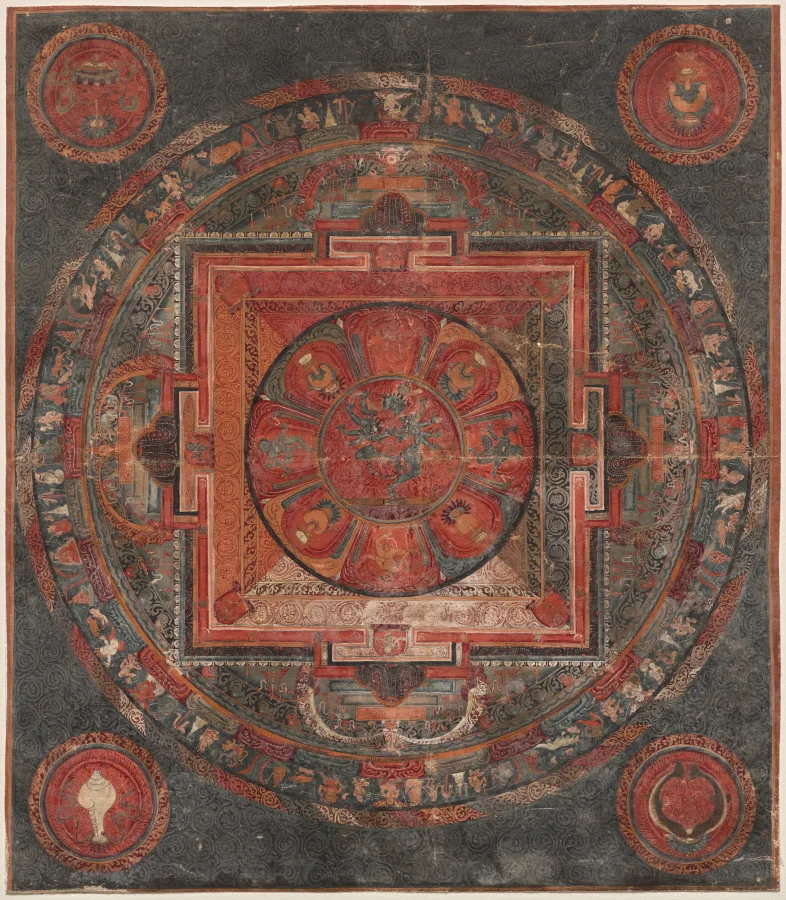
Cakrasaṃvara (Khorlo Demchog · Wheel of Supreme Bliss)
Celebrated across Himalayan art and pilgrimage as the indwelling mandala deity of Mount Kailash, sapphire-blue Cakrasaṃvara embraces crimson wisdom-ḍākinī Vajravārāhī with crossed vajra and bell—embodying Mother Tantra’s realization that great bliss and emptiness are indivisible.
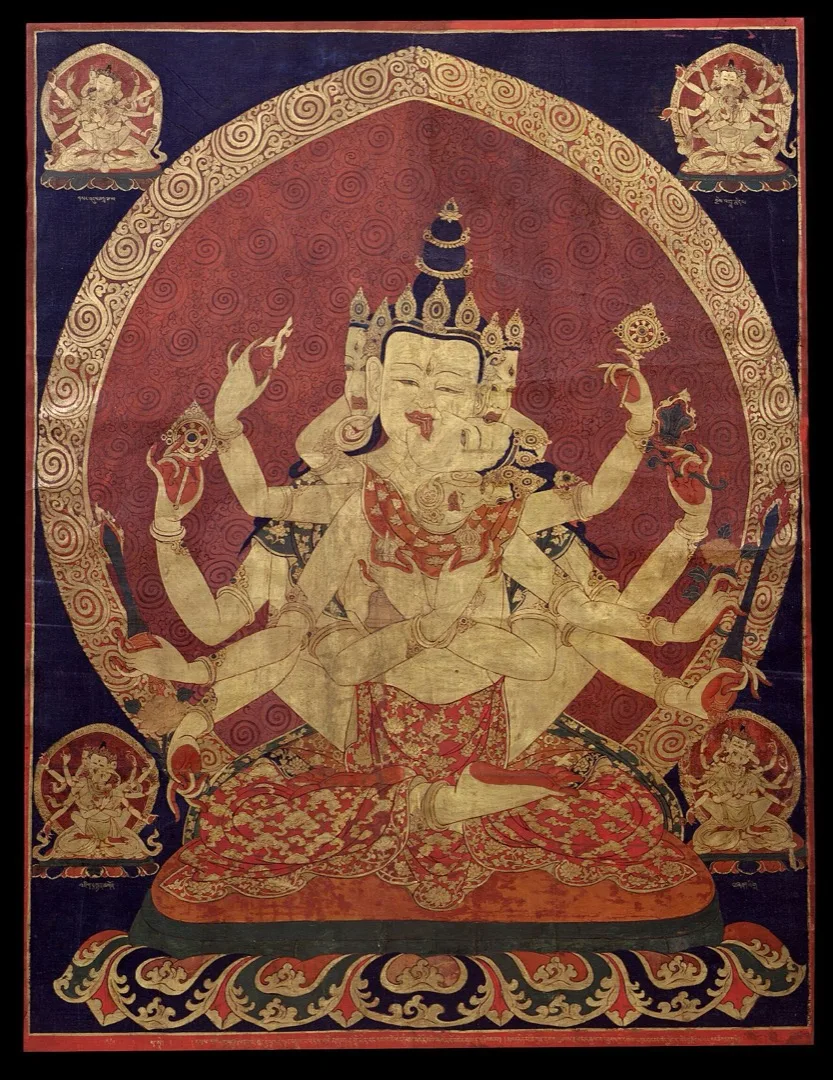
Guhyasamāja (Sangwa Düpa · “Secret Assembly”)
Revered across Tibetan monasticism as the “King of Tantras” (Toh 442), Guhyasamāja (“Secret Assembly” of awakened body, speech, and mind) anchors the Father-Tantra (pha-rgyud) tradition—teaching in exquisite precision how subtle winds and consciousness purify ordinary death, bardo, and rebirth into the rainbow-like Illusory Body and Clear Light.
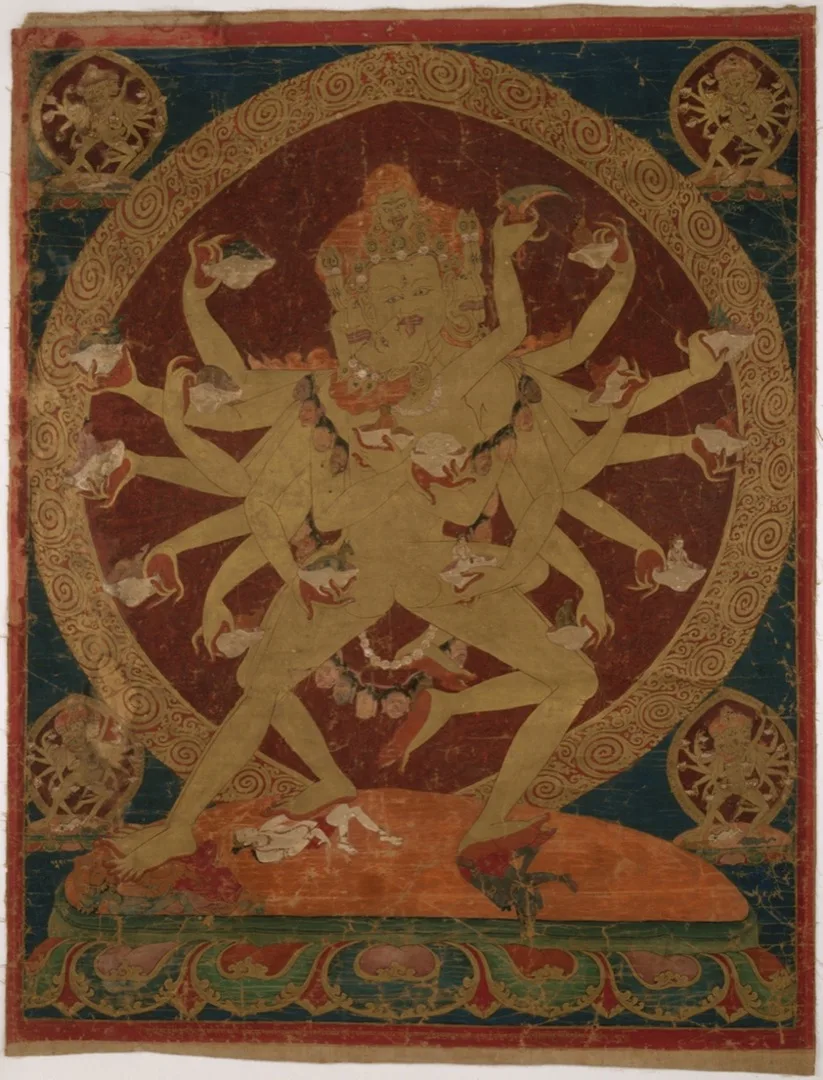
Hevajra & Nairātmyā (Kye Dorje · Bliss-Emptiness Mother Tantra)
Whose very name divides into “He!” (great compassion) and “Vajra” (indestructible emptiness), eight-faced, sixteen-armed Hevajra dances in embrace with Nairātmyā—literally “Lady Selflessness”—serving as the central meditational mandala of the Sakya Lamdre (“Path and Its Fruit”) tradition and Marpa’s Kagyu transmission.
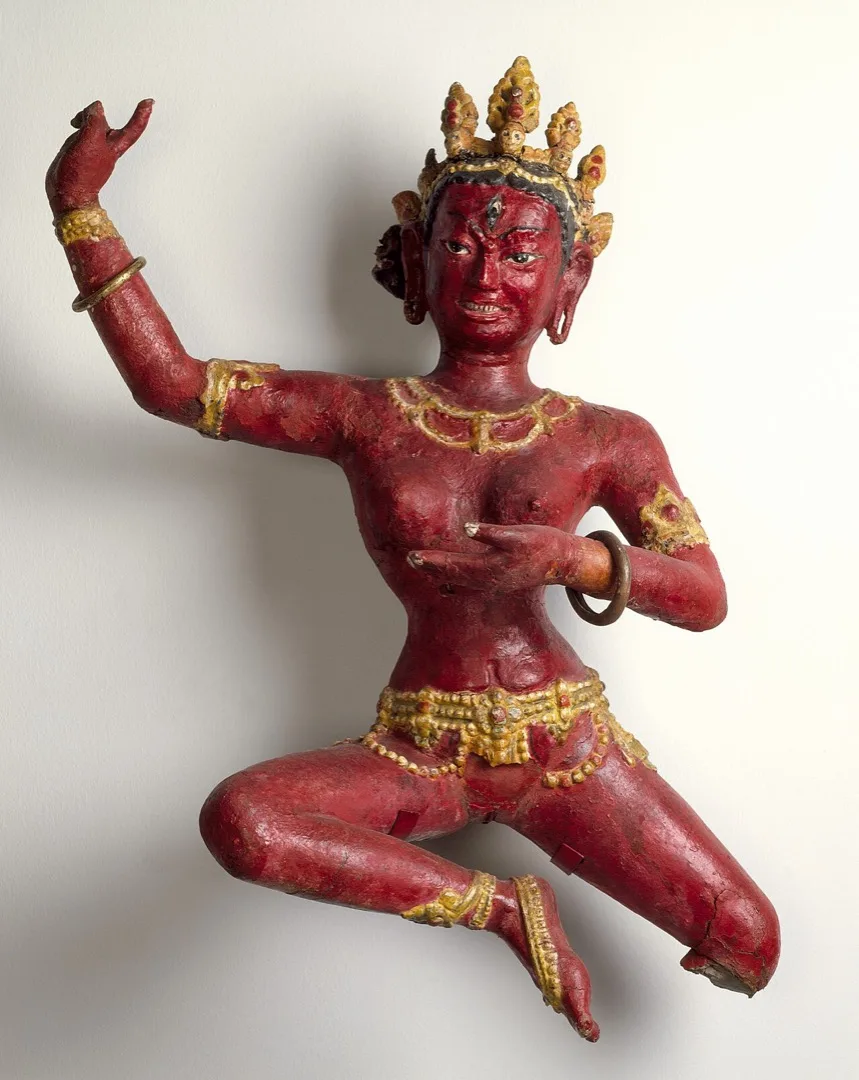
Vajrayoginī & Vajravārāhī (Dorje Naljorma / Dorje Phagmo)
Blazing ruby-red amidst wisdom flames, holding a curved flaying knife (kartika) to sever egoic habit and a skullcup of non-dual bliss, Vajrayoginī—and her celebrated sow-crowned form Vajravārāhī (Dorje Phagmo)—is the supreme female Anuttarayoga yidam across Kagyu, Sakya, and Gelug Buddhism, embodying full awakening in female form.
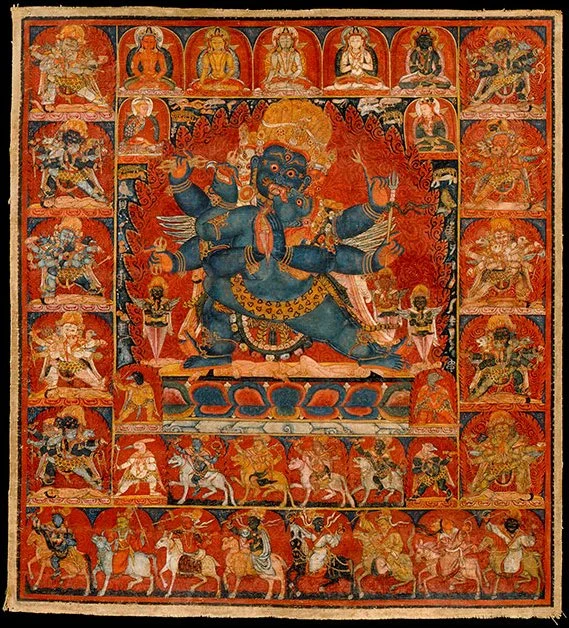
Vajrakīlaya / Vajrakumāra (Dorje Phurba · Obstacle-Transmuting Heruka)
Embodying the enlightened activity (karma / phrin-las) of all Buddhas in wrathful form, three-faced, six-armed Vajrakīlaya rolls a three-bladed ritual dagger (phurba) between his central palms—not to harm living beings, but to pin down and transfix the stubborn root of ego-clinging, hatred, and inner paralysis.
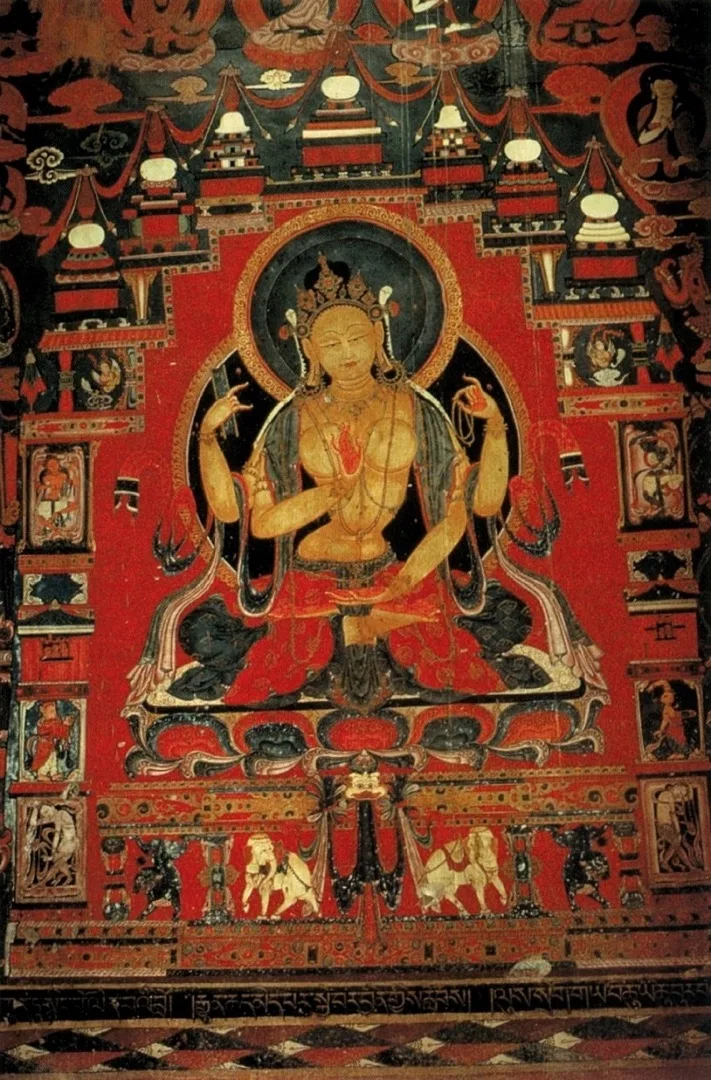
Prajñāpāramitā (Yum Chenmo · Great Mother of All Buddhas)
Affectionately revered in Tibet as Yum Chenmo (“The Great Mother”), golden four-armed Prajñāpāramitā is the luminous sculptural and painted personification of the Perfection of Wisdom sutras (including the Heart and Diamond Sutras)—teaching that direct insight into emptiness is the maternal womb from which every Buddha across all three times is born.
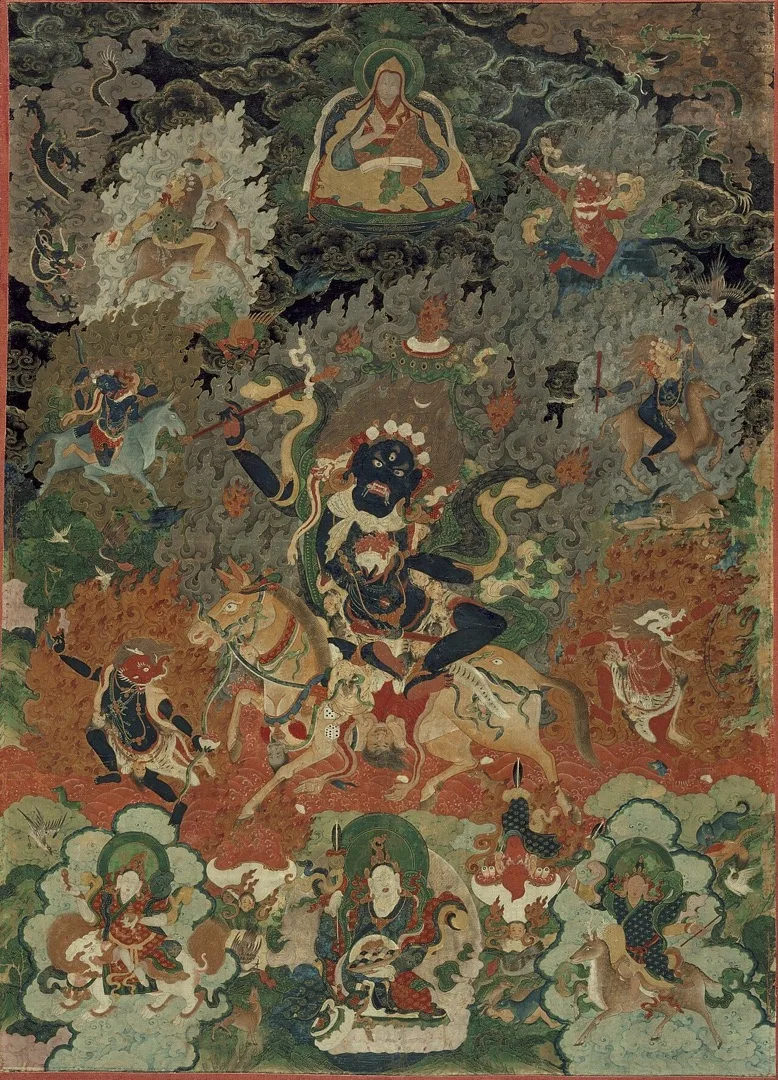
Palden Lhamo / Śrīdevī (Glorious Goddess · Magzor Gyalmo)
Riding side-saddle atop a swift yellow-white mule across a boiling sea of blood, bearing a sun in her navel, a crescent moon in her hair, and a pair of divination dice on her saddle, Palden Lhamo (Śrīdevī) is Tibet’s most celebrated female supramundane Wisdom Protector—guardian of Lhasa’s Jokhang Temple, the Dalai and Panchen lineages, and ethical Dharma practice.
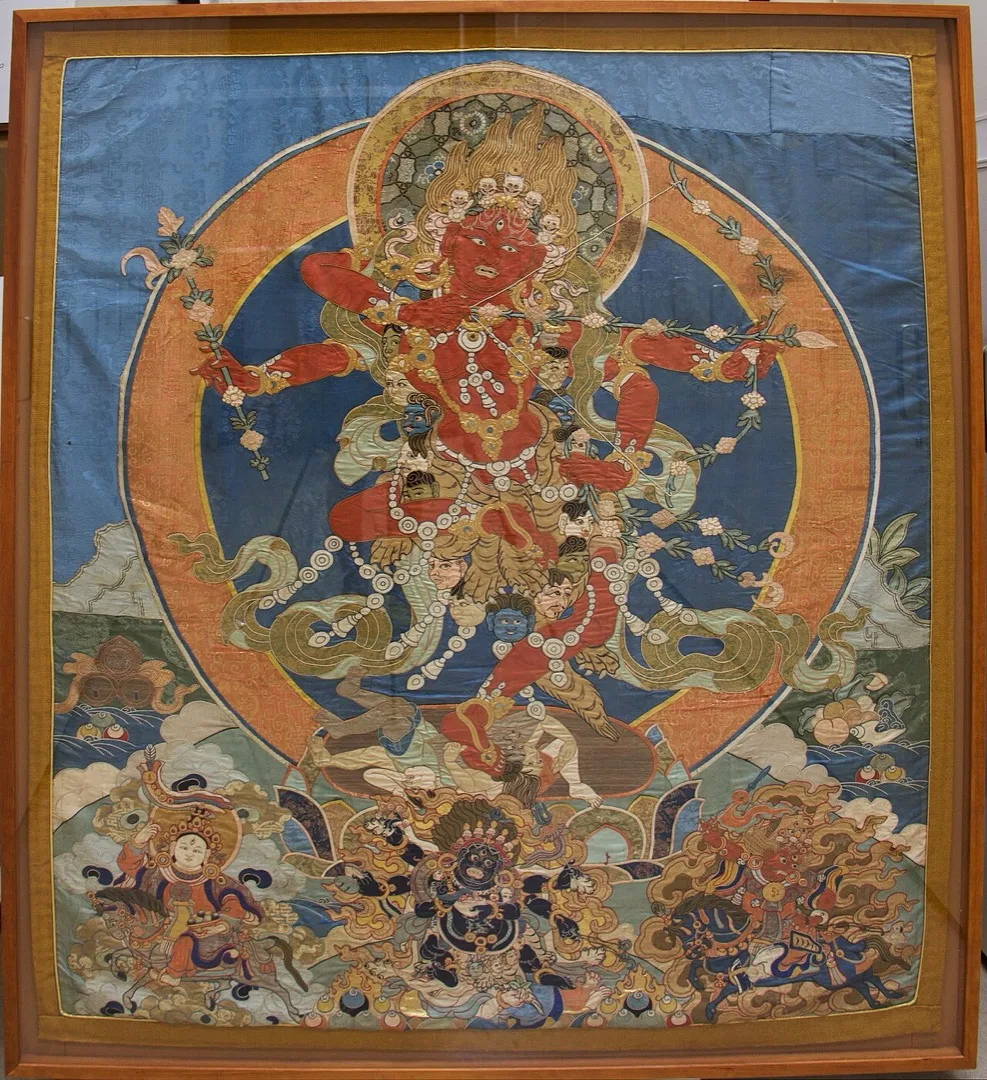
Kurukullā (Rigjema · Lotus-Bow Wisdom Ḍākinī)
Dancing on one foot in a ruby-red aura while drawing a bow and arrow woven entirely of red utpala lotus blossoms, four-armed Kurukullā (Tibetan: Rigjema, “Knowledge-Maker”) is an enlightened semi-wrathful emanation of Tārā in Amitābha’s Lotus Family—celebrated not for worldly manipulation, but for magnetizing fractured minds and conditions toward Dharma and harmony.
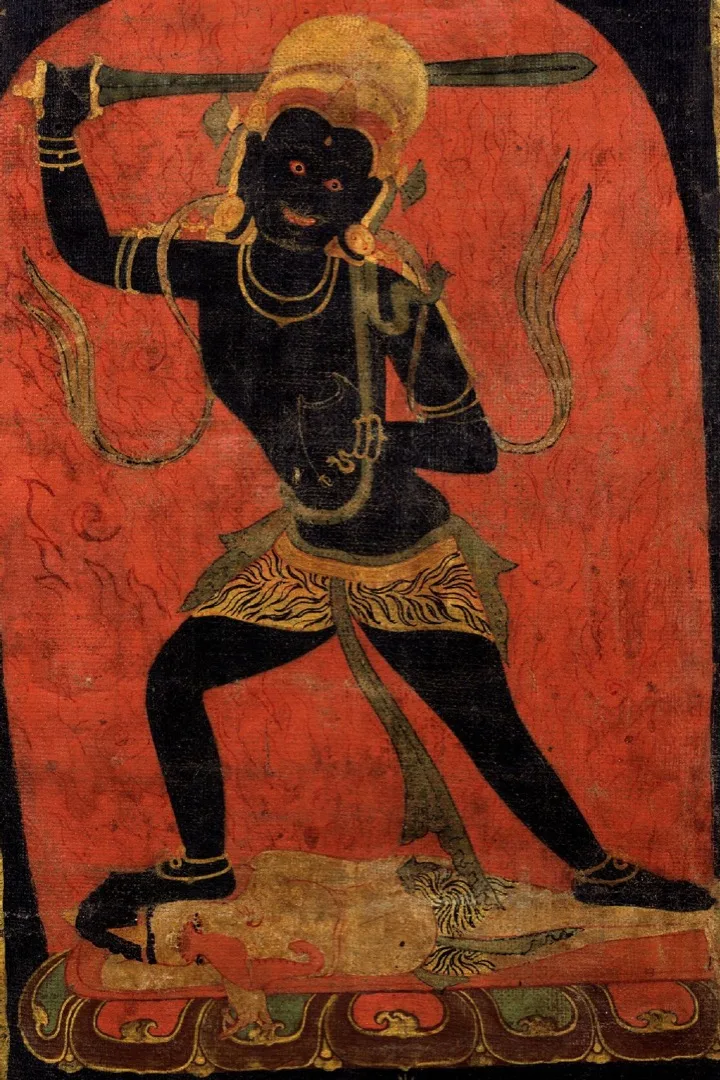
Blue Acala / Achala (Miyowa · “The Immovable Wisdom Protector”)
Whose Sanskrit name Acala and Tibetan name Miyowa both mean “The Immovable One,” sapphire-blue Acala brandishes a flaming wisdom sword overhead and coils a vajra lasso at his heart, often dropping one knee directly onto rocky ground—honored by Atiśa Dīpaṃkara as one of the Four Deities of the Kadampa school for cutting distraction and karmic obstacles without budging an inch.
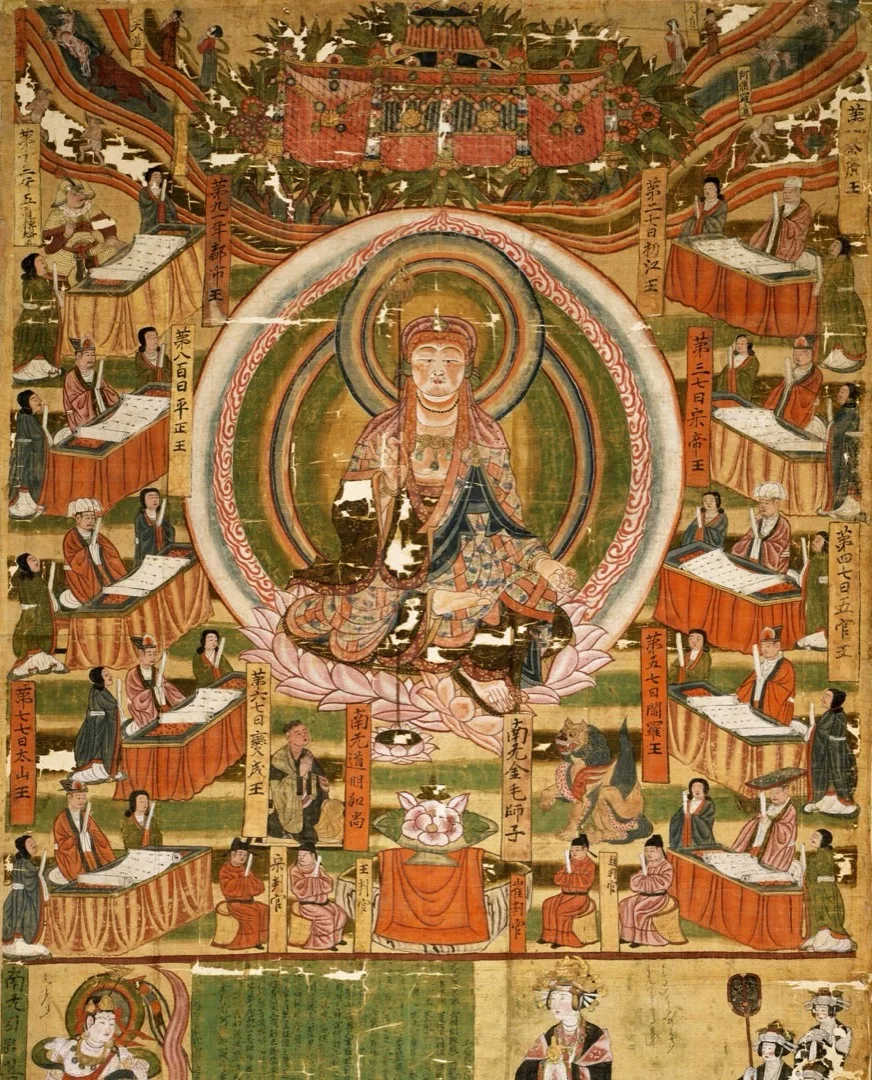
Kṣitigarbha (Sai Nyingpo · “Earth-Treasury” Bodhisattva)
Literally “Womb or Matrix of the Earth” (Tibetan: Sai Nyingpo), Kṣitigarbha stands among the canonical Eight Great Bodhisattvas (Nye-sras brgyad) surrounding Śākyamuni—revered across Tibet for patient stability, agricultural abundance, and fearlessness in dark passages, while offering a fascinating visual contrast between crowned Tibetan bodhisattva art and East Asian monastic robes.
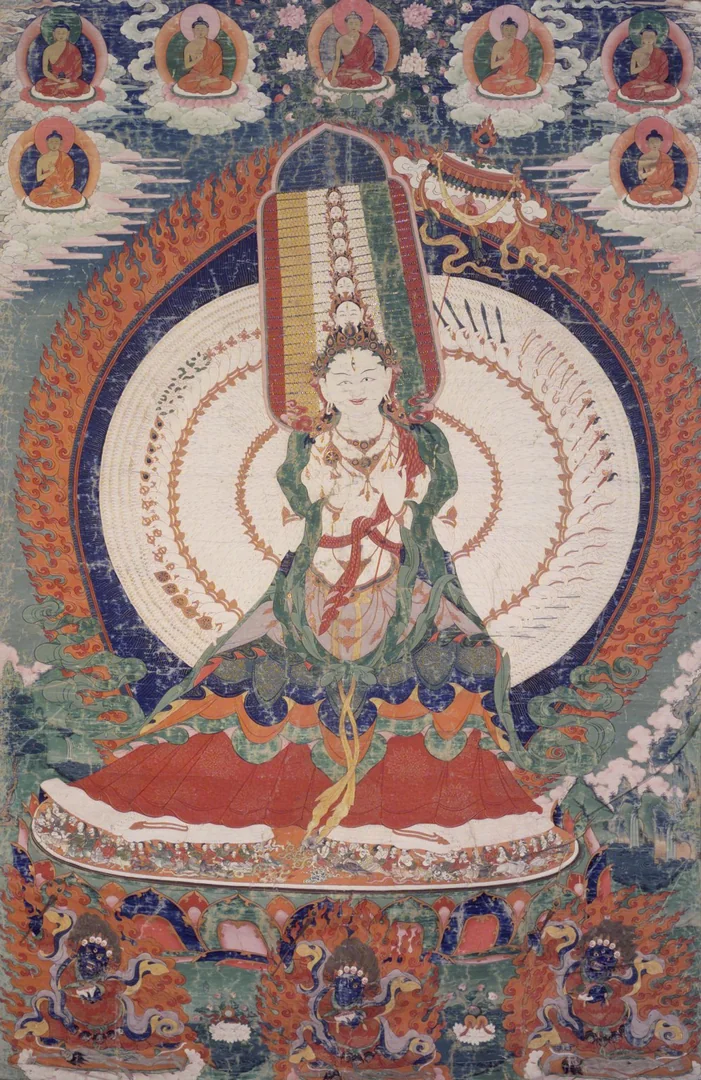
Sitātapatrā / Uṣṇīṣasitātapatrā (Dukkar · White Parasol Buddha-Mother)
Known across Tibet as Dukkar (“She of the White Parasol”), Uṣṇīṣasitātapatrā springs directly from the enlightened crown protuberance (uṣṇīṣa) of Śākyamuni Buddha—raising a vast, cooling white canopy of non-dual wisdom over sentient beings to turn back conflict, fear, illness, and inner turmoil across every school of Tibetan and East Asian Buddhism.
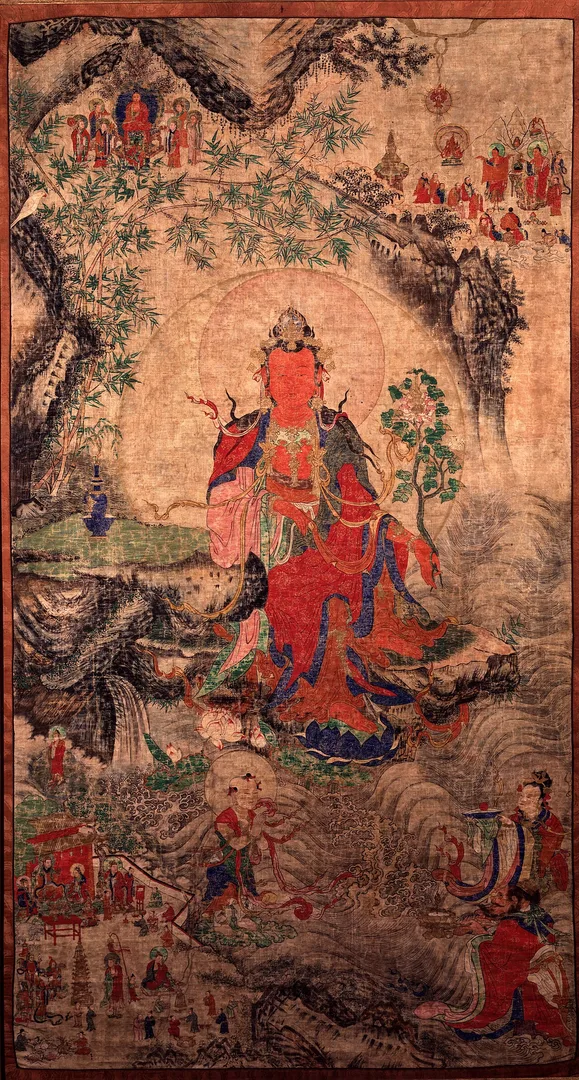
Maitreya (Jampa · 弥勒菩萨 / 强巴佛)
Regent of Tuṣita Heaven and the Fifth Buddha of this fortunate eon—uniquely recognized in Himalayan art by his “throne-seated” bhadrāsana posture with both feet planted on a lotus, ready to stand and enter the world.
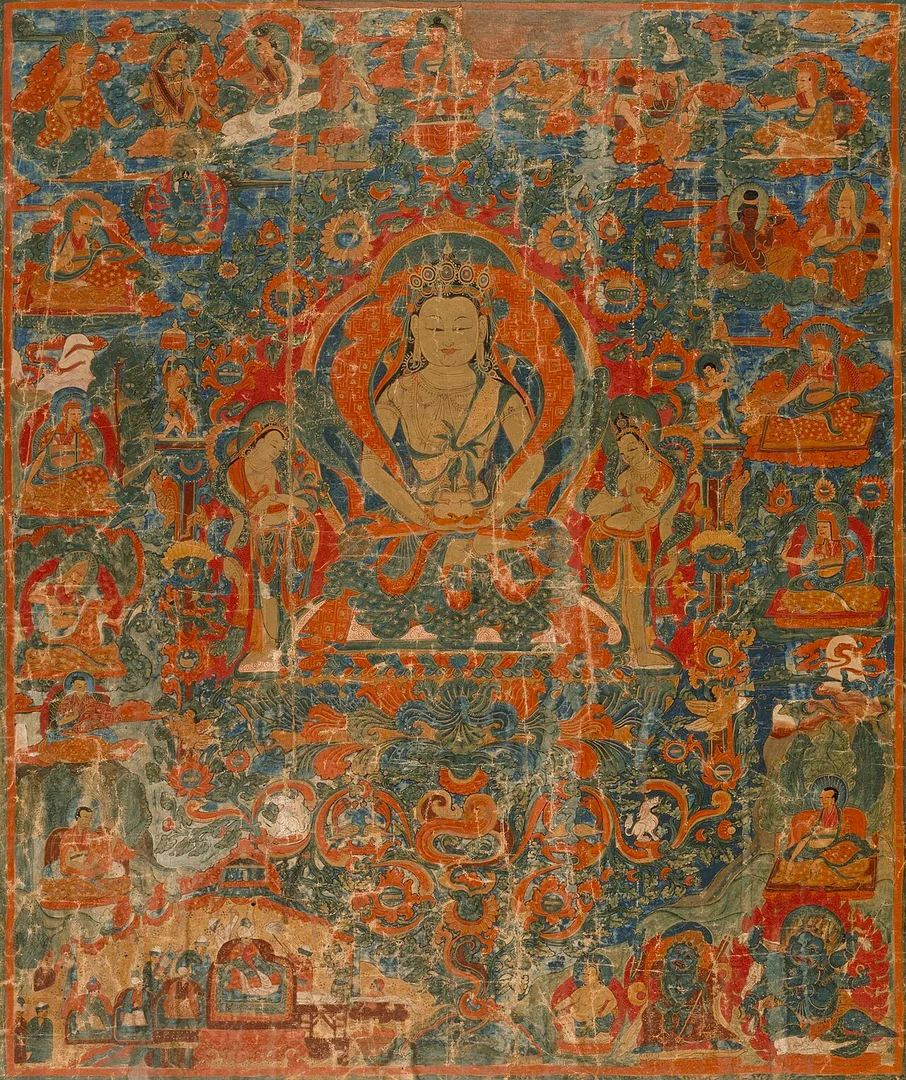
Amitāyus & the Three Long-Life Deities (Tshepakmé · 长寿佛)
In Sanskrit and Chinese Pure Land texts, Amitābha (“Boundless Light”) and Amitāyus (“Boundless Life”) are two names of one Buddha; in Tibetan art, they divide into two crystal-clear visual forms—monastic robe with begging bowl versus crowned royal splendor holding the nectar vase of longevity.
Curatorial Reading Key · Three Doctrinal Safeguards
Buddhist figures do not “reproduce” like Olympian myths. Peaceful and fierce forms radiate from one non-dual expanse of emptiness and compassion—like medicine tailored to each illness.
Lineage Topology places 8th–14th c. human masters in the fifth band so historical transmission reads clearly; in Guru Yoga & Refuge Trees, the Root Guru sits at the very center as Root of Blessings.
Guardians stand at the lower gate because sentries face outward—all four here are enlightened Buddhas/Bodhisattvas, never worldly spirits. Dual affiliations (e.g., Green Tārā’s Padma tear + Karma emerald body) are explicitly badged.
Complete Canonical Index Table: All 36 Figures by Stratum, Five-Buddha-Family & Primary Citation
| Deity / Figure | Cosmological Stratum | Five-Buddha-Family | Canonical Class & Toh |
|---|---|---|---|
|
Prajñāpāramitā (Yum Chenmo · Great Mother of All Buddhas)
ཤེར་ཕྱིན་མ།
|
I · Dharmakāya Source |
Buddha Family
+ Vajra (East)
|
Prajñā Sūtras · Toh 8–26 |
|
Ādi-Buddha: Samantabhadra & Vajradhara (Primordial Dharmakāya)
ཀུན་ཏུ་བཟང་པོ་དང་རྡོ་རྗེ་འཆང་།
|
I · Dharmakāya Source |
Primordial Axis
+ Vajra (East)
|
Dzogchen & Sarma Root · Toh 828 |
|
Vajrasattva (Dorje Sempa)
རྡོ་རྗེ་སེམས་དཔའ།
|
I · Dharmakāya Source |
Vajra (East)
+ Primordial Axis
|
100-Family Lord · Ngöndro |
|
Amitābha (Öpakmé · Buddha of Infinite Light)
འོད་དཔག་མེད།
|
II · Supreme Buddhas | Padma (West) | West Padma Lord · Toh 115 |
|
Amitāyus & the Three Long-Life Deities (Tshepakmé · 长寿佛)
ཚེ་དཔག་མེད།
|
II · Supreme Buddhas | Padma (West) | Sambhogakāya · Toh 674 |
|
Śākyamuni Buddha (Shakya Thubpa)
ཤཱཀྱ་ཐུབ་པ།
|
II · Supreme Buddhas | Buddha Family | Historical Founder · Toh 95 |
|
Maitreya (Jampa · 弥勒菩萨 / 强巴佛)
བྱམས་པ།
|
II · Supreme Buddhas | Buddha Family | Regent & 5th Buddha · Toh 198–199 |
|
Medicine Buddha (Bhaiṣajyaguru · Sangye Menla)
སངས་རྒྱས་སྨན་བླ།
|
II · Supreme Buddhas |
Buddha Family
+ Vajra (East)
|
East Lapis Realm · Toh 504 |
|
Avalokiteśvara (Chenrezig)
སྤྱན་རས་གཟིགས།
|
III · Bodhisattvas & Saviors | Padma (West) | Great Compassion · Toh 116 |
|
Green Tārā (Sgrol-ljang)
སྒྲོལ་ལྗང༌།
|
III · Bodhisattvas & Saviors |
Karma (North)
+ Padma (West)
|
Swift Activity · Toh 438 |
|
White Tārā (Sgrol-dkar)
སྒྲོལ་དཀར།
|
III · Bodhisattvas & Saviors |
Padma (West)
+ Karma (North)
|
Seven-Eyed Longevity · Kriyā |
|
Uṣṇīṣavijayā (Namgyalma · Victorious Crown Wisdom)
གཙུག་ཏོར་རྣམ་པར་རྒྱལ་མ།
|
III · Bodhisattvas & Saviors |
Buddha Family
+ Padma (West)
|
Crown Uṣṇīṣa · Toh 594 |
|
Sitātapatrā / Uṣṇīṣasitātapatrā (Dukkar · White Parasol Buddha-Mother)
གདུགས་དཀར་མོ།
|
III · Bodhisattvas & Saviors | Buddha Family | Crown Uṣṇīṣa · Toh 590–593 |
|
Mārīcī (Özer Chenma · Lady of the Dawn Rays)
འོད་ཟེར་ཅན་མ།
|
III · Bodhisattvas & Saviors | Buddha Family | Dawn Protectress · Toh 564 |
|
Kṣitigarbha (Sai Nyingpo · “Earth-Treasury” Bodhisattva)
ས་ཡི་སྙིང་པོ།
|
III · Bodhisattvas & Saviors |
Ratna (South)
+ Vajra (East)
|
8 Great Sons · Toh 239 |
|
Mañjuśrī (Jampelyang)
འཇམ་དཔལ་དབྱངས།
|
III · Bodhisattvas & Saviors |
Buddha Family
+ Vajra (East)
|
Primordial Wisdom · Toh 360 |
|
Vajrapāṇi (Chana Dorje · Wielder of the Thunderbolt)
ཕྱག་ན་རྡོ་རྗེ།
|
III · Bodhisattvas & Saviors | Vajra (East) | Lord of Secrets · Toh 496 |
|
Kurukullā (Rigjema · Lotus-Bow Wisdom Ḍākinī)
ཀུ་རུ་ཀུལླེ།
|
IV · Yidams & Ḍākinīs | Padma (West) | Padma Ḍākinī · Toh 437 |
|
Hayagrīva (Tamdrin · Horse-Headed Wrathful Compassion)
རྟ་མགྲིན།
|
IV · Yidams & Ḍākinīs | Padma (West) | Padma Speech · Toh 733 |
|
Mahottara Heruka (Chemchok Heruka · Supreme Wrathful Buddha)
ཆེ་མཆོག་ཧེ་རུ་ཀ
|
IV · Yidams & Ḍākinīs | Primordial Axis | Nyingma Mahāyoga · Toh 832 |
|
Hevajra & Nairātmyā (Kye Dorje · Bliss-Emptiness Mother Tantra)
ཀྱེ་རྡོ་རྗེ།
|
IV · Yidams & Ḍākinīs | Vajra (East) | Mother Tantra · Toh 417–418 |
|
Guhyasamāja (Sangwa Düpa · “Secret Assembly”)
གསང་བ་འདུས་པ།
|
IV · Yidams & Ḍākinīs |
Vajra (East)
+ Buddha Family
|
Father Tantra King · Toh 442 |
|
Kālacakra (Wheel of Time · Dus-kyi ’Khor-lo)
དུས་ཀྱི་འཁོར་ལོ།
|
IV · Yidams & Ḍākinīs |
Primordial Axis
+ Vajra (East)
|
Non-Dual Tantra · Toh 362 |
|
Dorje Drolö (Wrathful Padmasambhava on the Tigress)
རྡོ་རྗེ་གྲོ་ལོད།
|
IV · Yidams & Ḍākinīs |
Padma (West)
+ Karma (North)
|
8th Guru Form · Terma |
|
Siṃhamukhā (Senge Dongma · Lion-Faced Wisdom Ḍākinī)
སེང་གེའི་གདོང་མ།
|
IV · Yidams & Ḍākinīs |
Vajra (East)
+ Padma (West)
|
Dharmakāya Ḍākinī · Rimé |
|
Vajrakīlaya / Vajrakumāra (Dorje Phurba · Obstacle-Transmuting Heruka)
རྡོ་རྗེ་ཕུར་པ།
|
IV · Yidams & Ḍākinīs |
Karma (North)
+ Vajra (East)
|
Activity Heruka · Toh 439 |
|
Cakrasaṃvara (Khorlo Demchog · Wheel of Supreme Bliss)
འཁོར་ལོ་བདེ་མཆོག
|
IV · Yidams & Ḍākinīs | Vajra (East) | Mother Tantra Crown · Toh 368 |
|
Vajrayoginī & Vajravārāhī (Dorje Naljorma / Dorje Phagmo)
རྡོ་རྗེ་རྣལ་འབྱོར་མ།
|
IV · Yidams & Ḍākinīs |
Vajra (East)
+ Padma (West)
|
Sovereign Ḍākinī · Toh 368 |
|
Yamāntaka / Vajrabhairava (Dorje Jigje · Ender of Death)
རྡོ་རྗེ་འཇིགས་བྱེད།
|
IV · Yidams & Ḍākinīs |
Vajra (East)
+ Buddha Family
|
Wrathful Mañjuśrī · Toh 468 |
|
Padmasambhava (Guru Rinpoche)
པདྨ་འབྱུང་གནས།
|
V · Lineage Masters | Padma (West) | 8th-c. Lotus-Born · Root Guru |
|
Jetsün Milarepa (1052–1135 · Tibet’s Cotton-Clad Poet-Yogi)
རྗེ་བཙུན་མི་ལ་རས་པ།
|
V · Lineage Masters | Vajra (East) | 11th-c. Kagyu Yogi · Mahāmudrā |
|
Je Tsongkhapa (Lobsang Drakpa · 1357–1419)
རྗེ་ཙོང་ཁ་པ།
|
V · Lineage Masters |
Buddha Family
+ Vajra (East)
|
14th-c. Lamrim & Tantras |
|
Yellow Jambhala (Dzambhala Serpo)
ཛམ་བྷ་ལ།
|
VI · Wisdom Protectors |
Ratna (South)
+ Padma (West)
|
Ratna Wealth Bodhisattva |
|
Mahākāla (Gönpo · Wisdom Dharma Protector)
མགོན་པོ་ཕྱག་དྲུག་པ།
|
VI · Wisdom Protectors |
Vajra (East)
+ Padma (West)
|
Wisdom Protector · Toh 440 |
|
Palden Lhamo / Śrīdevī (Glorious Goddess · Magzor Gyalmo)
དཔལ་ལྡན་ལྷ་མོ།
|
VI · Wisdom Protectors |
Karma (North)
+ Vajra (East)
|
Female Wisdom Protector |
|
Blue Acala / Achala (Miyowa · “The Immovable Wisdom Protector”)
མི་གཡོ་བ།
|
VI · Wisdom Protectors | Vajra (East) | Kadampa 4 Deities · Toh 631 |
Pantheon & 3D Mandala FAQ
Common Questions on Tibetan Deities, Lineage & the 3D Mandala
How are Tibetan Buddhist deities organized—how do Buddhas, Bodhisattvas, Yidams, Ḍākinīs, and Protectors relate?
Tibetan Buddhism organizes enlightened figures not as a mythic royal court or bloodline family tree, but across the Three Bodies of Awakening (Trikāya: Dharmakāya primordial ground, Sambhogakāya Five Buddha Families, and Nirmāṇakāya historical teachers) and the Three Vajrayāna Roots (Guru as root of blessings, Yidam as root of accomplishment, and Ḍākinī/Dharmapāla as root of enlightened activity). Every peaceful Bodhisattva, fierce Heruka Yidam, and threshold Protector is a non-dual facet of wisdom and compassion.
Why is West (Amitābha) at the top and East (Akṣobhya) at the bottom of a Tibetan 3D Mandala?
Unlike modern maps that place North at the top, classical Indian and Tibetan mandala architecture (dkyil-’khor / blos-bslangs) orients the practitioner standing outside the Eastern threshold gate facing inward toward the central throne. Looking straight ahead across Vairocana’s center, West (Ruby-Red Amitābha, Padma Family) rises directly at the 12 o’clock top, East (Lapis-Blue Akṣobhya, Vajra Family) sits at the 6 o’clock entrance below, South (Golden Ratnasambhava) stands to your left, and North (Emerald Amoghasiddhi) stands to your right.
Are wrathful Tibetan deities like Mahākāla, Vajrapāṇi, or Yamāntaka demons or angry gods?
Never. Wrathful (khro-bo) iconography depicts fierce, uncompromising compassion—like a parent lunging to pull a child back from fire. Vajrapāṇi embodies the unstoppable power of all Buddhas, Yamāntaka is gentle Mañjuśrī’s wisdom subjugating death and ego-clinging, and Six-Armed Mahākāla is an enlightened emanation of Avalokiteśvara vowed to clear inner and outer obstacles on the path to awakening.